
Henriette of France as Flora — History & Facts
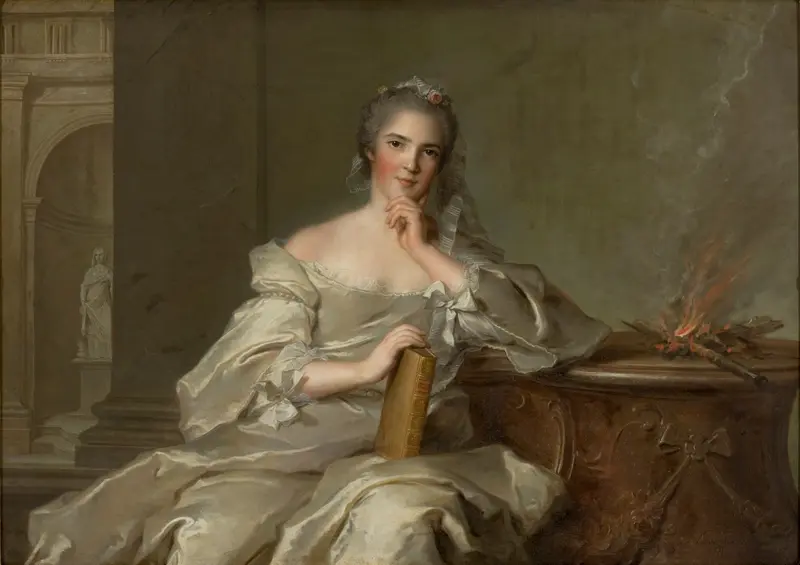
What first catches the eye in Henriette of France as Flora is the way the sitter reclines, not as a distant royal, but as a goddess at ease in her own invented Arcadia. The soft, luminous skin, the casual drape of the dress slipping from her shoulder, and the playful crown of flowers all conspire to draw the viewer into a scene that is both intimate and theatrical. Her gaze is direct, almost conspiratorial, as if inviting us to share in the masquerade.
The garland she weaves is no idle decoration; it is a signal of her assumed identity as Flora, goddess of spring, and a gentle assertion of her own vitality and grace. The light picks out the folds of her gown and the delicate blossoms, leading the eye from her serene face to the abundance of flowers at her side, and then out to the distant, golden landscape. Painted in 1742, this portrait belongs to a world where royal women were often transformed into mythological figures, their portraits doubling as both likeness and allegory. In the French court of the eighteenth century, such images were not mere decoration but statements of power, virtue, and cultivated taste—crafted for private galleries, diplomatic gifts, or the gaze of a select elite.
Jean-Marc Nattier became renowned for these elegant masquerades, blending the conventions of portraiture with the fantasy of classical myth. The work now forms part of the Web Gallery of Art’s collection, a reminder of an era when artifice and identity danced together in the painted image. Look again at the sitter’s faint smile and the easy confidence of her pose—every detail is an invitation to linger in her carefully constructed world.
More Artworks by Jean-Marc Nattier

Madame Crozat de Thiers and Her Daughter
Jean-Marc Nattier
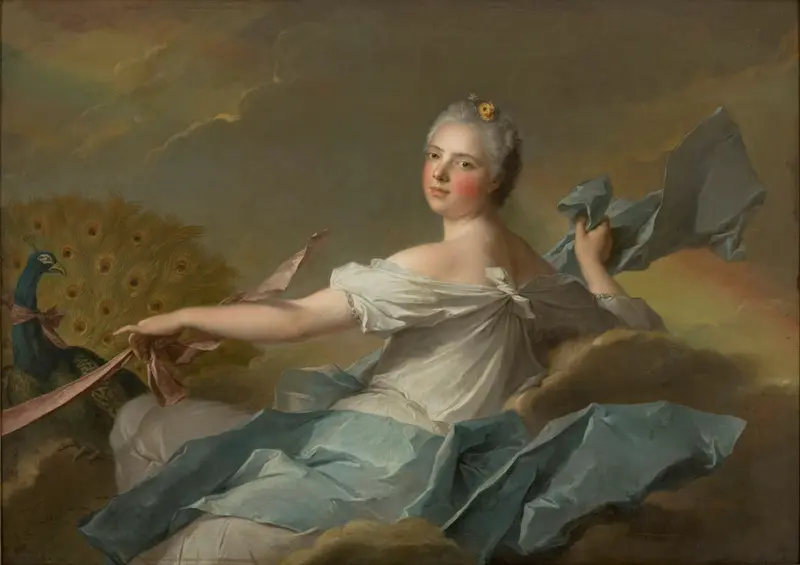
Princess Marie Adélaïde of France - The Air
Jean-Marc Nattier
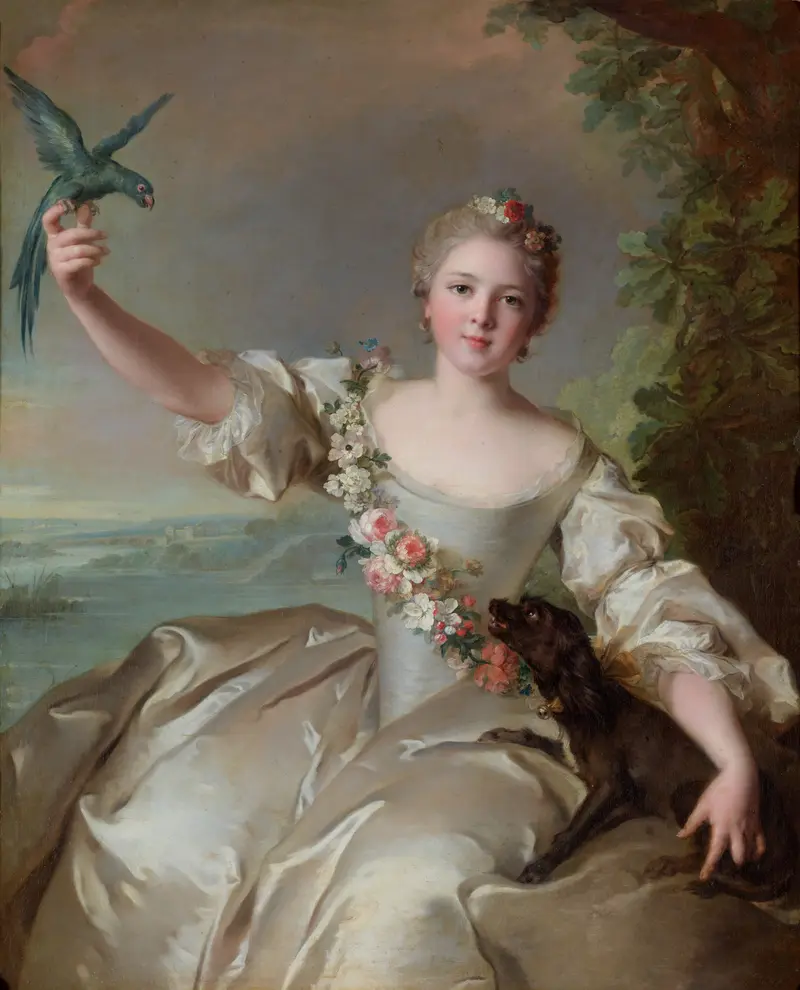
Portrait de Mathilde de Canisy, marquise d'Antin
Jean-Marc Nattier
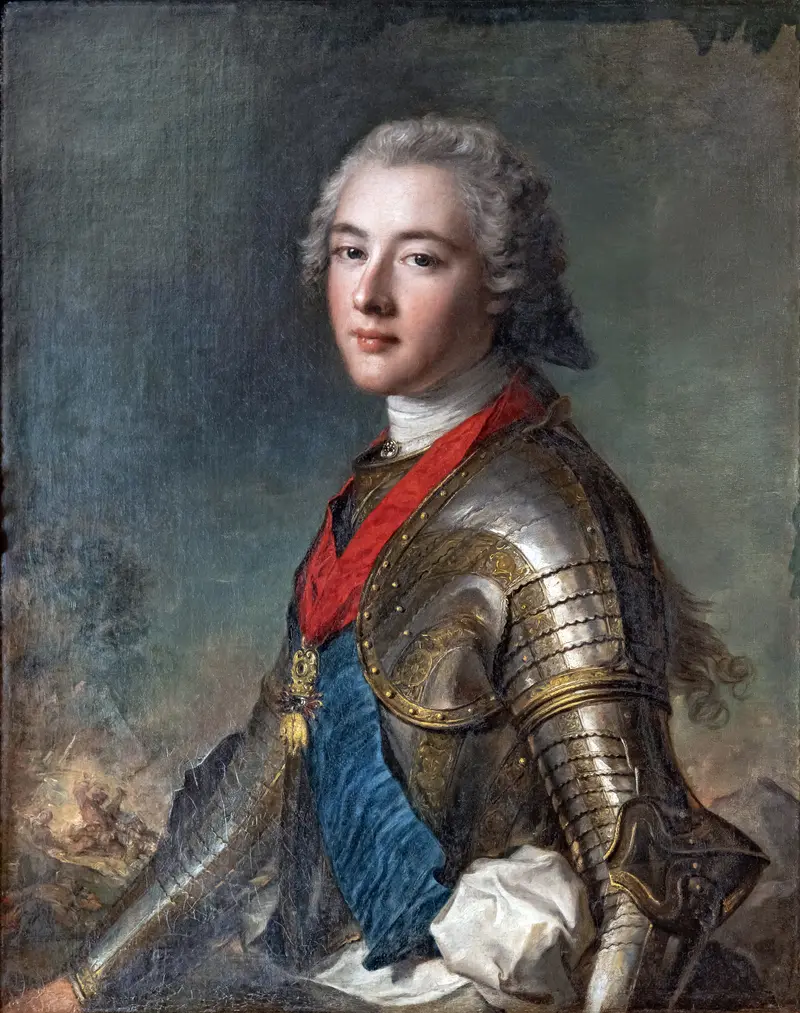
Bemberg Fondation Toulouse - Portrait de Louis Jean Marie de Bourbon, Duc de Penthièvre - Jean Marc Nattier inv.1158 82x65.4
Jean-Marc Nattier
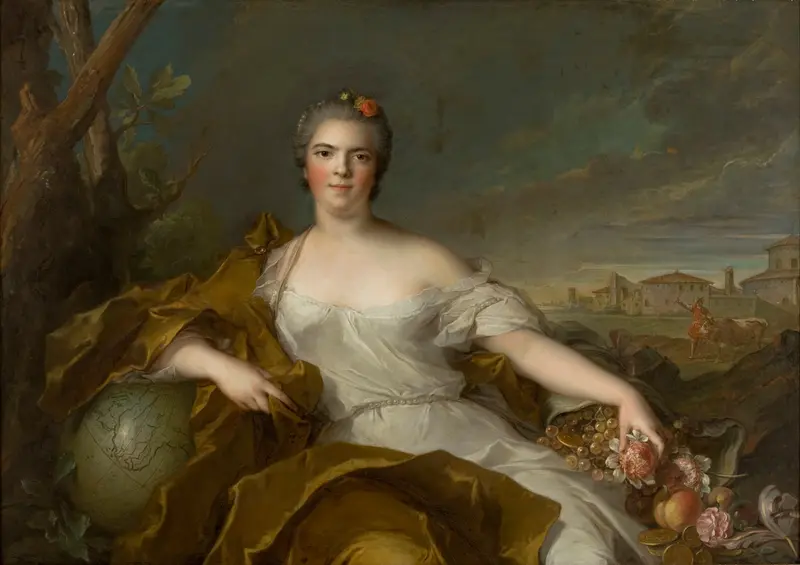
Princess Louise-Élisabeth of France - The Earth
Jean-Marc Nattier
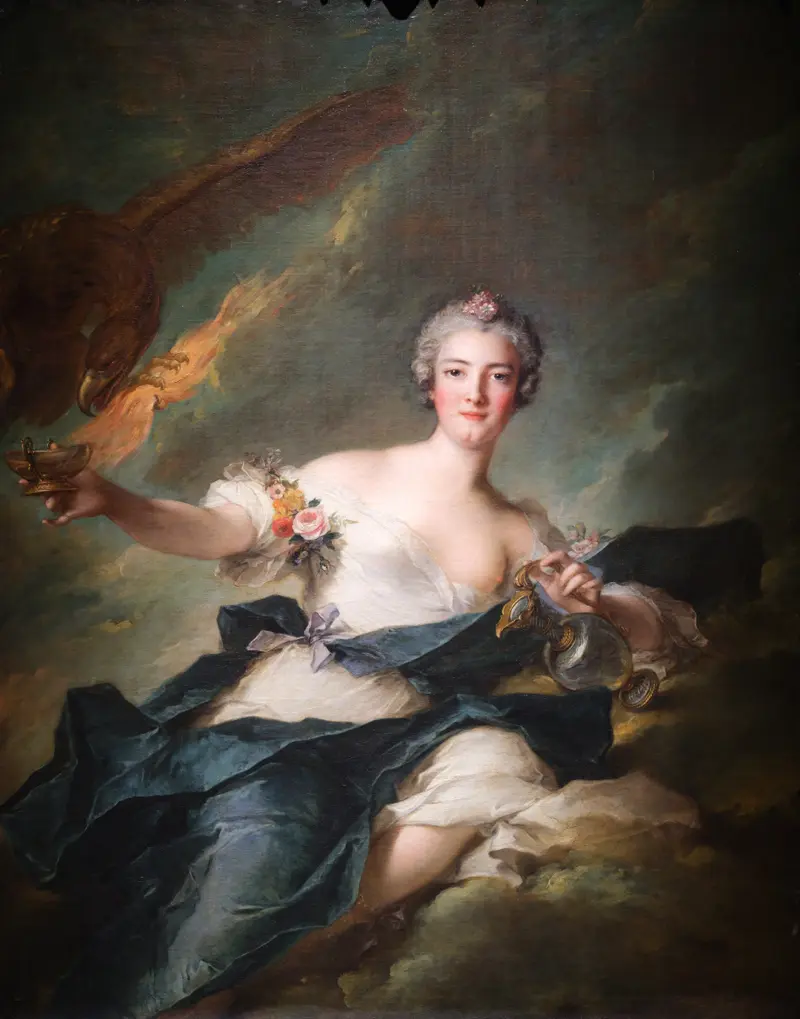
The Duchess of Chaulnes Represented as Hebe
Jean-Marc Nattier
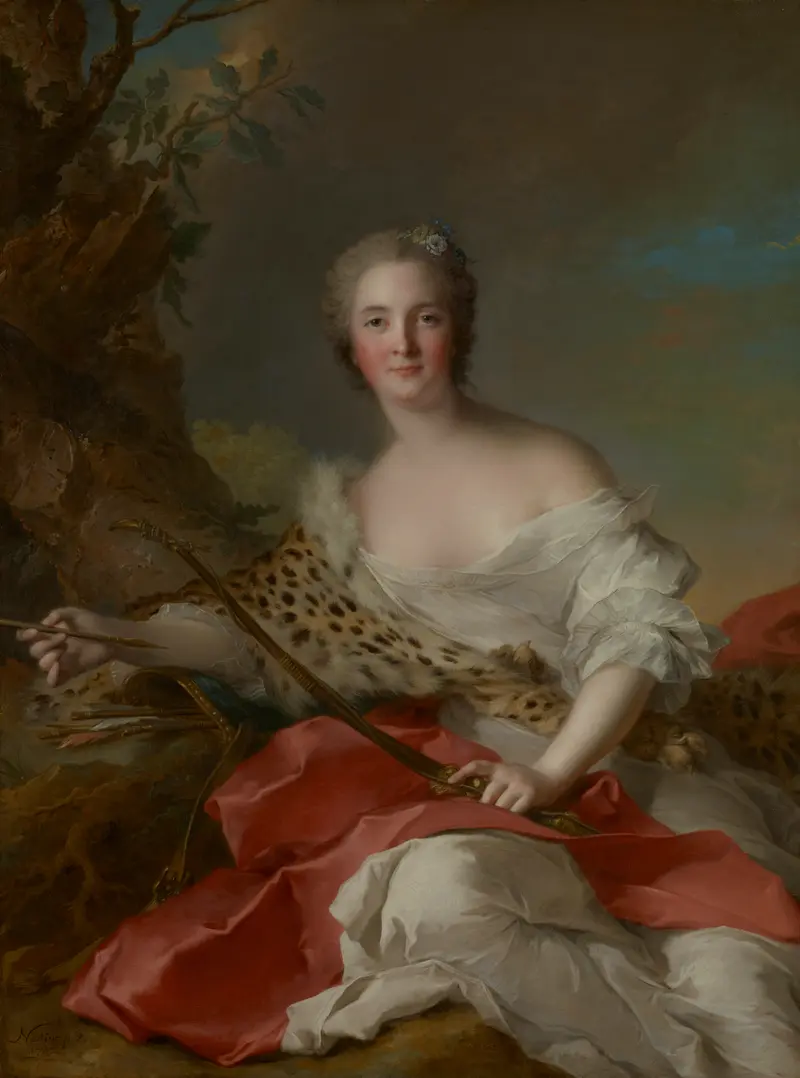
Portrait of Madame Bonnier de la Mosson as Diana (Constance-Gabrielle-Magdeleine du Monciel de Lauraille
Jean-Marc Nattier
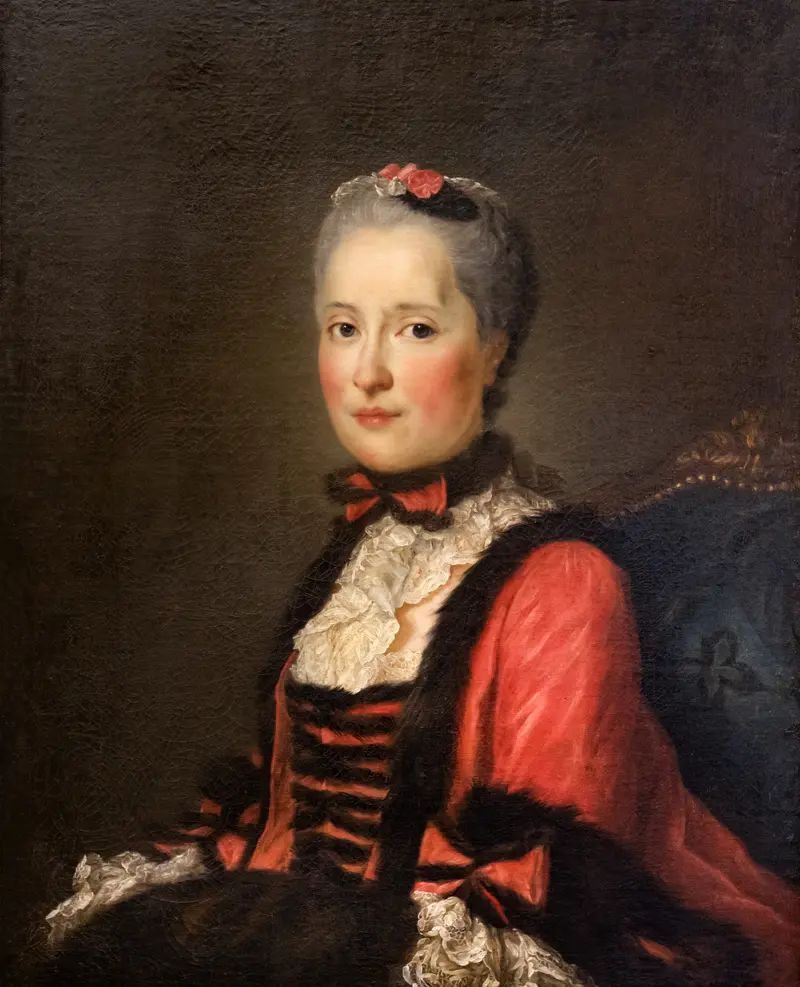
Portrait of Marie-Josephe of Saxony, Dauphine of France
Jean-Marc Nattier
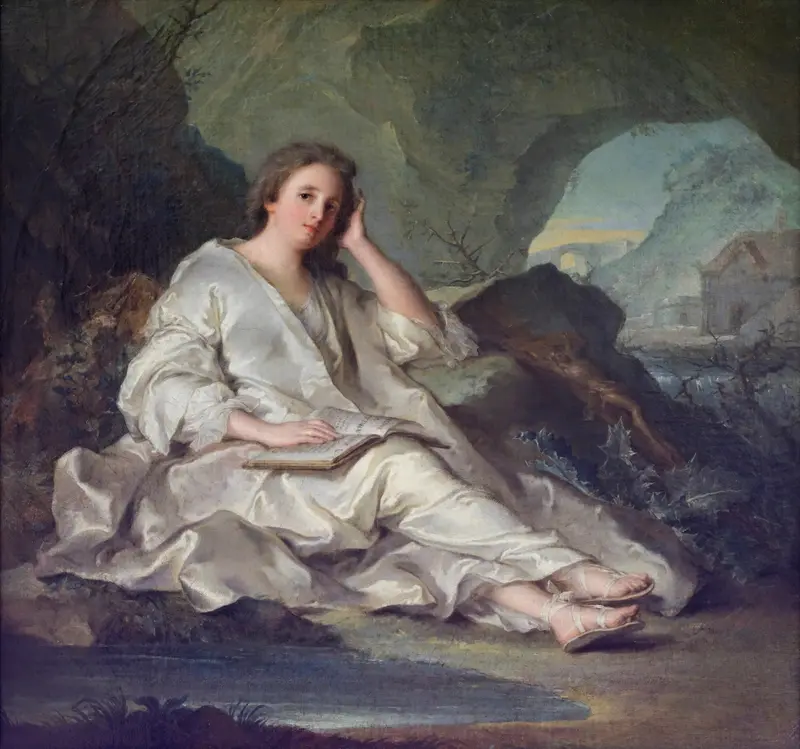
La Madeleine, ou Une Pénitente dans le désert Musée du Louvre Peintures INV 6880 ; MR
Jean-Marc Nattier
Princess Anne-Henriette of France - The Fire
Jean-Marc Nattier





