Discover insights about this artwork
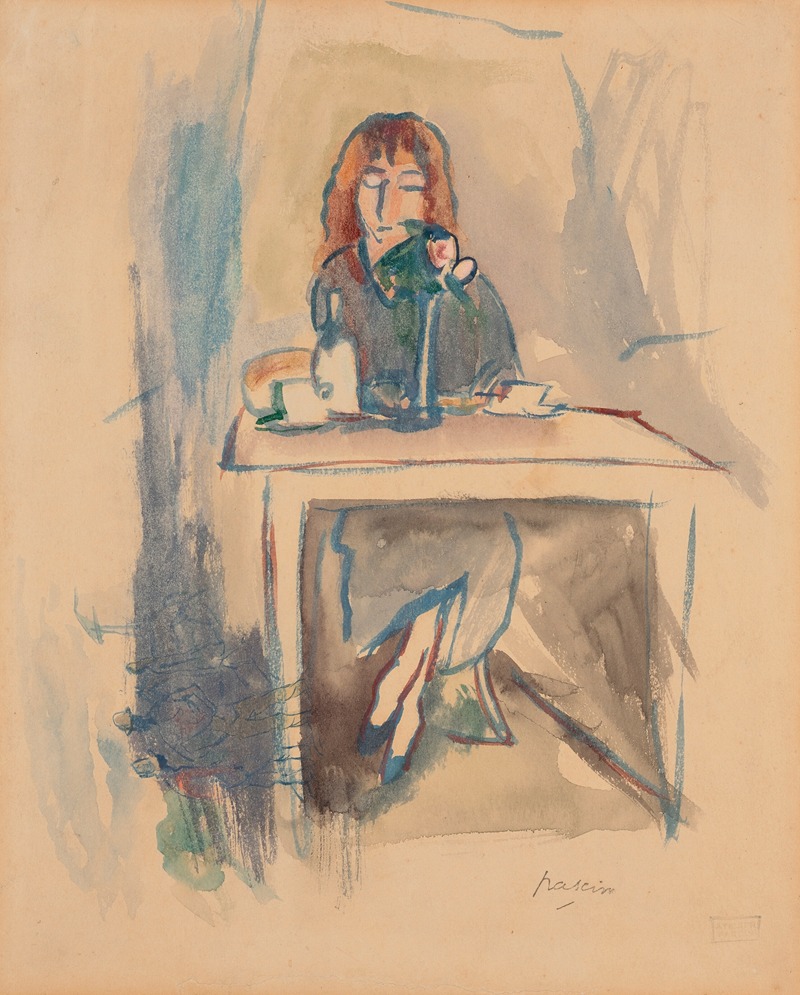
Hermine à table — History & Facts
In Hermine à table, we see a woman seated at a table, surrounded by a warm, inviting atmosphere. The colors are soft and muted, with gentle tones of beige, brown, and hints of green. The figure of Hermine is depicted in a relaxed pose, suggesting a moment of contemplation or leisure.
The setting appears intimate, possibly a café or a cozy home environment. The painting is characterized by its loose brushwork and a focus on the play of light and shadow. Pascin's technique captures the essence of the moment, allowing the viewer to feel the tranquility of the scene. The composition is balanced, with Hermine positioned centrally, drawing the eye.
The use of color enhances the overall mood, creating a sense of warmth and comfort. Jules Pascin was a prominent figure in the early 20th-century art scene, known for his depictions of women and café life. Hermine à table reflects his interest in capturing everyday moments with a modernist approach. An interesting fact about this work is that it exemplifies Pascin's ability to blend realism with a touch of whimsy, making his subjects relatable yet idealized.
More Artworks by Jules Pascin
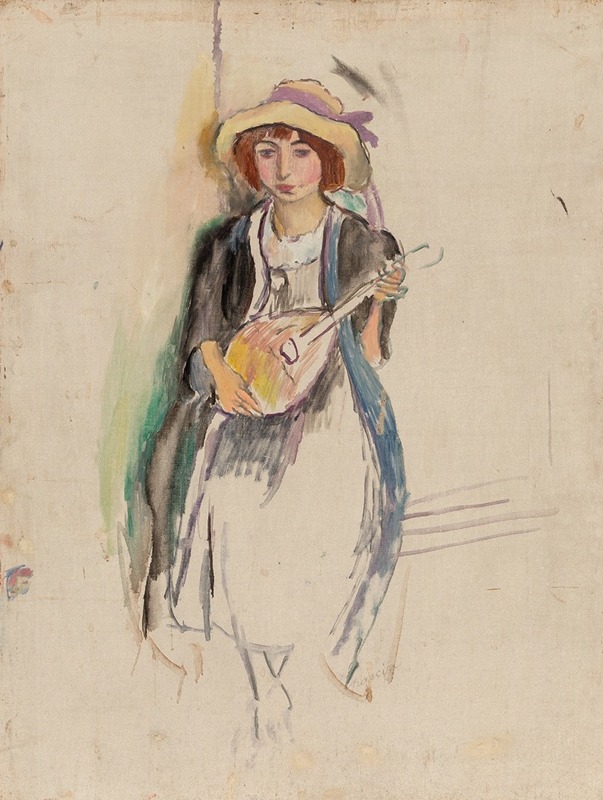
Fille à la mandoline
Jules Pascin
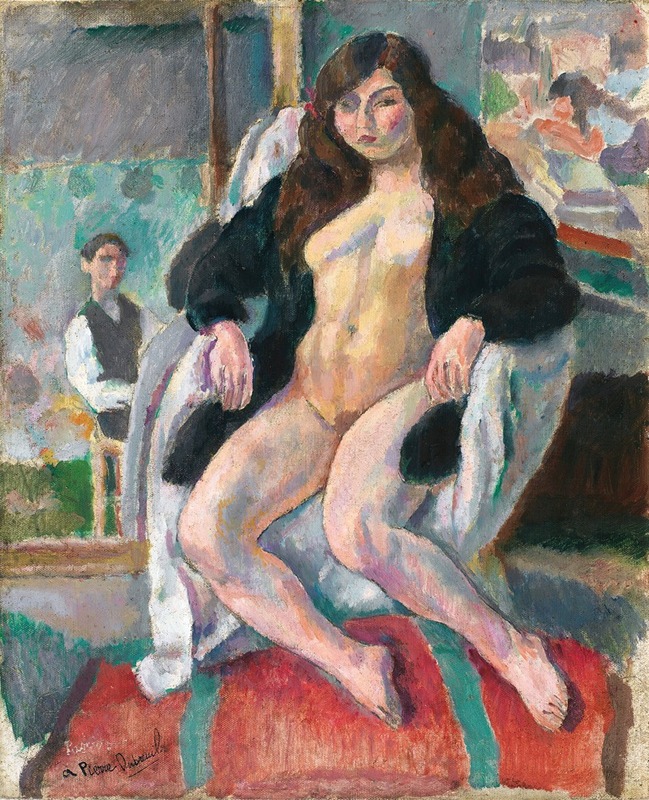
Le Peintre Et Son Modèle
Jules Pascin
Hermine David à la robe bleue
Jules Pascin
Les Tunisiennes
Jules Pascin
Femmes au salon
Jules Pascin
Le Modèle à la chemise rose
Jules Pascin
La Petite Actrice
Jules Pascin
Les Voleurs d’art
Jules Pascin
Réunion infernale
Jules Pascin
Julie, la Martiniquaise
Jules Pascin