
Hetch Hetchy Valley — History & Facts
The first thing to catch the eye in Hetch Hetchy Valley is the way the light pours through the trees, turning the clearing into a stage where a small group of deer rest and graze. The painter draws you in with the contrast between the towering pines, rendered in careful detail, and the distant, misty cliffs that seem to dissolve into the sky. The deer, alert but unhurried, give the scene a sense of pause, as if the world itself is holding its breath.
The water’s edge, reflecting both the sky and the autumn foliage, guides the gaze deeper into the painting, inviting the viewer to imagine the hush and coolness of the valley. Works like this, painted in the late nineteenth century, were part of a larger movement in American art that sought to capture the grandeur and promise of the nation’s western landscapes. Artists such as Albert Bierstadt became famous for their sweeping views of places like Yosemite and the Sierra Nevada, often commissioned by patrons eager to see the wonders of the expanding frontier. This particular painting, documented in a private collection as of December 2012, stands as a testament to that era’s fascination with wilderness and the belief that such scenes could inspire both awe and stewardship.
Few records remain of the journeys of lesser-known works like this one, but their quiet presence continues to offer a window into a world where nature was both a refuge and a revelation.
More Artworks by Albert Bierstadt

A Storm in the Rocky Mountains, Mt. Rosalie
Albert Bierstadt
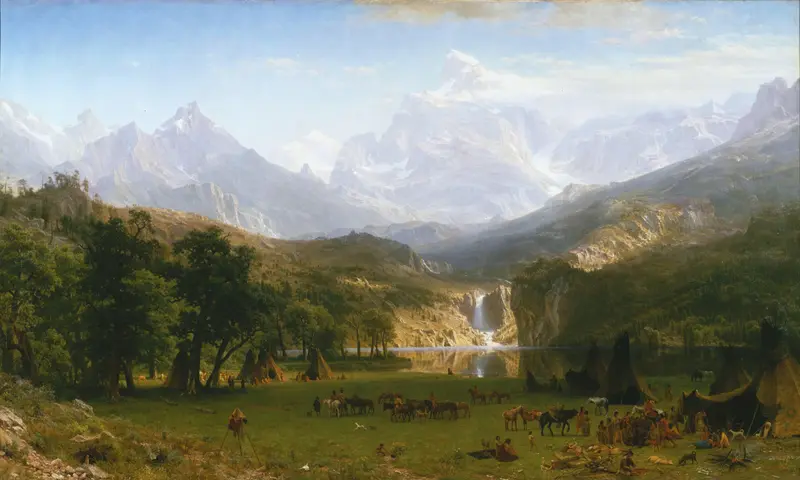
The Rocky Mountains, Lander's Peak
Albert Bierstadt
Niagara from the American Side
Albert Bierstadt
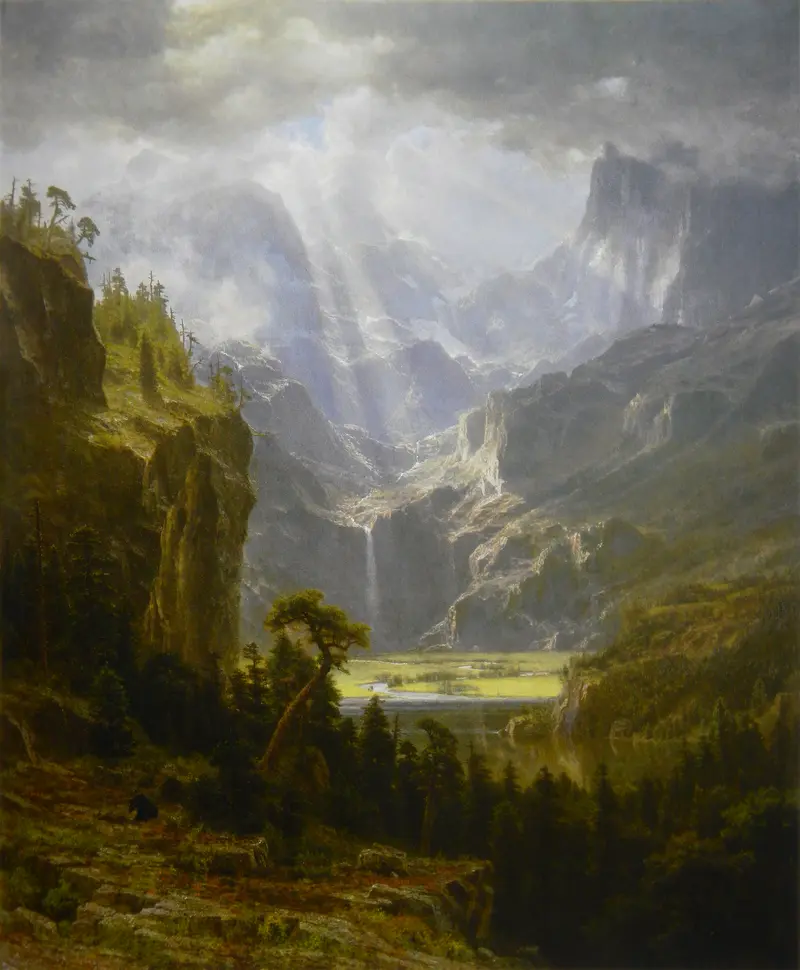
Rocky Mountains, Lander’s Peak
Albert Bierstadt

Valley of the Yosemite
Albert Bierstadt
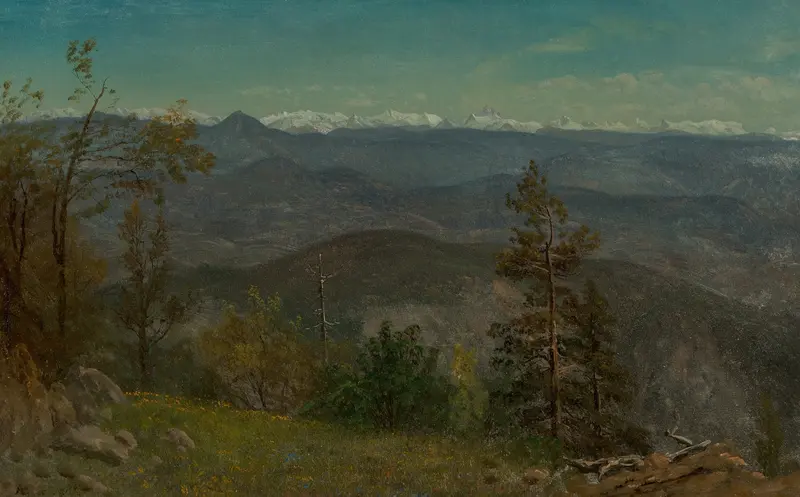
Yosemite Valley, California
Albert Bierstadt
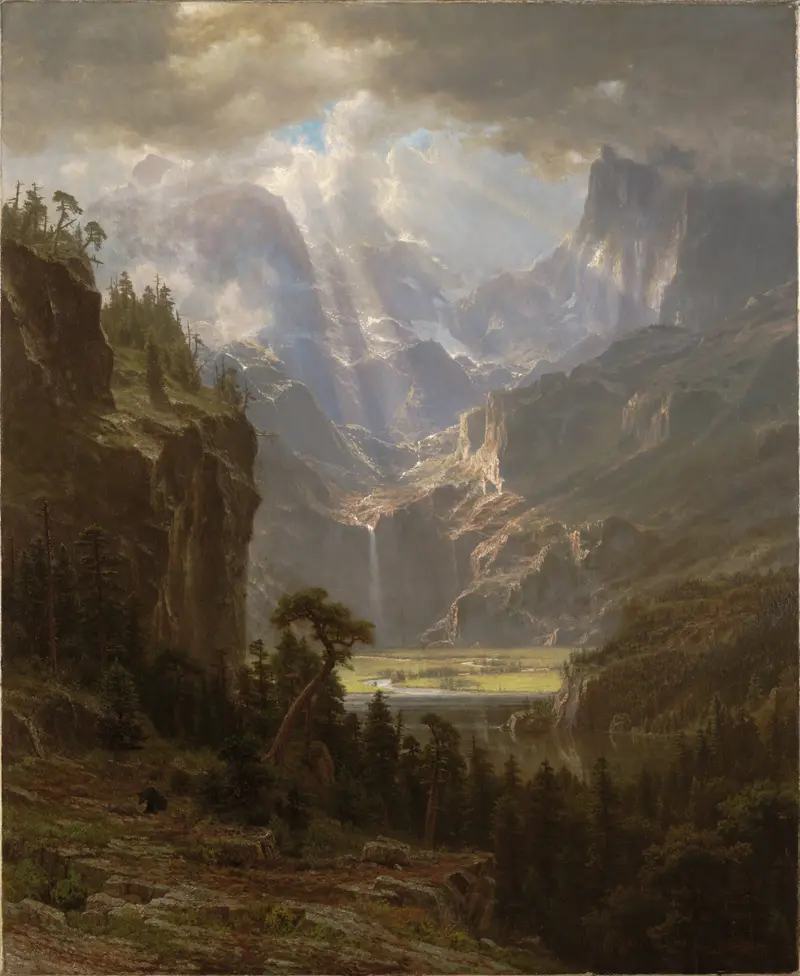
Rocky Mountains, "Lander's Peak"
Albert Bierstadt

Laramie Peak
Albert Bierstadt
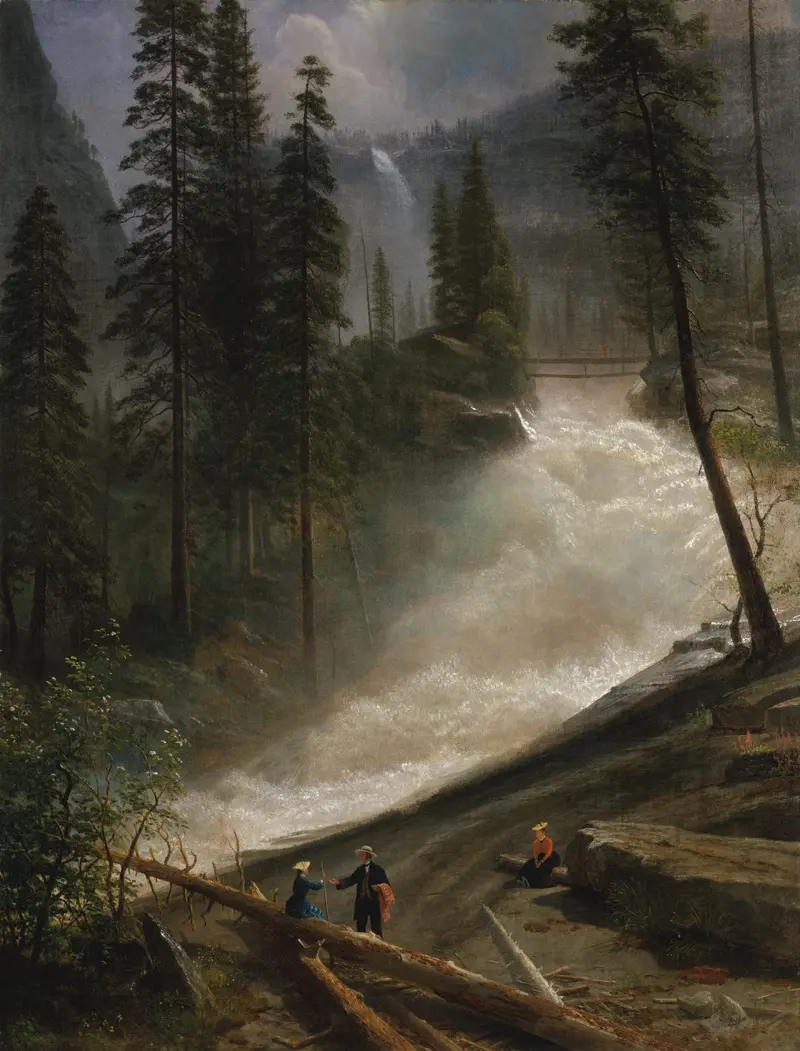
Nevada Falls, Yosemite
Albert Bierstadt
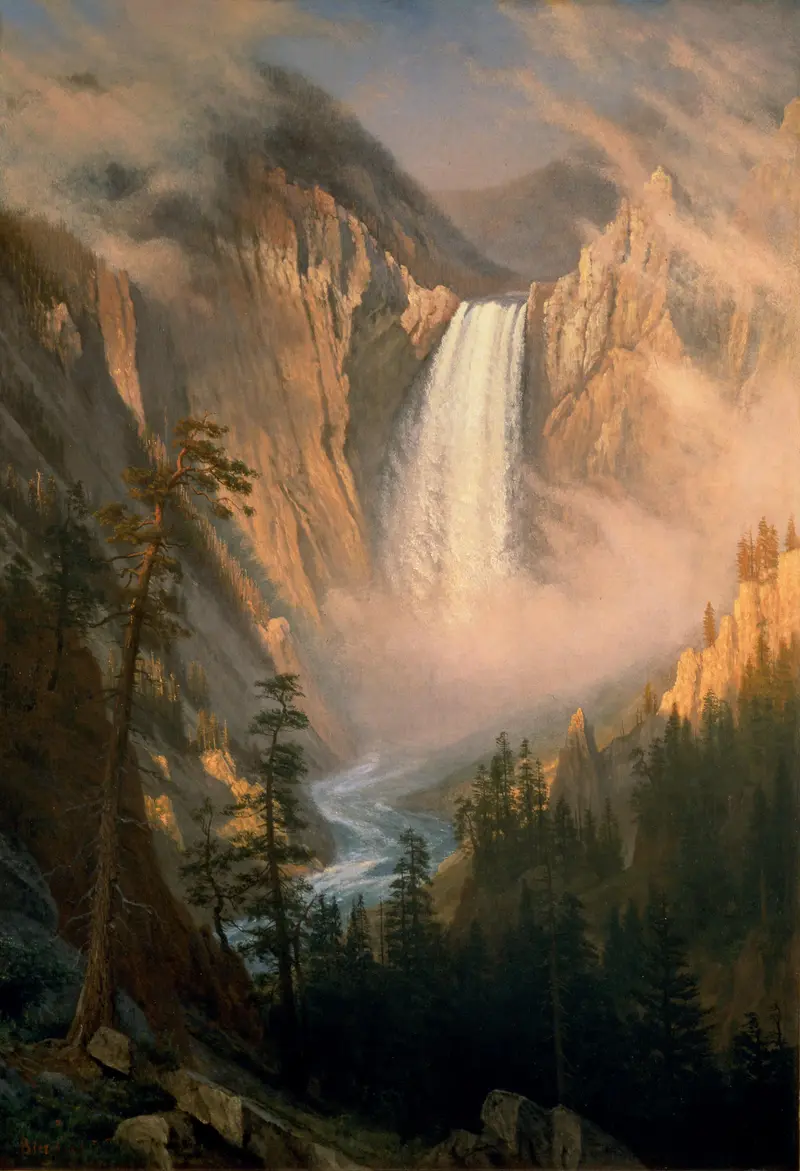
Yellowstone Falls
Albert Bierstadt
More Landscape Art

The Starry Night
Vincent van Gogh

View of Delft
Johannes Vermeer

Water Lilies
Claude Monet

The Grand Canal, Venice, looking north-west from the Ca' Corner to the Ca' Contarini degli Scrigni, with the campanile of Santa Maria della Carità
Canaletto

Windsor Castle
Canaletto

The Grand Canal looking North-East from the Palazzo Dolfin-Manin to the Rialto Bridge
Canaletto