
High Bridge — History & Facts
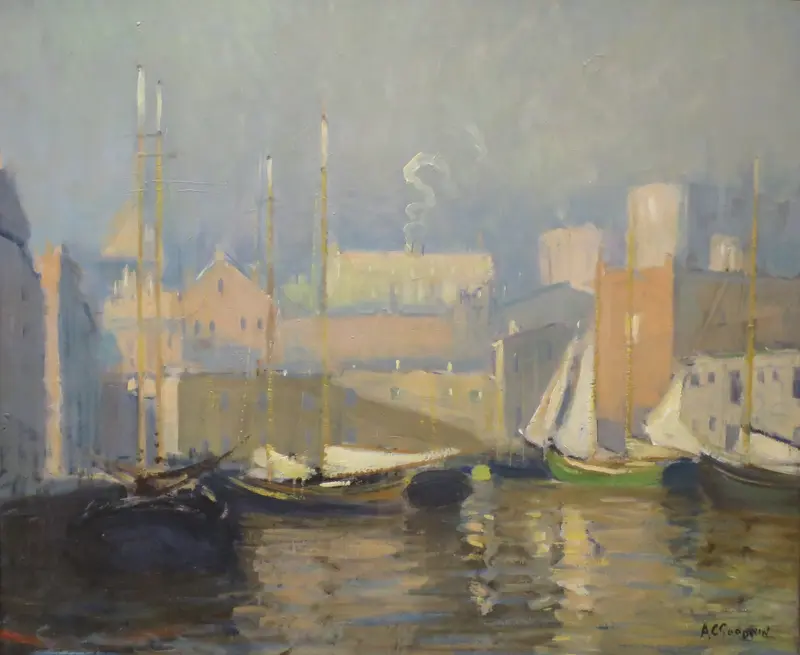
A sweep of arching stone commands the scene, its massive span casting a cool shadow over the river below. The eye is drawn first to this monumental bridge, but it is the play of light and color beneath it that quietly steals the show. Dappled sunlight filters through new-leafed trees, catching on the clustered rooftops and the water’s restless surface.
The brushwork is loose and energetic, suggesting the bustle of life along the riverbank—boats moored, buildings huddled, the city rising beyond. Here, the bridge is not just an engineering feat but a gateway, dividing and connecting two worlds: the leafy calm of the riverside and the vertical thrust of the city beyond. Works like High Bridge by Arthur Clifton Goodwin belong to a moment when American painters, inspired by Impressionism, turned their attention to the changing face of their own cities. Bridges, in particular, became icons of progress and modernity, celebrated in paint as much as in steel and stone.
Little is recorded about this specific canvas, now in a private collection, but its lively palette and urban subject place it firmly within the early twentieth-century fascination with cityscapes. In this painting, the bridge is both subject and stage, inviting us to linger over the fleeting effects of light and the quiet drama of daily life unfolding beneath its span.
More Artworks by Arthur Clifton Goodwin

View of the Brooklyn Bridge
Arthur Clifton Goodwin
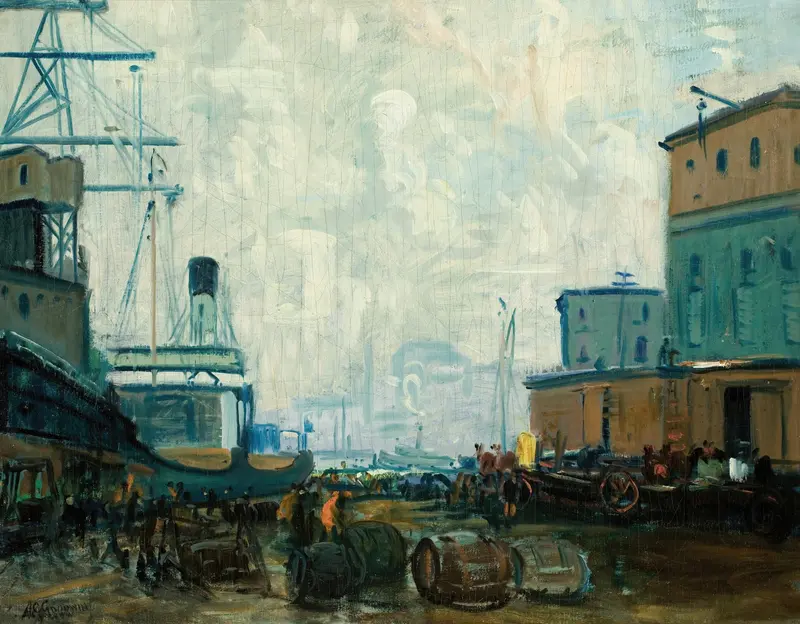
Dock Scene, Boston
Arthur Clifton Goodwin
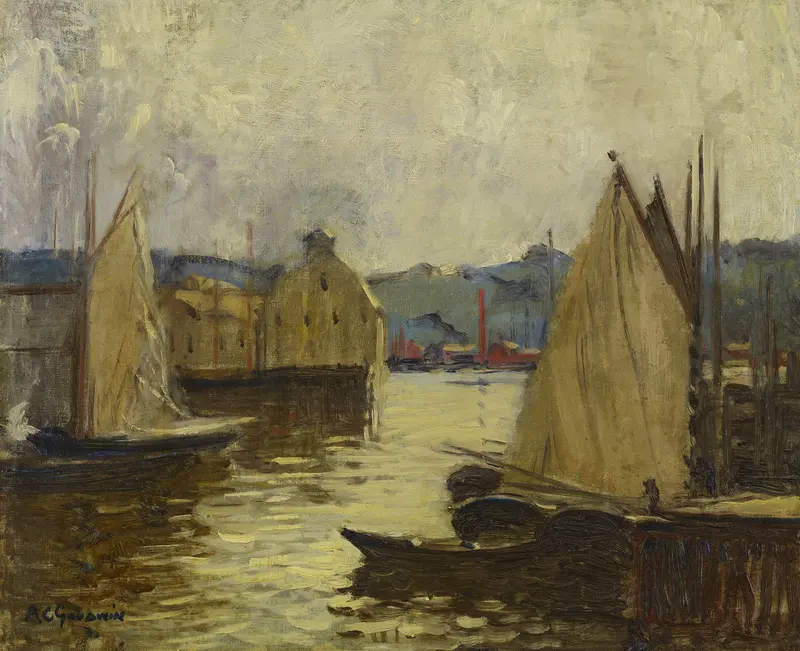
Gloucester Harbor
Arthur Clifton Goodwin
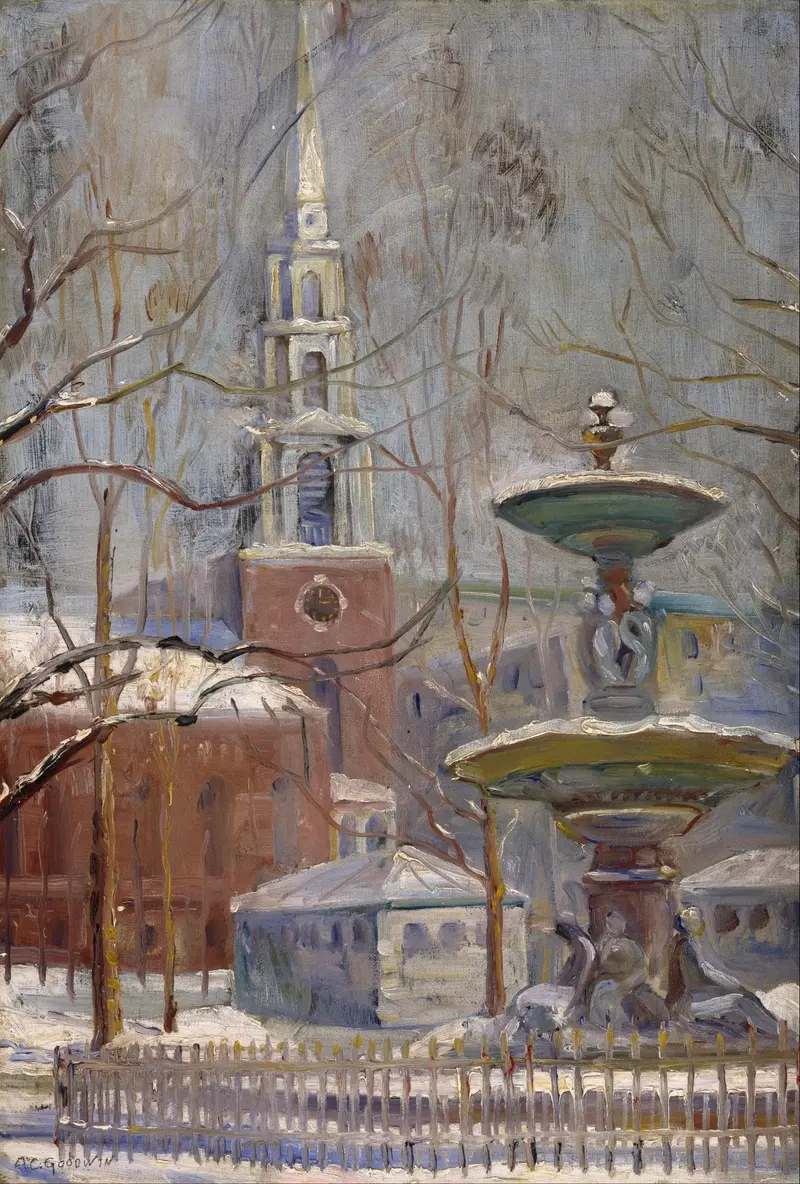
Park Street at Boston Commons
Arthur Clifton Goodwin
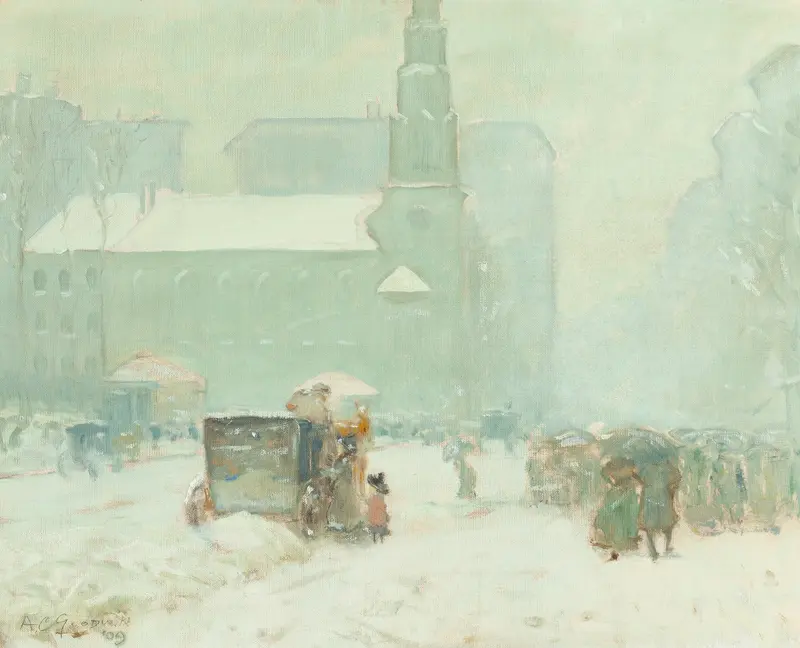
Park Street, Boston
Arthur Clifton Goodwin
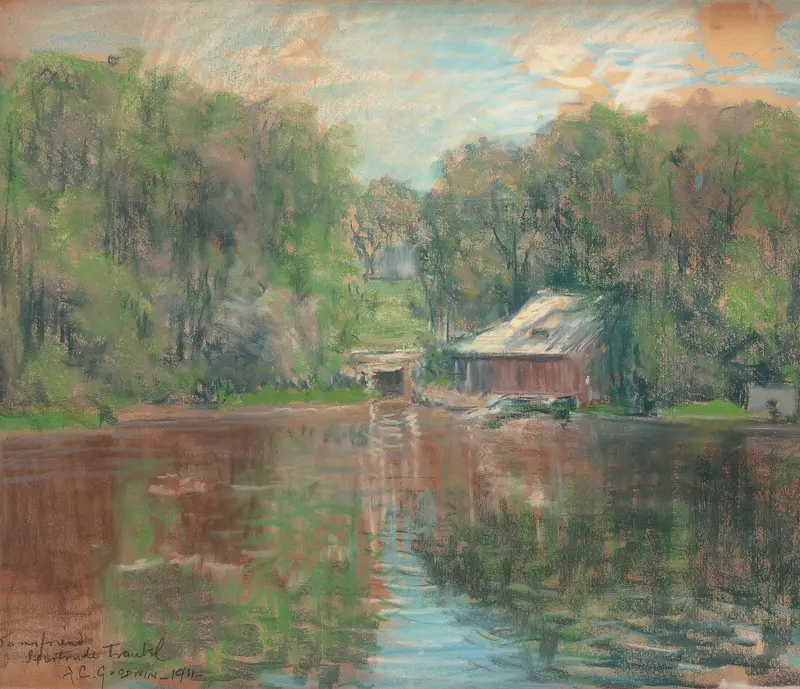
Boathouse by the Water
Arthur Clifton Goodwin
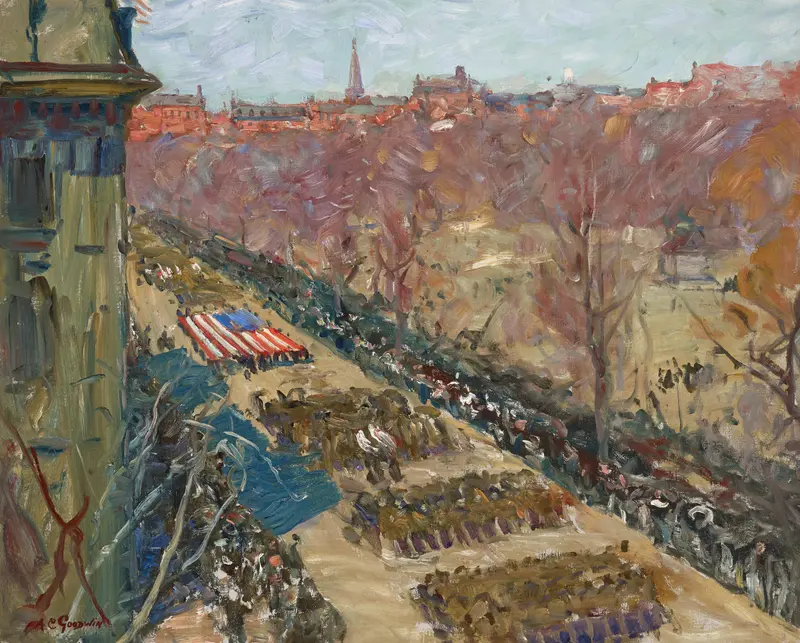
Liberty Loan Parade
Arthur Clifton Goodwin
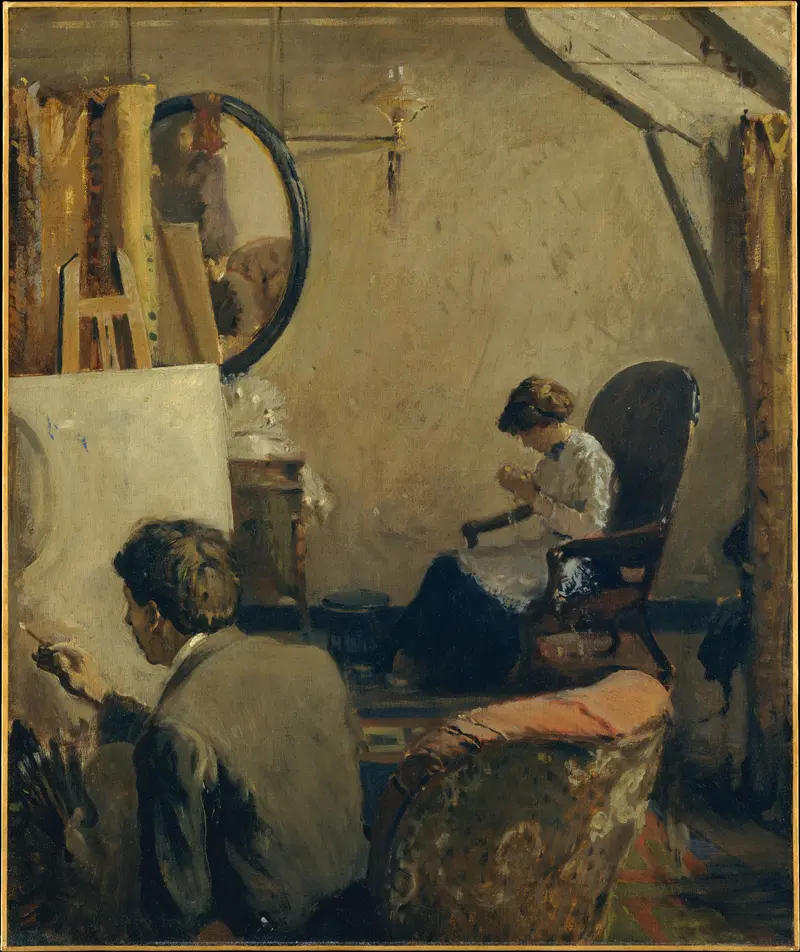
Louis Kronberg in His Studio in Copley Hall
Arthur Clifton Goodwin
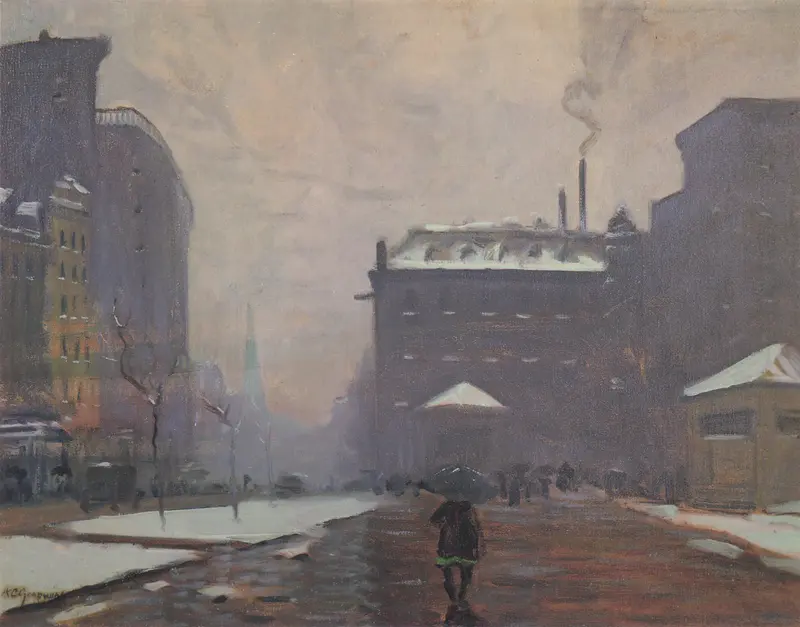
Tremont & Boylston Streets, Boston
Arthur Clifton Goodwin
Tea Wharf, Boston
Arthur Clifton Goodwin





