
Tremont & Boylston Streets, Boston — History & Facts
A single figure, umbrella in hand, walks away from us into the muted glow of a winter city. The wet street glistens underfoot, reflecting a sky thick with the haze of industry and dusk, while the buildings loom as silent sentinels, their upper floors dissolving into the mist. The painter, Arthur Clifton Goodwin, draws the eye down Tremont Street, where the sharp geometry of rooftops and the vertical thrust of smokestacks and bare trees break the otherwise soft, enveloping atmosphere.
The choice to center the lone pedestrian against such a vast, impersonal backdrop hints at the quiet drama of urban solitude—an experience both ordinary and quietly monumental. Painted in 1915, this cityscape belongs to a moment when American artists were turning their gaze to the modern metropolis, fascinated by its energy and anonymity. Works like this, often created for private collectors or local exhibitions, captured the changing face of cities as electric lights, automobiles, and industry transformed daily life. Goodwin was known for his affinity with Boston, and this painting—self-scanned from a Childs Gallery annual nearly a century later—preserves not only a street corner but a mood: the hush of snow, the pulse of progress, and the smallness of the individual within it.
The viewer is left to wonder who that solitary walker is, and what stories the city holds just out of sight.
More Artworks by Arthur Clifton Goodwin

View of the Brooklyn Bridge
Arthur Clifton Goodwin
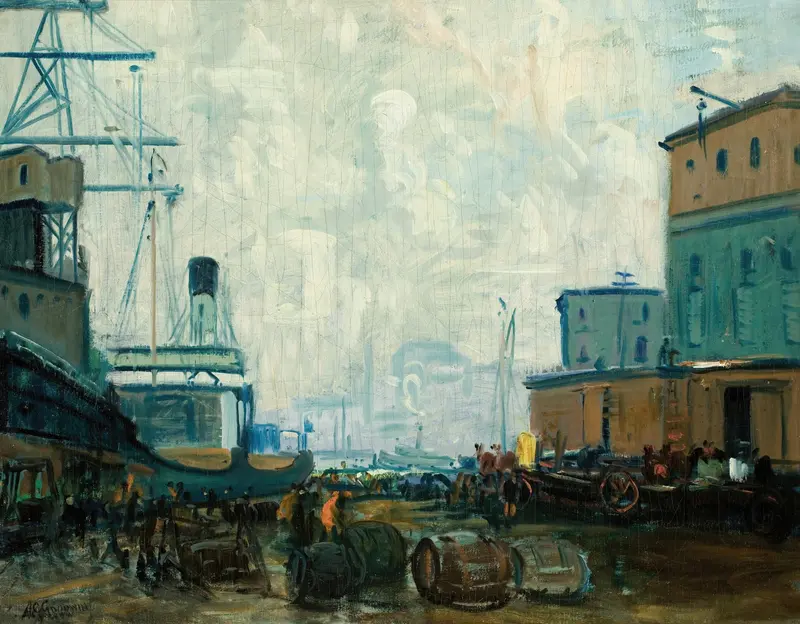
Dock Scene, Boston
Arthur Clifton Goodwin
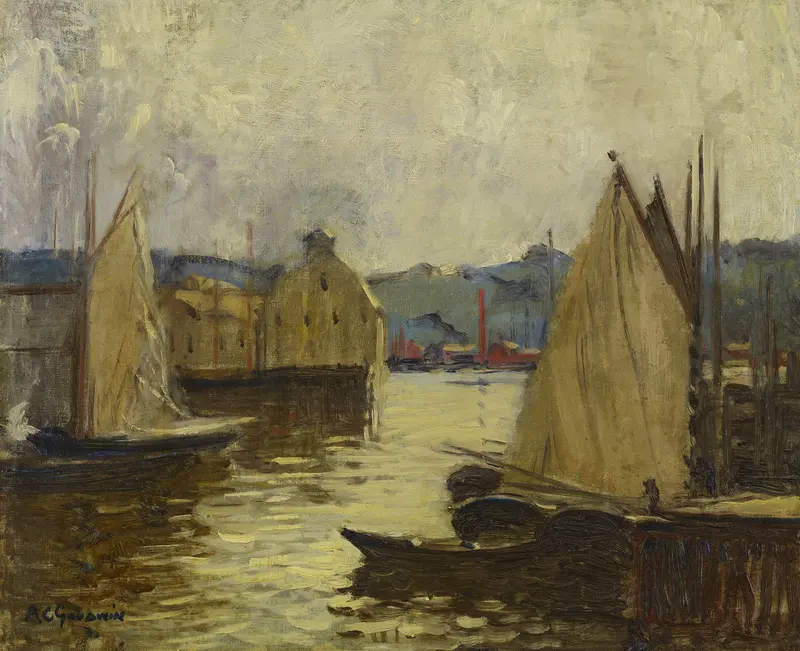
Gloucester Harbor
Arthur Clifton Goodwin
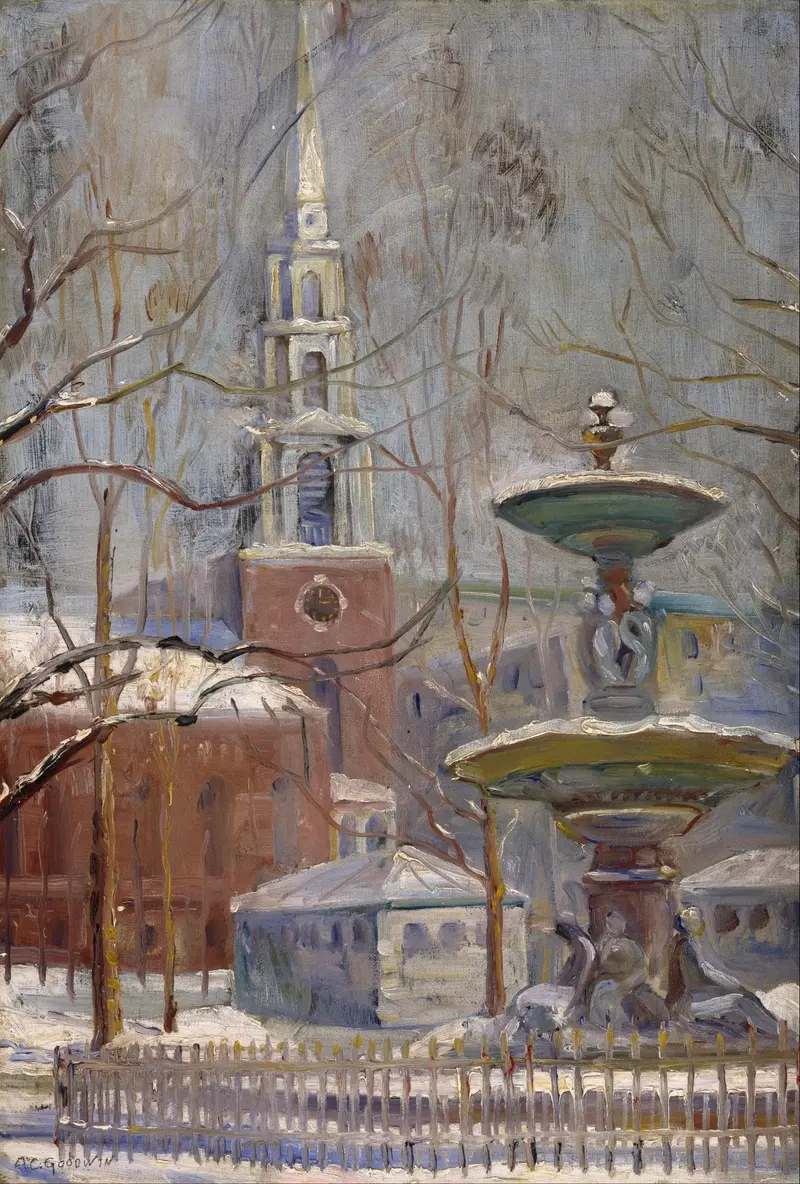
Park Street at Boston Commons
Arthur Clifton Goodwin
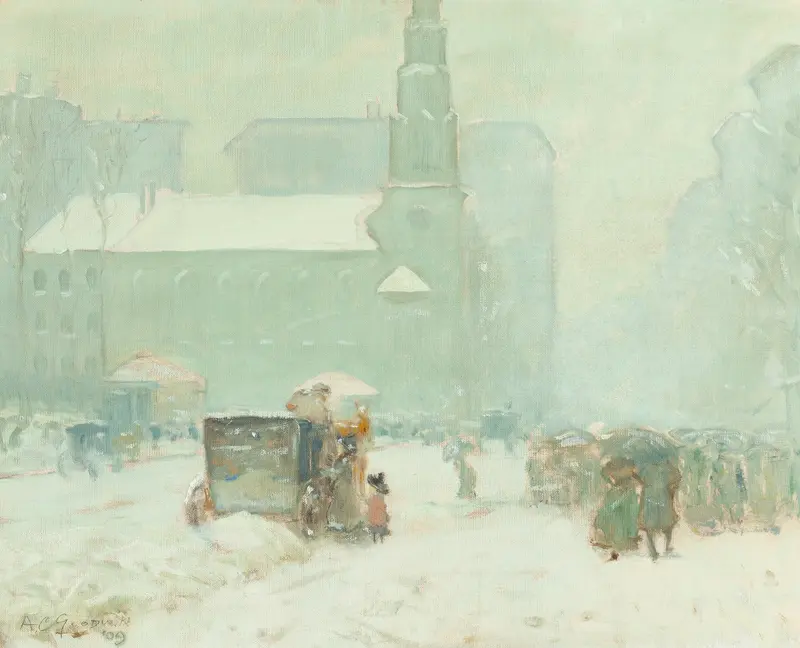
Park Street, Boston
Arthur Clifton Goodwin
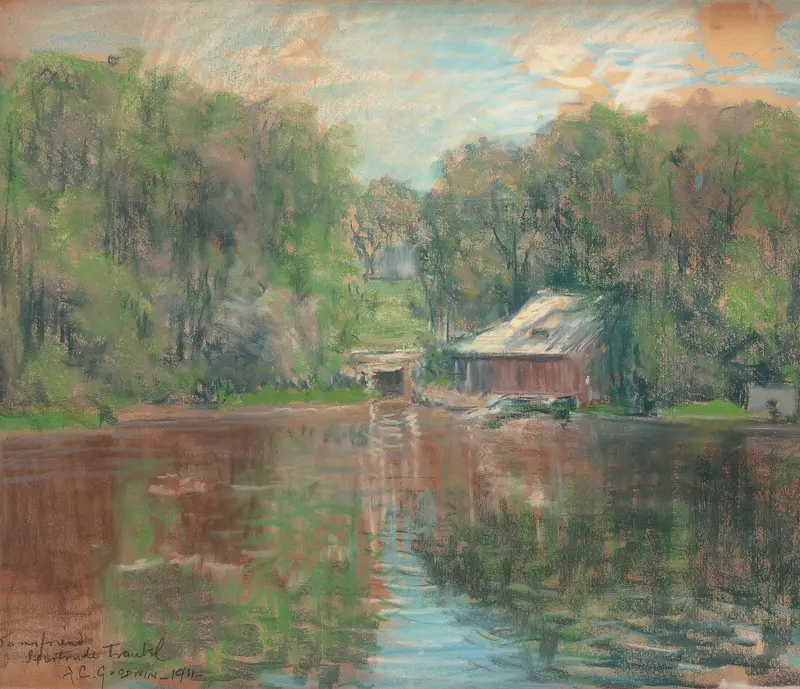
Boathouse by the Water
Arthur Clifton Goodwin
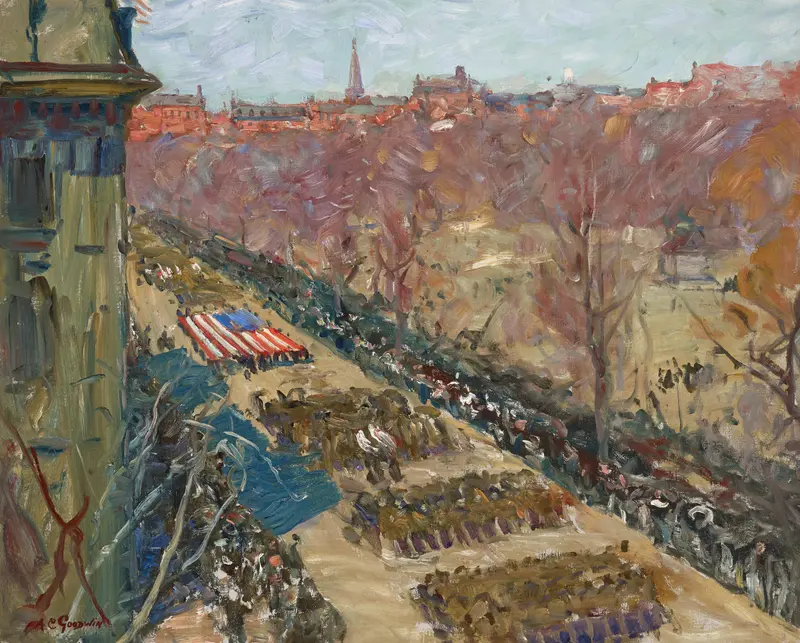
Liberty Loan Parade
Arthur Clifton Goodwin
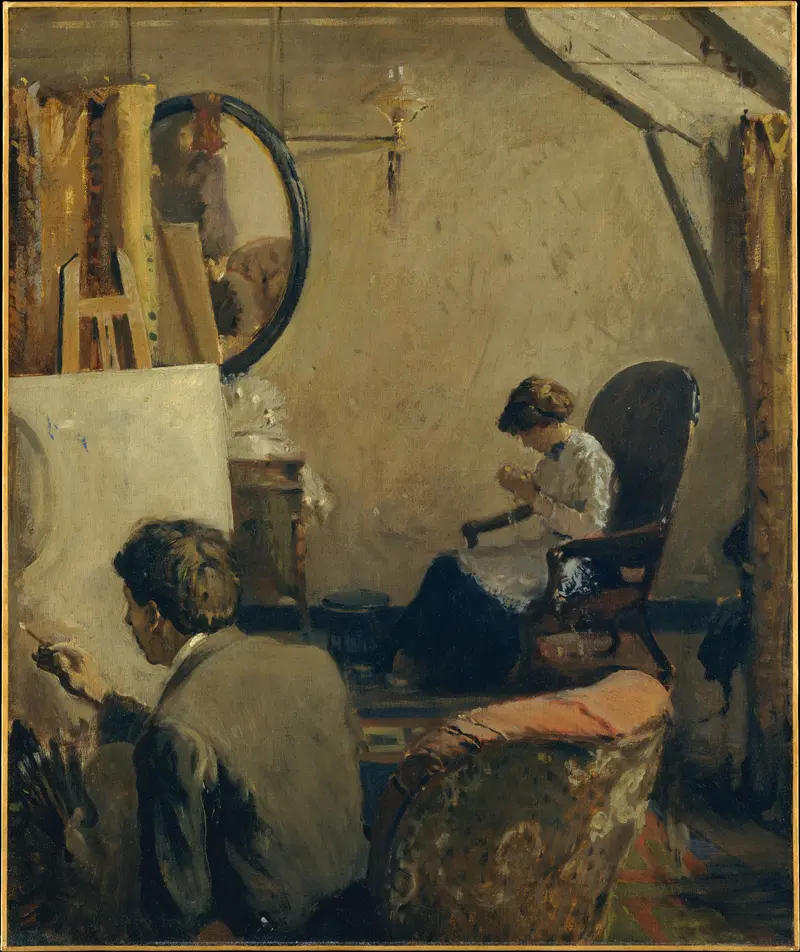
Louis Kronberg in His Studio in Copley Hall
Arthur Clifton Goodwin
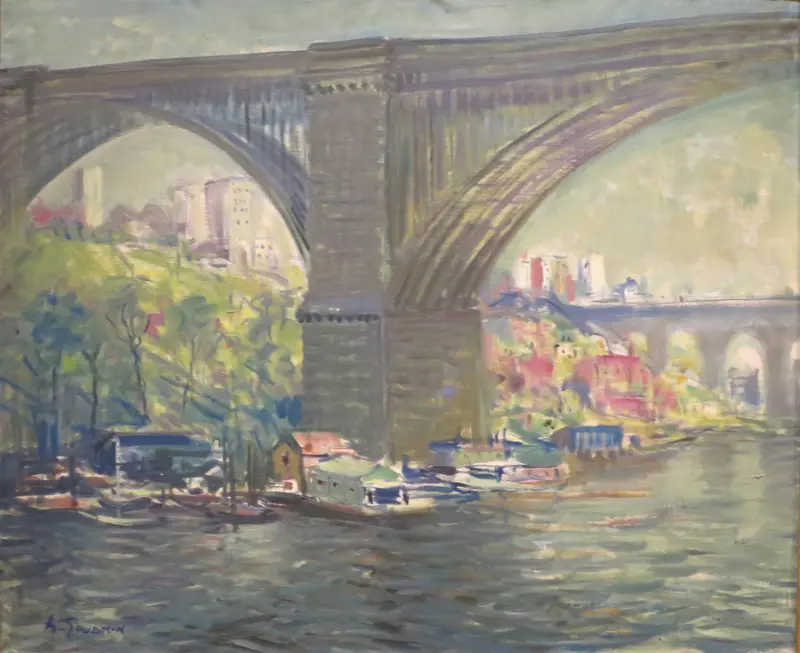
High Bridge
Arthur Clifton Goodwin
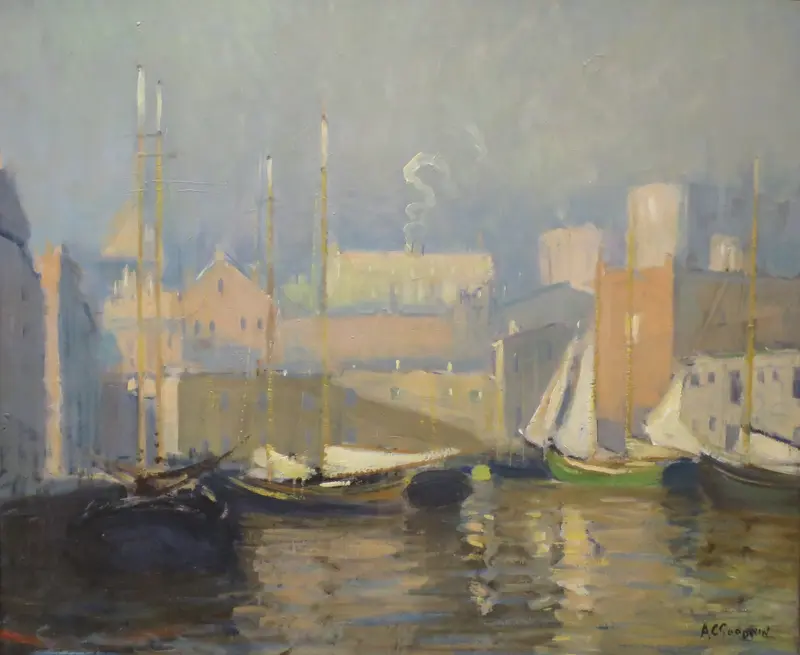
Tea Wharf, Boston
Arthur Clifton Goodwin
More Landscape Art

The Starry Night
Vincent van Gogh

View of Delft
Johannes Vermeer

Water Lilies
Claude Monet

The Grand Canal, Venice, looking north-west from the Ca' Corner to the Ca' Contarini degli Scrigni, with the campanile of Santa Maria della Carità
Canaletto

Windsor Castle
Canaletto

The Grand Canal looking North-East from the Palazzo Dolfin-Manin to the Rialto Bridge
Canaletto