
Liberty Loan Parade — History & Facts
A river of movement surges through the heart of the city, and the eye is instantly drawn to the enormous American flag unfurled at the parade’s center—a bold, geometric punctuation in a world of flickering brushstrokes. The vantage point is high and slightly off-kilter, as if the viewer has leaned out from a window to catch the full sweep of the spectacle below. The crowd forms a dense, dark border along the avenue, their energy barely contained by the painter’s quick, restless marks.
Rows of uniformed figures march in formation, their discipline contrasting with the wild, almost abstract trees and the blurred city skyline beyond. The palette, dominated by ochres, violets, and the cool blue of the flag, sets a brisk, autumnal mood, while the loose handling of paint gives the moment a sense of immediacy and motion—this is not a static commemoration, but a living, pulsing event. Painted in 1918, Liberty Loan Parade by Arthur Clifton Goodwin belongs to a world on the brink of transformation. The Liberty Loan drives were a defining feature of the American home front during World War I, rallying citizens to finance the war effort through public bonds and patriotic display.
Artists like Goodwin, working in the impressionist mode, were drawn to these urban gatherings as symbols of collective purpose and modern life. The painting’s presence in the collection of the Indianapolis Museum of Art today is a testament to both the fleeting nature of such civic rituals and the enduring power of art to capture the spirit of an era. In the rush of color and crowd, the painting asks us to imagine the noise, the pride, and the uncertainty of a nation at war—inviting us to linger, to look again, and to find ourselves somewhere in the throng.
More Artworks by Arthur Clifton Goodwin

View of the Brooklyn Bridge
Arthur Clifton Goodwin
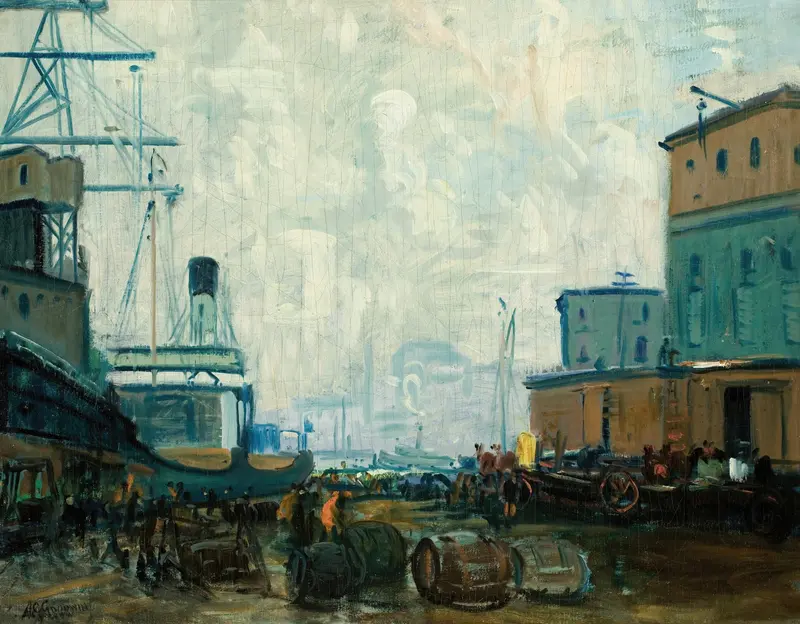
Dock Scene, Boston
Arthur Clifton Goodwin
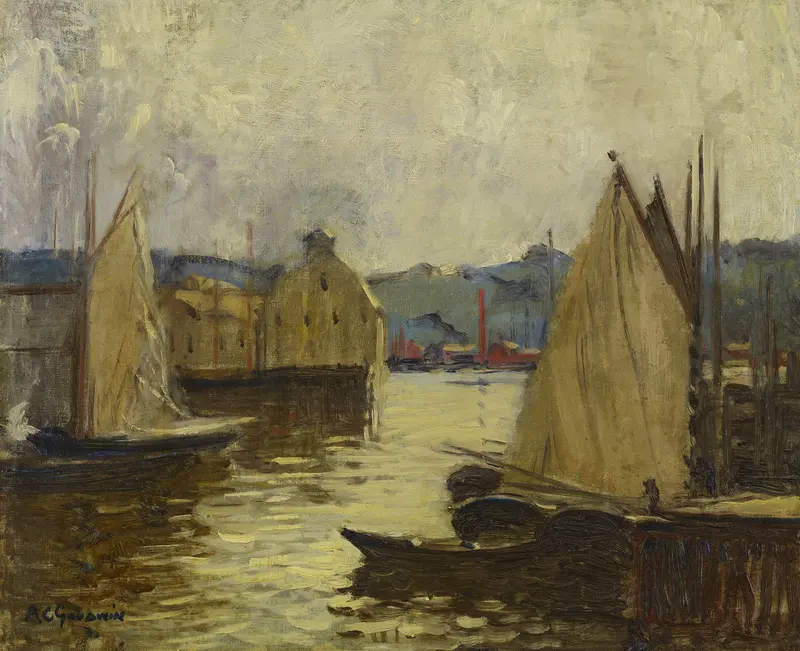
Gloucester Harbor
Arthur Clifton Goodwin
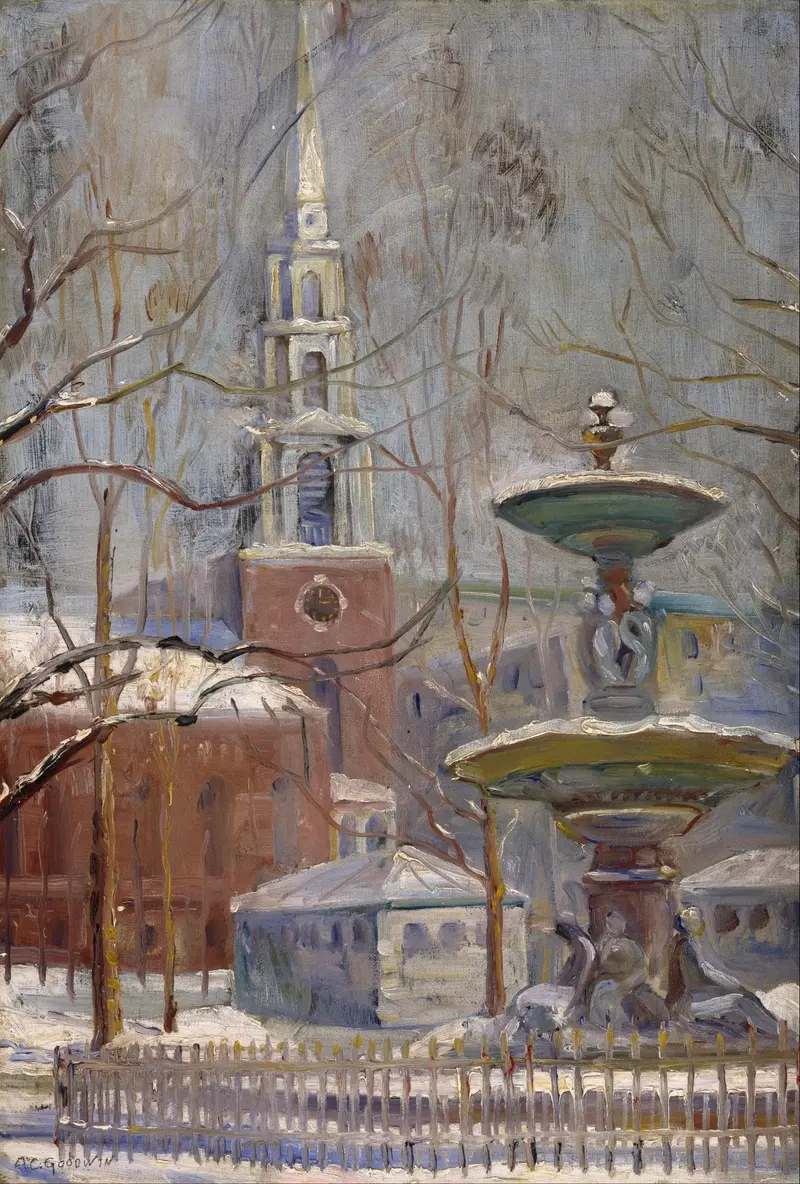
Park Street at Boston Commons
Arthur Clifton Goodwin
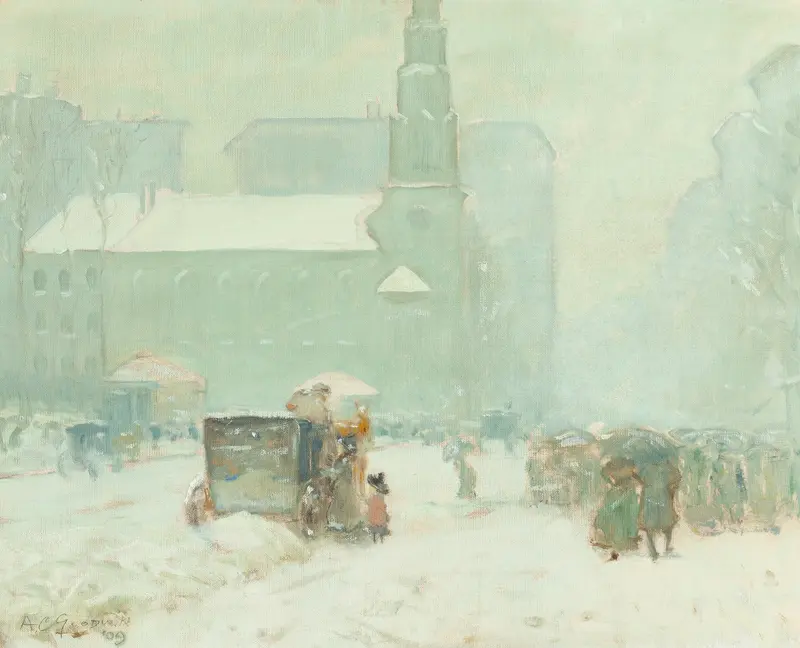
Park Street, Boston
Arthur Clifton Goodwin
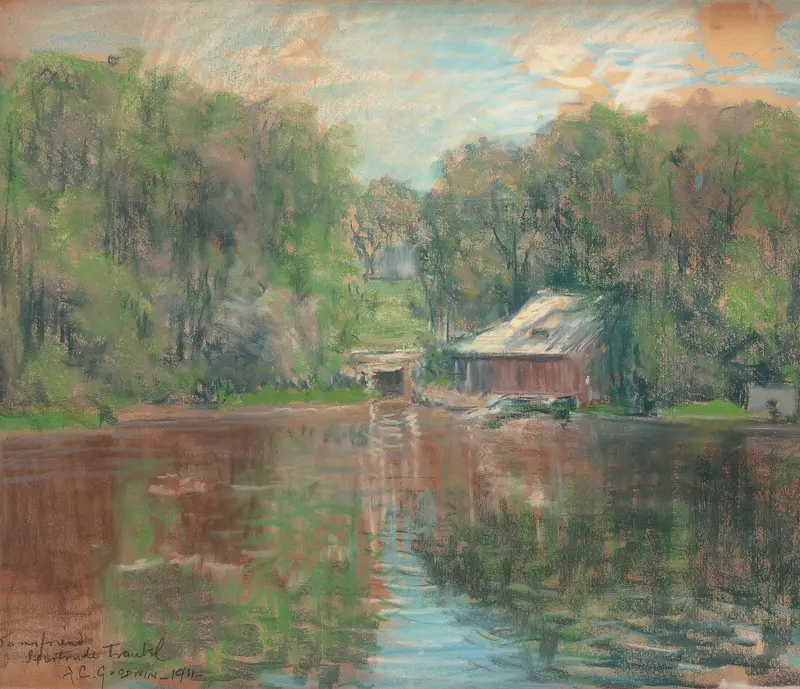
Boathouse by the Water
Arthur Clifton Goodwin
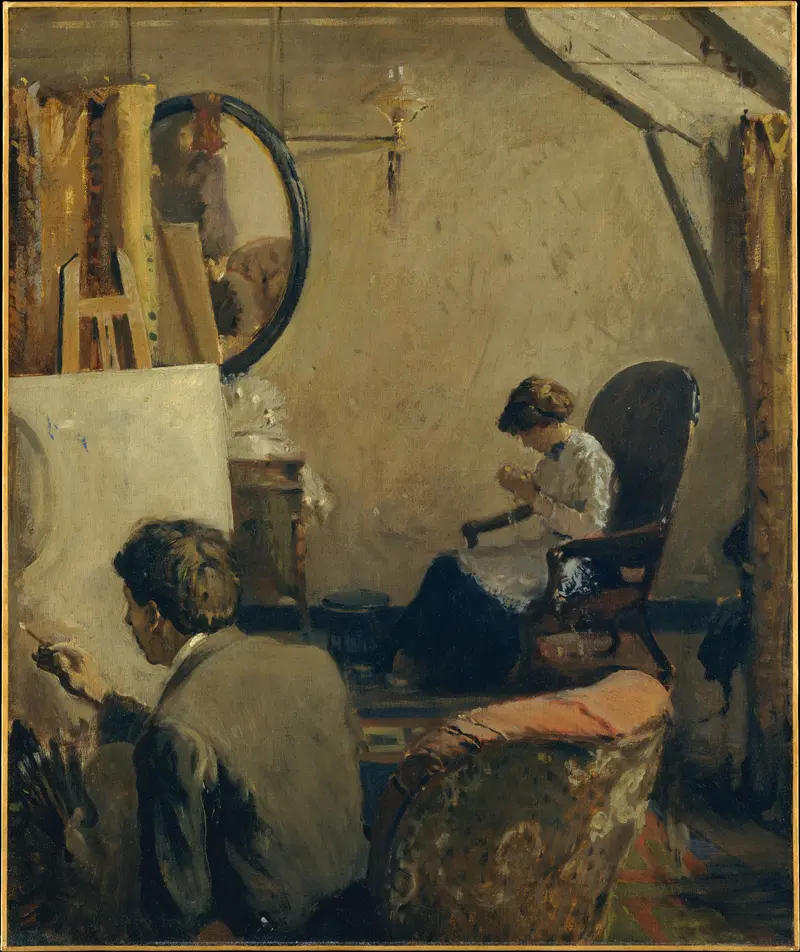
Louis Kronberg in His Studio in Copley Hall
Arthur Clifton Goodwin
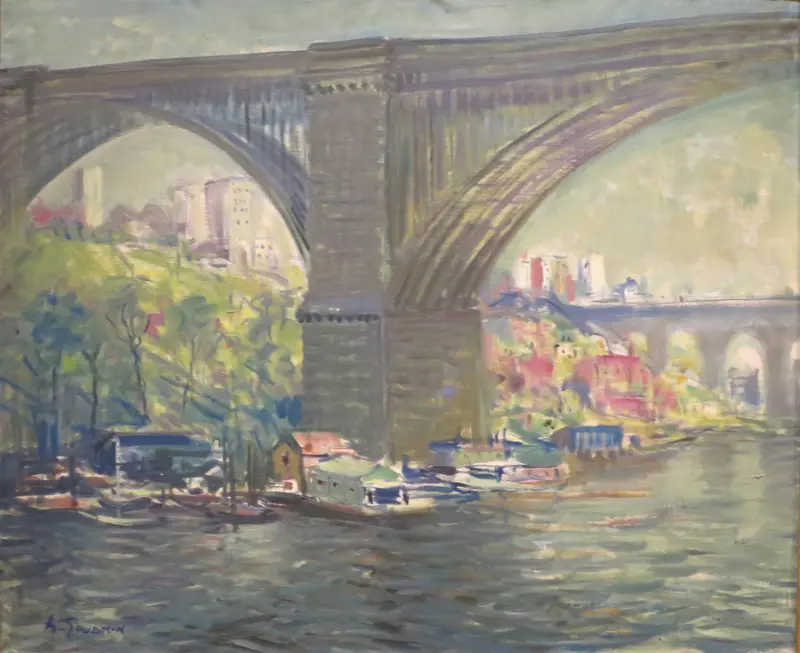
High Bridge
Arthur Clifton Goodwin
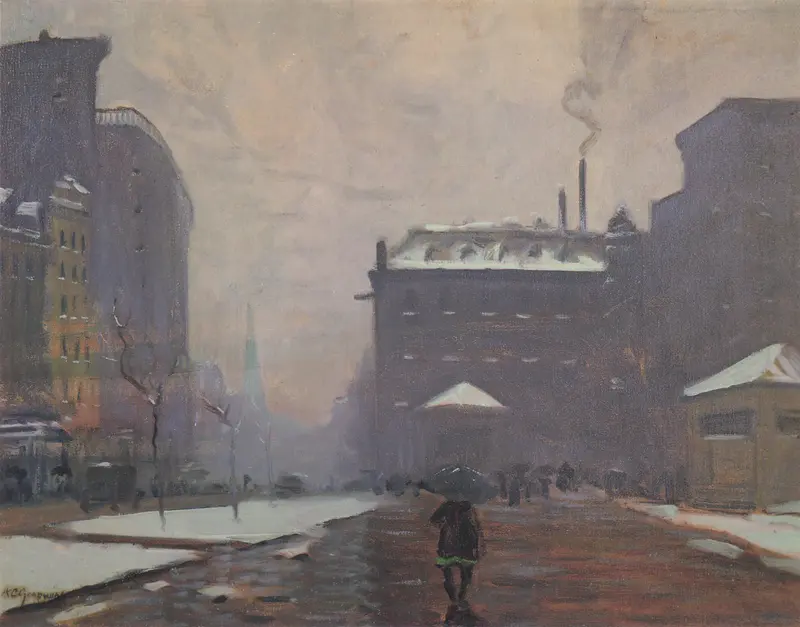
Tremont & Boylston Streets, Boston
Arthur Clifton Goodwin
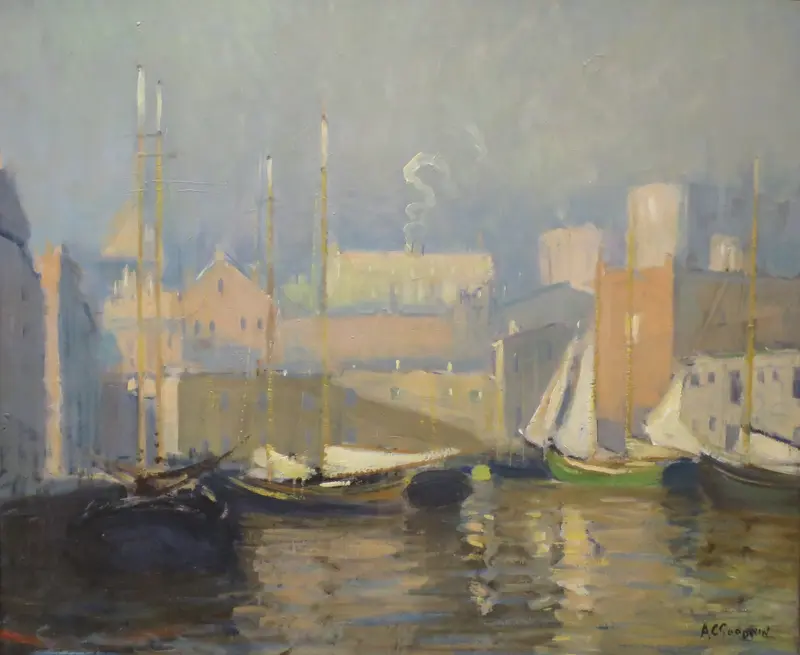
Tea Wharf, Boston
Arthur Clifton Goodwin





