
Tea Wharf, Boston — History & Facts
A haze of color and light floats over the water, drawing the viewer into the heart of Boston’s working harbor. In Tea Wharf, Boston, Arthur Clifton Goodwin chooses not to give us the crisp outlines of ships and warehouses, but instead lets atmosphere and reflection take the lead. The masts rise like faint exclamation points through the mist, while the water below shimmers with gold and blue, echoing the sky and the industry above.
The smoke curling from a distant rooftop is the only sign of movement, hinting at the bustle behind the stillness. Here, the city’s energy is suggested rather than declared, and the eye is left to wander, piecing together the forms from brushstrokes and light. Paintings of American harbors at the turn of the twentieth century often balanced between celebration and documentation. Artists like Goodwin—working in the wake of Impressionism—were drawn to the changing city, its new skylines and the play of light on water and stone.
Such works were rarely grand commissions; they were made for a growing middle class eager to see their world reflected in art, or for the artists themselves, fascinated by the fleeting effects of weather and industry. This particular painting, held in a private collection, is a testament to a moment when Boston’s waterfront was both a gateway to the world and a subject for modern painters. Look again at the soft edges and the way the colors bleed into one another: they are the marks of a city—and an artist—caught in transition.
More Artworks by Arthur Clifton Goodwin

View of the Brooklyn Bridge
Arthur Clifton Goodwin
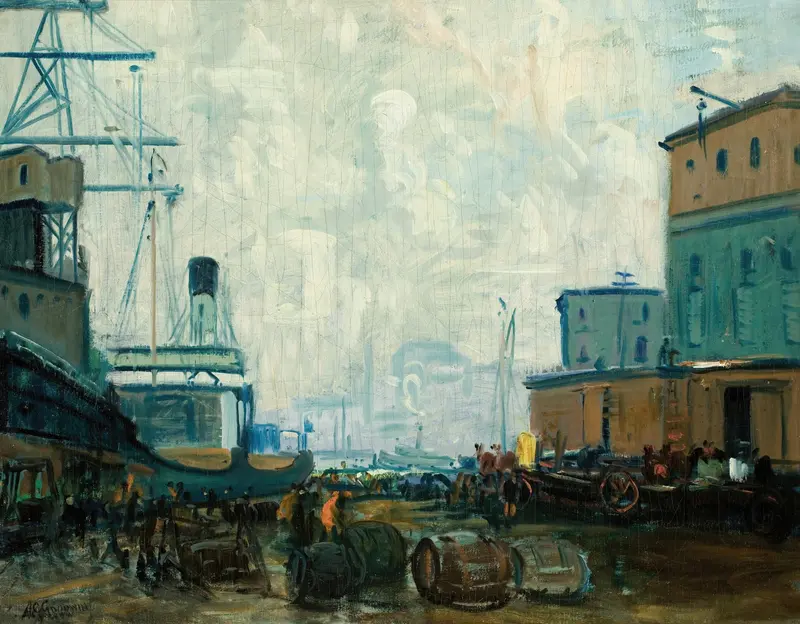
Dock Scene, Boston
Arthur Clifton Goodwin
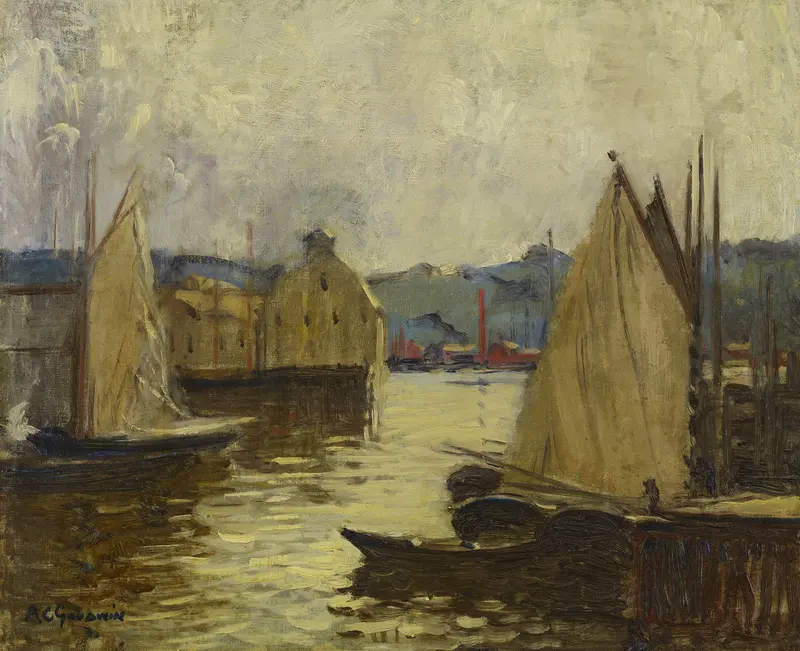
Gloucester Harbor
Arthur Clifton Goodwin
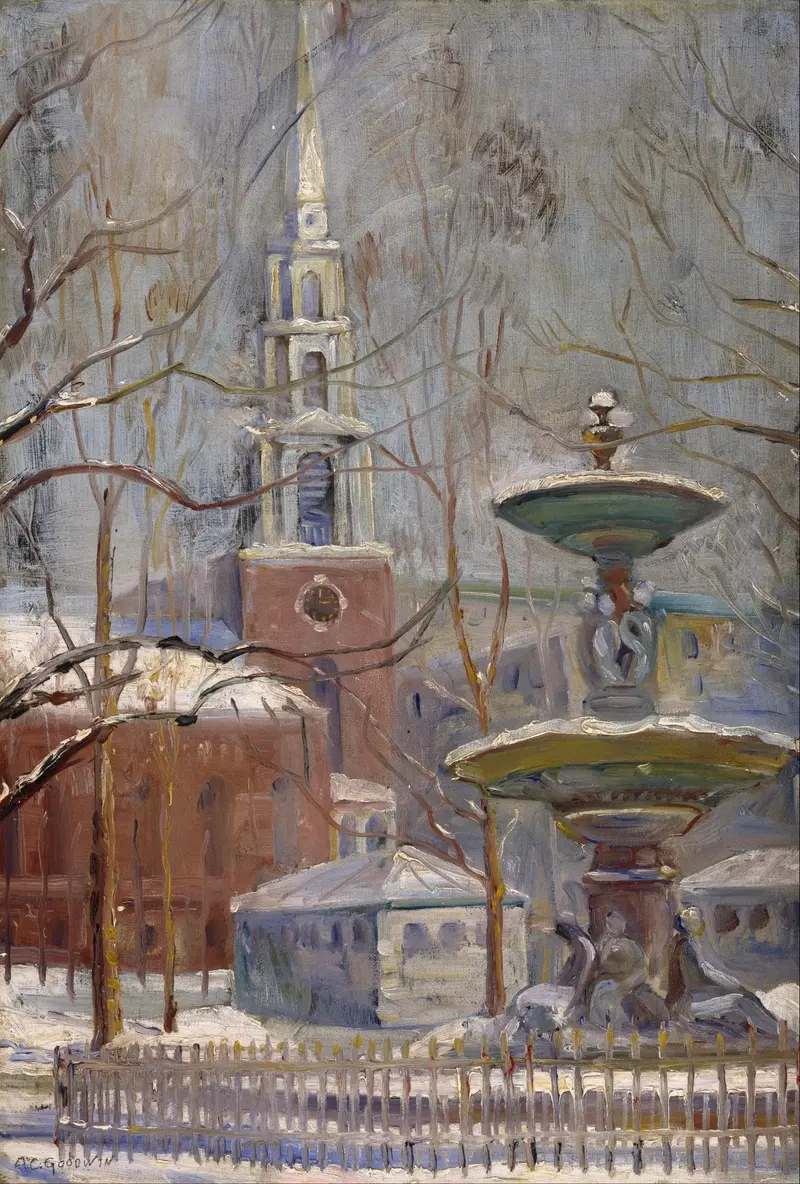
Park Street at Boston Commons
Arthur Clifton Goodwin
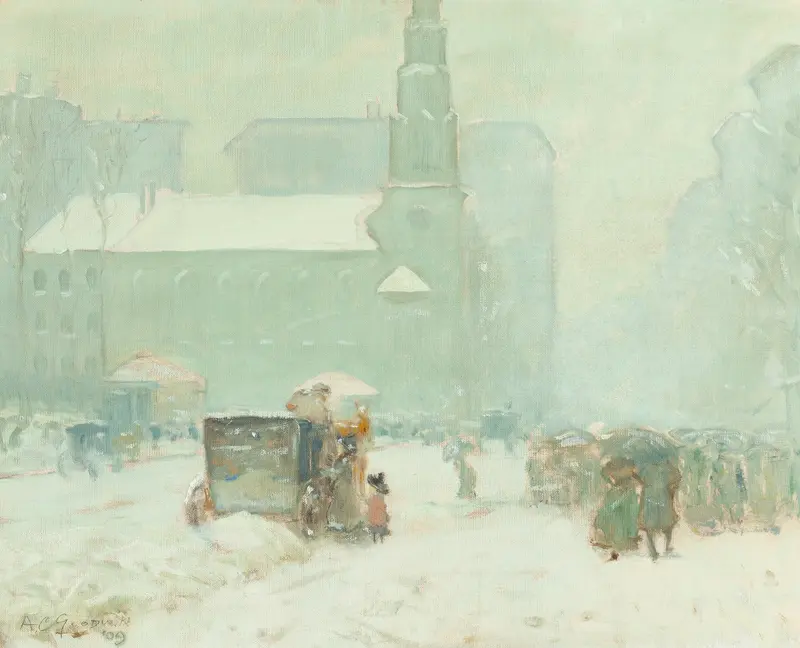
Park Street, Boston
Arthur Clifton Goodwin
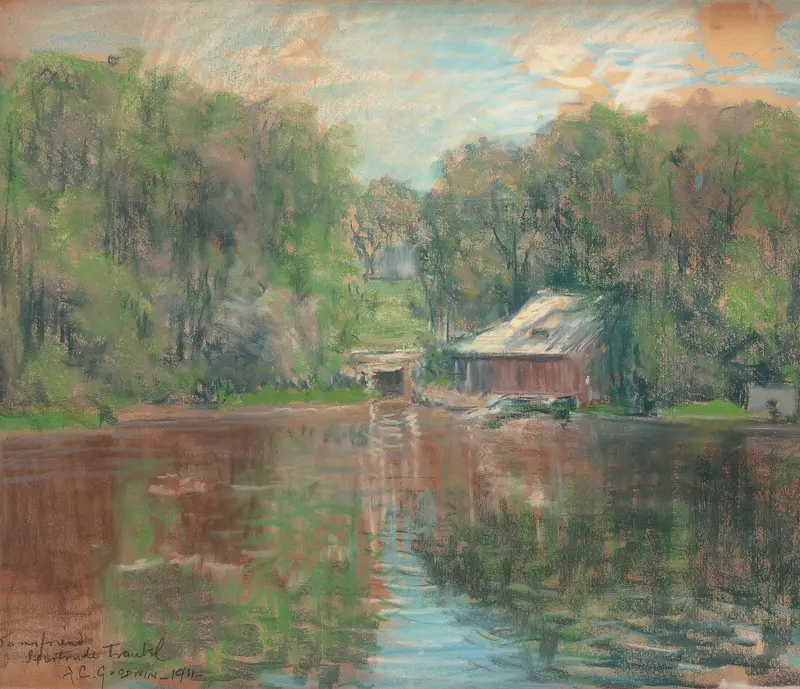
Boathouse by the Water
Arthur Clifton Goodwin
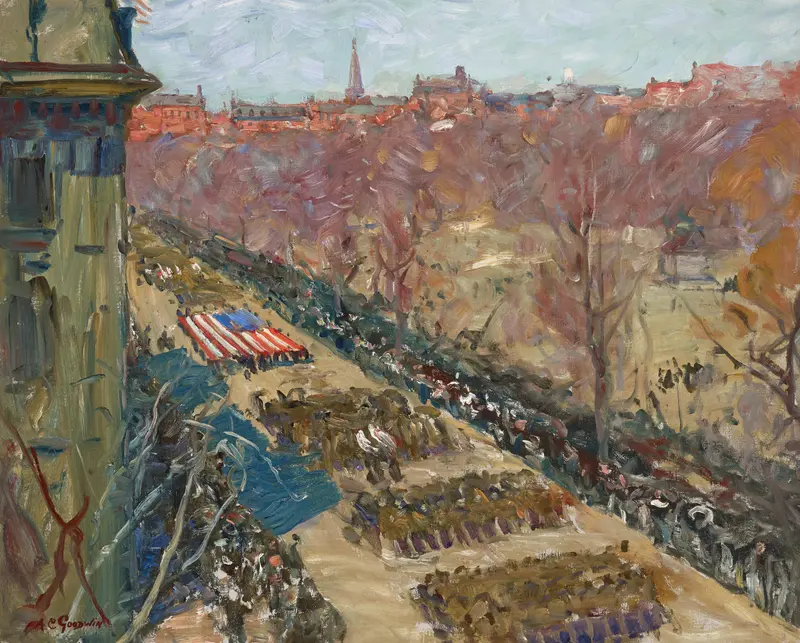
Liberty Loan Parade
Arthur Clifton Goodwin
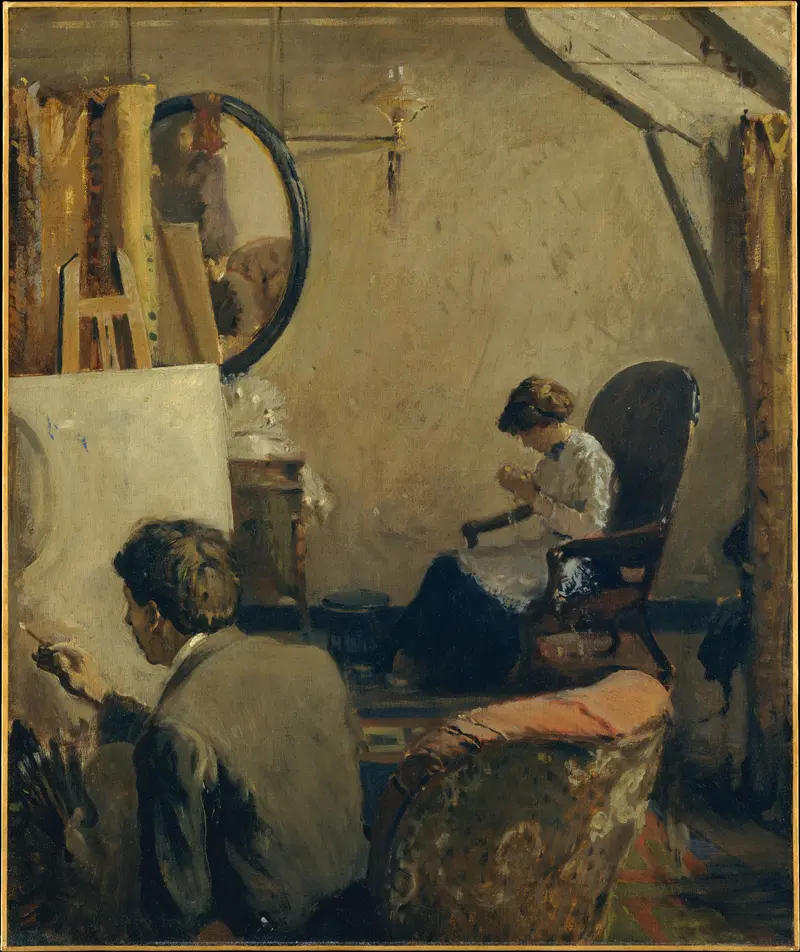
Louis Kronberg in His Studio in Copley Hall
Arthur Clifton Goodwin
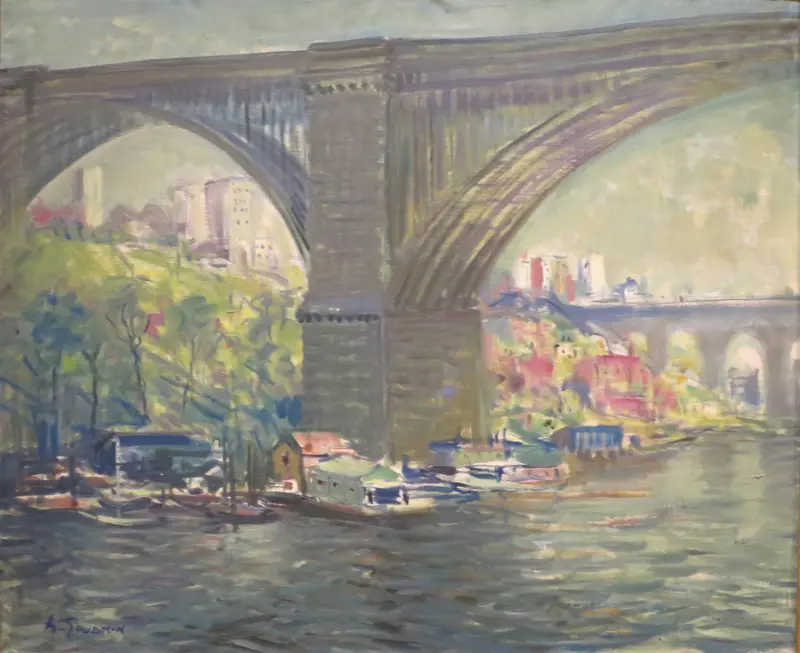
High Bridge
Arthur Clifton Goodwin
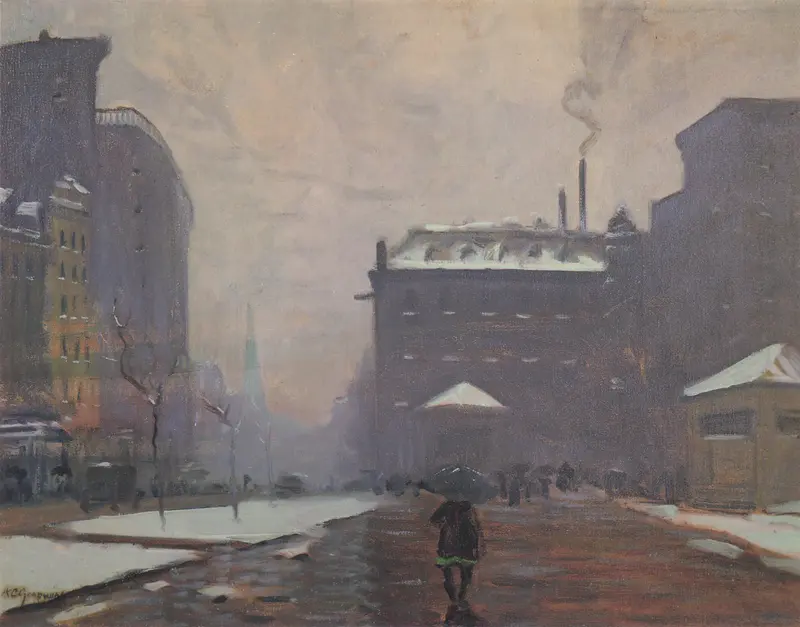
Tremont & Boylston Streets, Boston
Arthur Clifton Goodwin





