
Louis Kronberg in His Studio in Copley Hall — History & Facts
The hush of creative concentration fills this attic studio, where the painter’s world is both stage and sanctuary. Your eye is drawn first to the man at his easel, his hand poised mid-stroke, the brush an extension of his intent gaze. Light slants in from the upper right, carving out the angled beams and catching on the woman’s white blouse as she bends to her own quiet task.
The room is crowded but not cluttered—each object, from the patterned armchair to the oval mirror reflecting a sliver of the scene, seems chosen for its role in this intimate theater of making. The palette is muted, earthy, as if the dust of charcoal and oil paint has settled into the very fabric of the space, lending it a lived-in warmth. Painted around 1913, this studio interior belongs to a moment when American artists were forging their own identities, often looking to Europe but rooted in the rhythms of their own cities. Scenes like this—of artists at work, of quiet domesticity—were favored by painters who wanted to capture the texture of everyday life, not just its grand gestures.
Such works were rarely grand commissions; they were more often created for fellow artists, patrons with a taste for the personal, or simply for the artist’s own circle. Arthur Clifton Goodwin’s work, now in the collection of the Metropolitan Museum of Art, is one of those pieces history has left mostly unchronicled, but its quiet honesty invites us to linger, to imagine the stories that unfolded in that golden, paint-scented room.
More Artworks by Arthur Clifton Goodwin

View of the Brooklyn Bridge
Arthur Clifton Goodwin
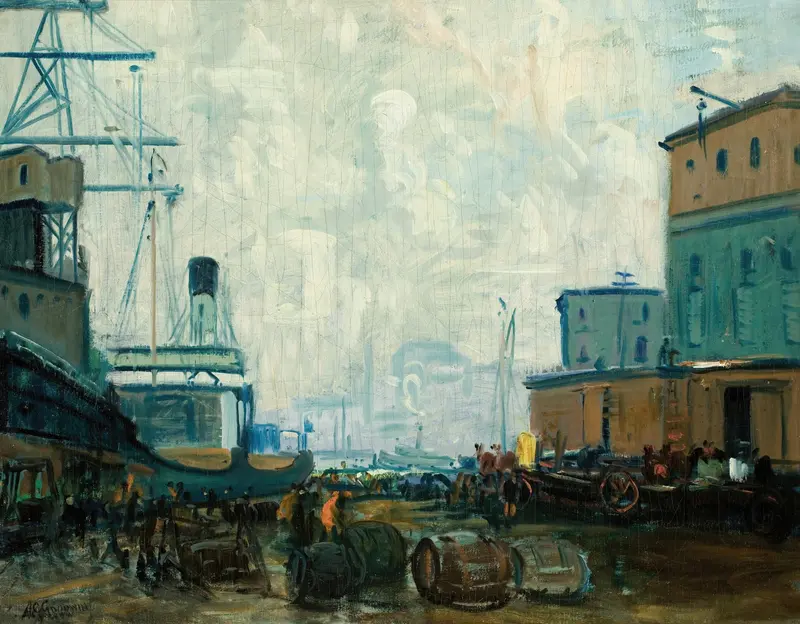
Dock Scene, Boston
Arthur Clifton Goodwin
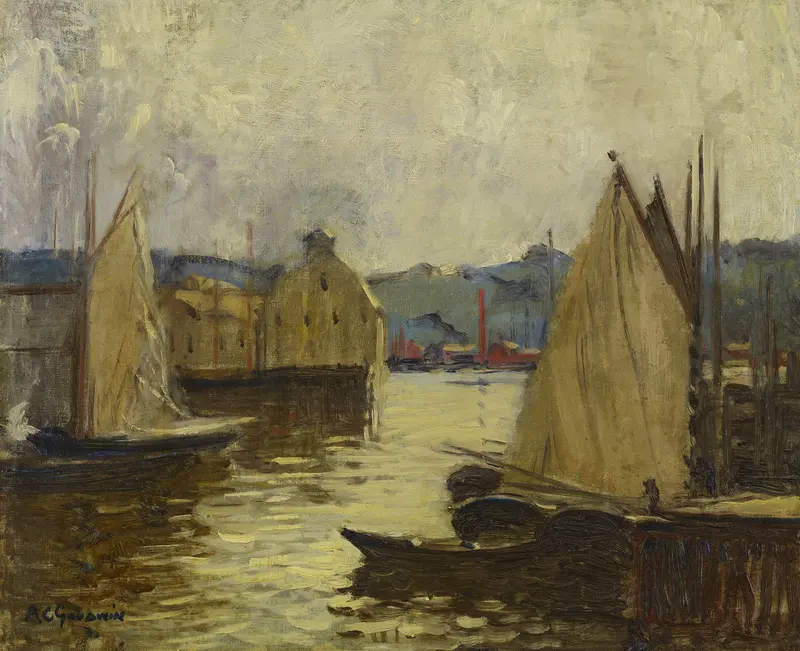
Gloucester Harbor
Arthur Clifton Goodwin
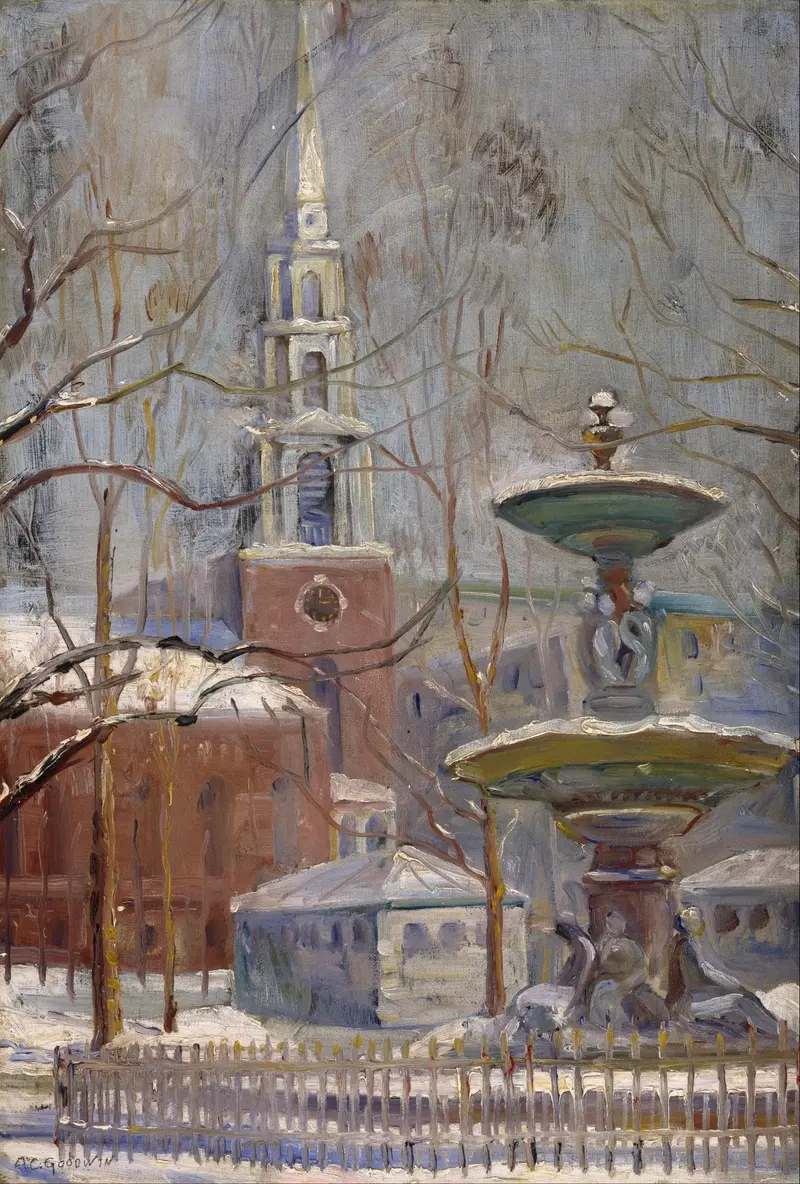
Park Street at Boston Commons
Arthur Clifton Goodwin
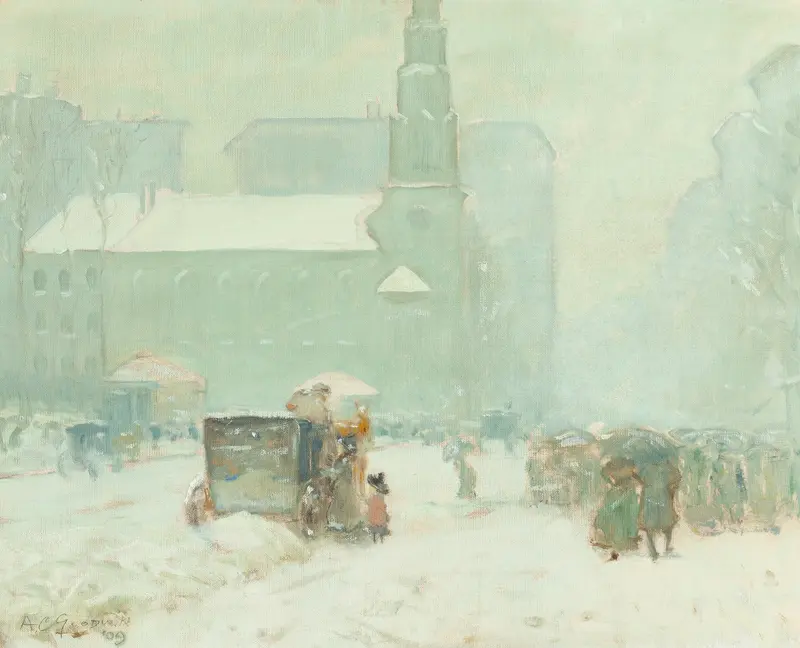
Park Street, Boston
Arthur Clifton Goodwin
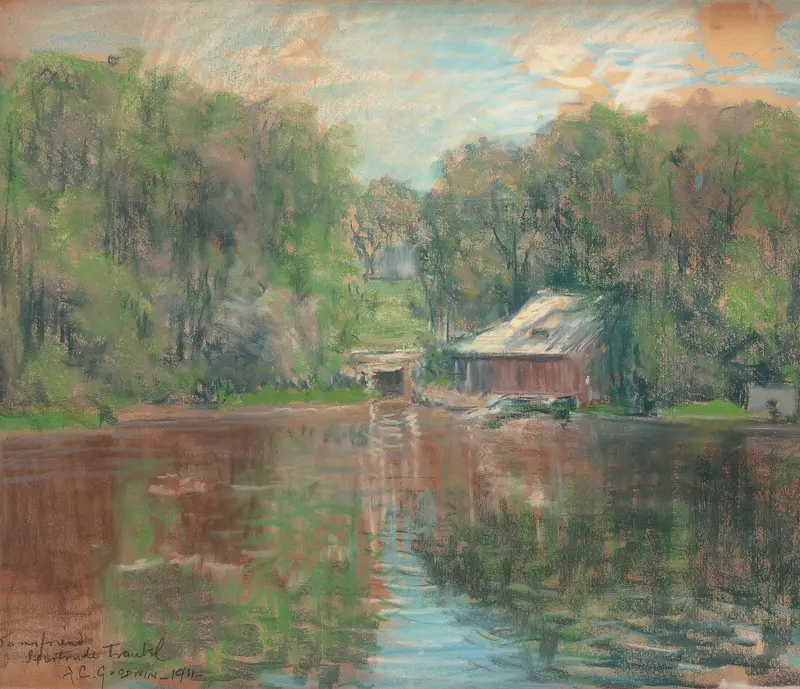
Boathouse by the Water
Arthur Clifton Goodwin
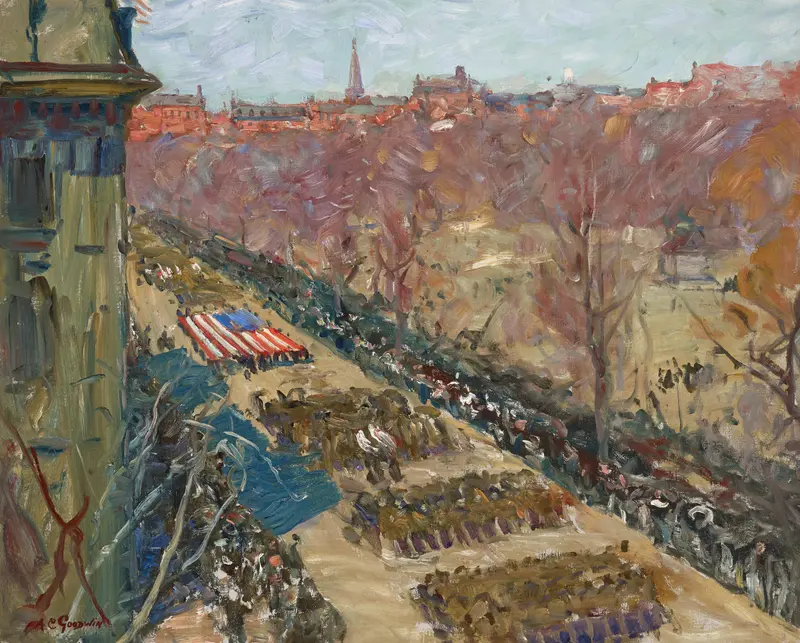
Liberty Loan Parade
Arthur Clifton Goodwin
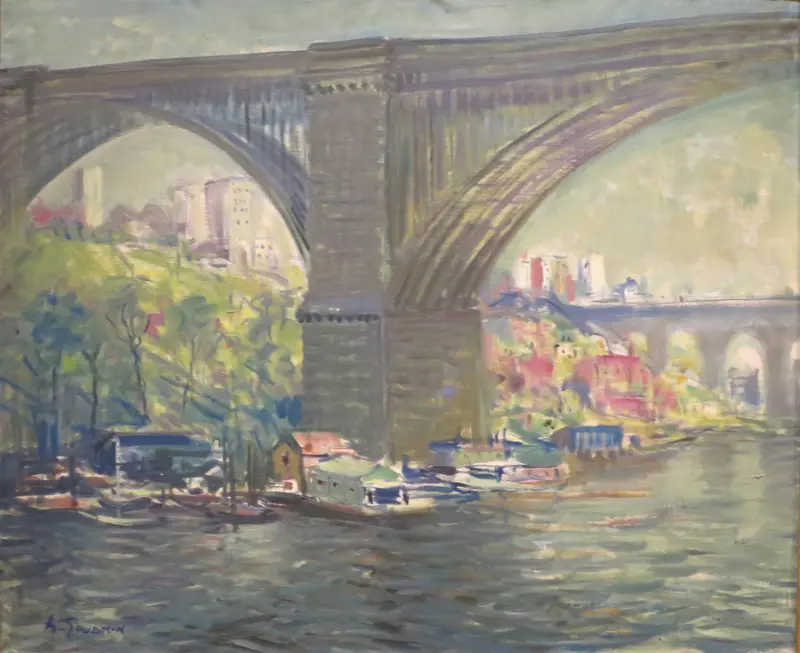
High Bridge
Arthur Clifton Goodwin
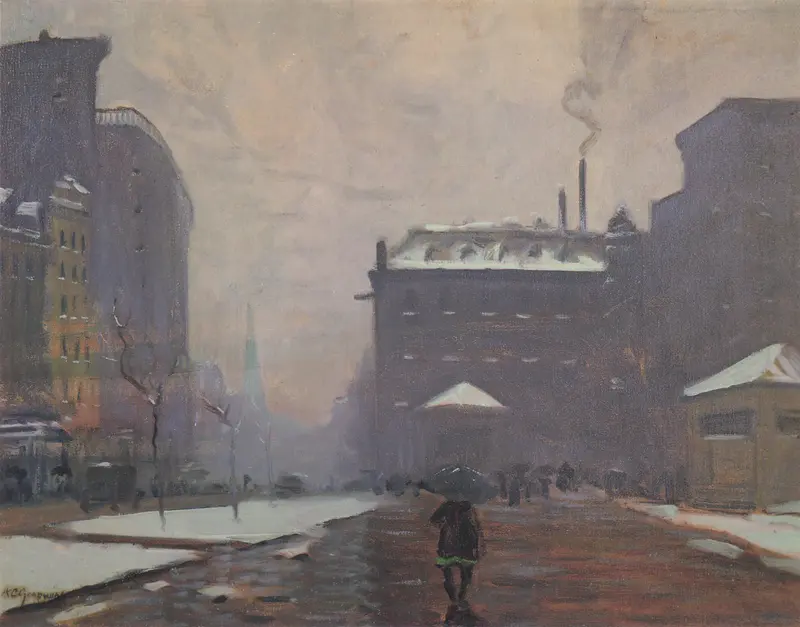
Tremont & Boylston Streets, Boston
Arthur Clifton Goodwin
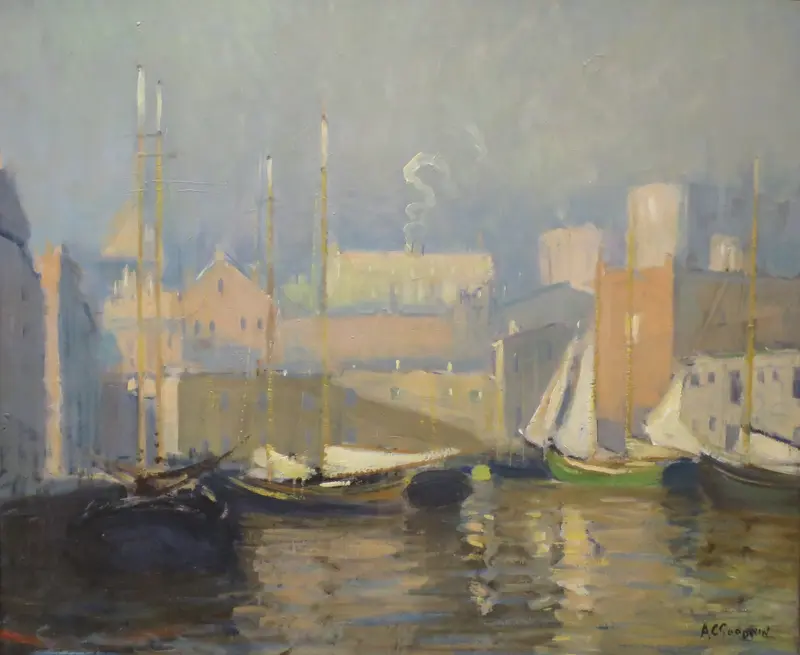
Tea Wharf, Boston
Arthur Clifton Goodwin





