
Holy Allegory — History & Facts
No one knows for certain what Holy Allegory by Giovanni Bellini truly means, and this enduring mystery has fascinated scholars for centuries. Unlike many of his contemporaries, Bellini left no written explanation, and no patron's records have surfaced to clarify its purpose. The painting’s enigmatic gathering of saints and children in a lush landscape has led to countless interpretations, from a vision of paradise to an allegory of the Church itself.
Its unusual composition and ambiguous symbolism have made it one of the most debated works of the late Quattrocento. Even Giorgio Vasari, writing decades later, could only note that Bellini "delighted in invention and in the veiling of meaning." The scene unfolds in a tranquil garden, where saints and holy children gather around the Virgin and Child, seated serenely beneath a classical loggia. Each figure is carefully individualized: Saint Catherine with her broken wheel, Saint Sebastian with arrows at his feet, and Saint Peter holding his keys.
The distant city and the gentle, golden light suggest a world suspended between heaven and earth. The figures do not interact, but their gazes and gestures create a silent dialogue, inviting the viewer to ponder their relationships. Unlike the dramatic narratives of Andrea Mantegna, Bellini’s brother-in-law, here the story is one of contemplation and spiritual harmony, rather than action. The exact origins of Holy Allegory remain uncertain, but it is generally dated to around 1490, a period when Bellini was at the height of his powers in Venice.
The painting may have been intended for a private patron or a small chapel, but no definitive commission has been traced. Over the centuries, it has traveled through various collections and was eventually acquired by the Uffizi Gallery in Florence, where it remains today. Its ambiguous meaning and innovative composition mark a turning point in Bellini’s career, reflecting the transition from the medieval to the Renaissance approach to sacred art.
More Artworks by Giovanni Bellini
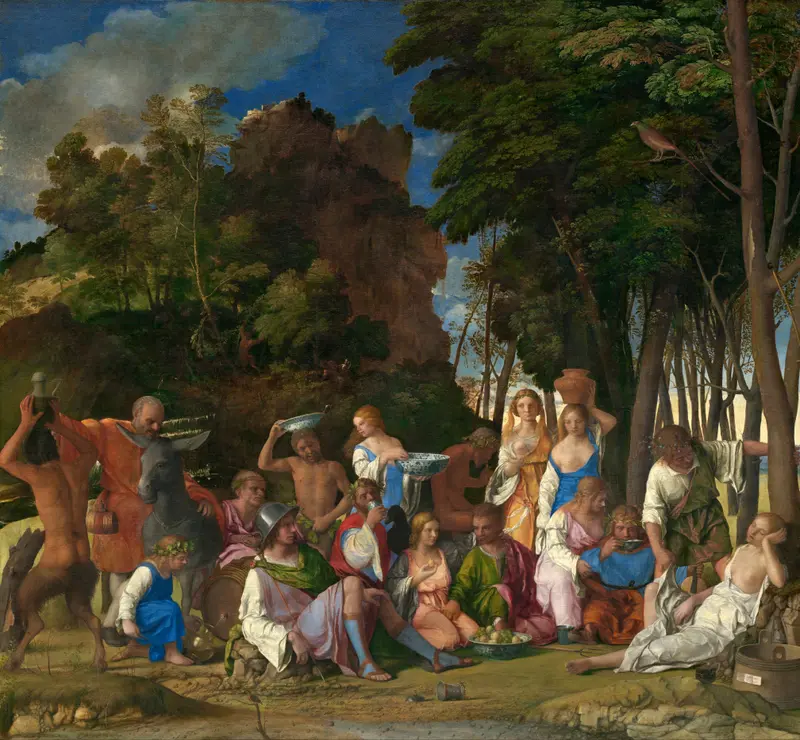
The Feast of the Gods
Giovanni Bellini

Madonna and Child enthroned with Saints and Angels
Giovanni Bellini
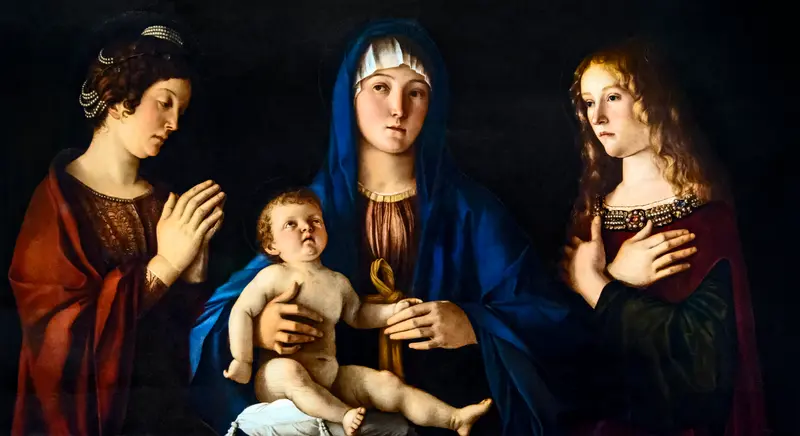
Madonna and Child between Saints Catherine and Mary Magdalene
Giovanni Bellini
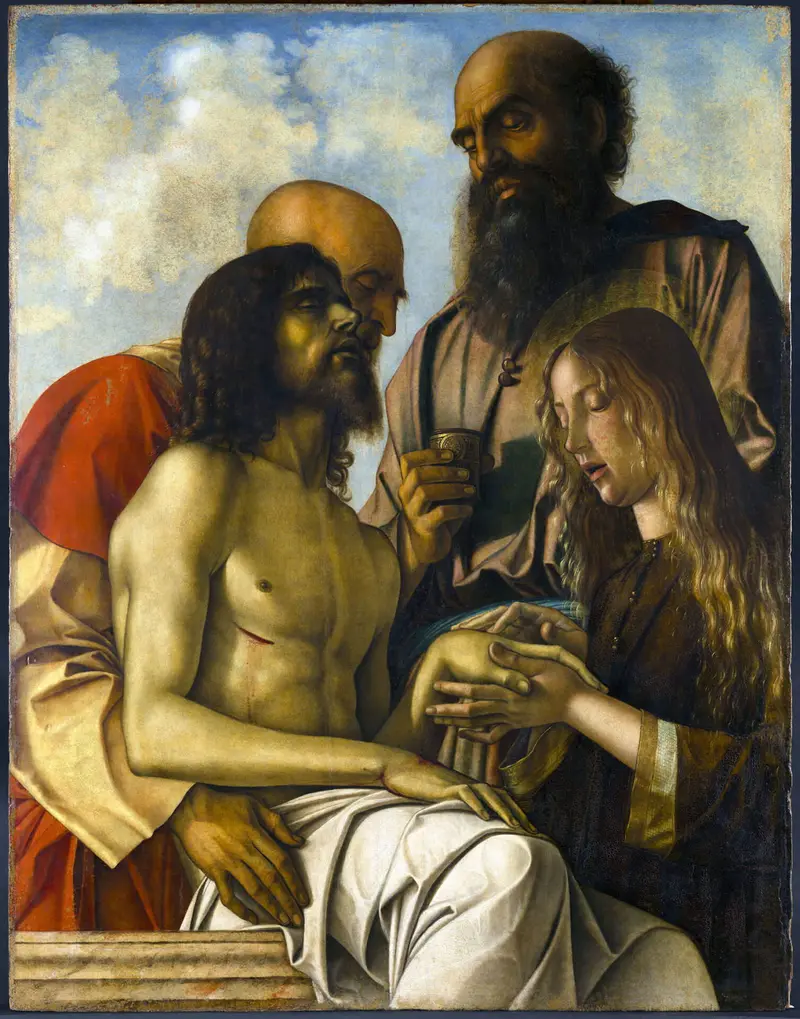
Lamentation over the Dead Christ
Giovanni Bellini
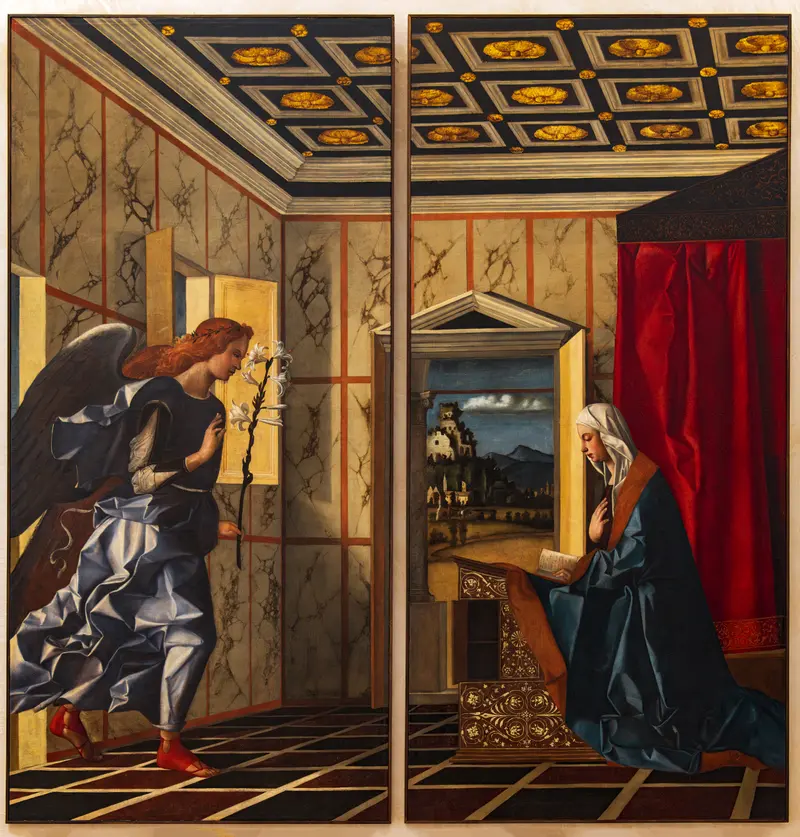
Annunciation
Giovanni Bellini
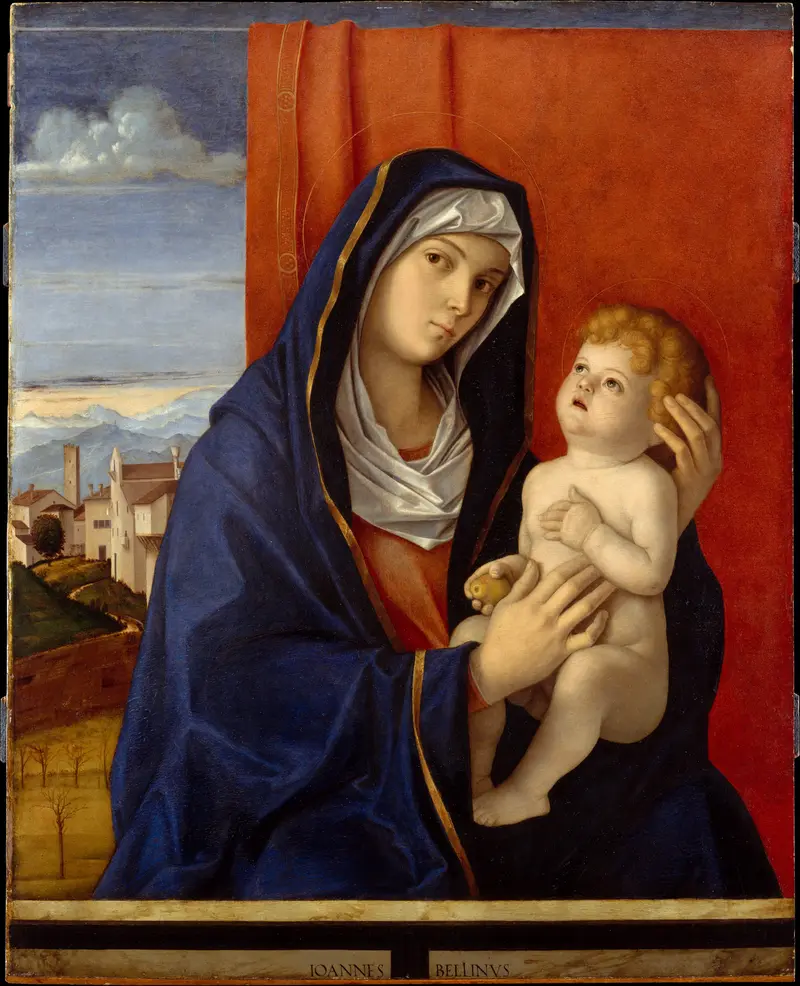
Madonna and Child
Giovanni Bellini
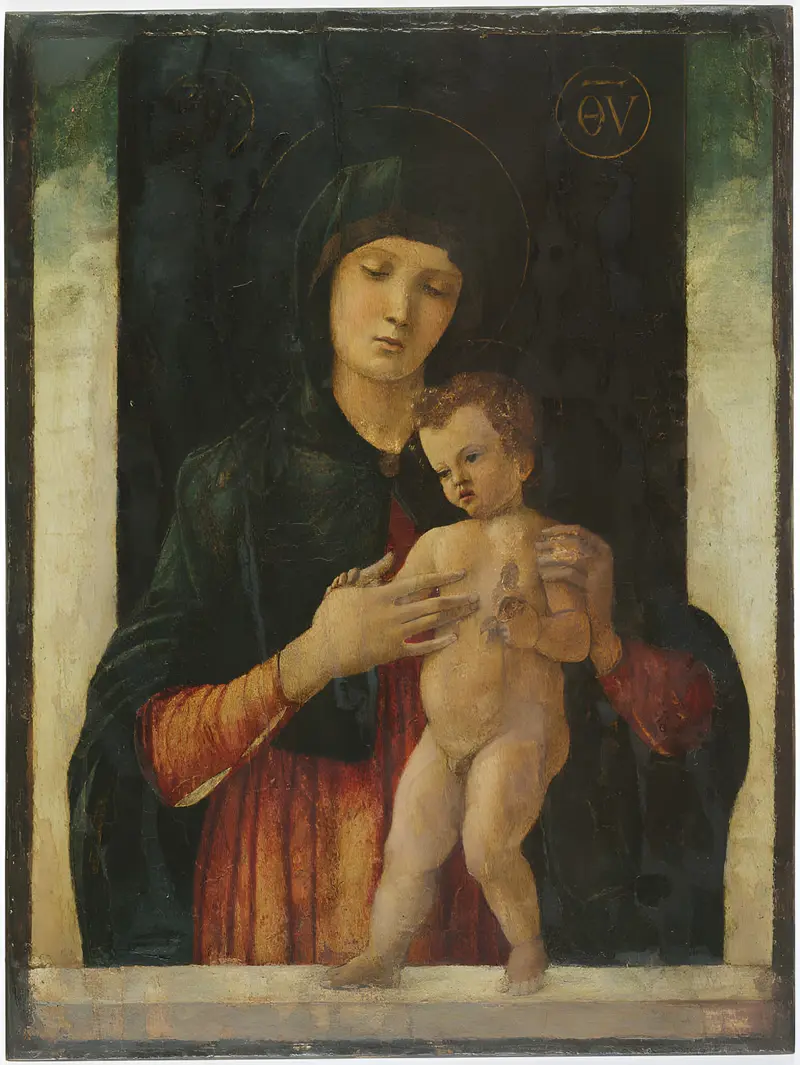
The Virgin and Child
Giovanni Bellini
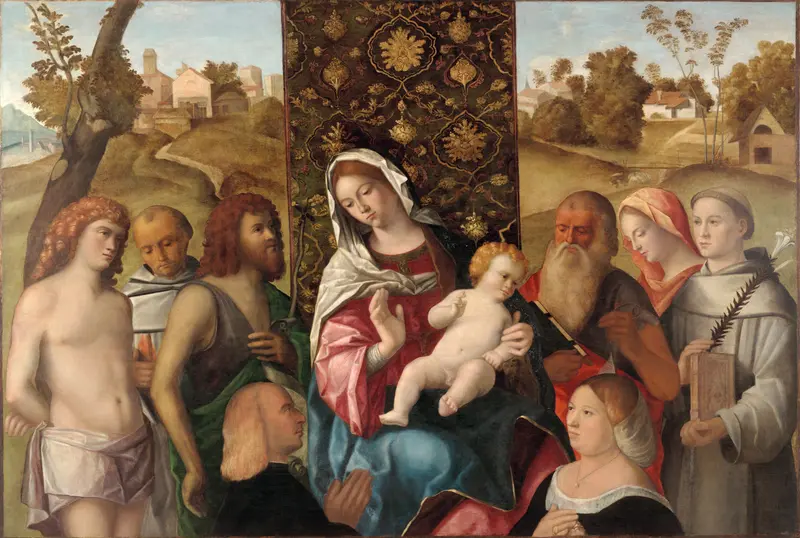
Virgin and Child with Saints Sebastian, Francis, John the Baptist, Jerome, an unidentified female saint, Saint Anthony of Padua and two donors
Giovanni Bellini
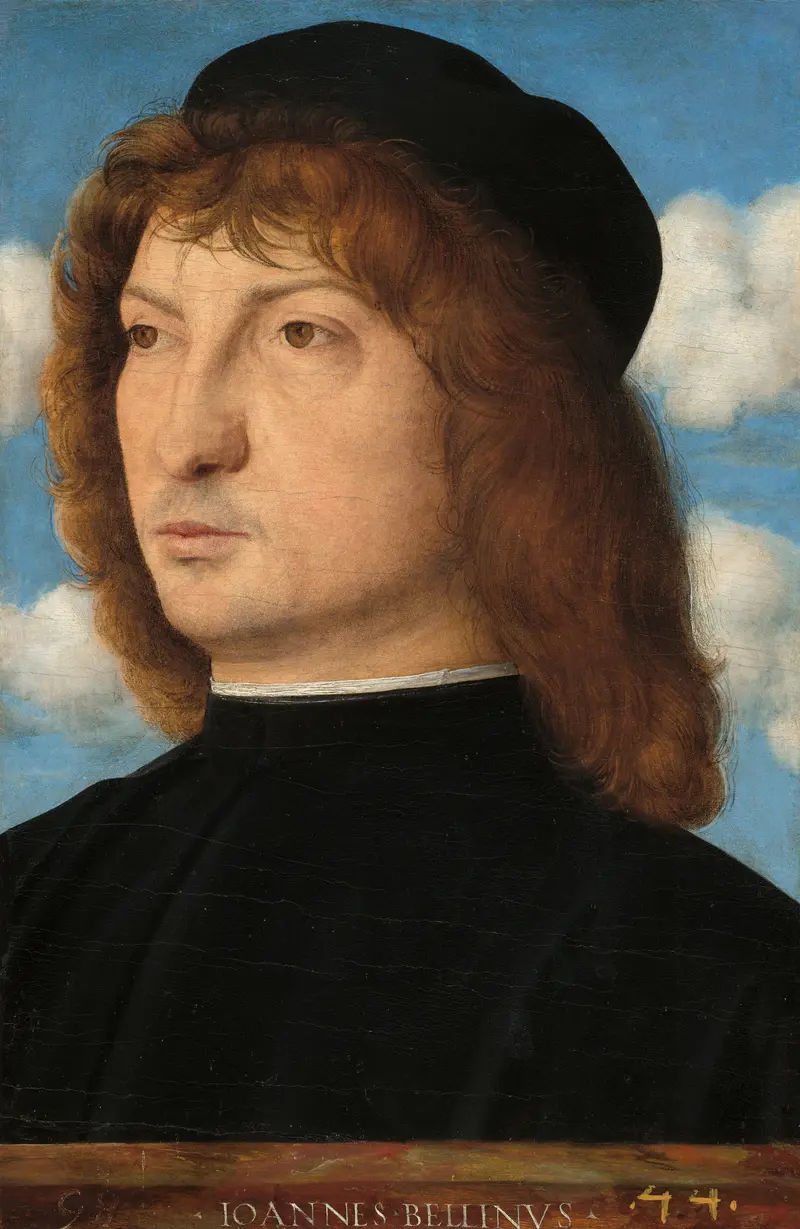
Portrait of a Venetian Gentleman
Giovanni Bellini
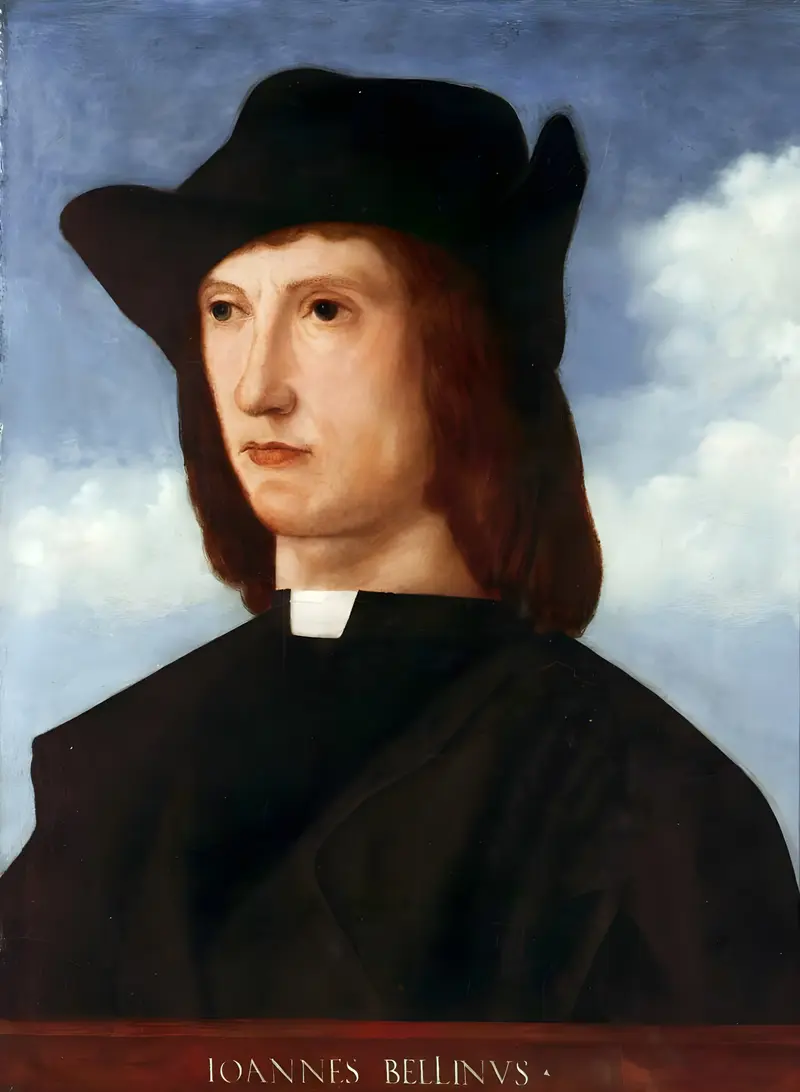
Portrait of a Young Man
Giovanni Bellini





