
Houten gevel in de Saucierstraat — History & Facts
In Houten gevel in de Saucierstraat, the quiet reverberations of life linger in the reflections adorning the wooden facade, inviting viewers to ponder what stories lie hidden within each layer of paint. Look to the left at the delicate interplay of shadow and light that dances across the wooden surface. The texture of the paint captures the grain of the wood, while warm ochres and muted browns whisper of time passing. Dujardin's meticulous attention to detail invites you to trace the contours of the architecture, revealing a world where craftsmanship meets the ever-changing climate of urban life. Beneath the surface, there is a tension between permanence and transience.
The wooden facade stands steadfast, yet the reflections hint at a world in motion—passersby, changing seasons, and the fleeting moments of daily life. This juxtaposition embodies a deeper emotional resonance, as the facade acts as a guardian of memories, sheltering the echoes of laughter and conversation that have come and gone. In 1837, Edward Dujardin painted this piece during a time of artistic exploration and burgeoning awareness of the urban landscape. Living in France, he was influenced by the Realist movement, which sought to capture everyday life with sincerity.
The work reflects the artist’s observations of his surroundings, emphasizing a moment in time that resonates with both nostalgia and the beauty of the ordinary.
More Artworks by Edward Dujardin
Browse all →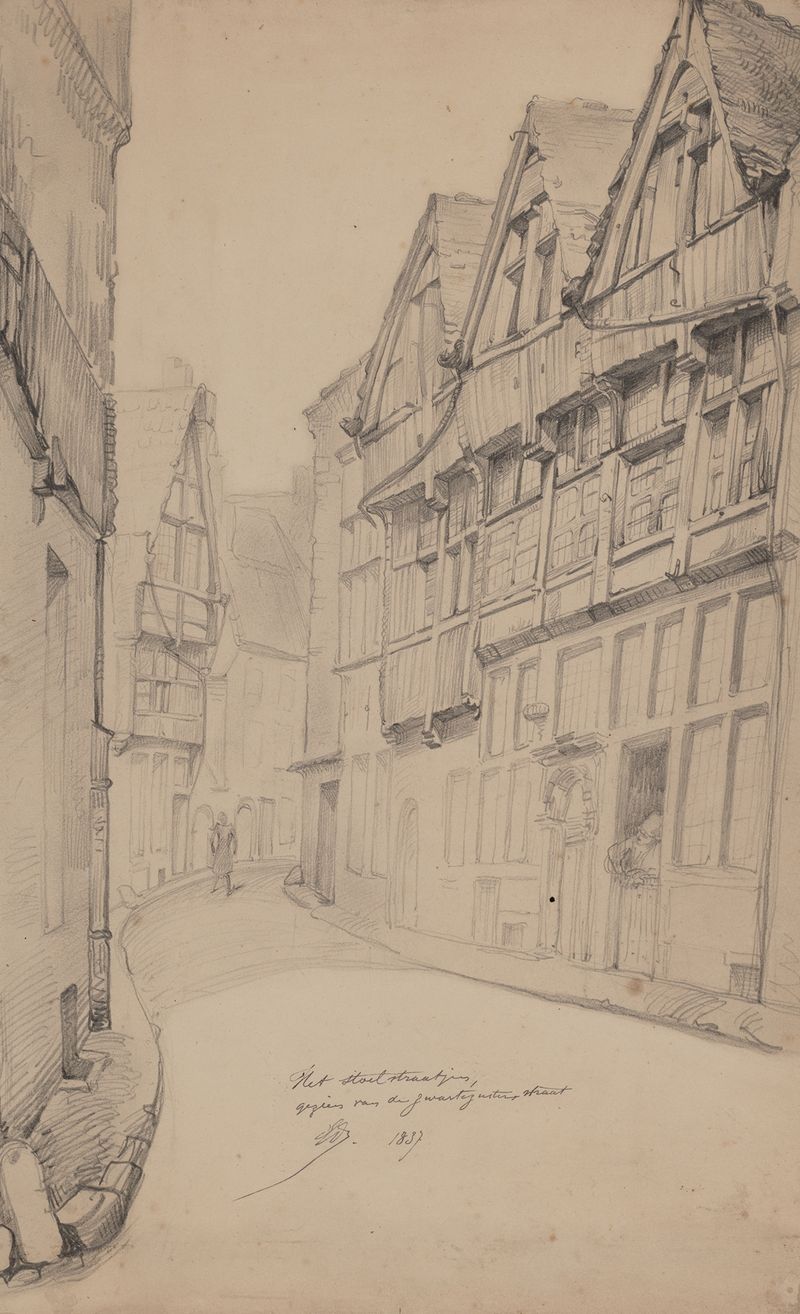
De Stoelstraat, gezien vanuit de Zwarte Zusterstraat
Edward Dujardin
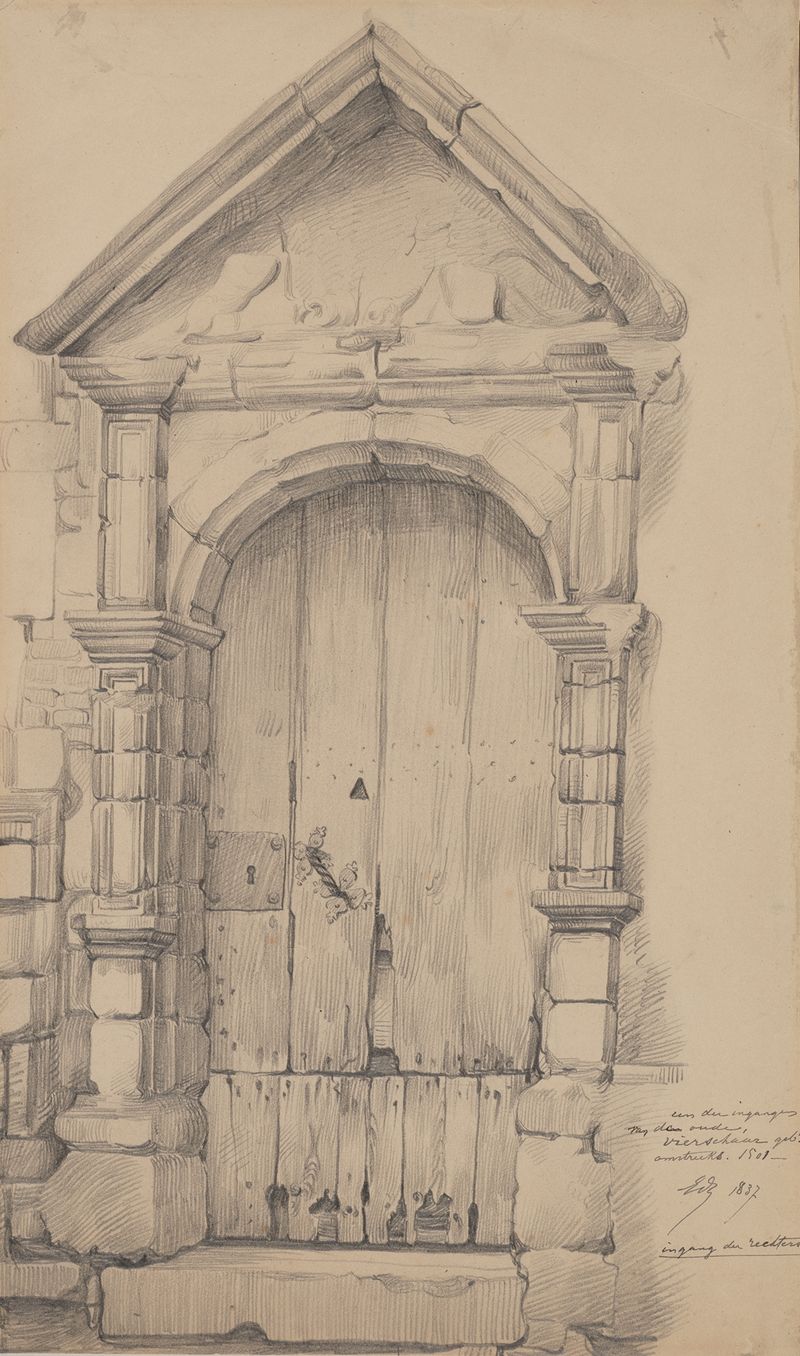
De ingang der rechters van de oude Vierschaar
Edward Dujardin
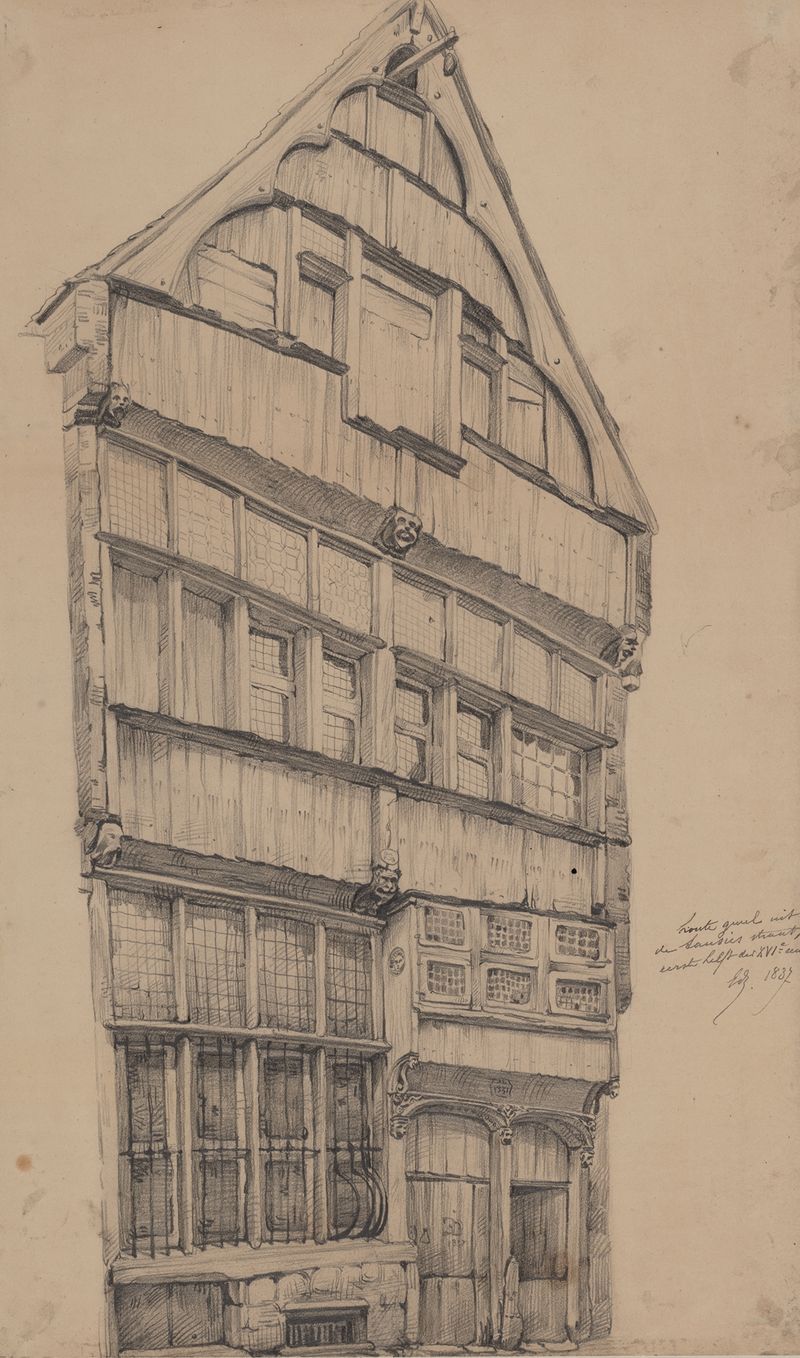
Houten gevel in de Saucierstraat.
Edward Dujardin
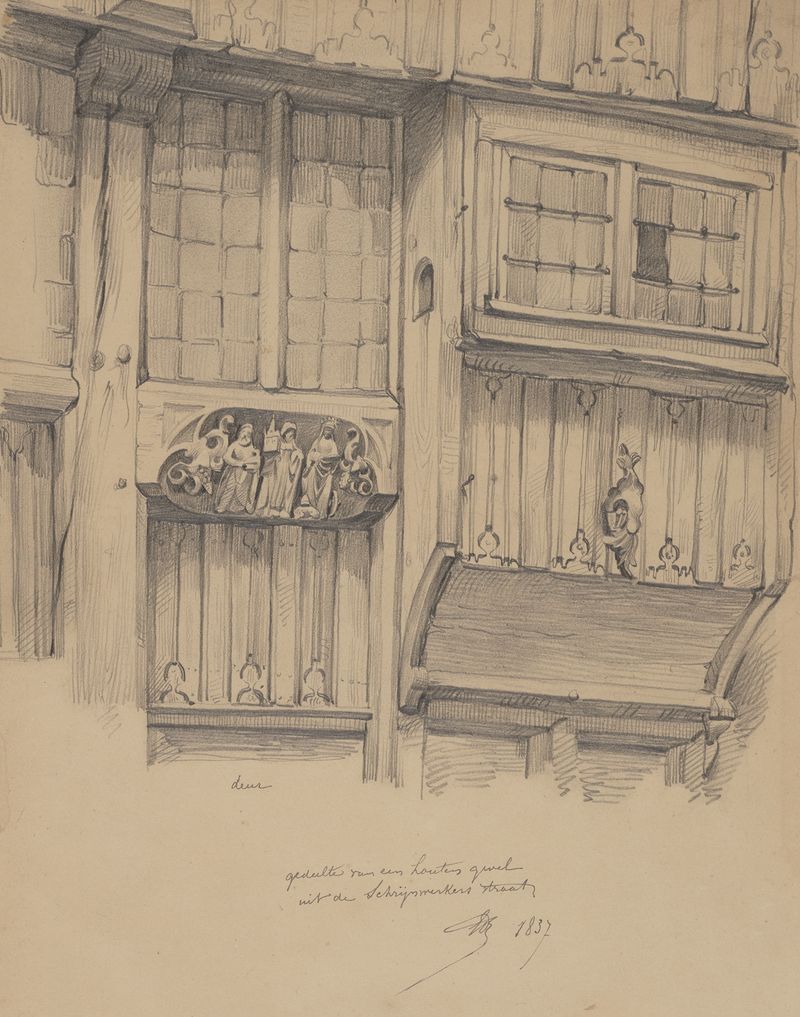
Gedeelte van een houten gevel uit de Schrijnwerkersstraat
Edward Dujardin
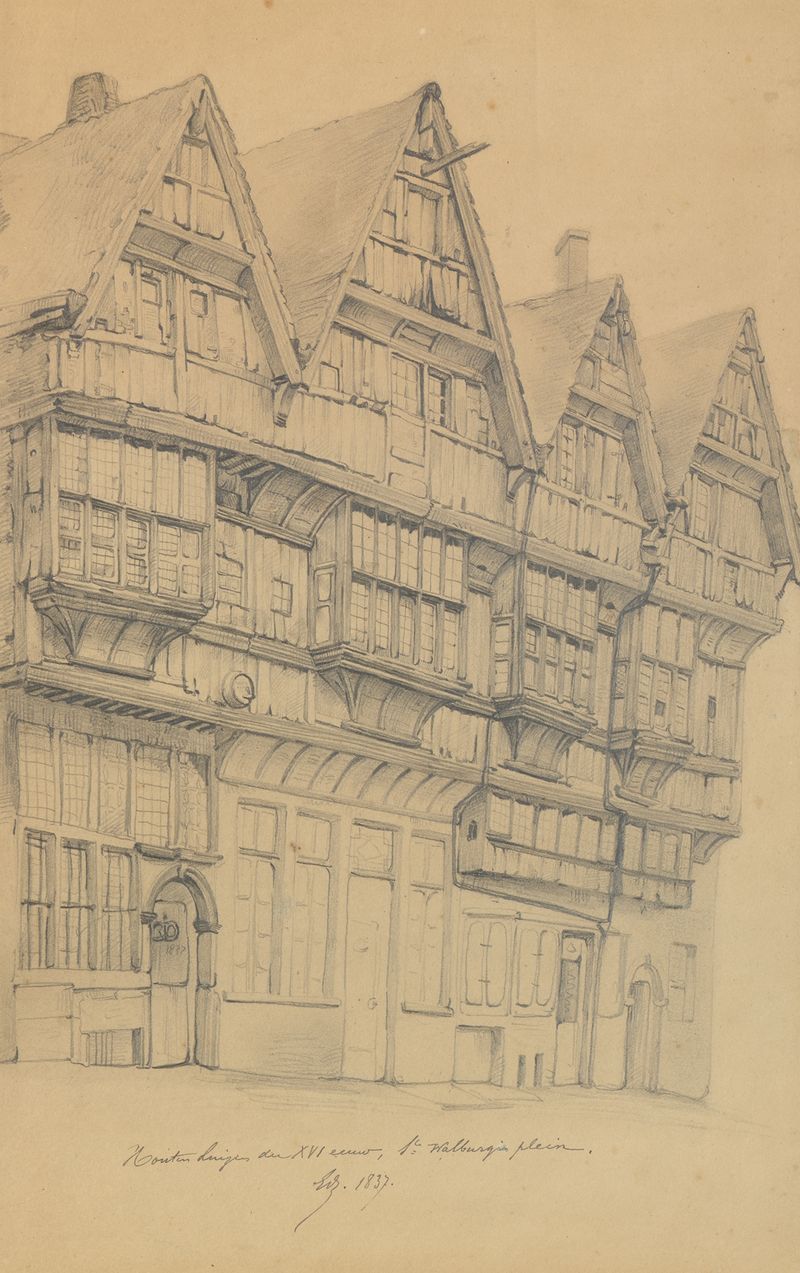
Houten huizen der XVI eeuw, Sint-Walburgisplein
Edward Dujardin
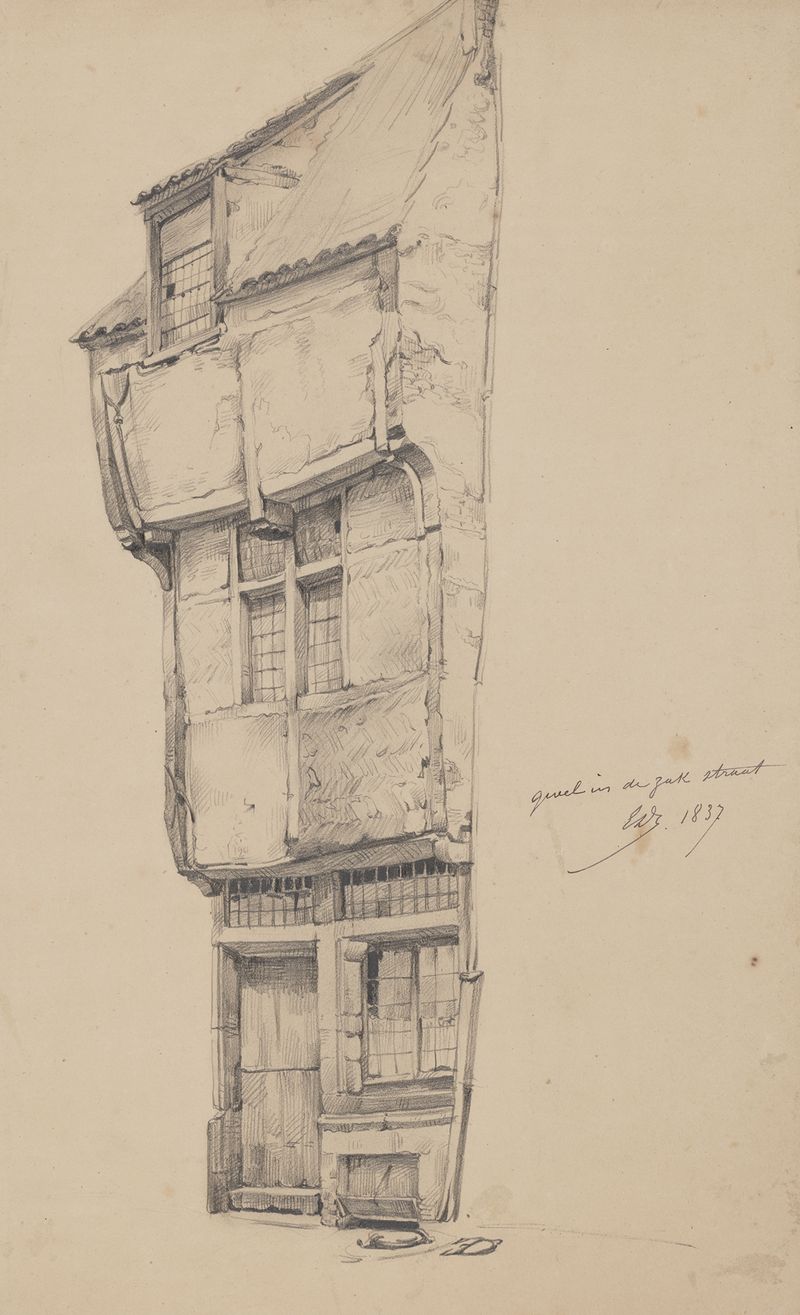
Gevel in de Zakstraat
Edward Dujardin
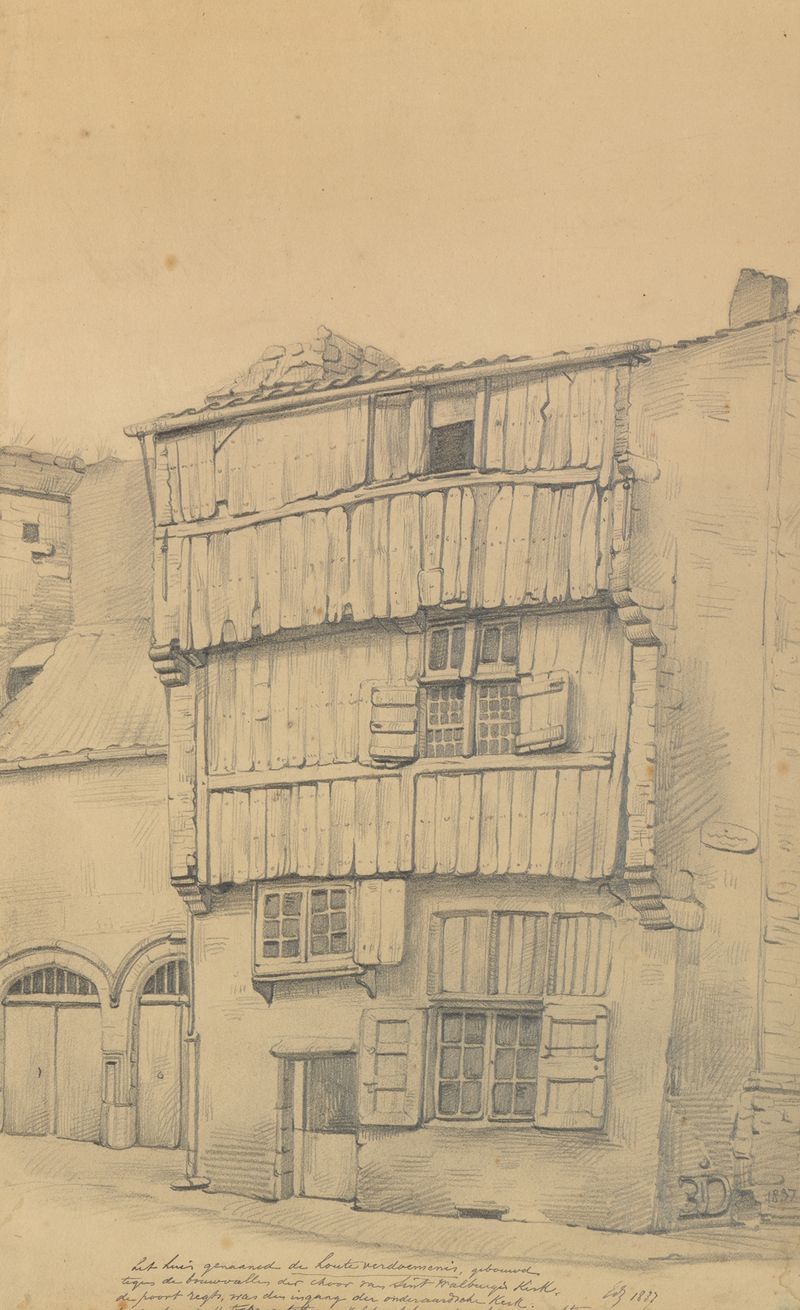
Het huis ‘De Houte Verdoemenis’, gebouwd tegen het koor van de Sint-Walburgiskerk
Edward Dujardin
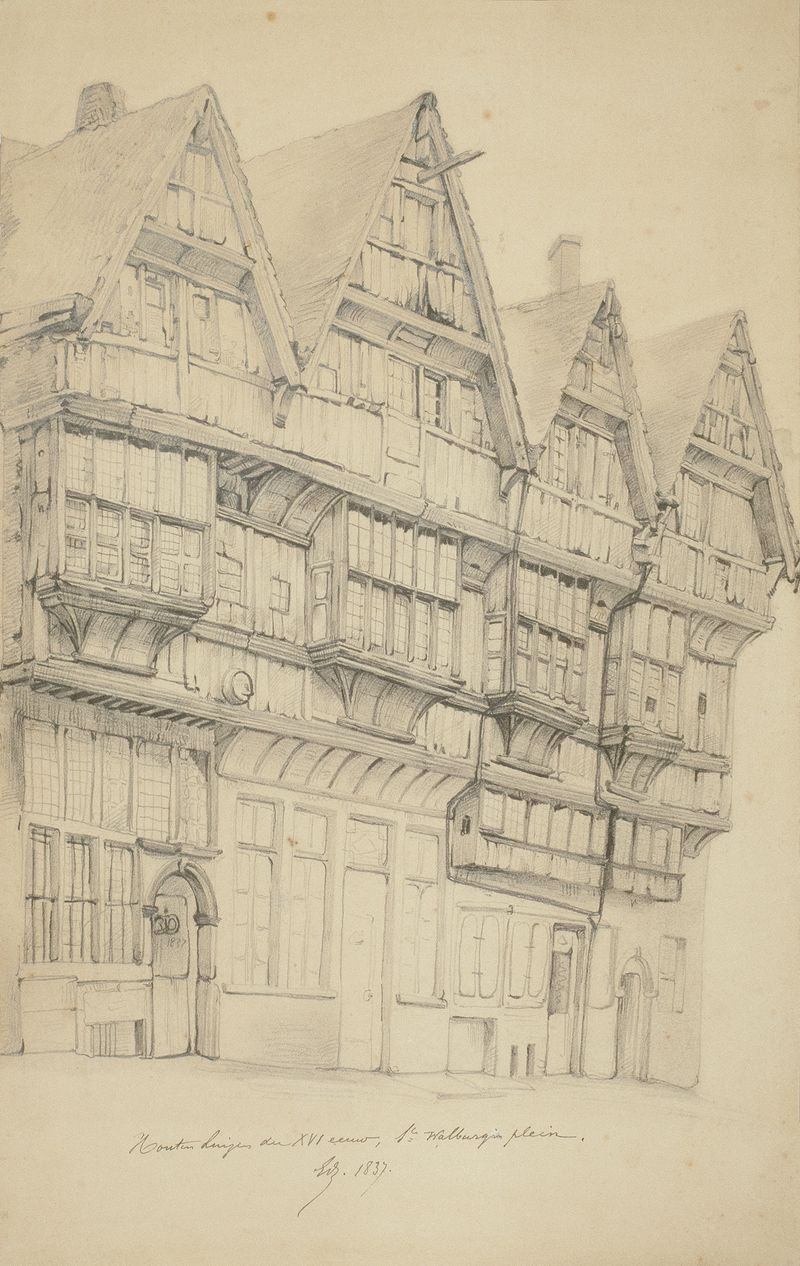
Houten huizen der XVI eeuw, Sint-Walburgisplein
Edward Dujardin

Ingangspoort van het Sint-Julianusgodshuis
Edward Dujardin
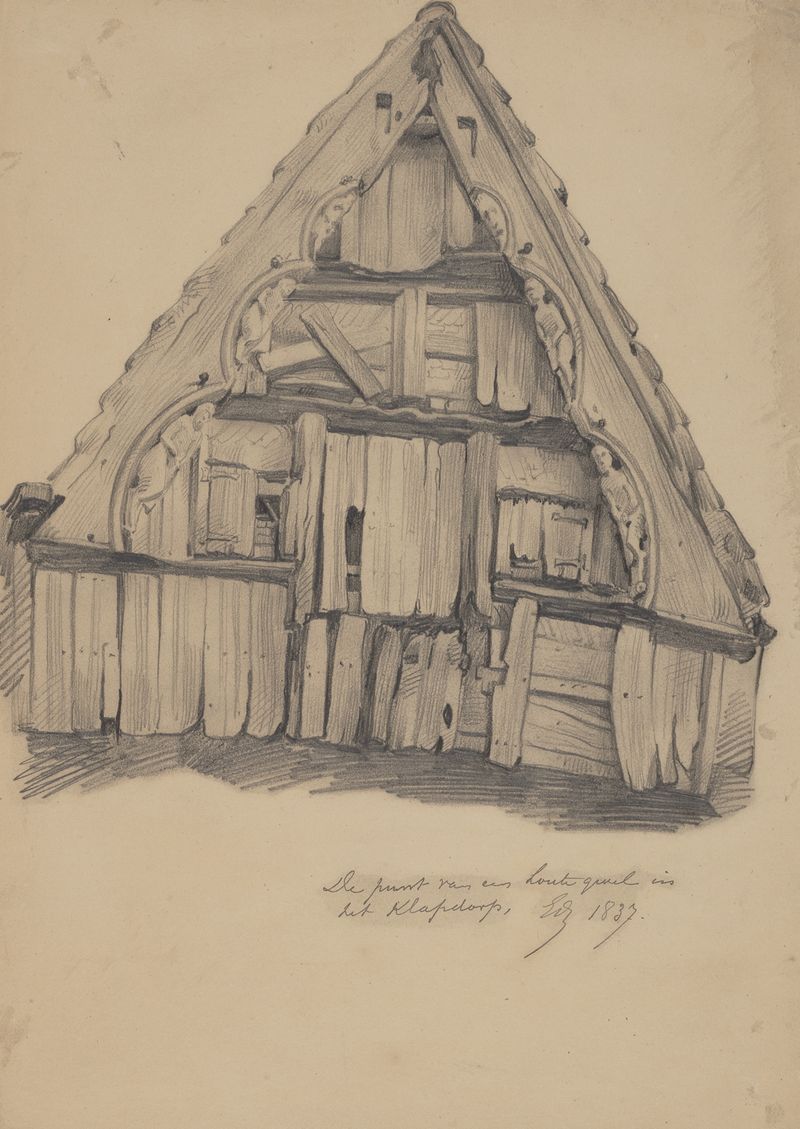
De punt van een houten gevel in het Klapdorp
Edward Dujardin
More Architecture Art
Browse all →
The statue of Liberty
Frédéric Auguste Bartholdi

View of Houses in Delft, Known as ‘The Little Street’
Johannes Vermeer

View of Houses in Delft, Known as ‘The Little Street’
Johannes Vermeer

The Cathedral in Rouen. The portal, Grey Weather
Claude Monet

The yellow house
Vincent van Gogh

The Church in Auvers-sur-Oise, View from the Chevet
Vincent van Gogh