
Houten gevel op de hoek van de Zwarte Zusterstraat en de Doornikstraat — History & Facts
Where does light end, and longing begin? In the quiet corners of Edward Dujardin's Houten gevel op de hoek van de Zwarte Zusterstraat en de Doornikstraat, the interplay of shadow and architecture invokes a profound sense of emptiness that resonates with the heart. Look to the left, where the wooden facade stands resolute yet worn, its textures speaking of time and solitude. Notice how the soft light washes over the surface, revealing deep crevices that echo the passage of years. The muted color palette, dominated by earthy browns and soft grays, draws the eye upward along the gentle slope of the roof, accentuating the building's angularity and inviting a sense of stillness.
Every brushstroke feels deliberate, a whisper of the world beyond the frame. In this still moment, we encounter contrasts that extend beyond the physical. The solidness of the building exudes a stark sense of permanence, yet the light that dances upon it hints at transience and the ephemeral nature of existence. The absence of human presence amplifies the feeling of longing, as if the structure itself yearns for stories past and lives lived within its walls.
It’s a poignant reminder of solitude and the silent echoes of time spent waiting. Dujardin created this work in 1837 during a period of growing interest in realism and urban landscapes. Living in Brussels, he was influenced by his contemporaries who captured the world around them with a keen eye for detail. This painting illustrates the tension between the solidity of architecture and the emotional resonance of absence, reflecting both his artistic exploration and the broader thematic currents within the art world at that time.
More Artworks by Edward Dujardin
Browse all →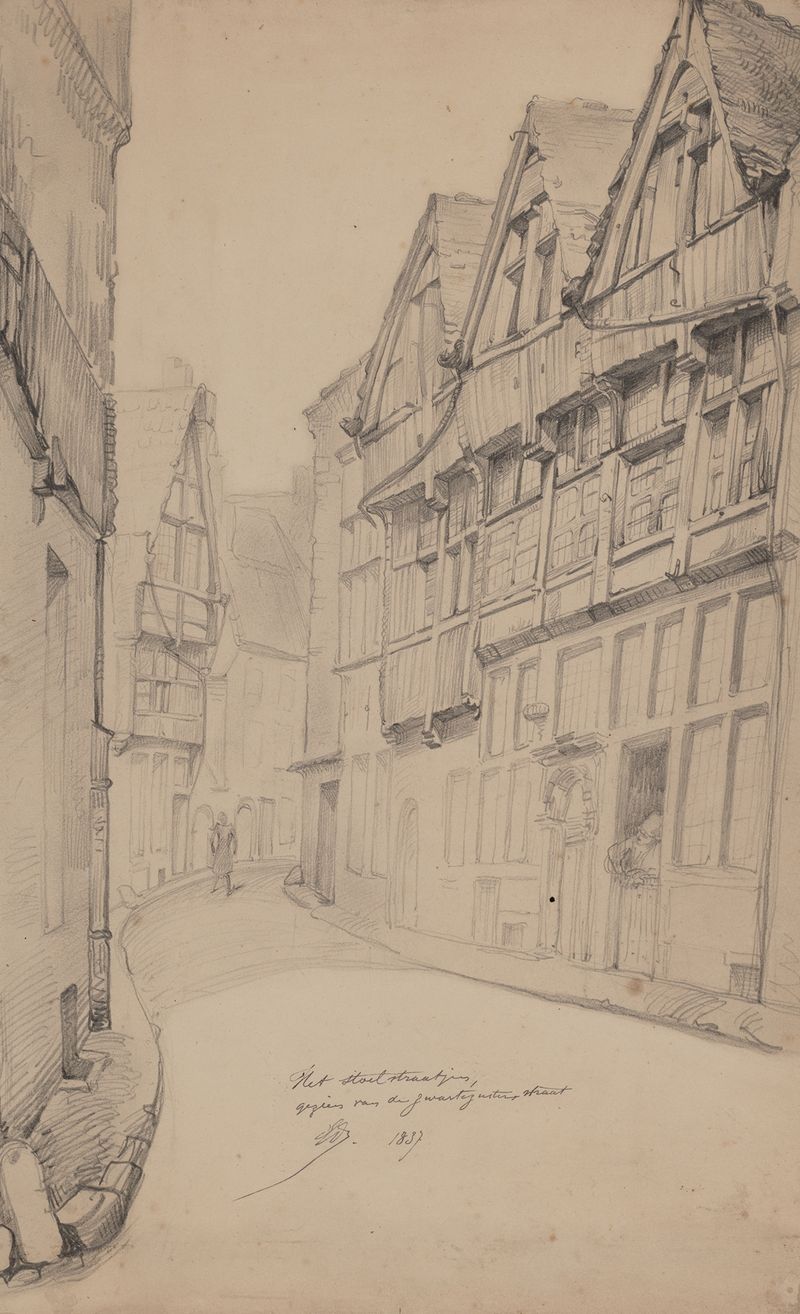
De Stoelstraat, gezien vanuit de Zwarte Zusterstraat
Edward Dujardin
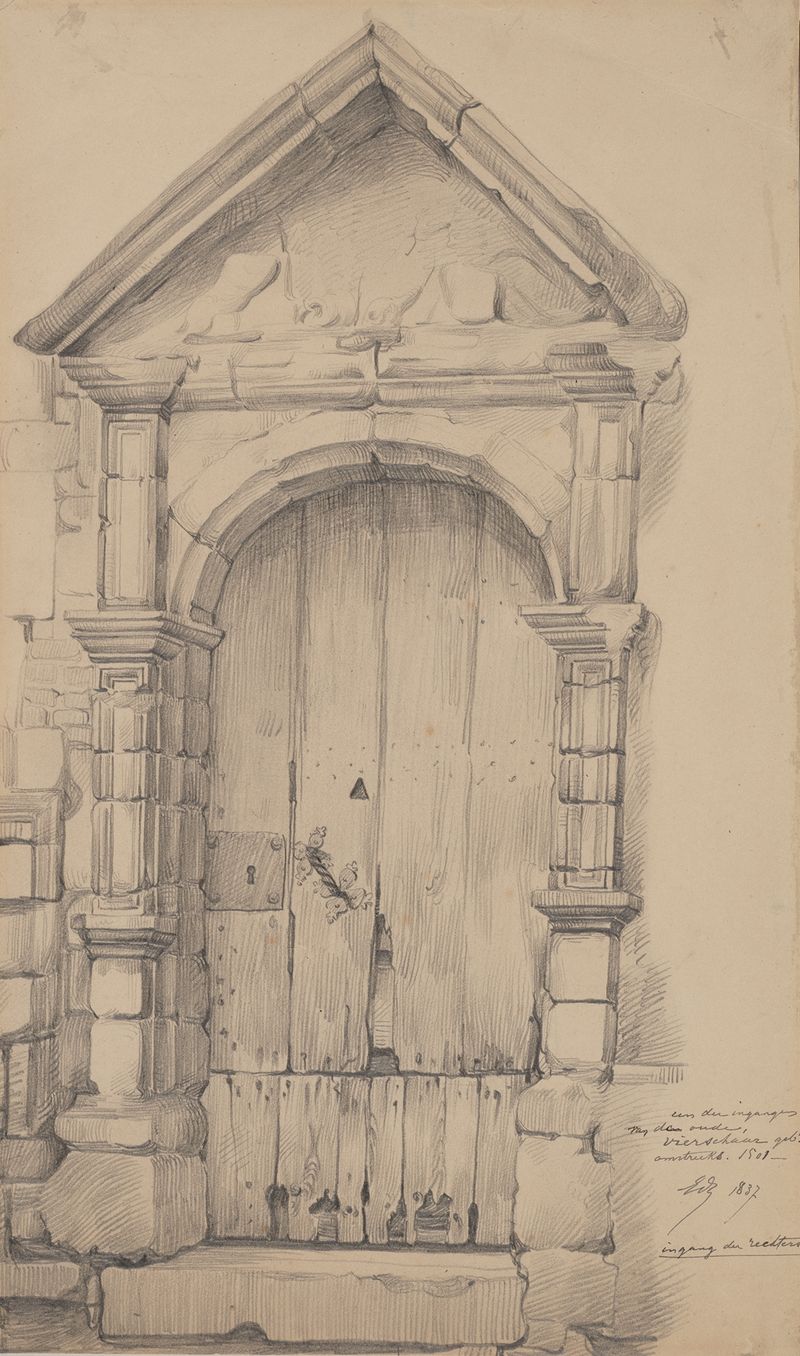
De ingang der rechters van de oude Vierschaar
Edward Dujardin
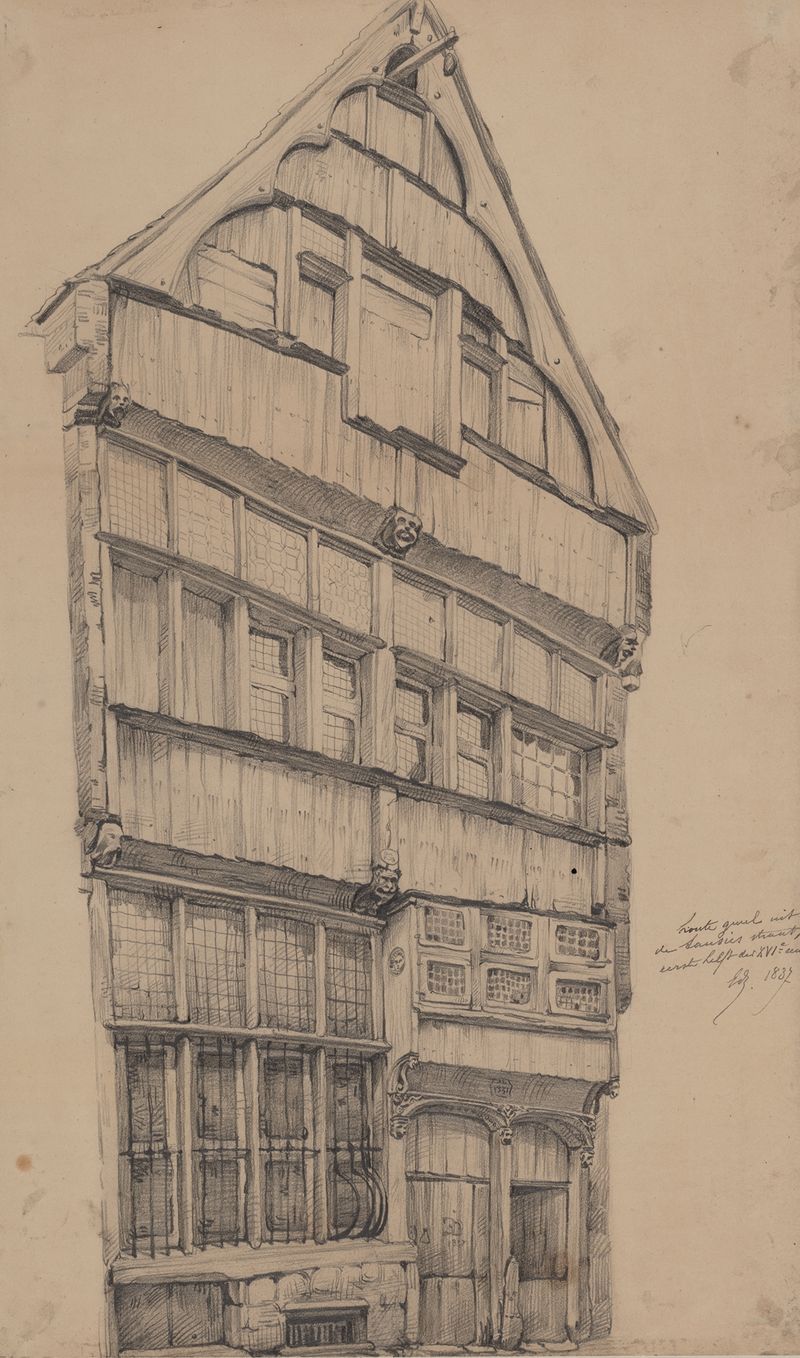
Houten gevel in de Saucierstraat.
Edward Dujardin
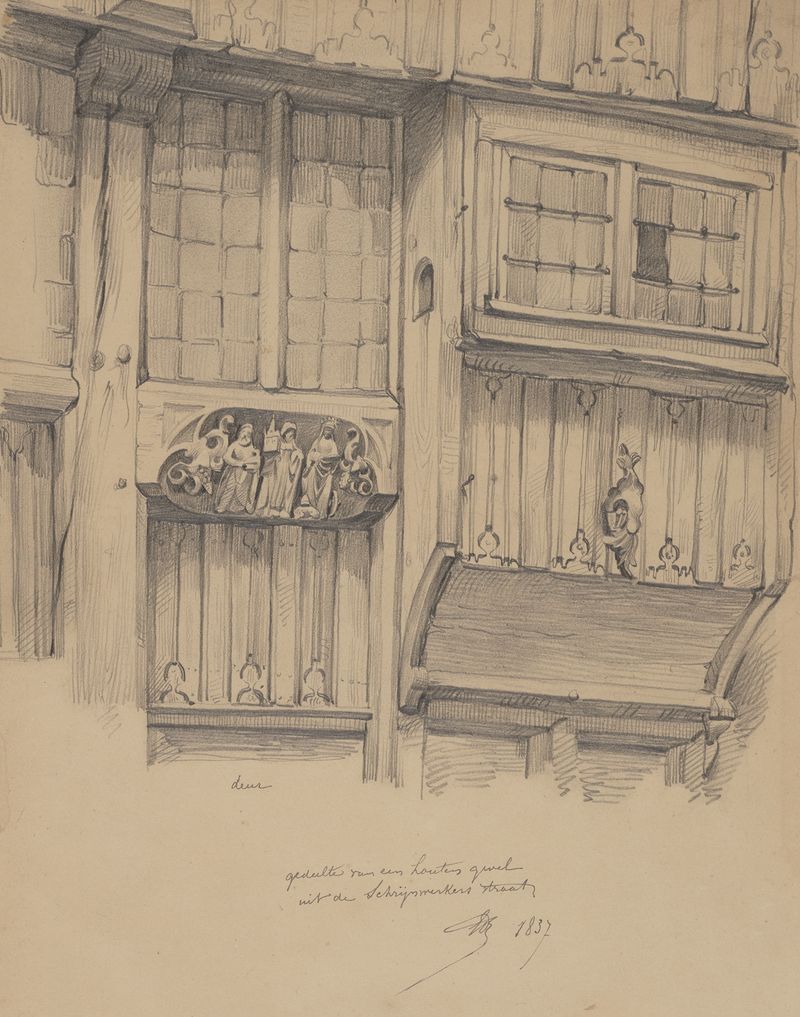
Gedeelte van een houten gevel uit de Schrijnwerkersstraat
Edward Dujardin
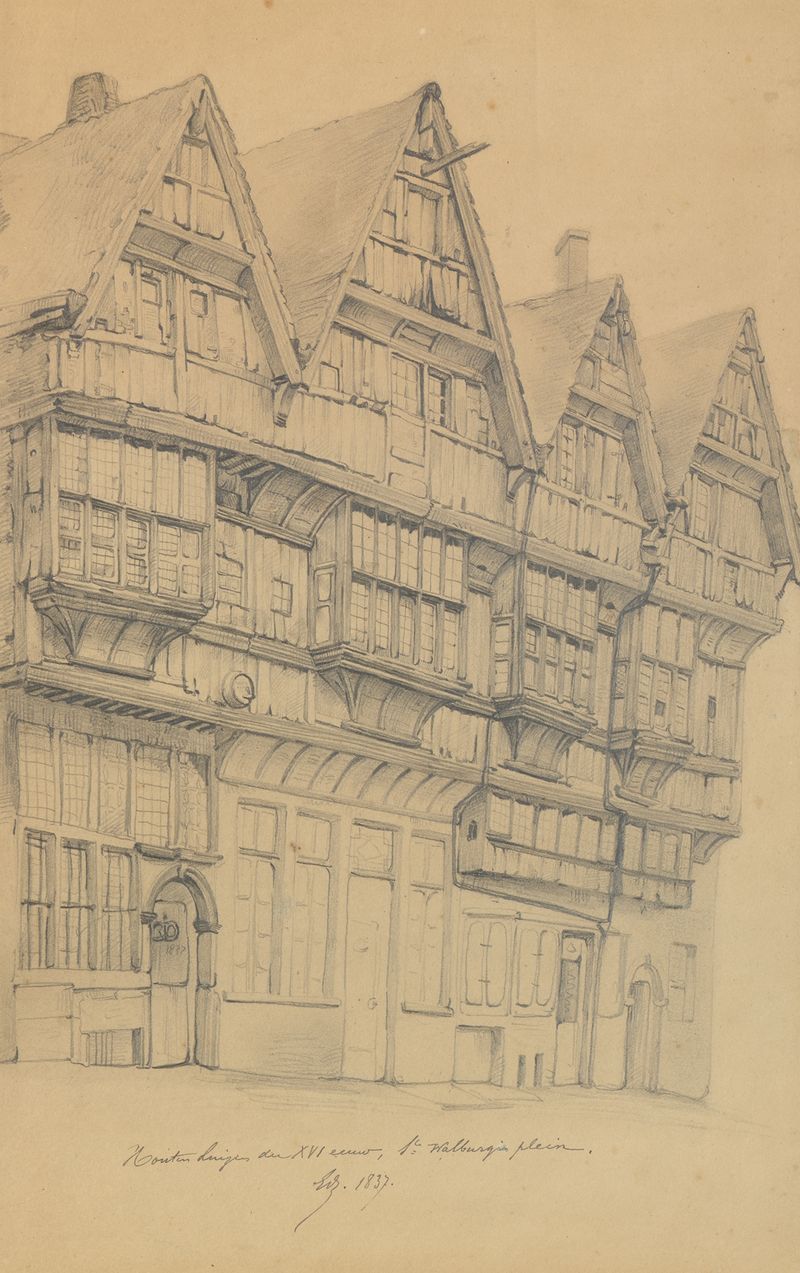
Houten huizen der XVI eeuw, Sint-Walburgisplein
Edward Dujardin
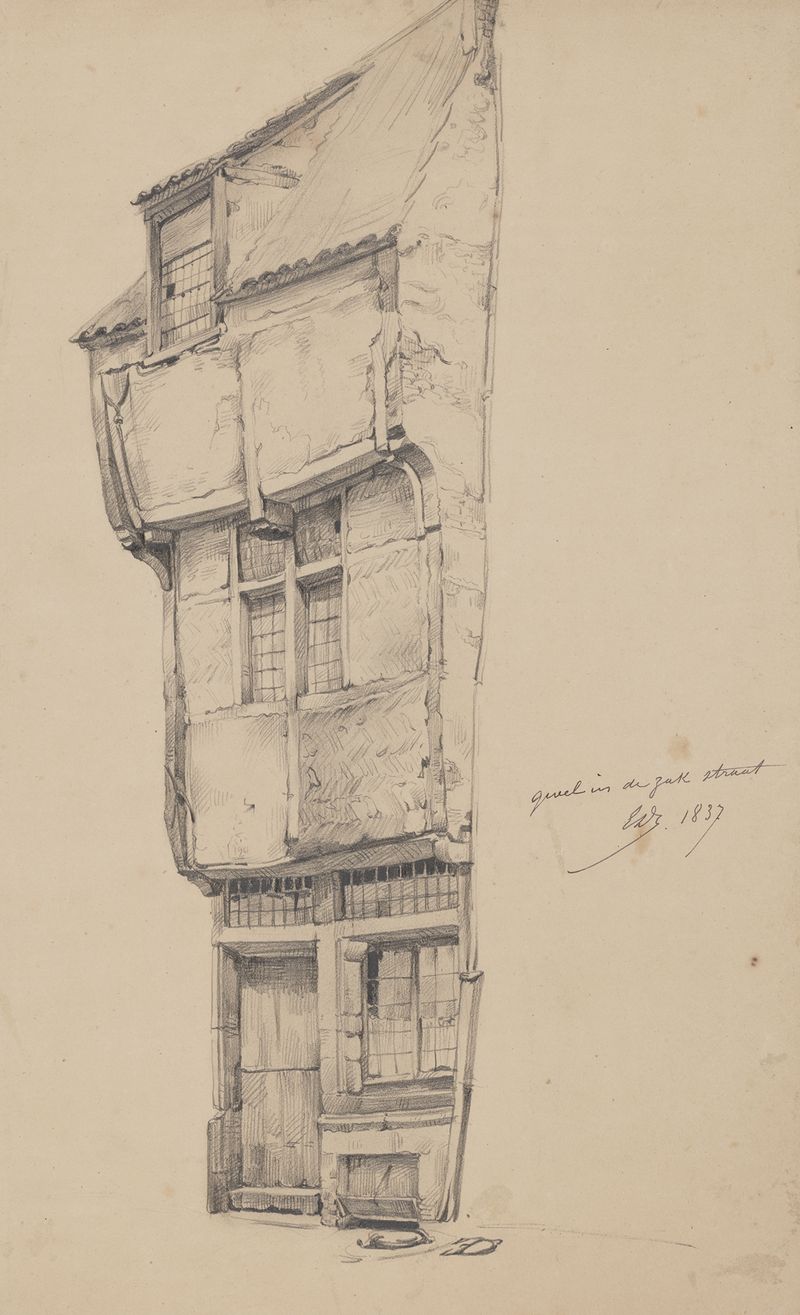
Gevel in de Zakstraat
Edward Dujardin
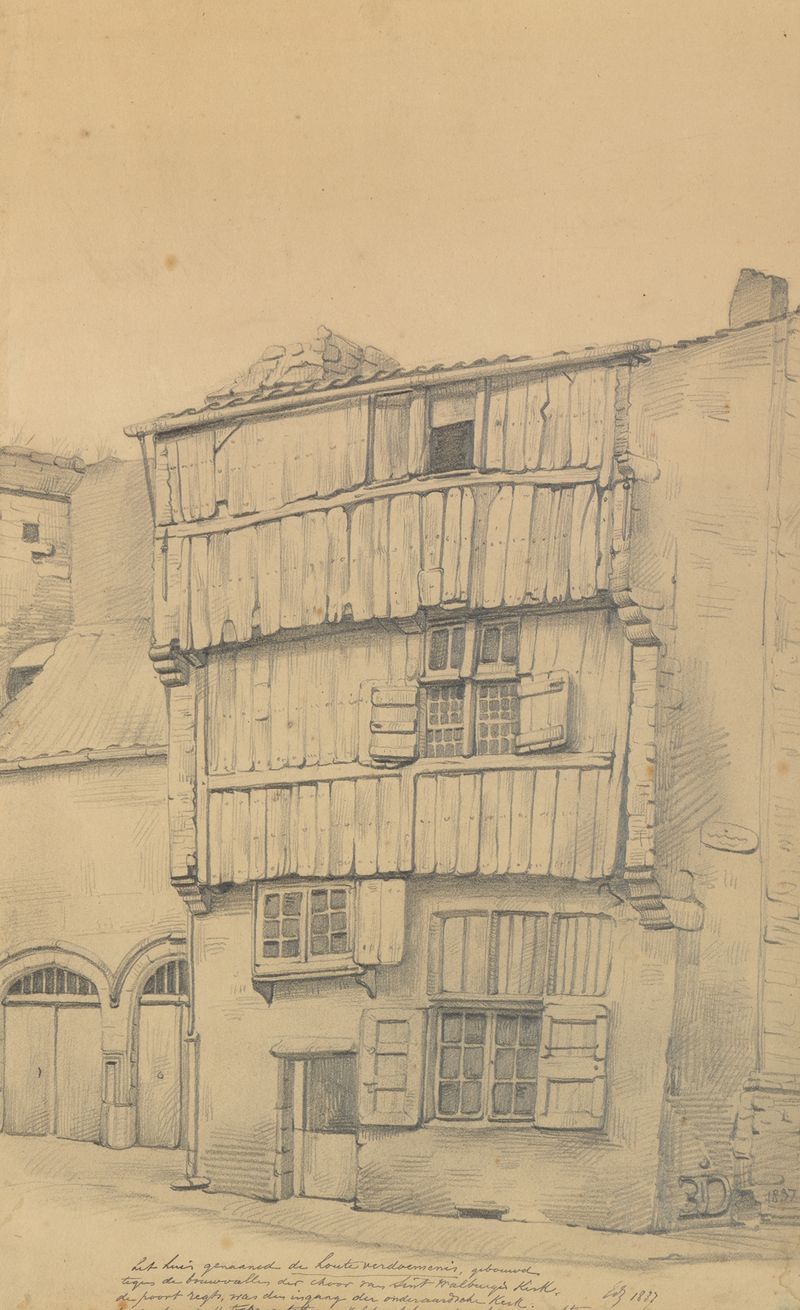
Het huis ‘De Houte Verdoemenis’, gebouwd tegen het koor van de Sint-Walburgiskerk
Edward Dujardin
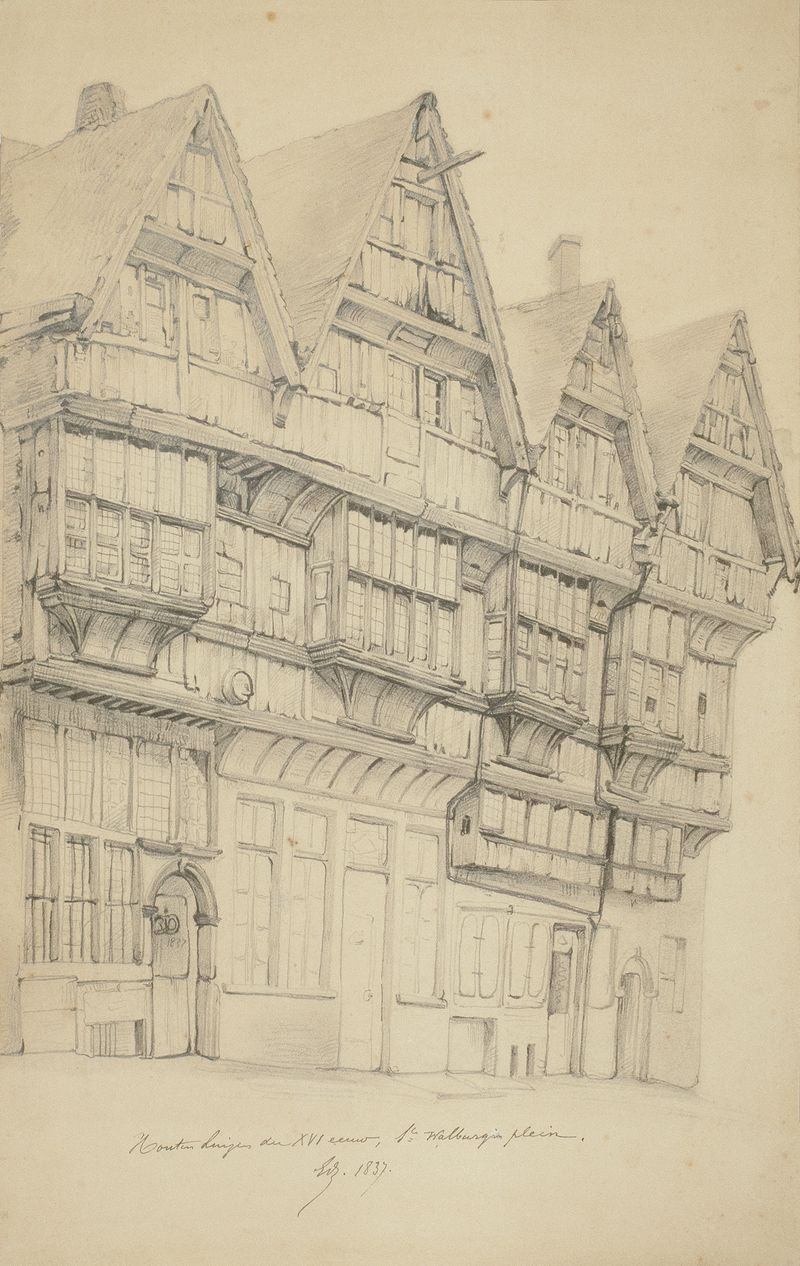
Houten huizen der XVI eeuw, Sint-Walburgisplein
Edward Dujardin

Ingangspoort van het Sint-Julianusgodshuis
Edward Dujardin
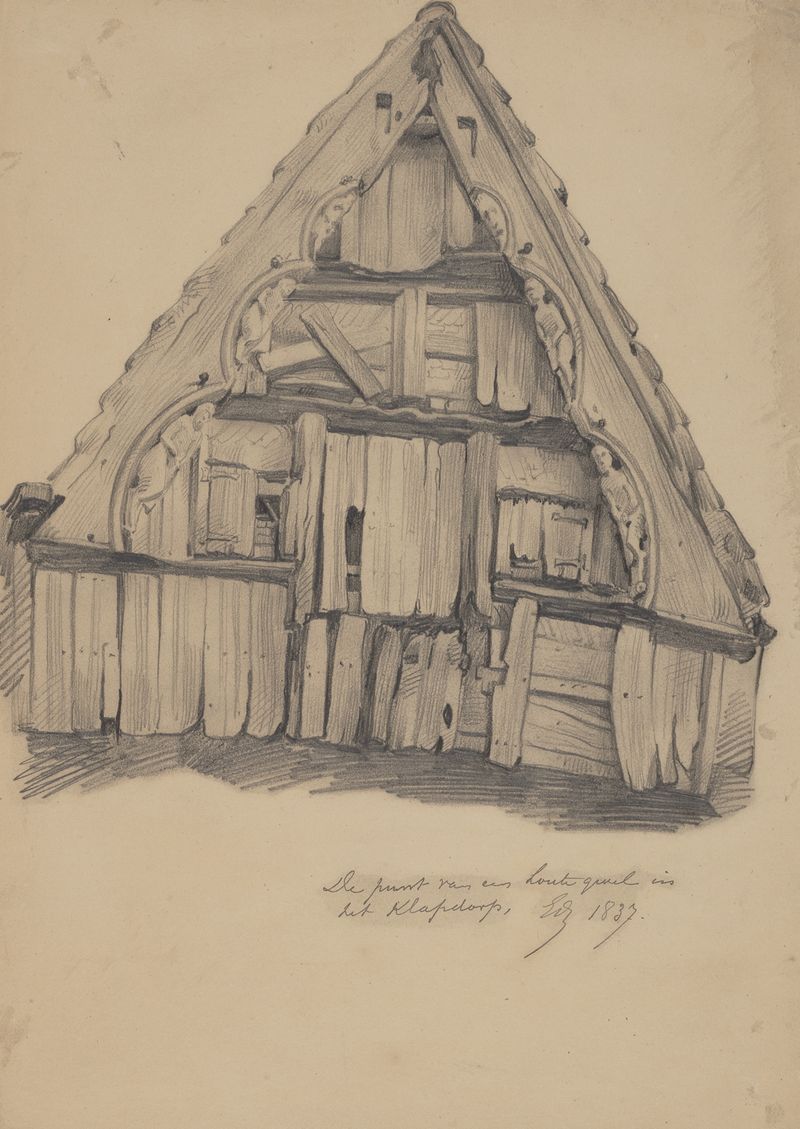
De punt van een houten gevel in het Klapdorp
Edward Dujardin
More Architecture Art
Browse all →
The statue of Liberty
Frédéric Auguste Bartholdi

View of Houses in Delft, Known as ‘The Little Street’
Johannes Vermeer

View of Houses in Delft, Known as ‘The Little Street’
Johannes Vermeer

The Cathedral in Rouen. The portal, Grey Weather
Claude Monet

The yellow house
Vincent van Gogh

The Church in Auvers-sur-Oise, View from the Chevet
Vincent van Gogh