
Hut along a Roadside — History & Facts
Who listens when art speaks of silence? In Hut along a Roadside, the stillness of a rural moment invites contemplation, echoing the innocence that lingers in forgotten corners of life. Focus first on the modest hut nestled to the left, its thatched roof harmonizing with the verdant landscape around it. Look closely at the play of light filtering through the trees, casting gentle shadows that whisper secrets of the past. The rich greens and earthy browns draw you into a serene embrace, while the few figures—perhaps travelers or wanderers—blend seamlessly into the tranquil setting, inviting you to ponder their stories. Delve deeper, and you'll find a profound juxtaposition within the painting: the blend of human presence against the vastness of the natural world.
The innocence of the scene is palpable, yet the subtle tension of solitude hangs in the air. The way the figures interact with their environment—standing still, almost as if suspended in time—speaks to the delicate balance between humanity and nature, suggesting an existence grounded in simplicity and reflection. In 1659, Meindert Hobbema created this piece while living in Haarlem, a city flourishing with artistic innovation. During this period, the Dutch Golden Age was in full swing, with landscapes gaining prominence among the genres of art.
Hobbema’s work reflects not just his skillful technique but also a growing appreciation for the intimate relationship between humanity and the natural world—a theme that resonates profoundly through his art.
More Artworks by Meindert Hobbema
Browse all →
The Water Mill (The Trevor Landscape)
Meindert Hobbema

Bewaldete Flusslandschaft mit Figuren auf einem Weg
Meindert Hobbema
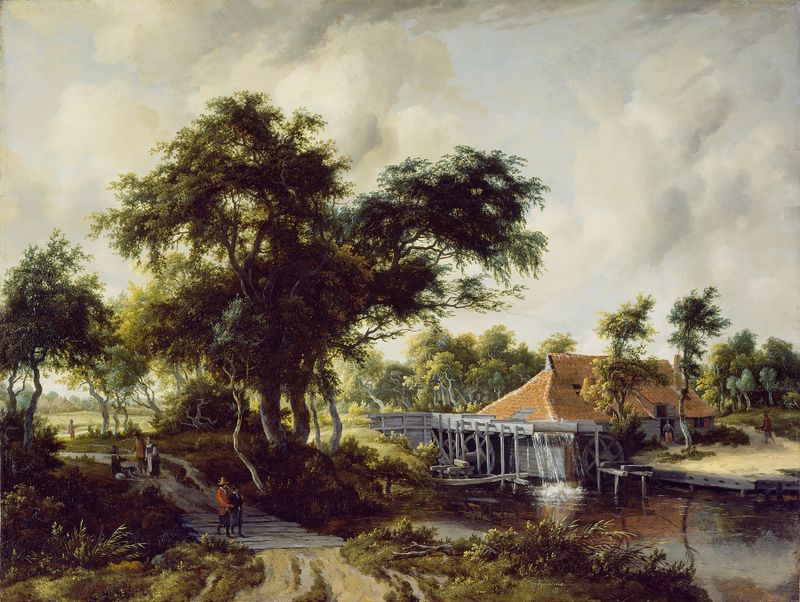
A Watermill
Meindert Hobbema
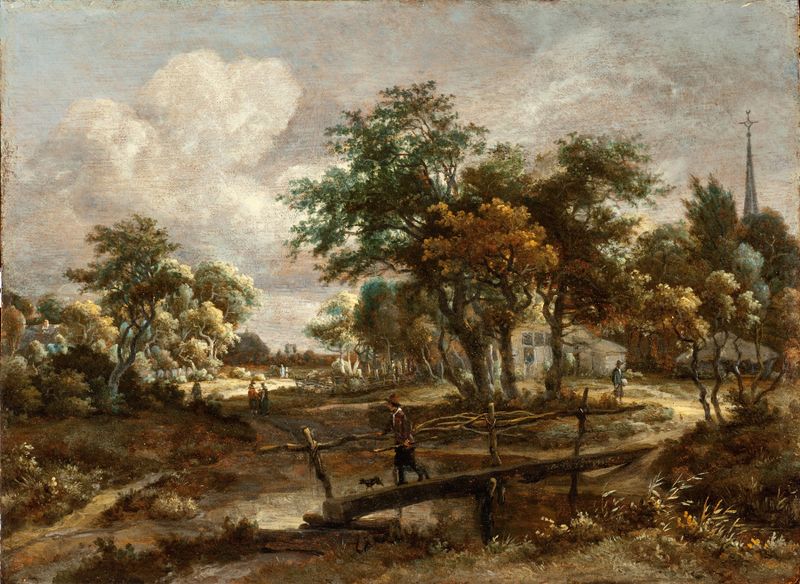
Landscape with a Footbridge
Meindert Hobbema

A Watermill
Meindert Hobbema
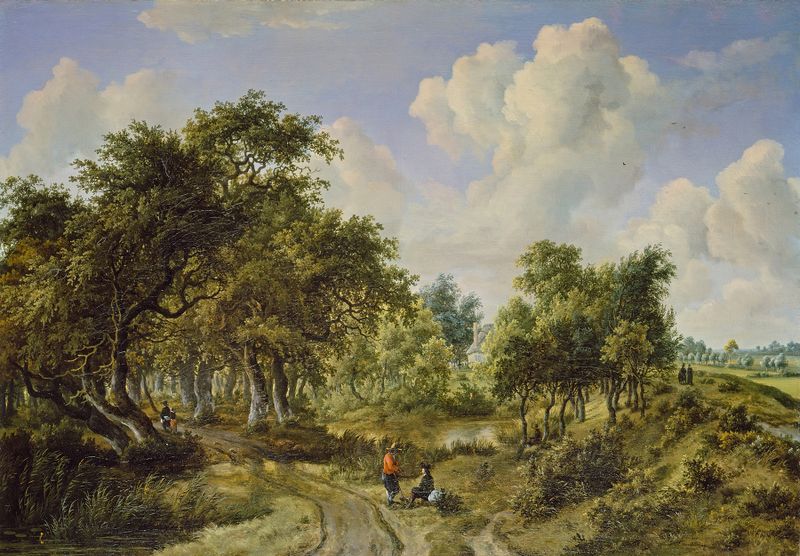
A Wooded Landscape
Meindert Hobbema

A Wooded Landscape
Meindert Hobbema
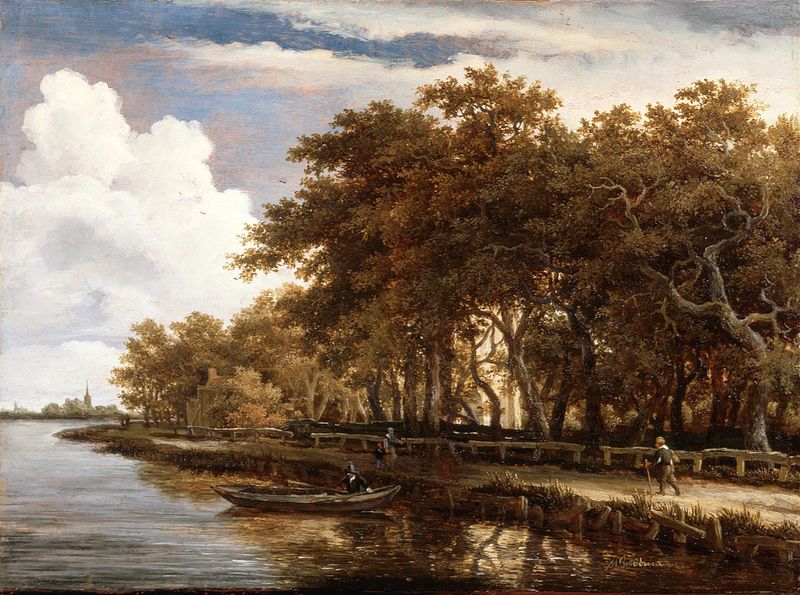
View Along the Amstel
Meindert Hobbema

The Watermill with the Great Red Roof
Meindert Hobbema

Water Mill
Meindert Hobbema





