
Illustrated Sutra of Past and Present Karma (E Ingakyō) — History & Facts
A section of the Illustrated Sutra of Past and Present Karma (E Ingakyō), attributed to an unknown artist, dates to the 8th century and is executed in ink and color on paper. The handscroll format presents a continuous narrative scene above a block of Chinese text, characteristic of early Japanese Buddhist illustrated manuscripts. The image depicts a series of figures, including monks and laypersons, arranged in groups and pairs, some of whom are engaged in ritual or devotional activities. Several seated figures, likely Buddhas or bodhisattvas, are shown on lotus thrones, while others stand or move through a stylized landscape of rocks and trees.
The color palette is dominated by warm earth tones, with accents of green, red, and blue, and the composition is organized in a horizontal procession, interspersed with natural elements and architectural motifs. Handscrolls illustrating Buddhist sutras were produced in Japan during the Nara period (710–794), often commissioned by temples or the imperial court as acts of piety and merit-making. The Illustrated Sutra of Past and Present Karma is an example of this tradition, combining calligraphic text with narrative imagery to convey religious teachings. This work is dated to between 700 and 800 and is preserved in a public collection, as documented by the Google Cultural Institute.
More Artworks by Unknown Artist
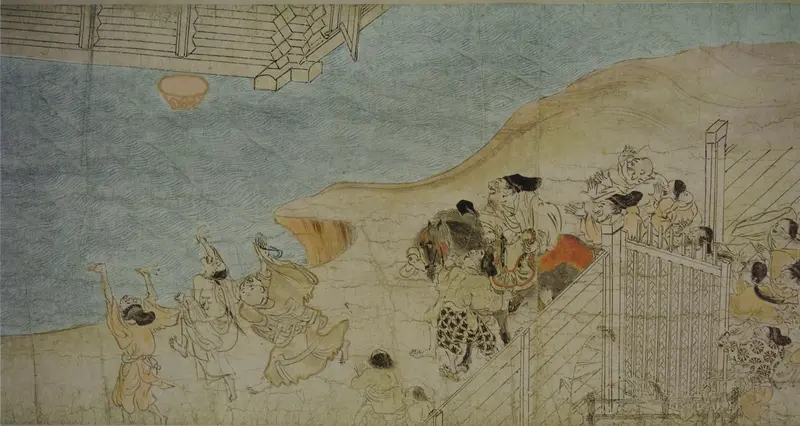
Legends of Mount Shigi: The Flying Granary
Unknown Artist
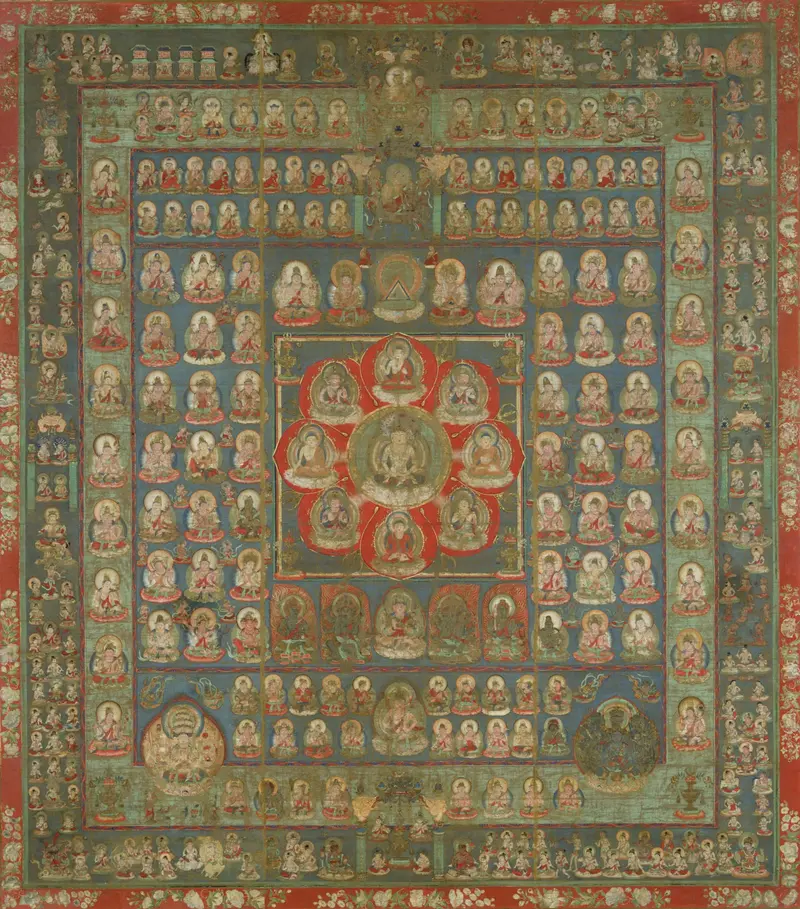
Womb World Mandala (Mandala of the Two Realms)
Unknown Artist
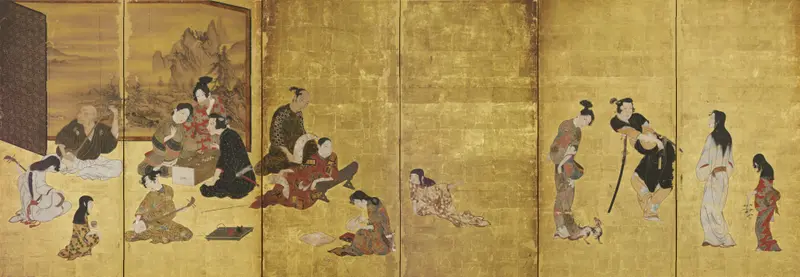
Hikone Screen
Unknown Artist

The Tale of Genji Scroll: Yadorigi
Unknown Artist
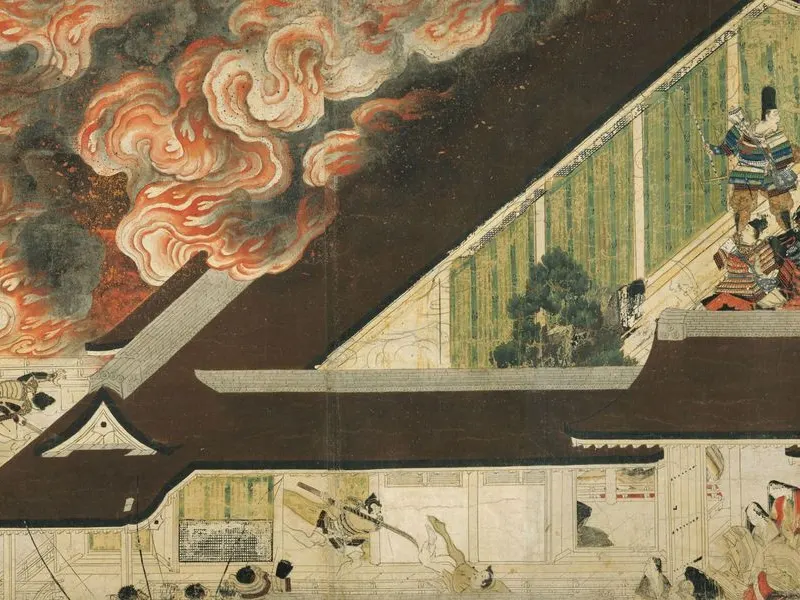
Night Attack on the Sanjō Palace
Unknown Artist

The Ideal City
Unknown Artist
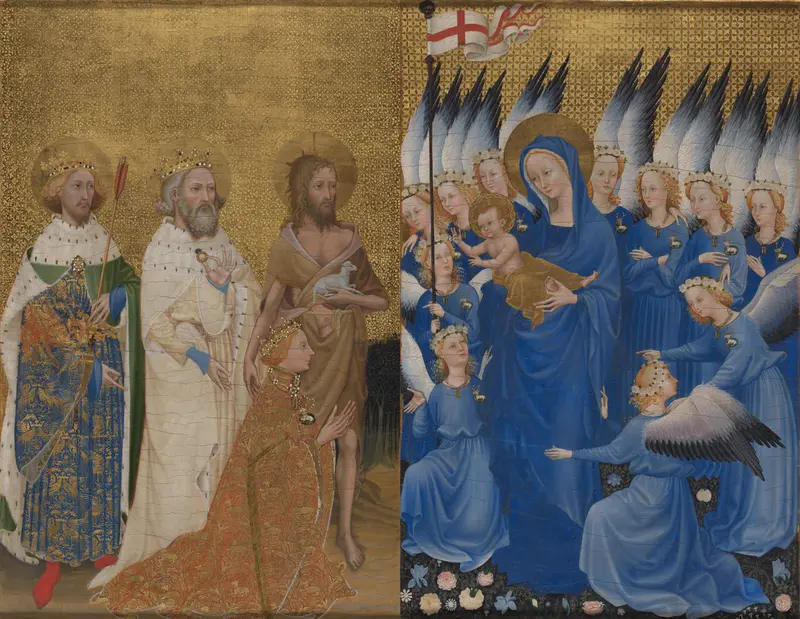
The Wilton Diptych
Unknown Artist

Ridder, Dood en Duivel
Unknown Artist
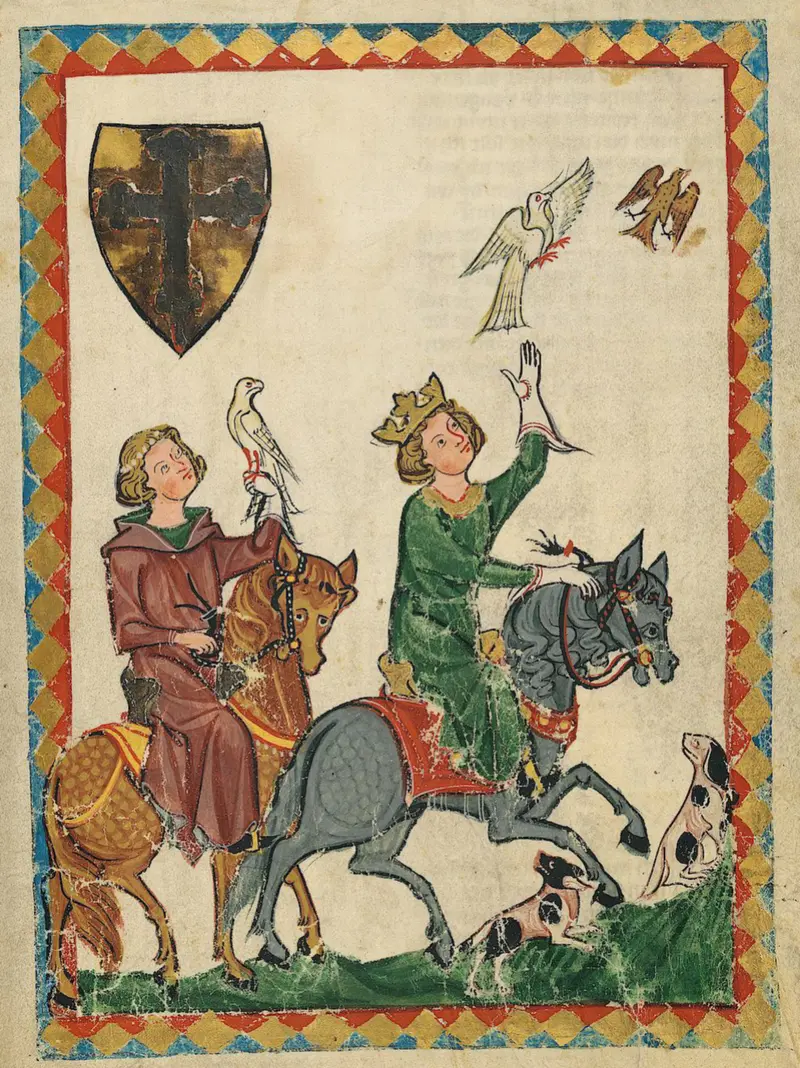
Codex Manesse: King Conradin Hawking (fol. 7r)
Unknown Artist
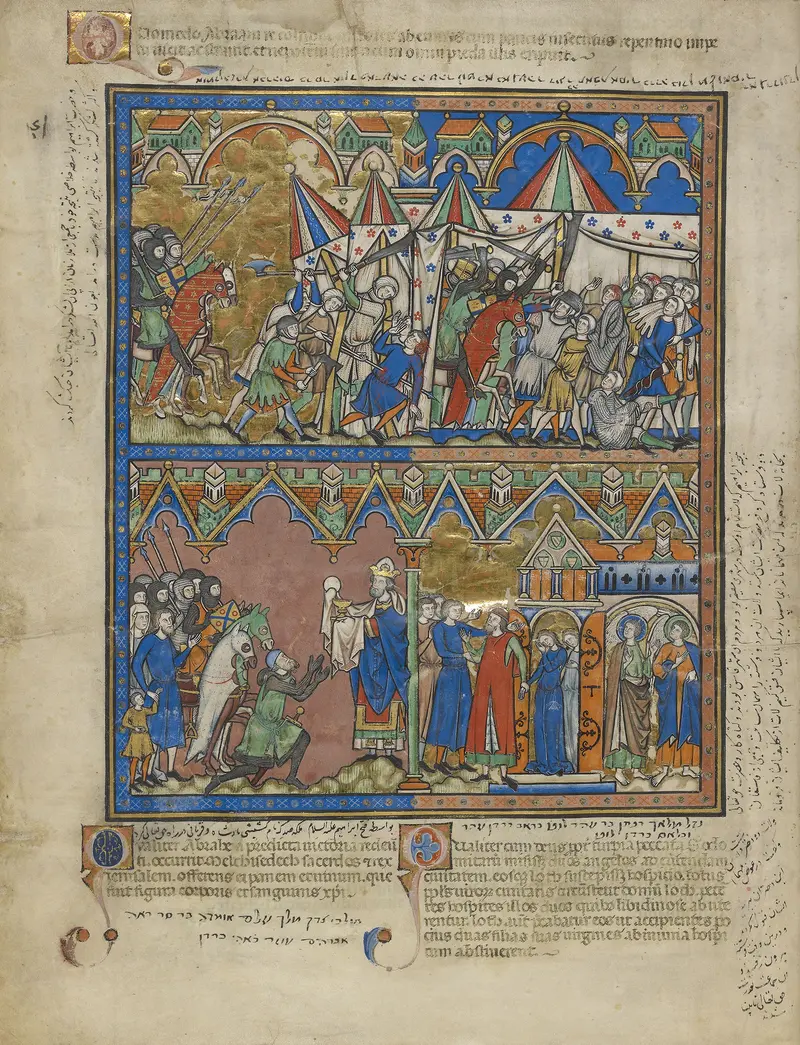
Morgan Bible (Maciejowski Bible), fol. 3v
Unknown Artist





