
Art tradition · 10th–19th century · Asia
Buddhist Art and Paintings
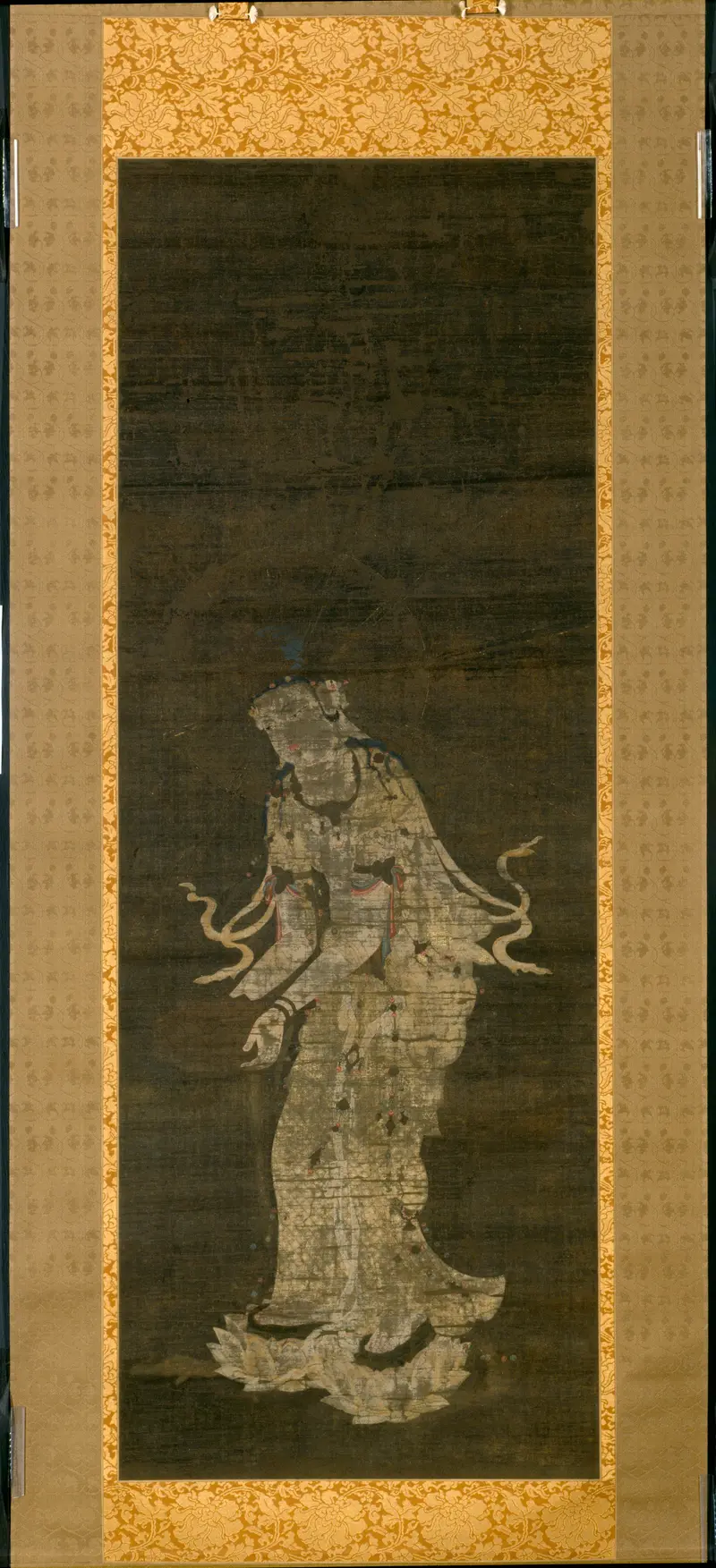
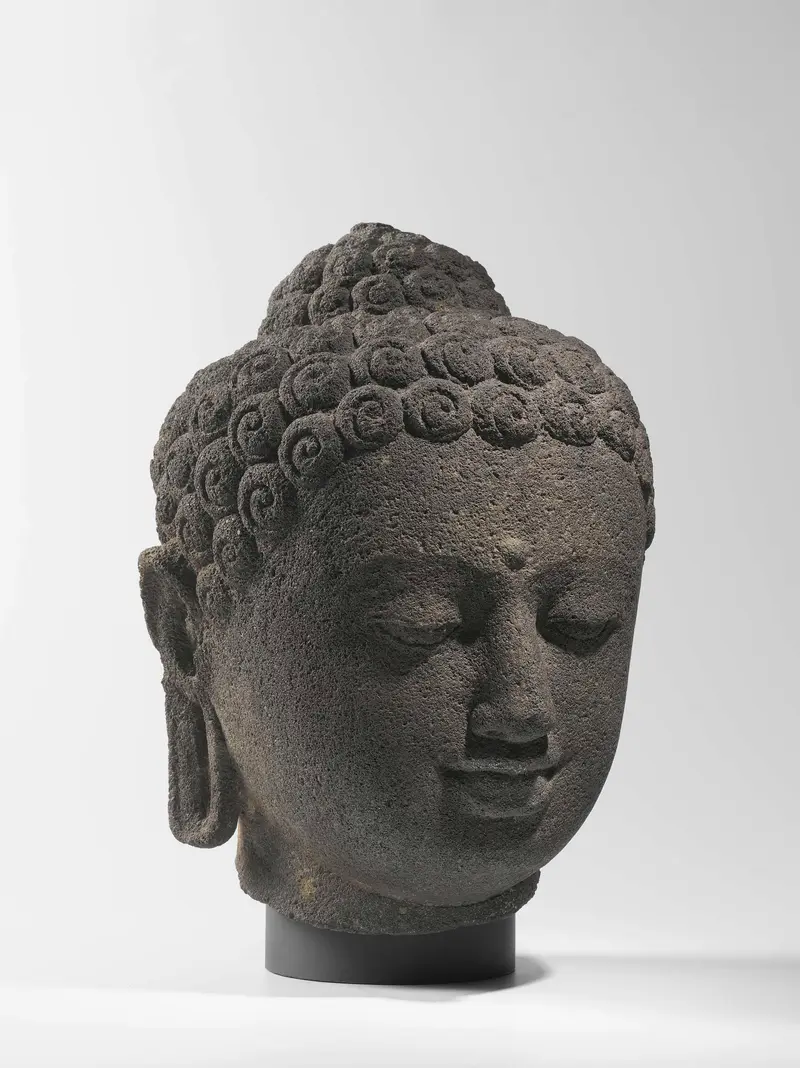
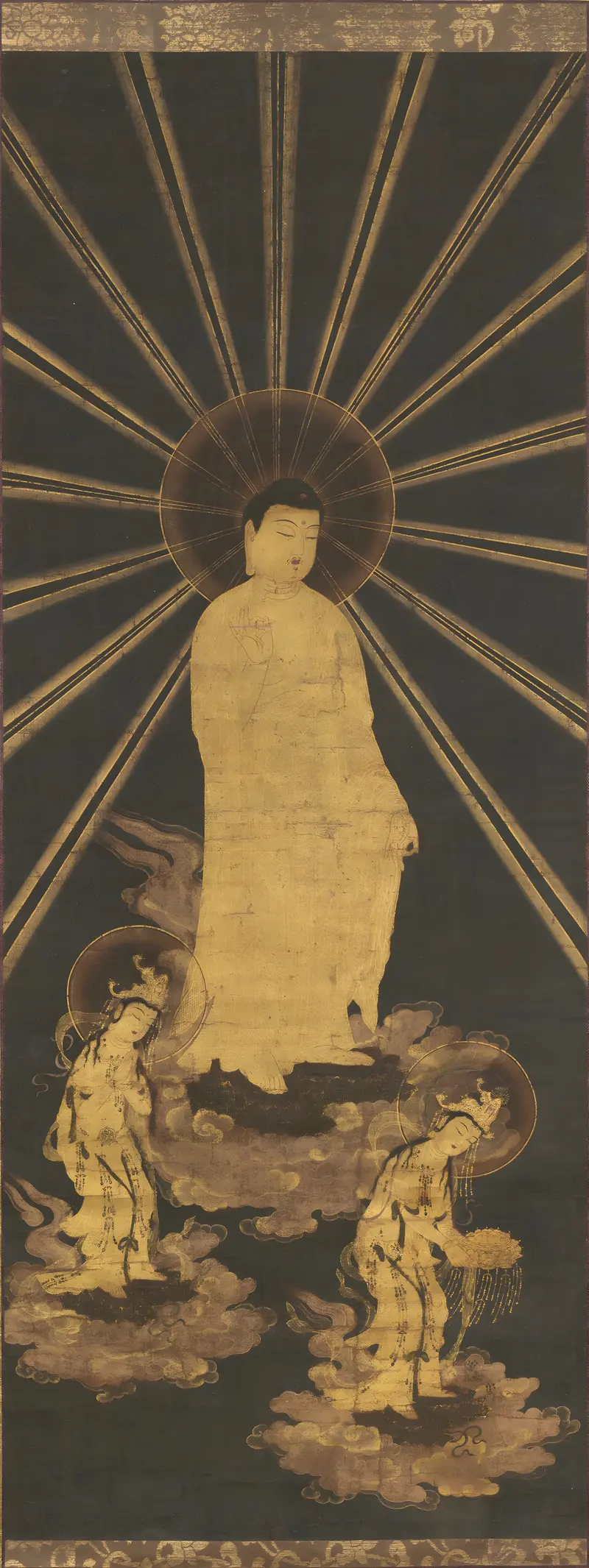
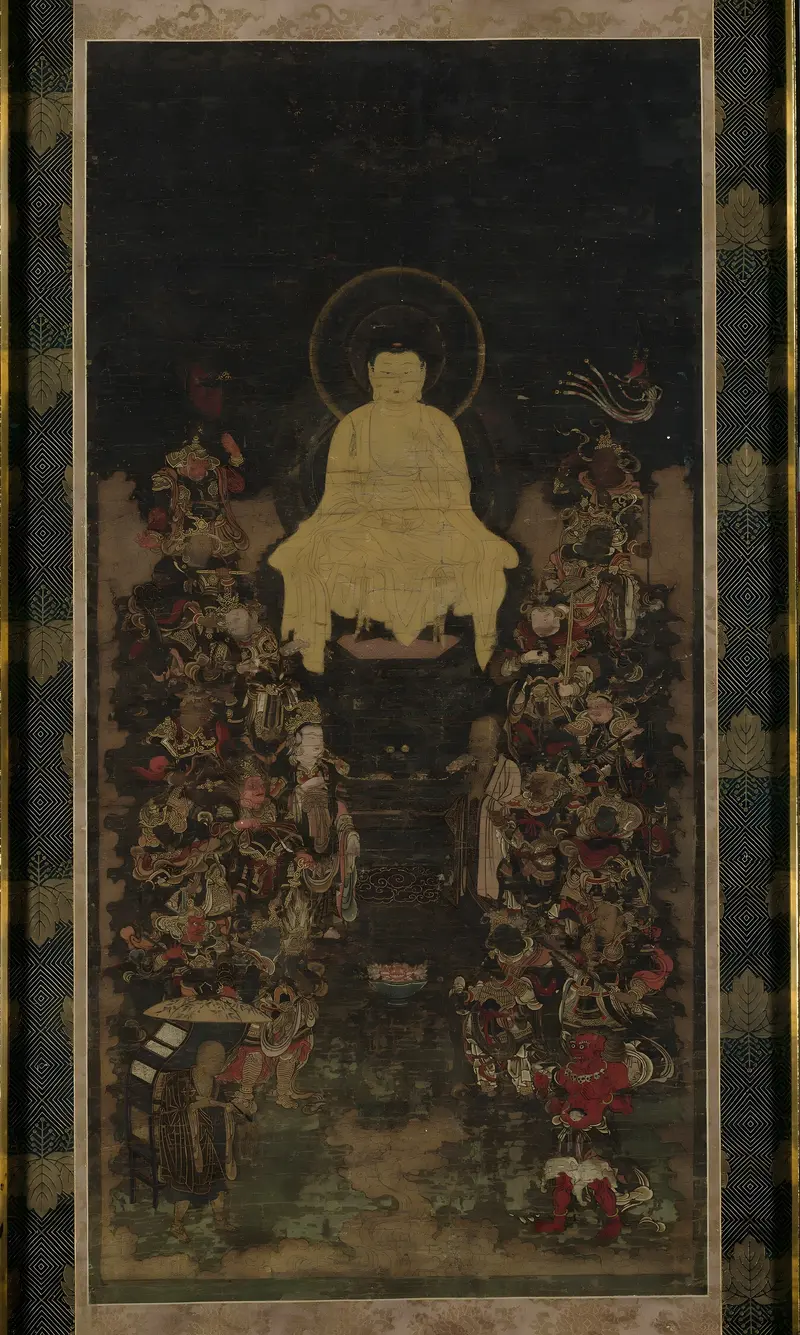
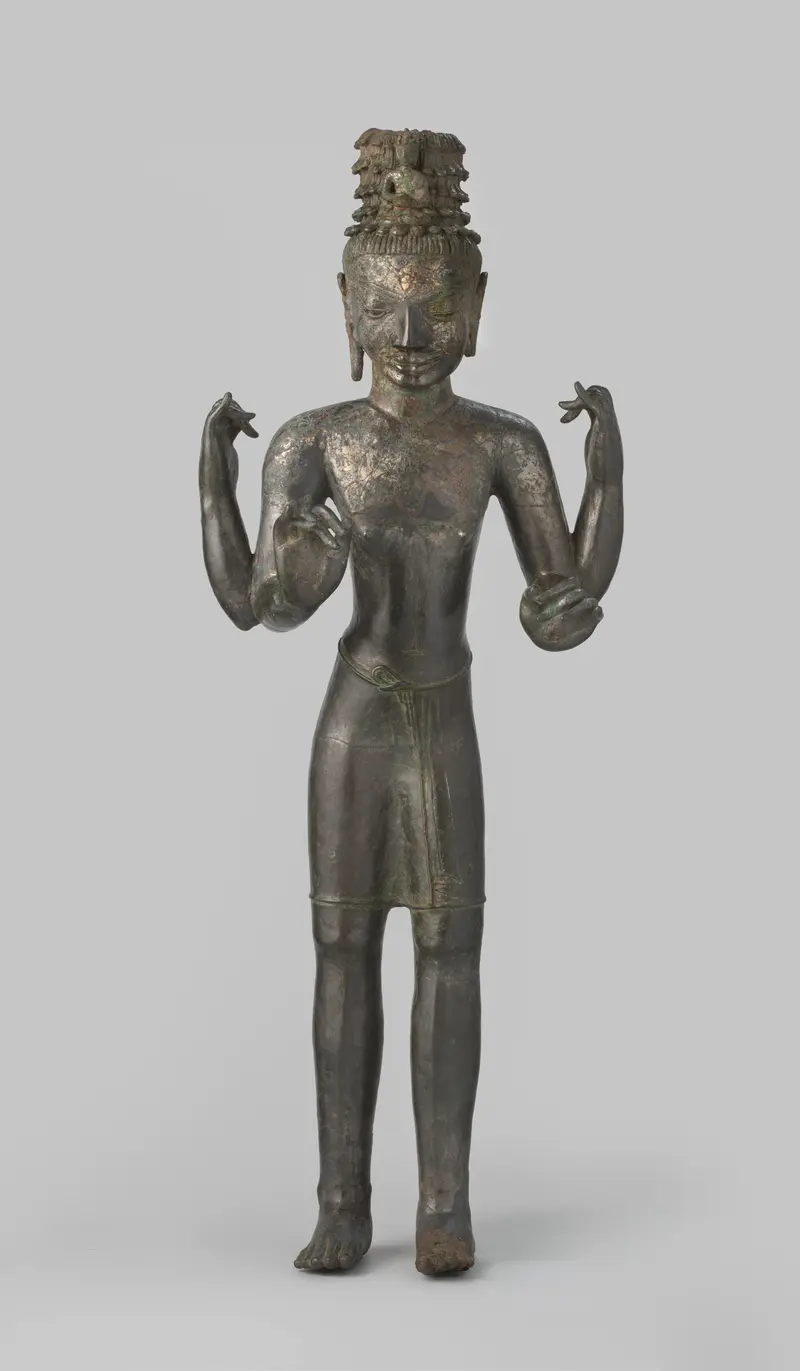
Buddhist art is the art tradition of the religion that began in India with the Buddha, in the fifth and fourth centuries BC, and spread with it across Asia: to Nepal and Tibet, China, Korea, Japan and Southeast Asia. Its paintings show buddhas, bodhisattvas, deities and revered teachers, made as aids to worship and meditation, and most of the paintings in our collection date from the 10th to the 19th century.
Most of the painters were anonymous: in Tibet, the Met notes, many were monks, and lay artists traveled from monastery to monastery. In Japan a few are known by name, such as the priest-painter Josetsu and the Zen monk Sengai. They painted cloth scrolls that could be rolled up and carried, silk hanging scrolls, sutra books and temple walls. The Medicine Buddha, a 14th-century Tibetan scroll, shows the healing Buddha with a lapis-blue body, a color likened to the sky.
Browse 133 Buddhist paintings and artworks below, all public domain and free to download.
Selected and written by Pavel MazuelasUpdated November 5, 2026
Part of Art Movements and Painting StylesRelated: Japanese Painting, Chinese Painting, Famous Religious Paintings
All Buddhist paintings and artworks
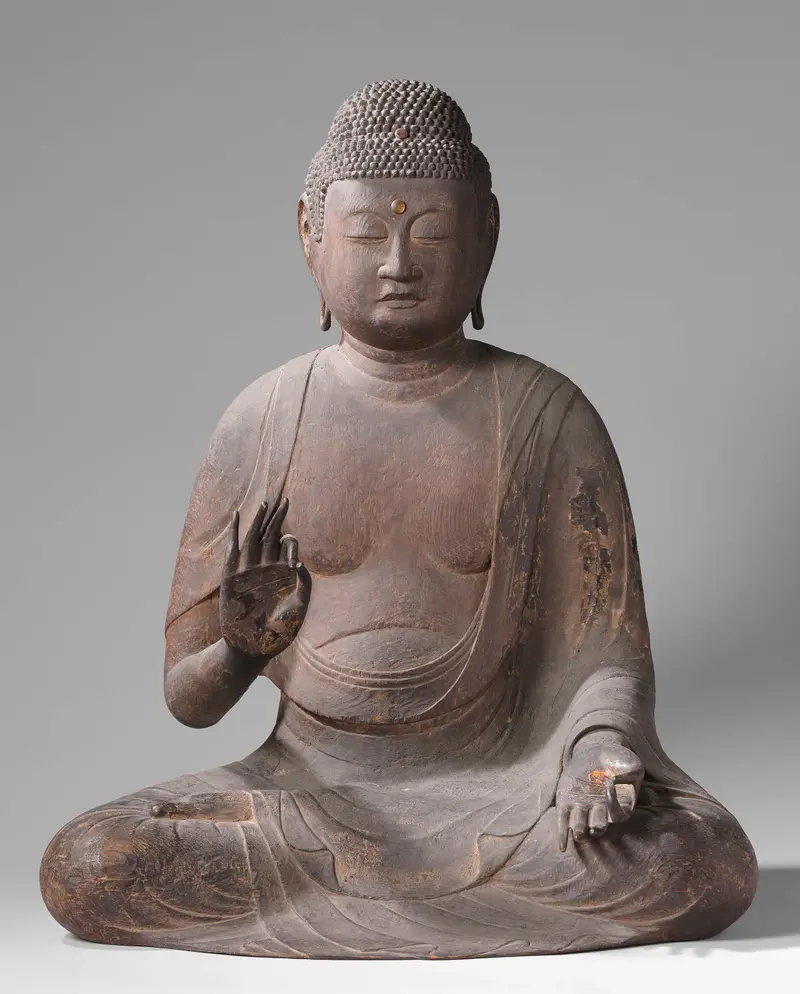
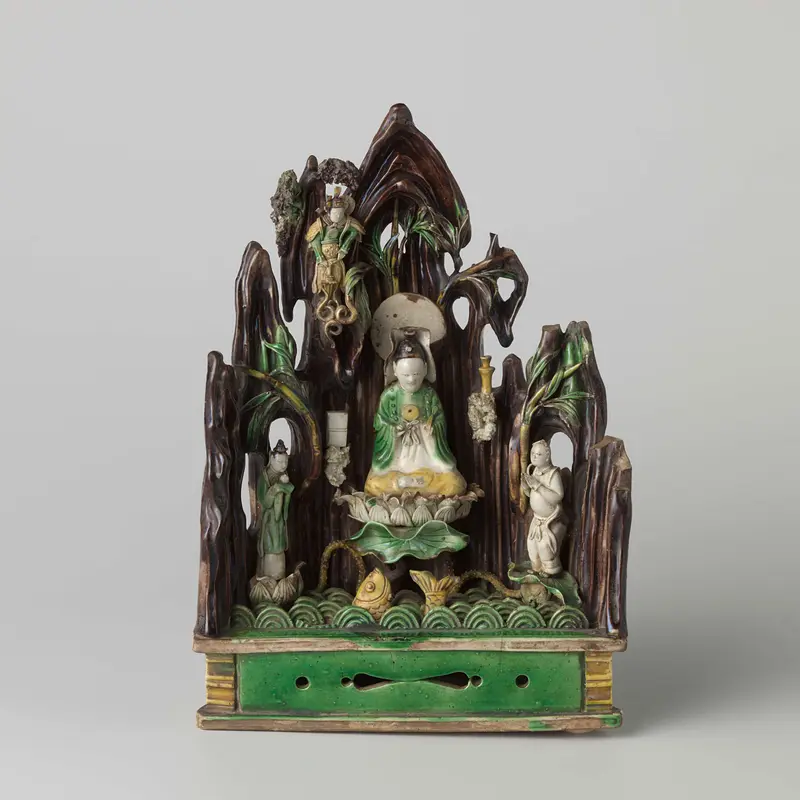
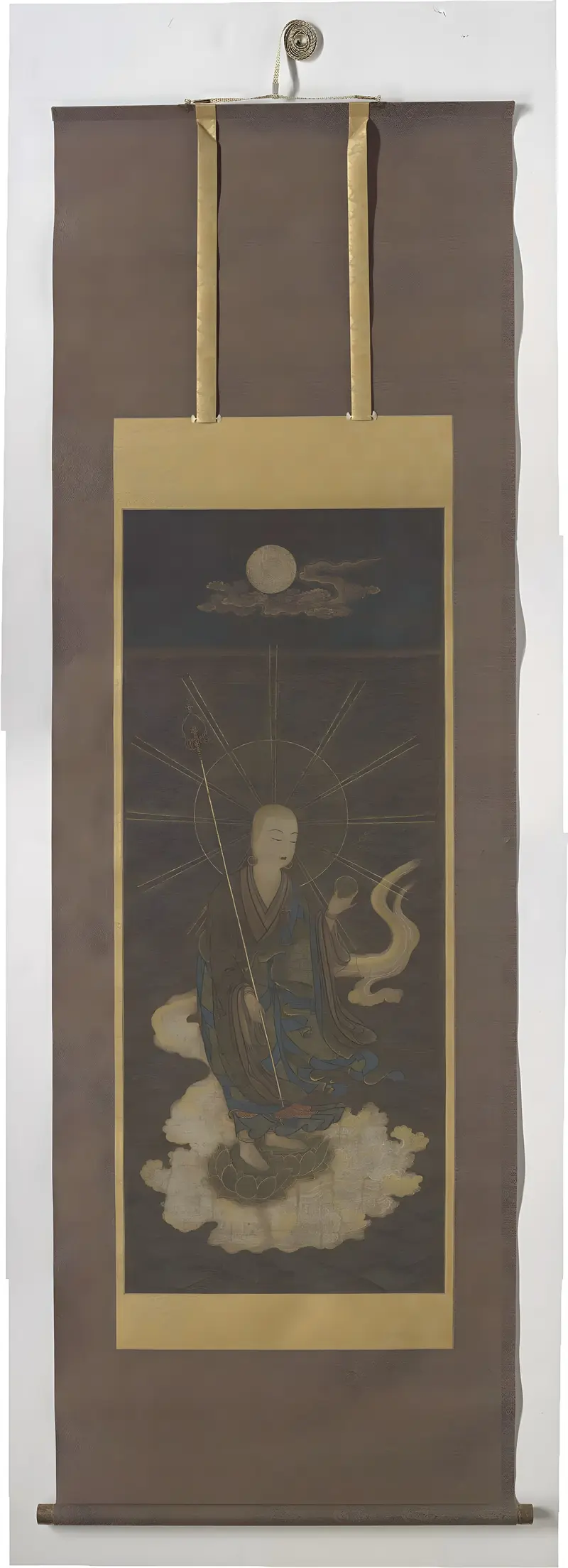
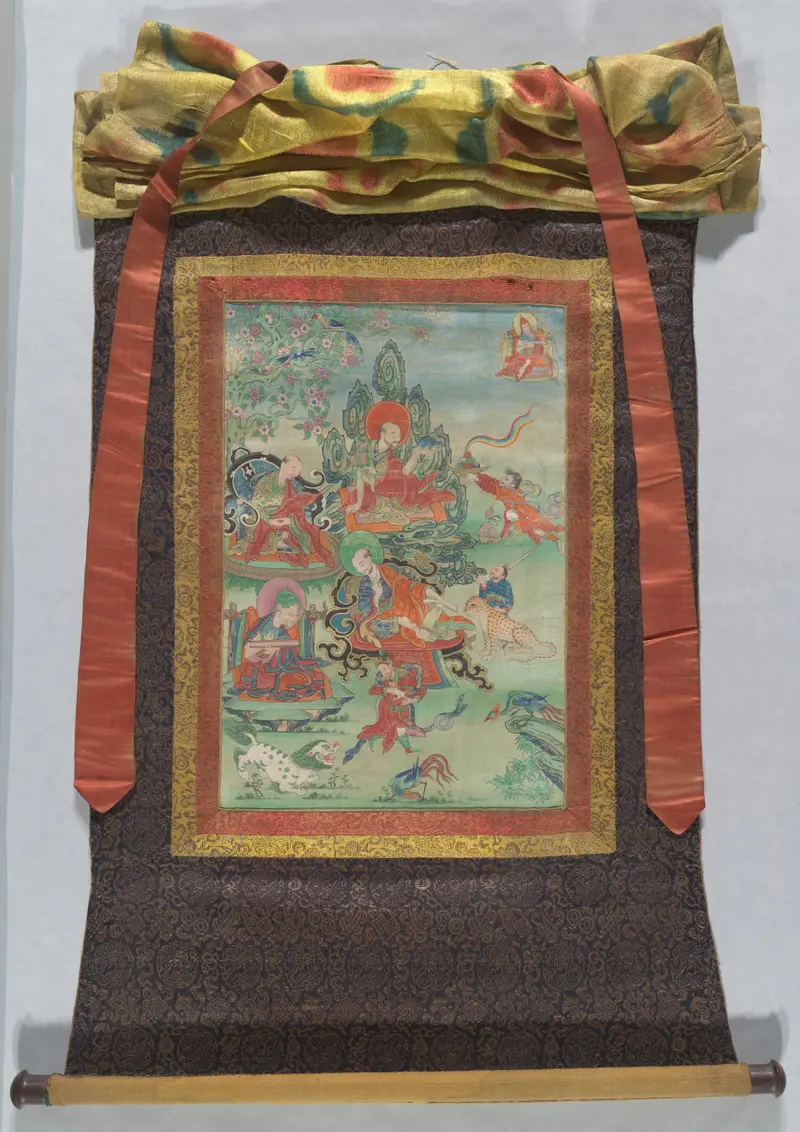
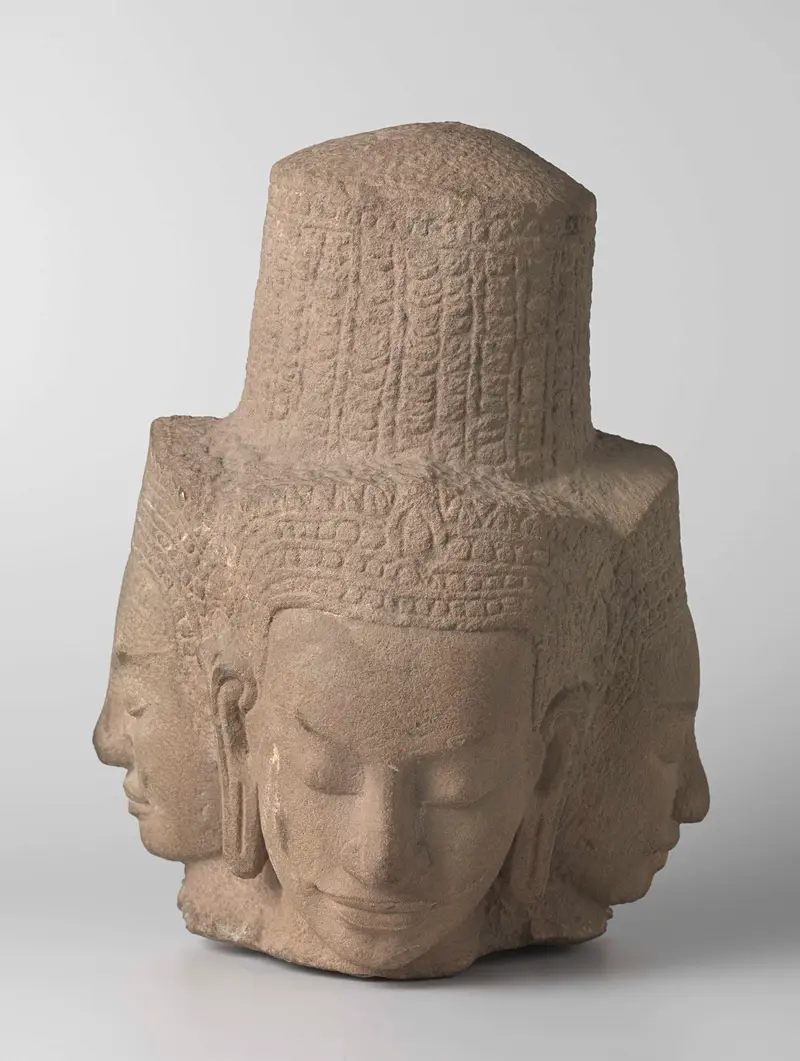
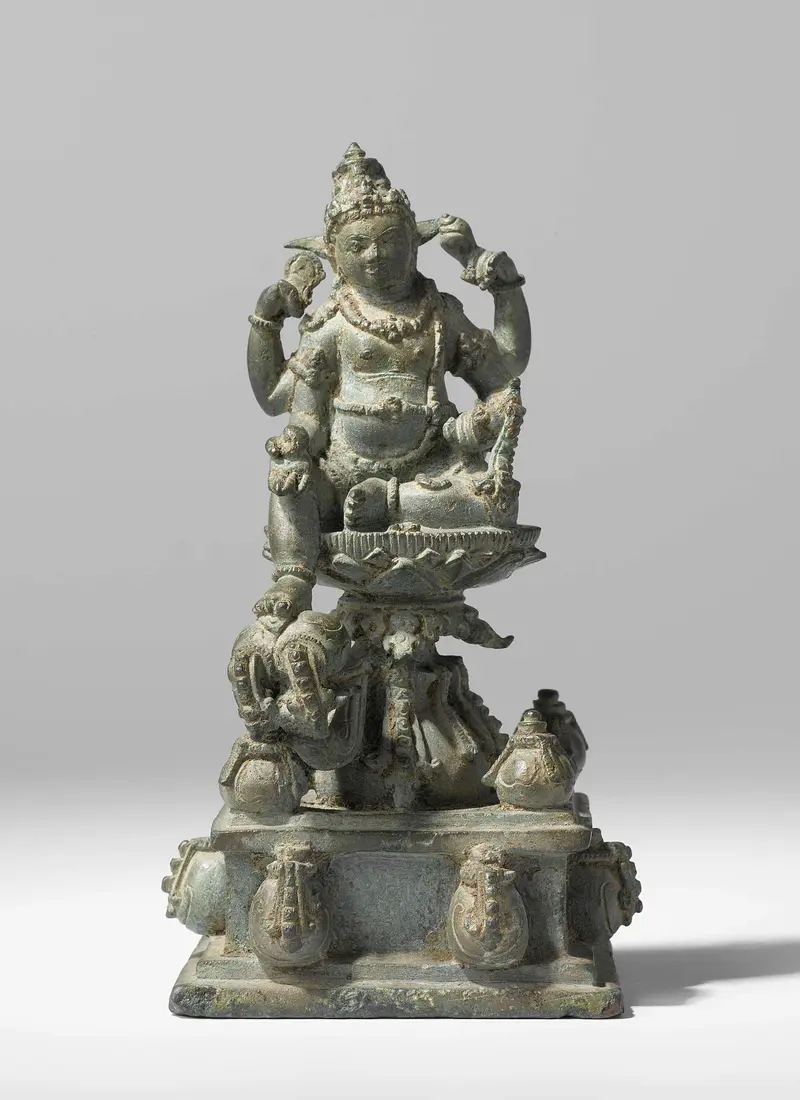
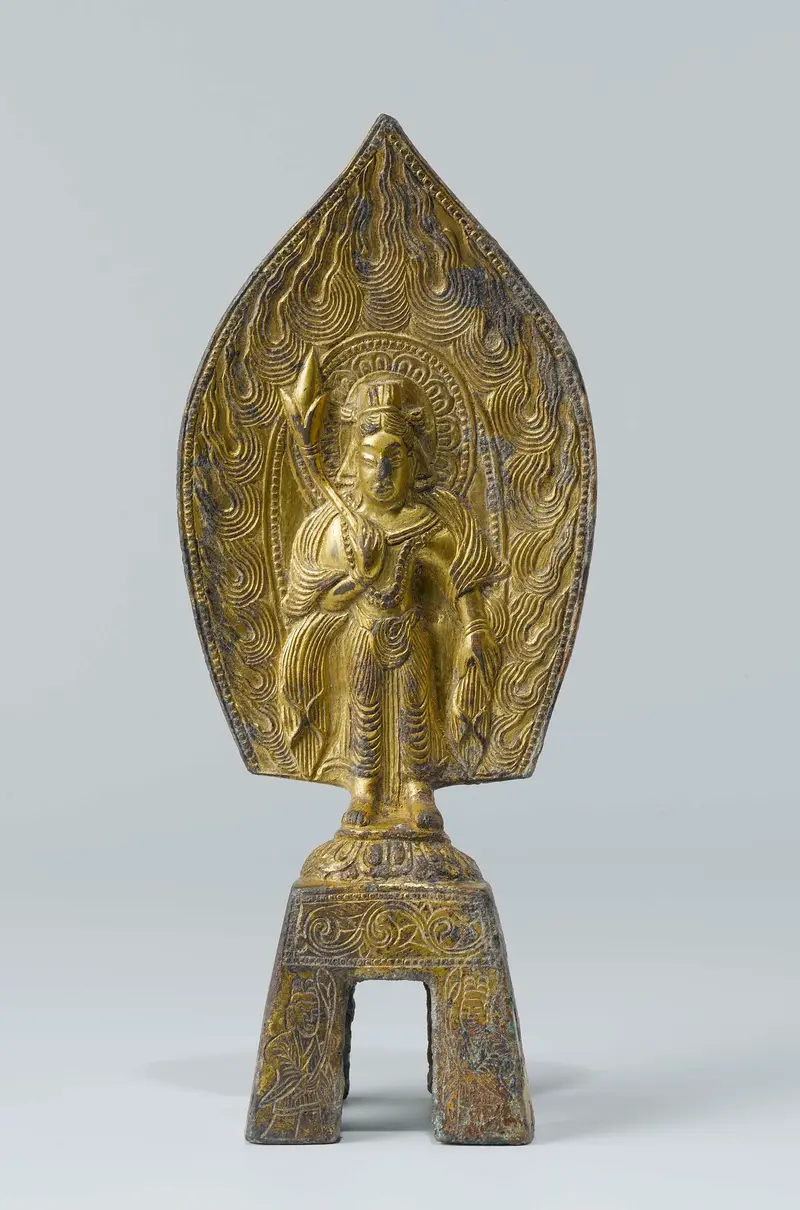
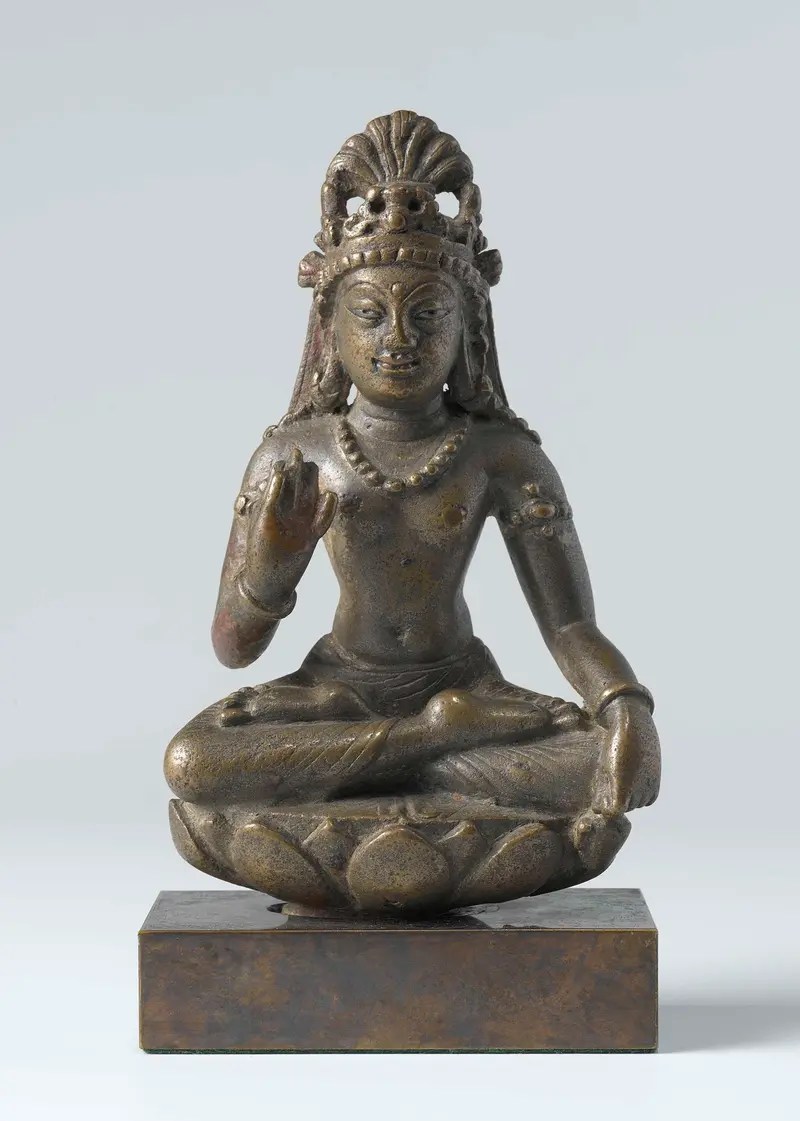
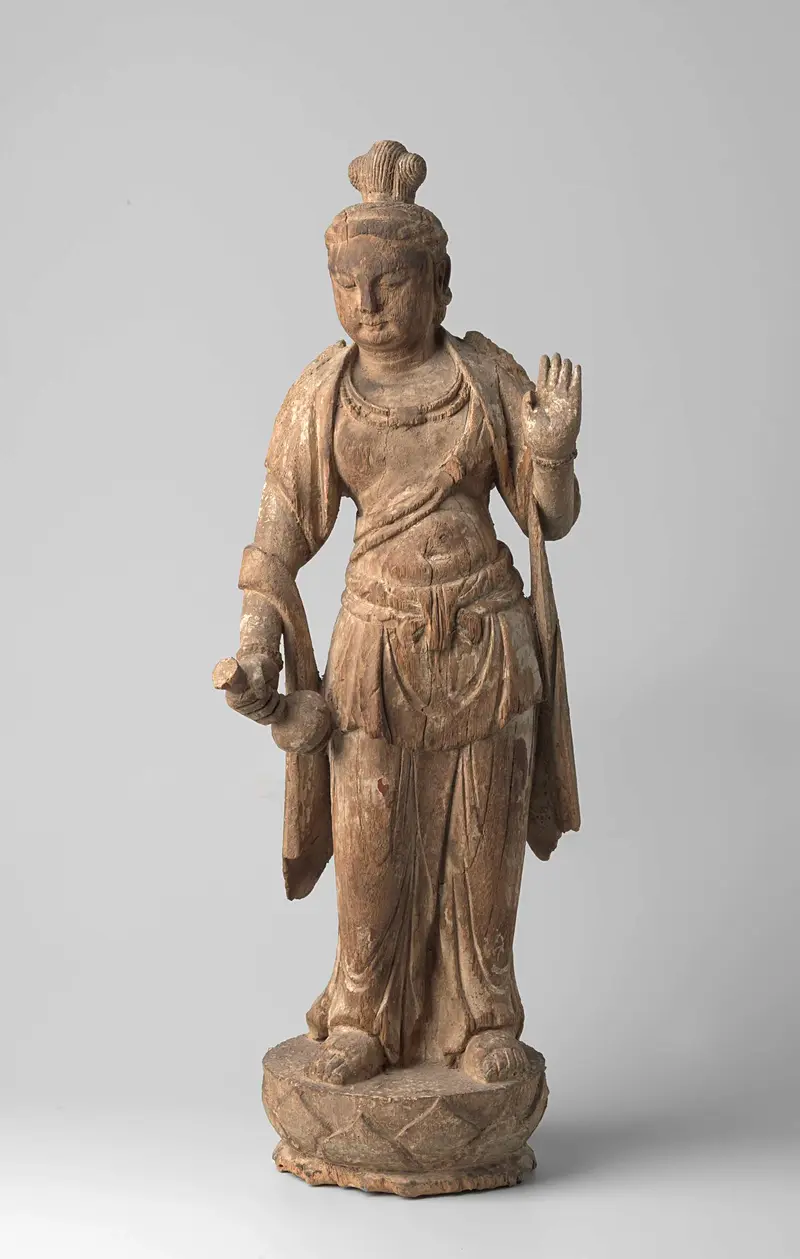
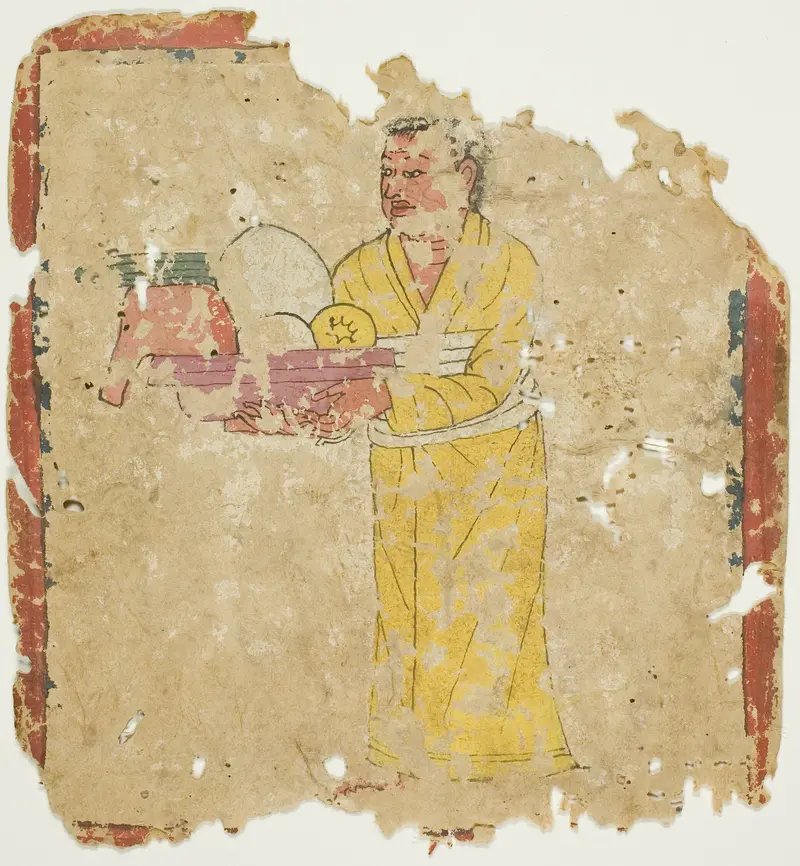
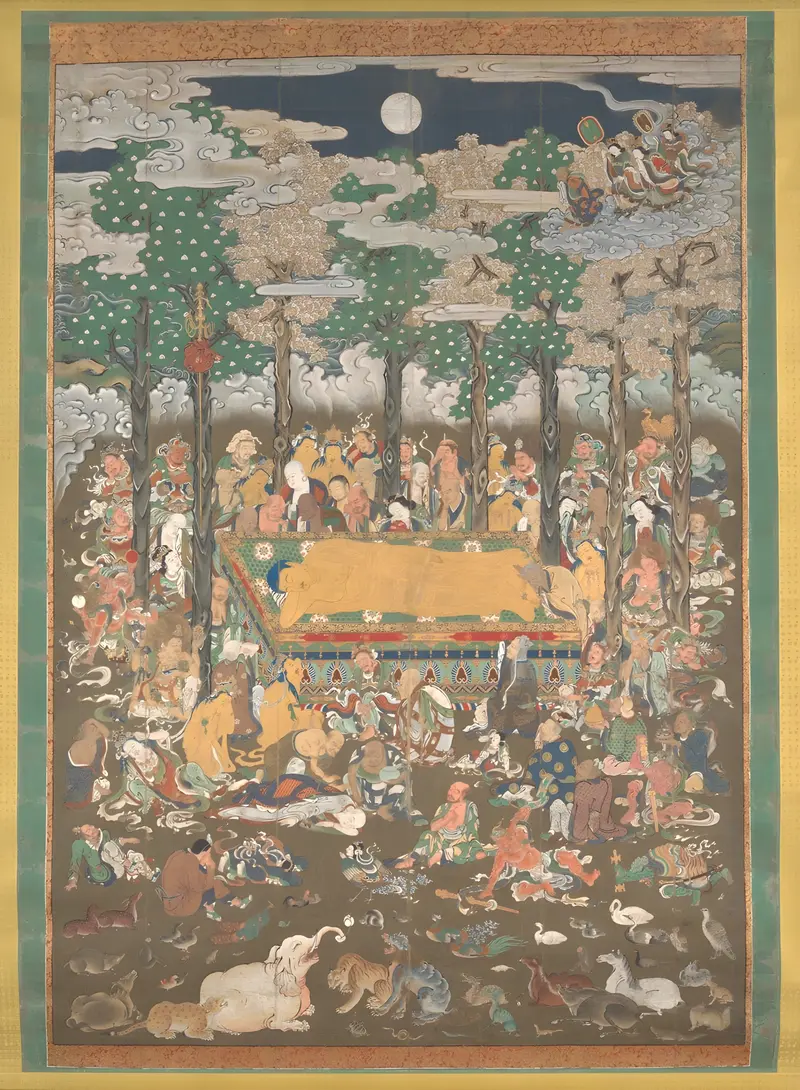
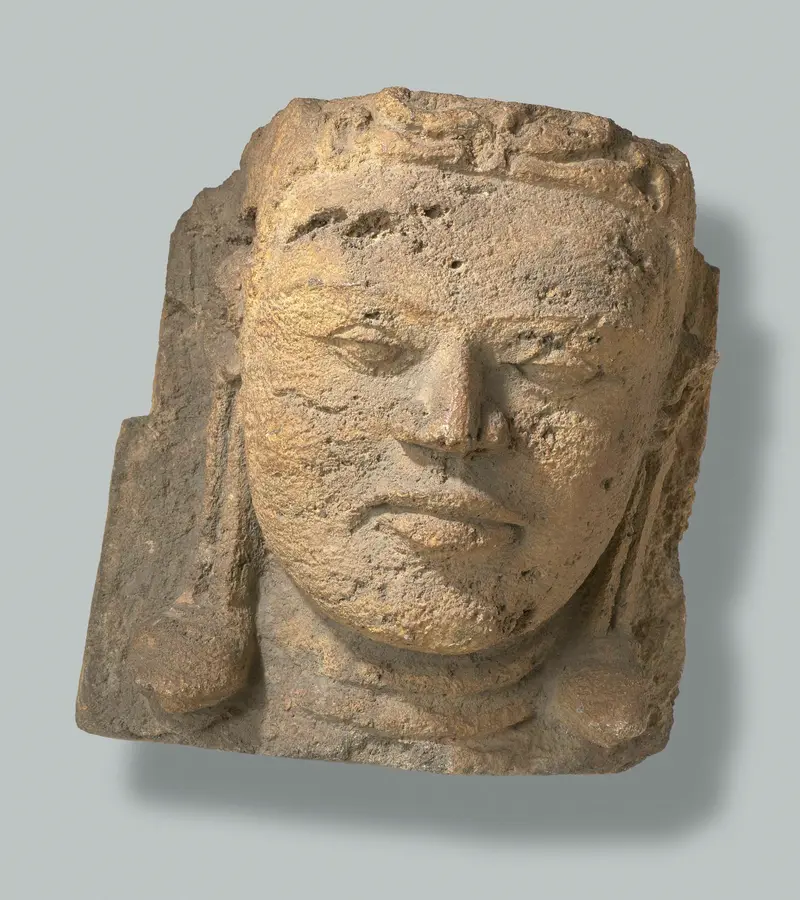
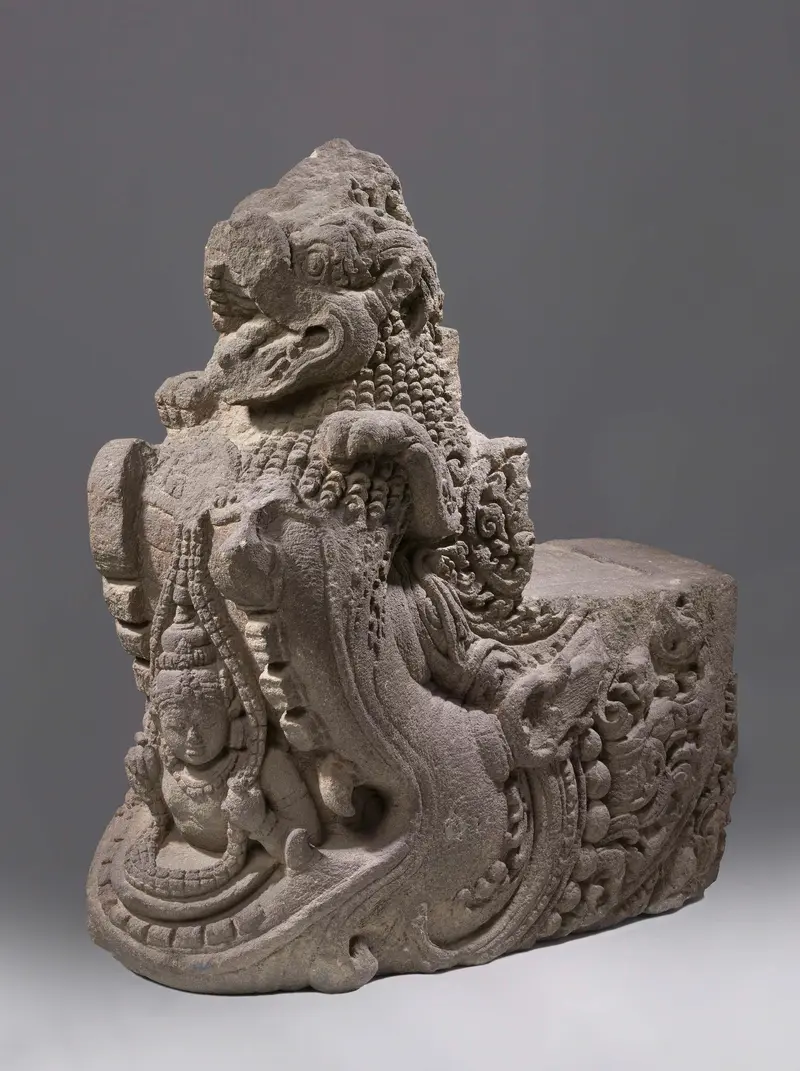
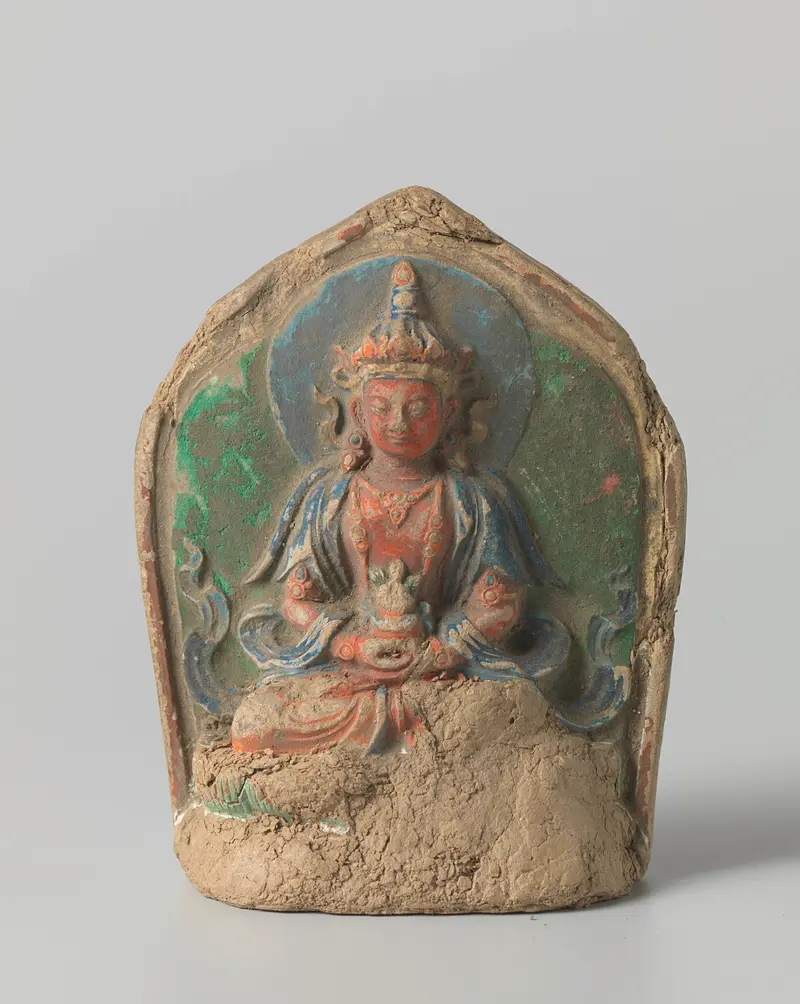
Thangkas, scroll paintings from China and Japan, sutras, initiation cards and sculpture. All public domain, free to download.




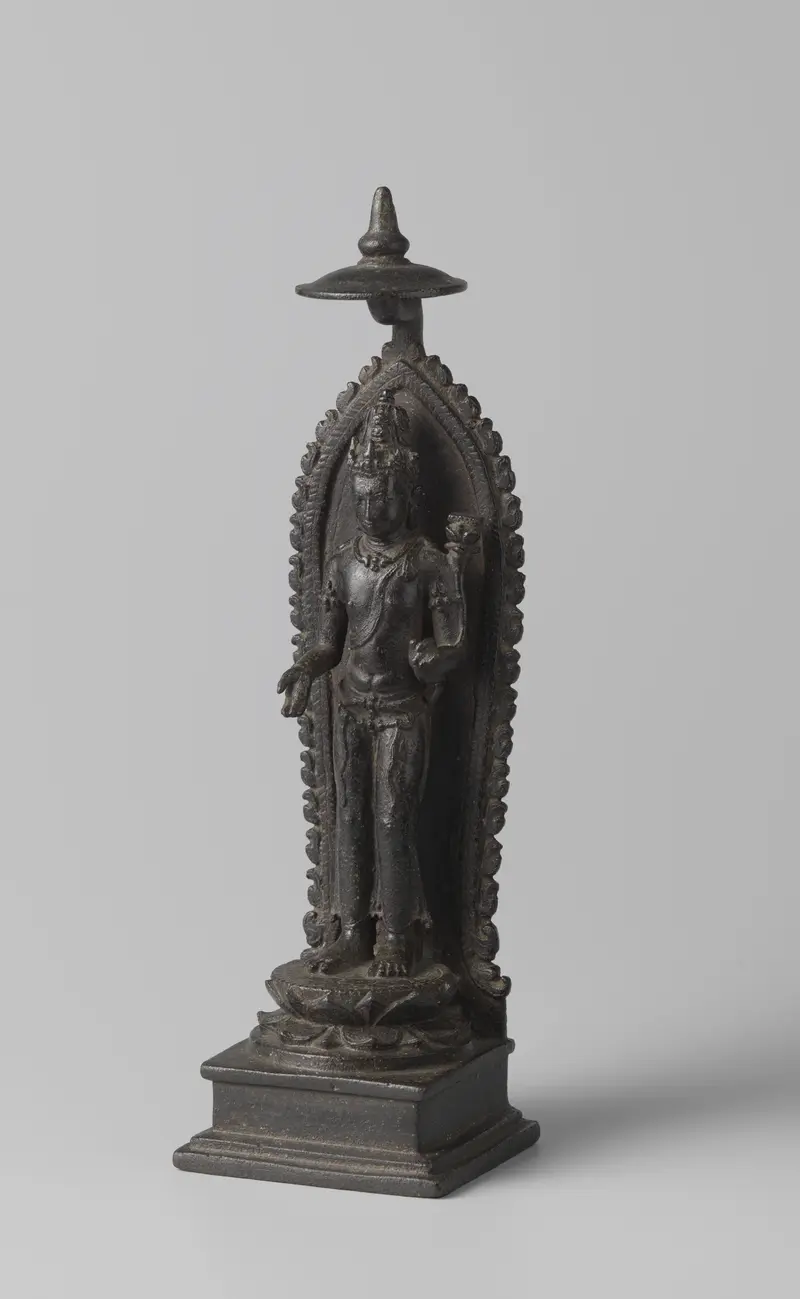











Famous Buddhist paintings
Buddhist paintings known around the world. Click any painting to see it up close and download it free.
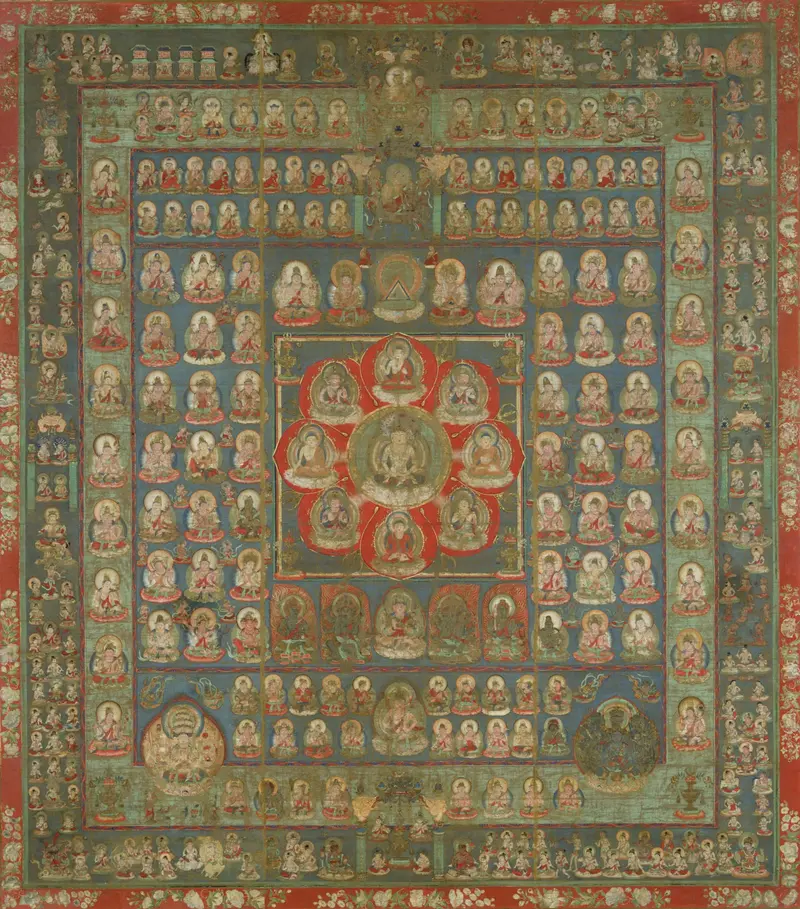 Womb World Mandala (Mandala of the Two Realms)Unknown artist
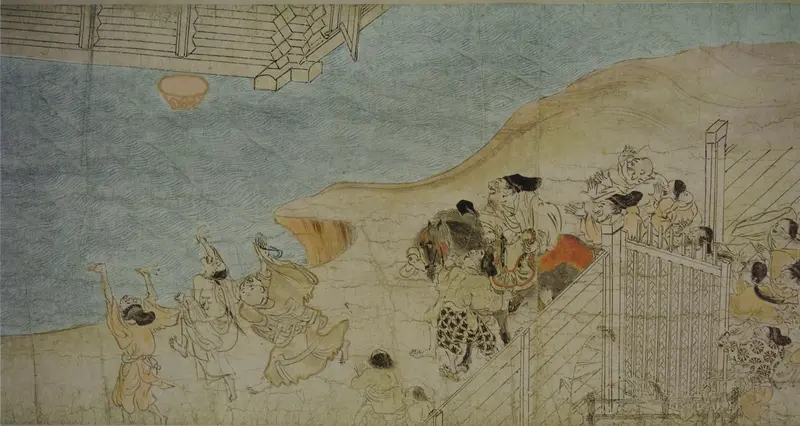 Legends of Mount Shigi: The Flying GranaryUnknown artist
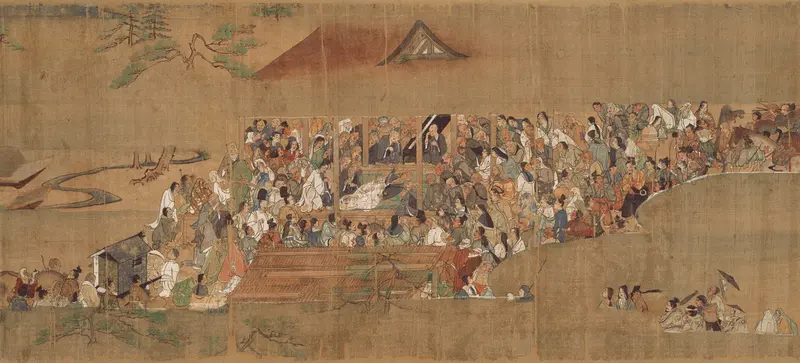 Illustrated Biography of the Monk Ippen, Scroll 12En'i
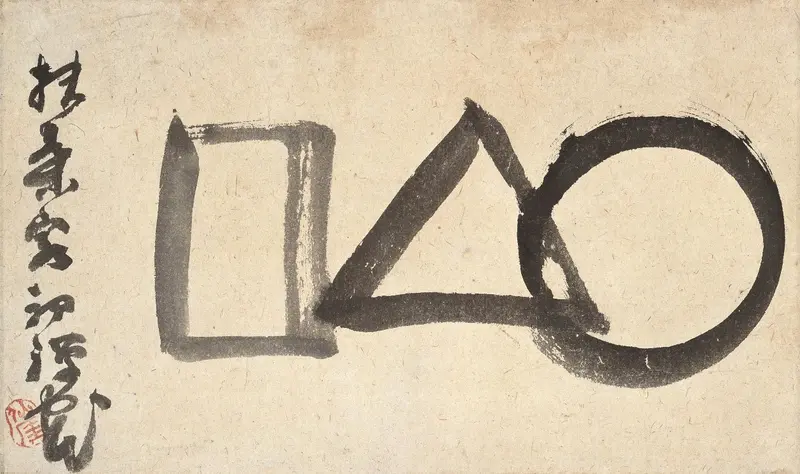 Circle, Triangle, SquareSengai
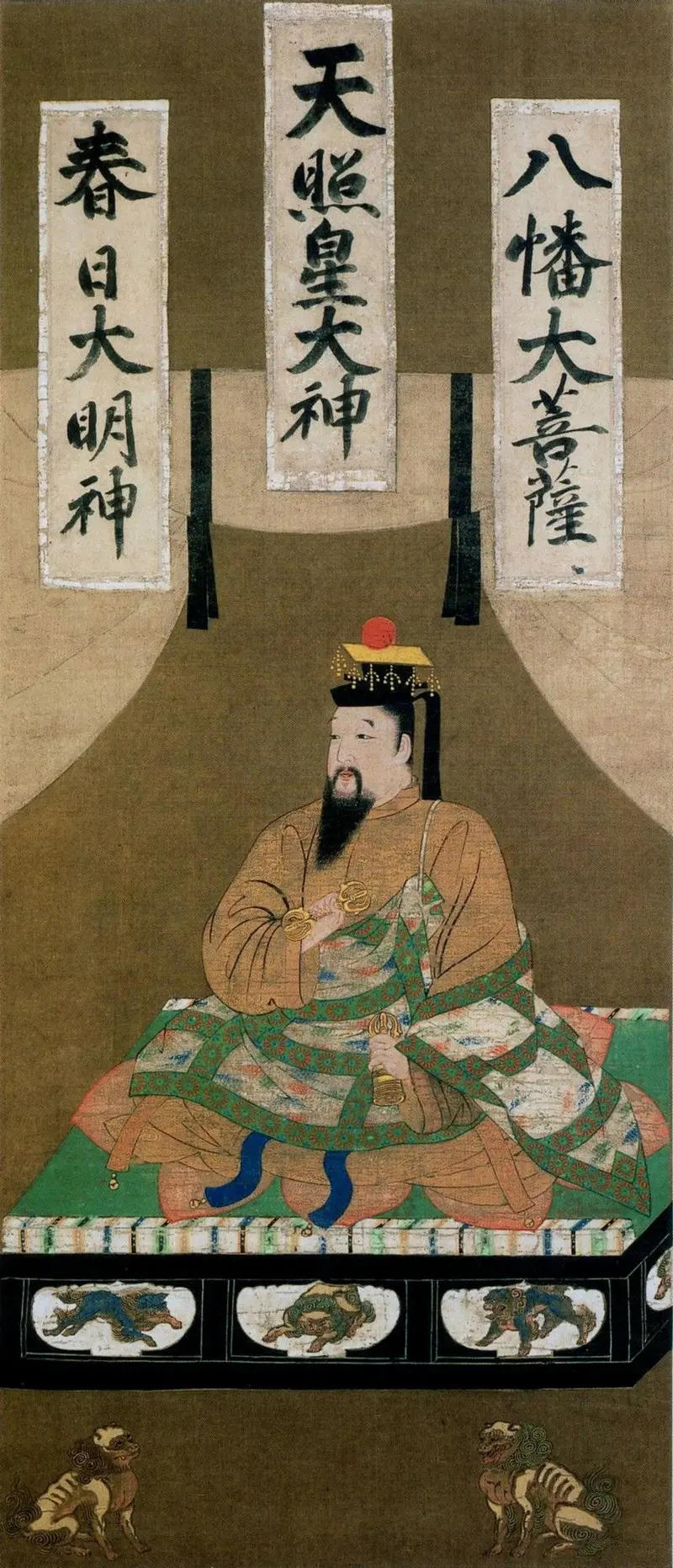 Portrait of Emperor Go-DaigoMonkan
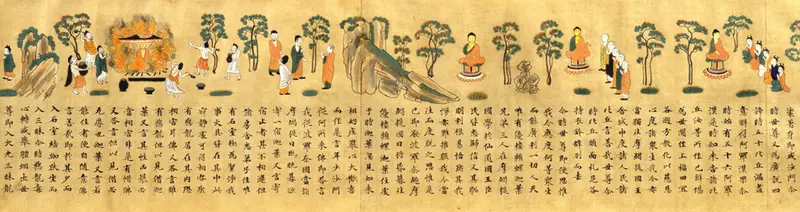 Illustrated Sutra of Past and Present Karma (E Ingakyō)Unknown artist
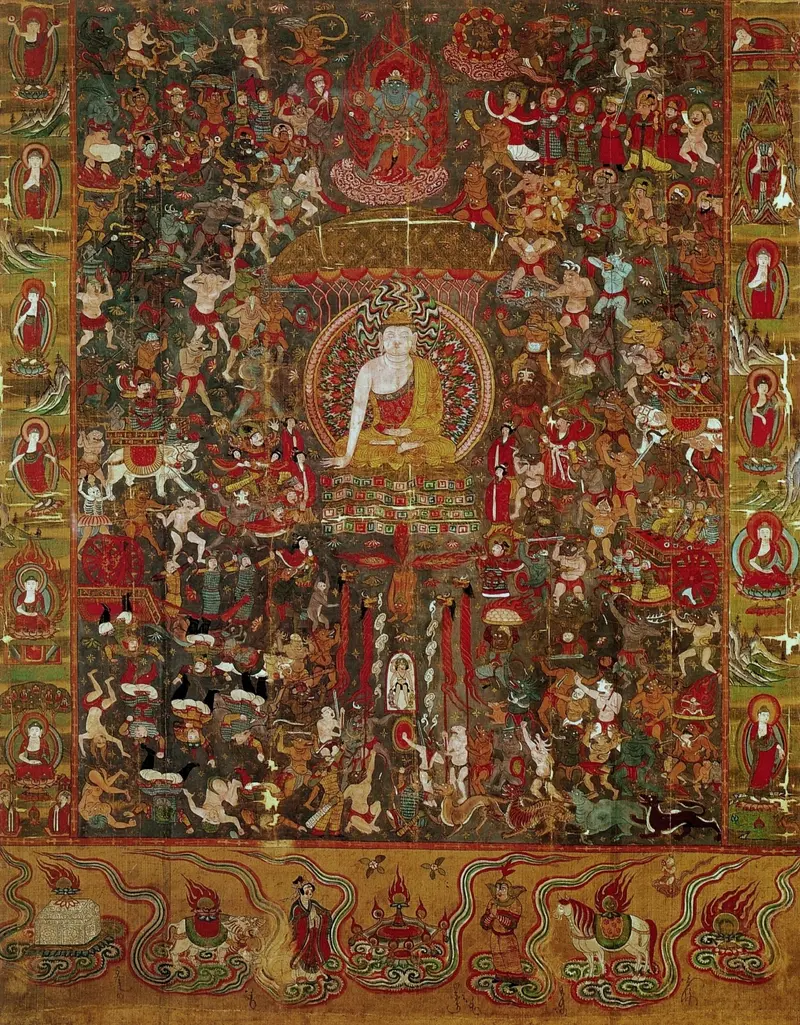 The Subjugation of MaraUnknown artist
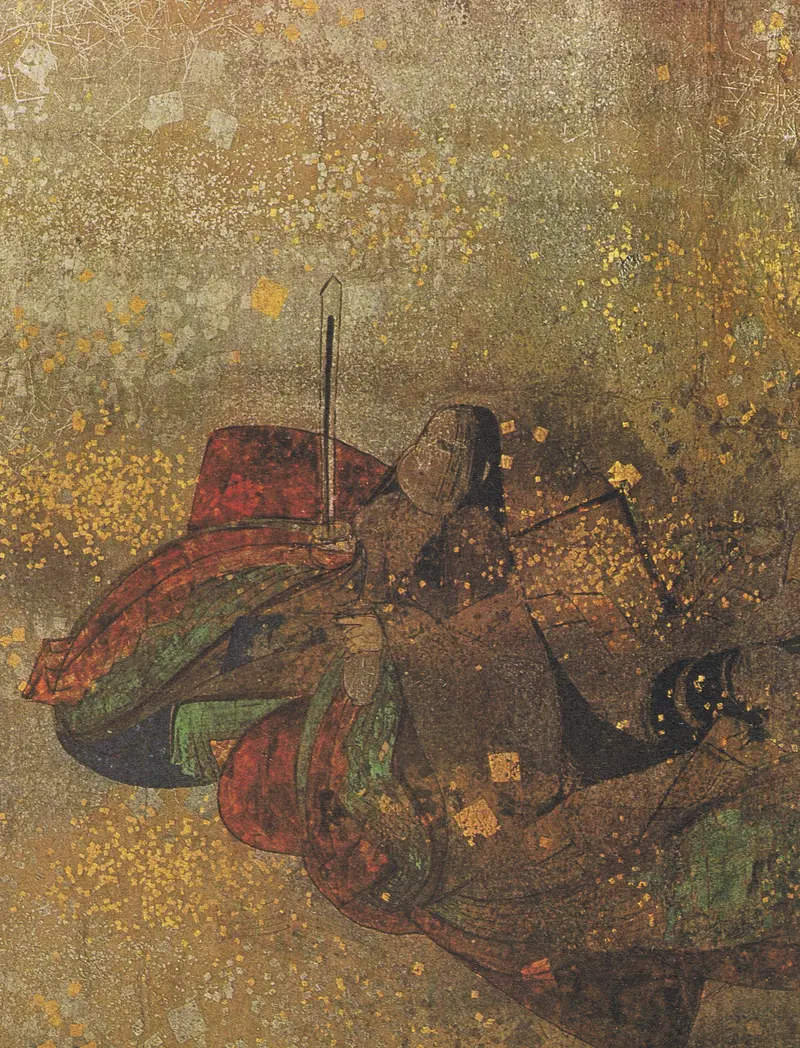 Heike Nōkyō: Frontispiece of the Kanfugen SutraUnknown artist
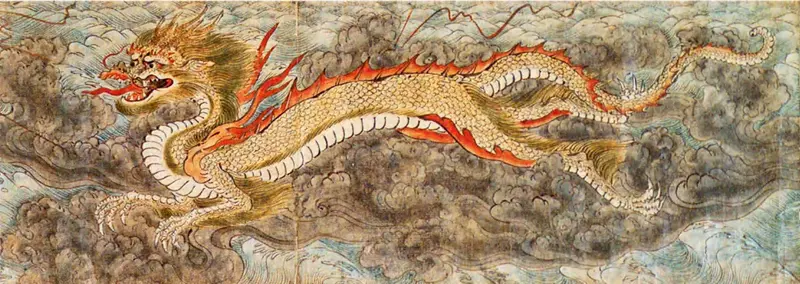 Legends of the Kegon Patriarchs: Zenmyō as a DragonUnknown artist
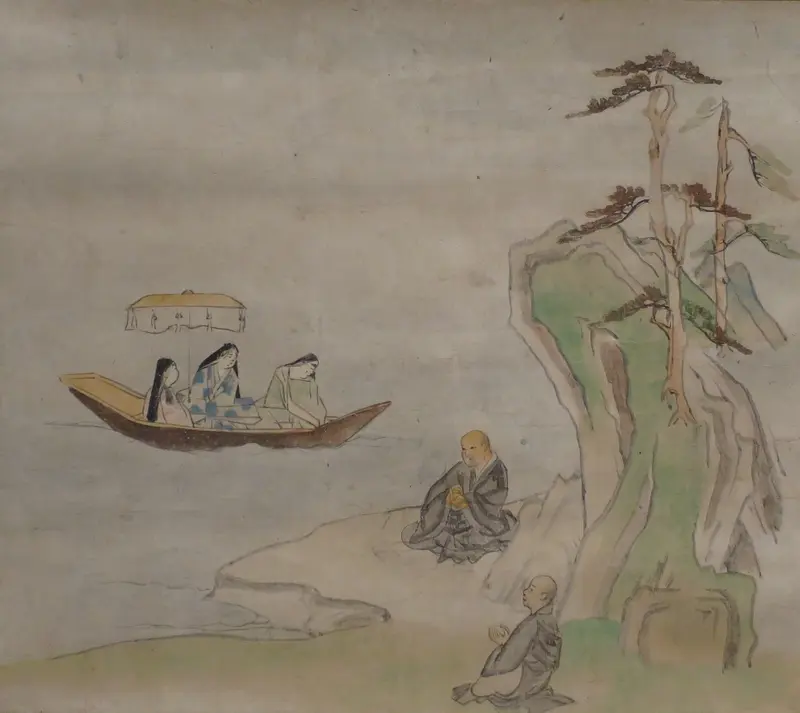 Fragment of the Illustrated Life of Priest HōnenUnknown artist
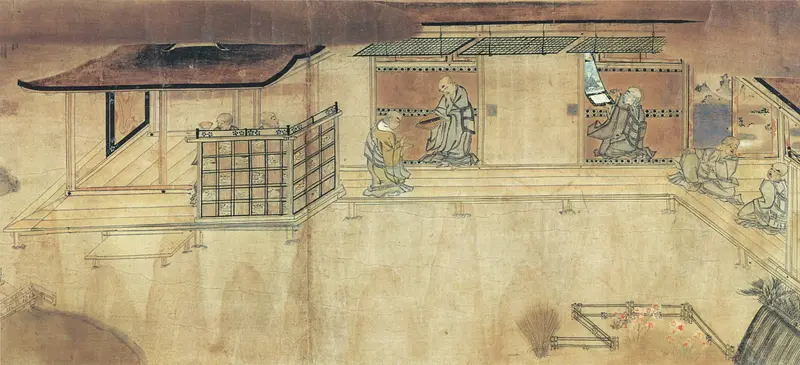 Illustrated Biography of Shinran (Rin'a Version)Unknown artist
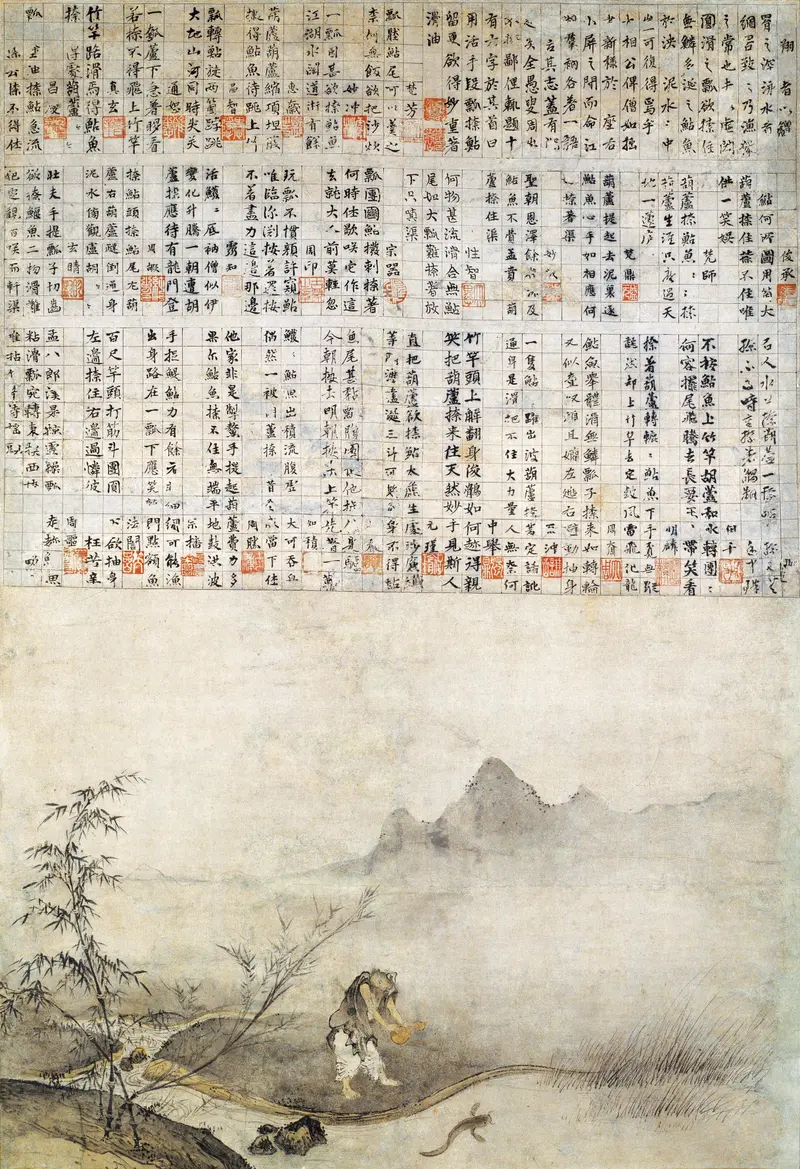 Catching a Catfish with a GourdJosetsu
Tibetan Buddhist thangka paintings
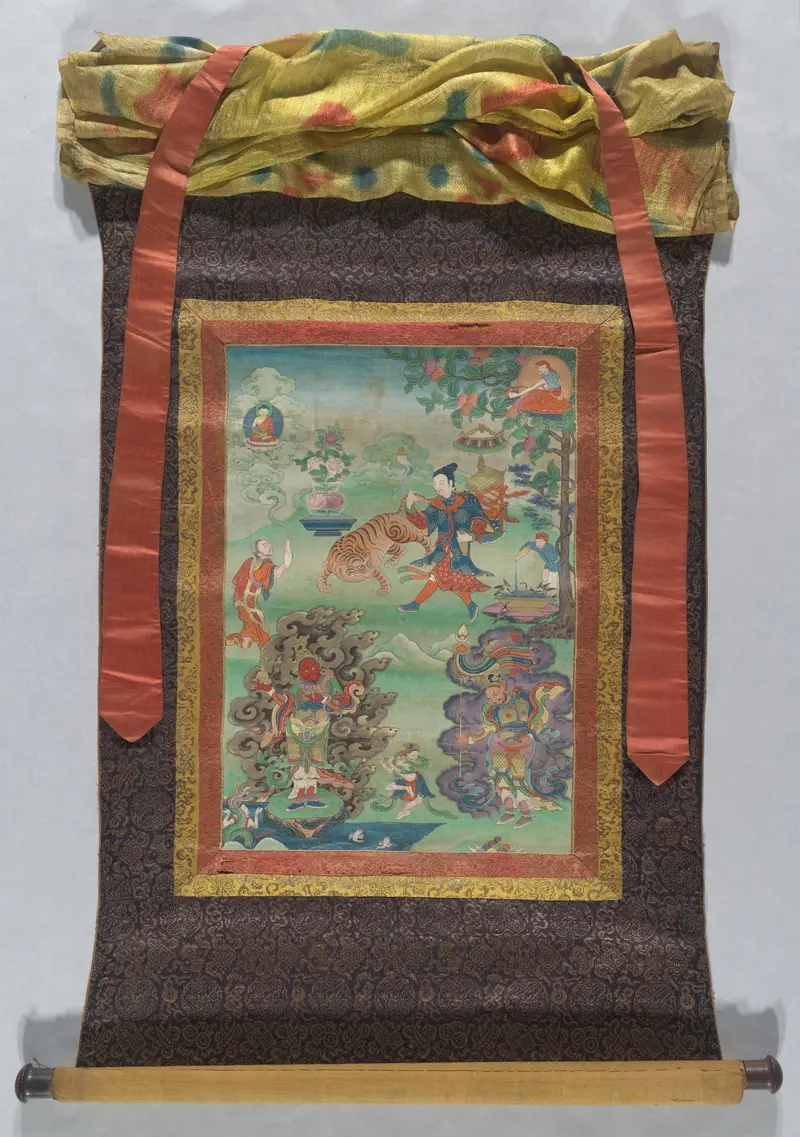
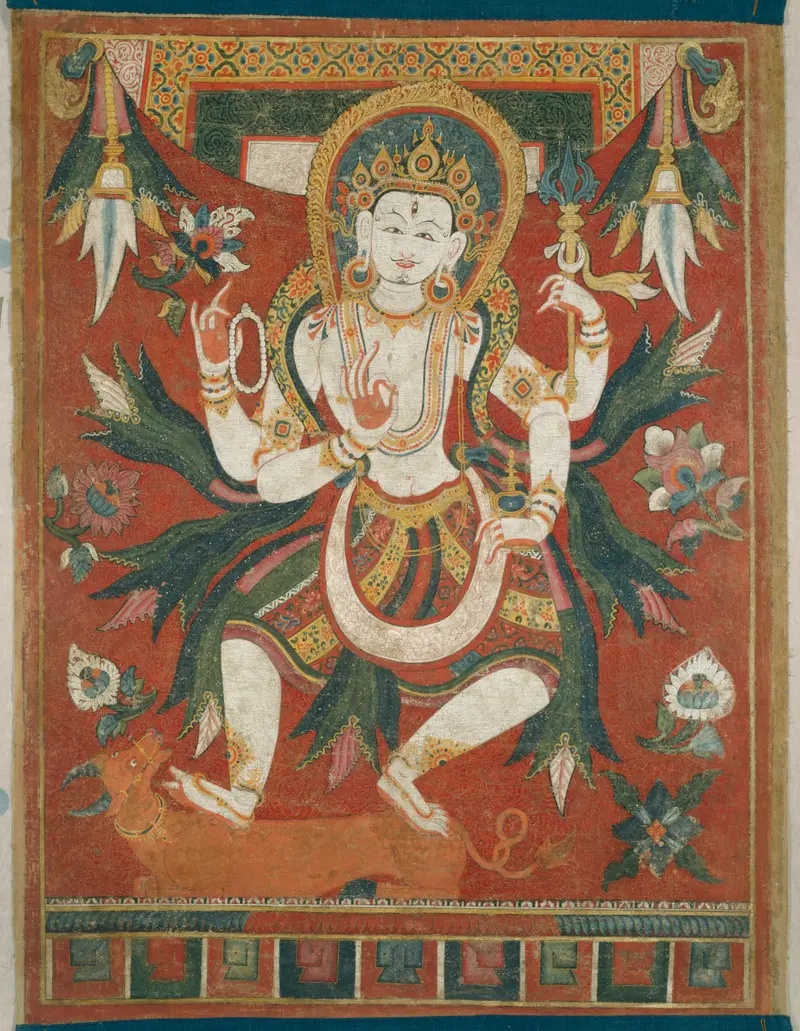
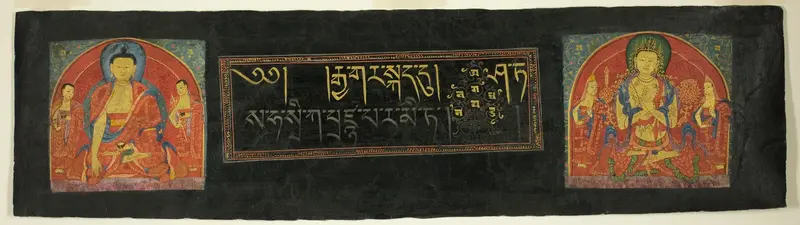
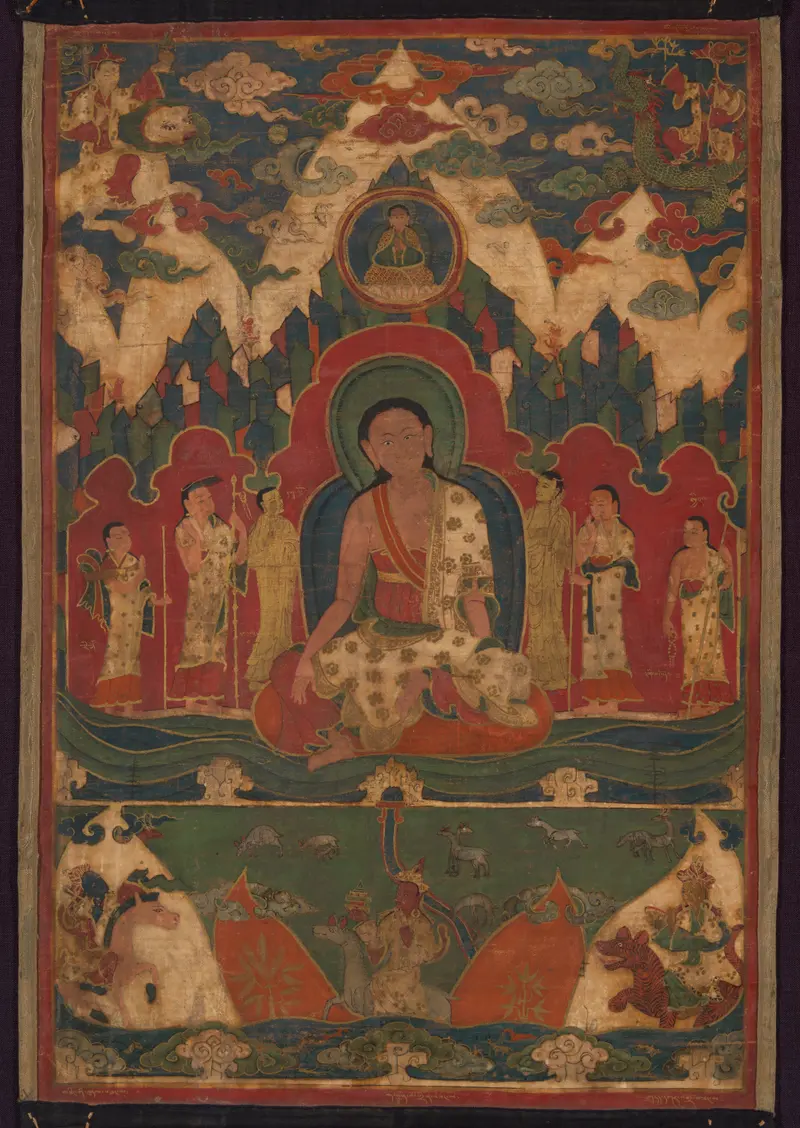
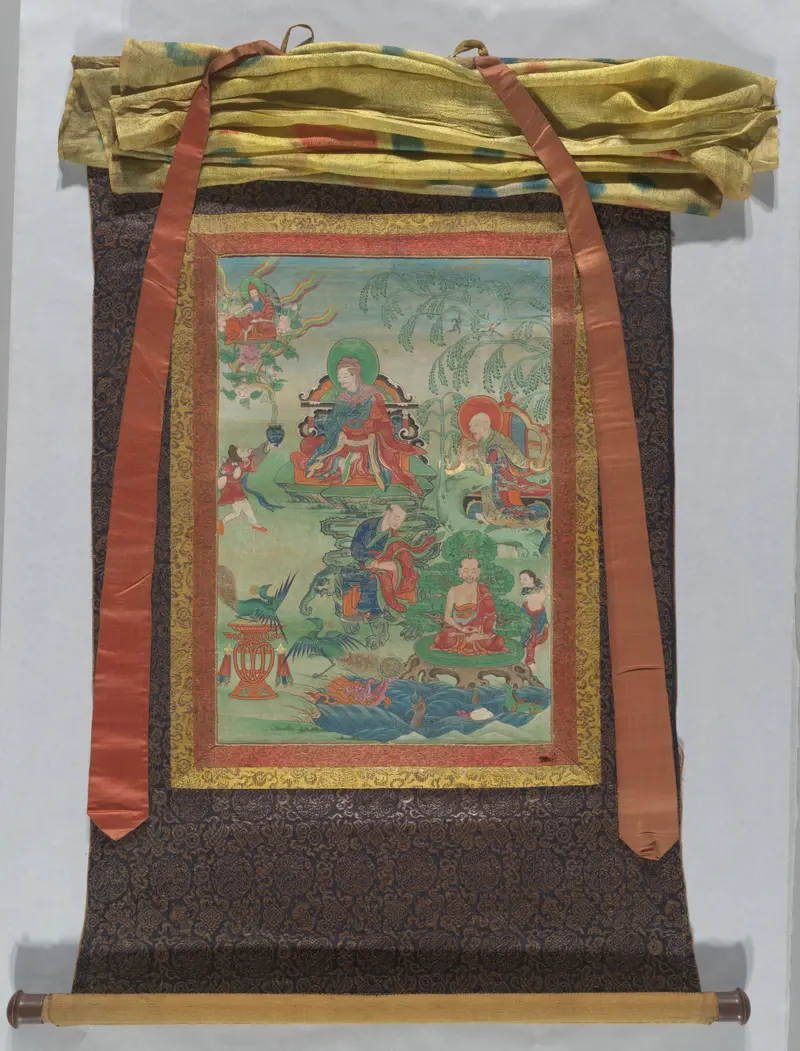
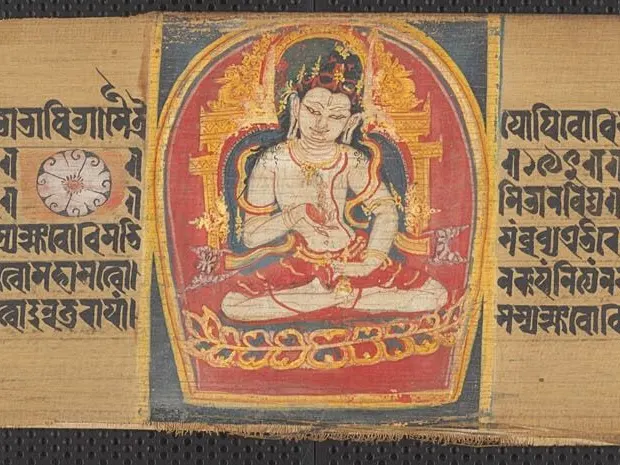
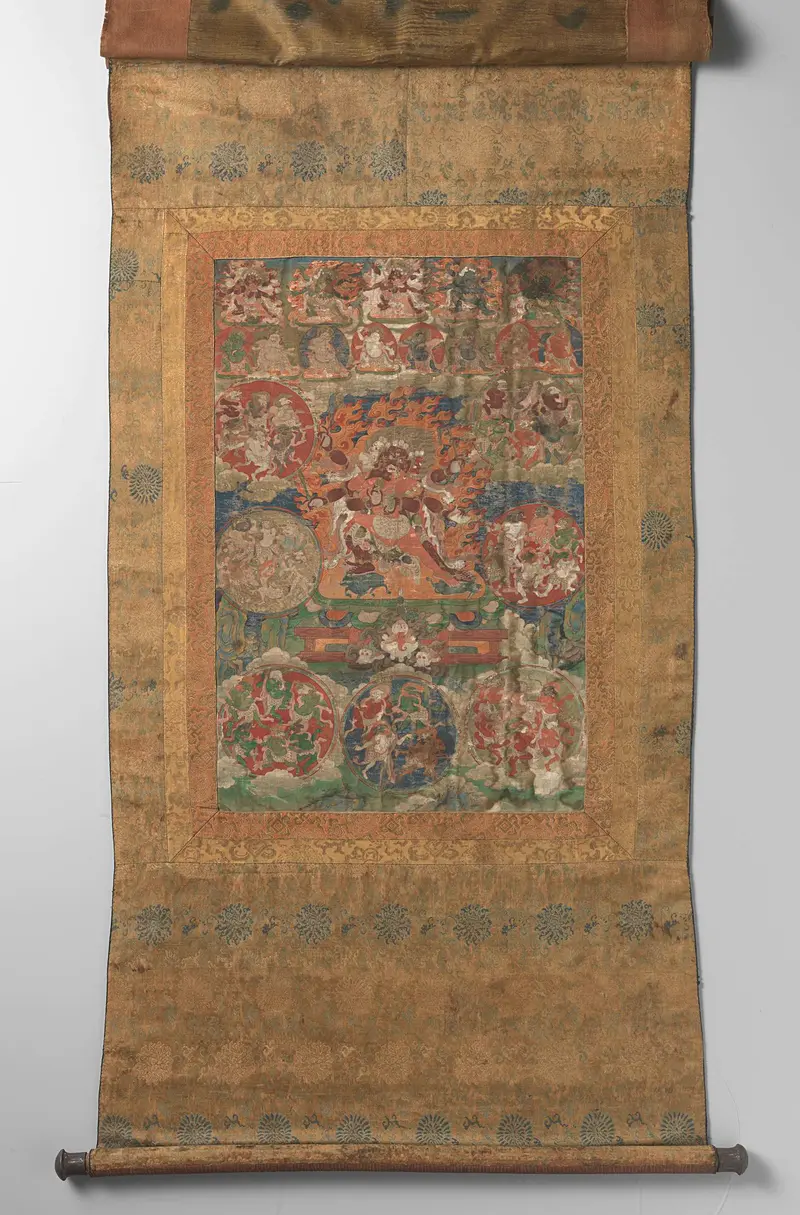
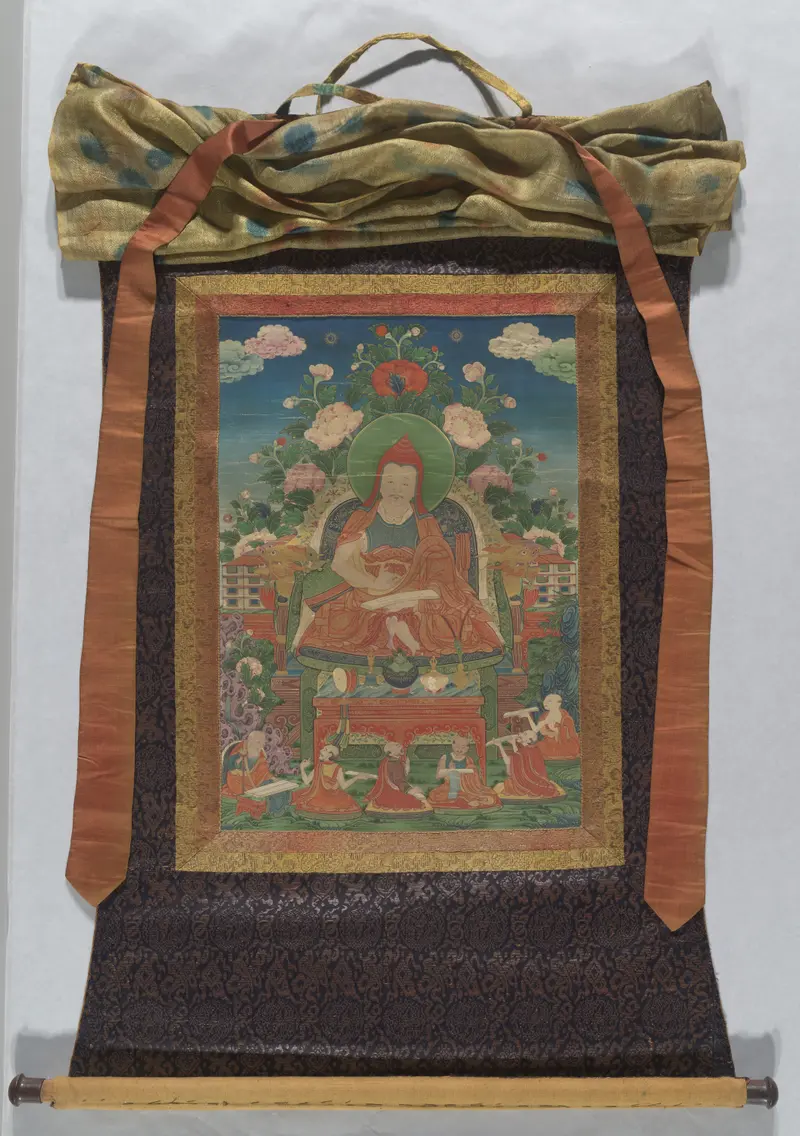
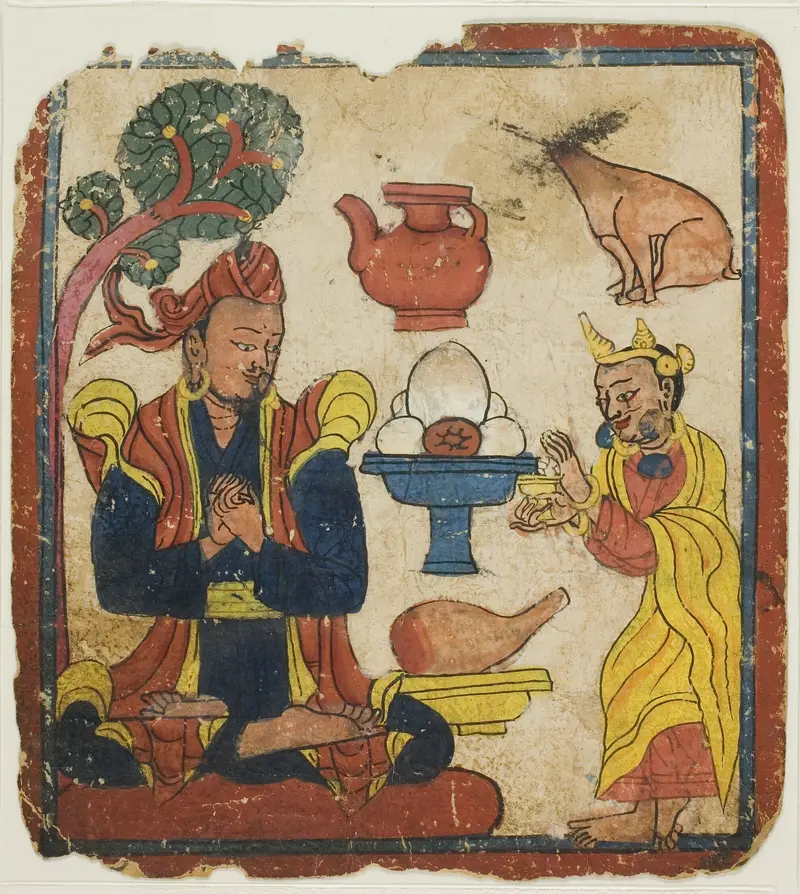
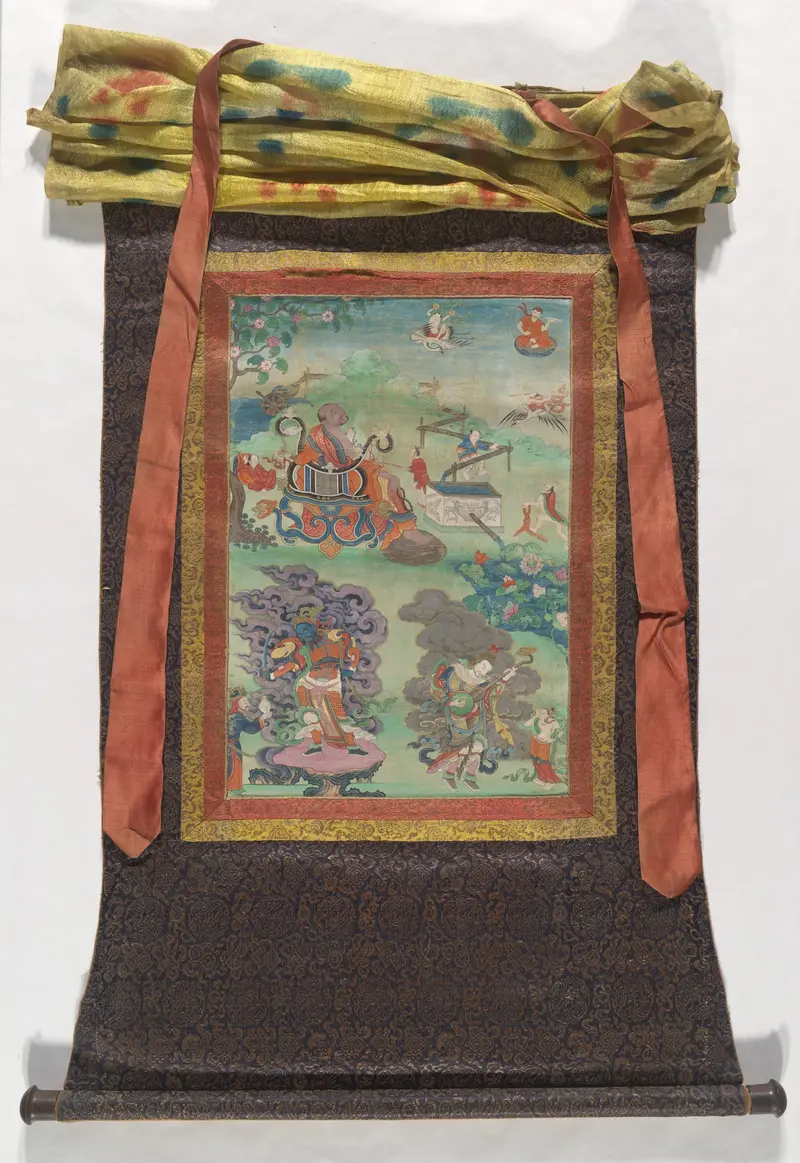
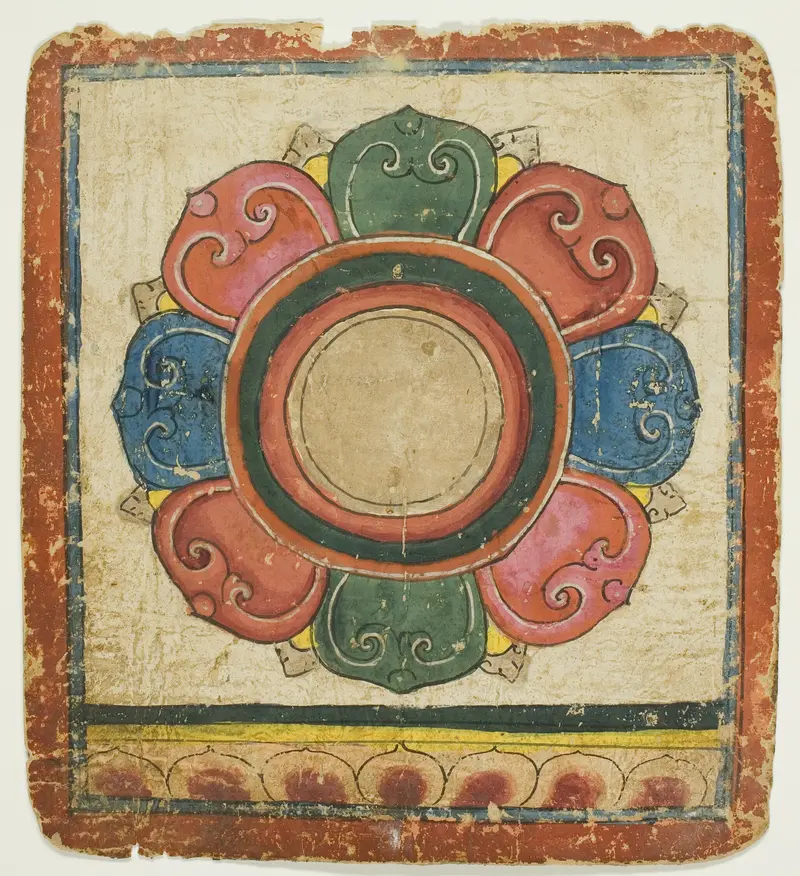
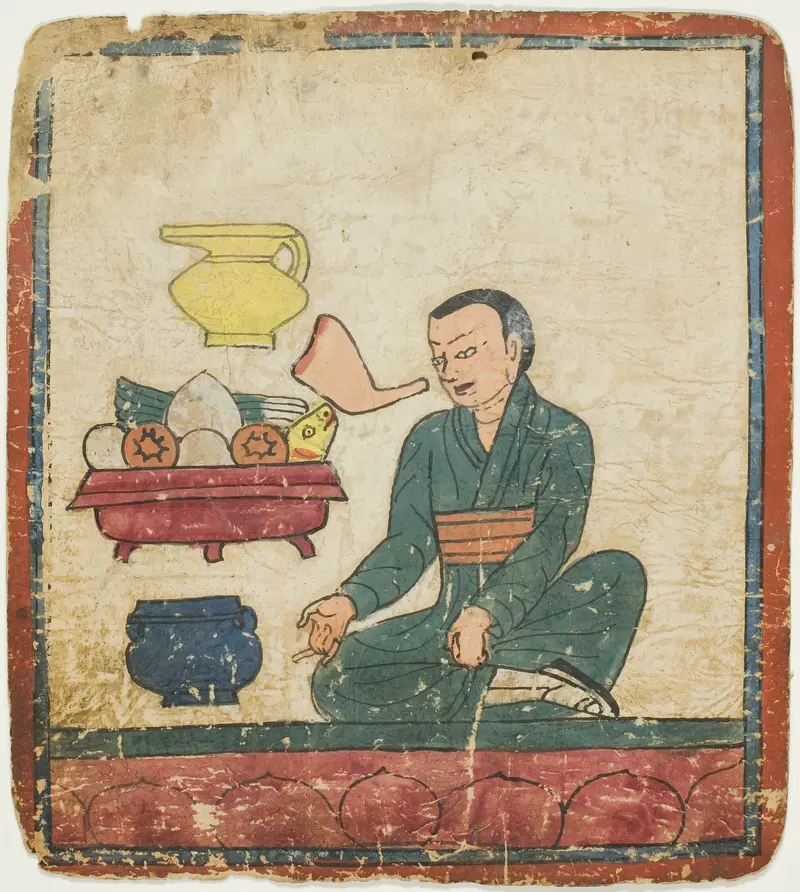
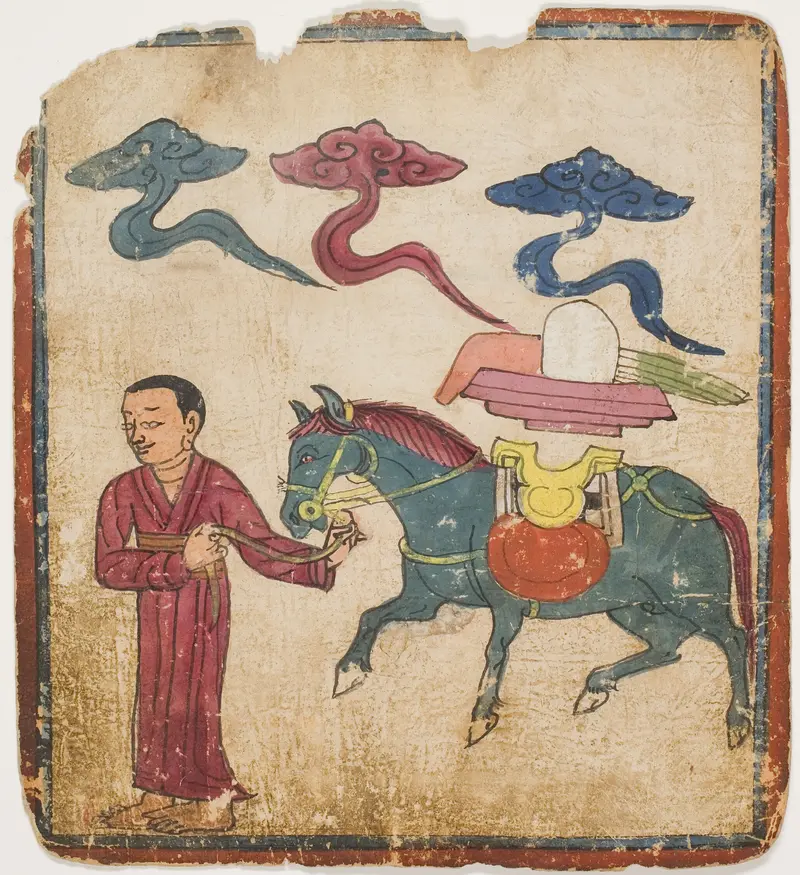
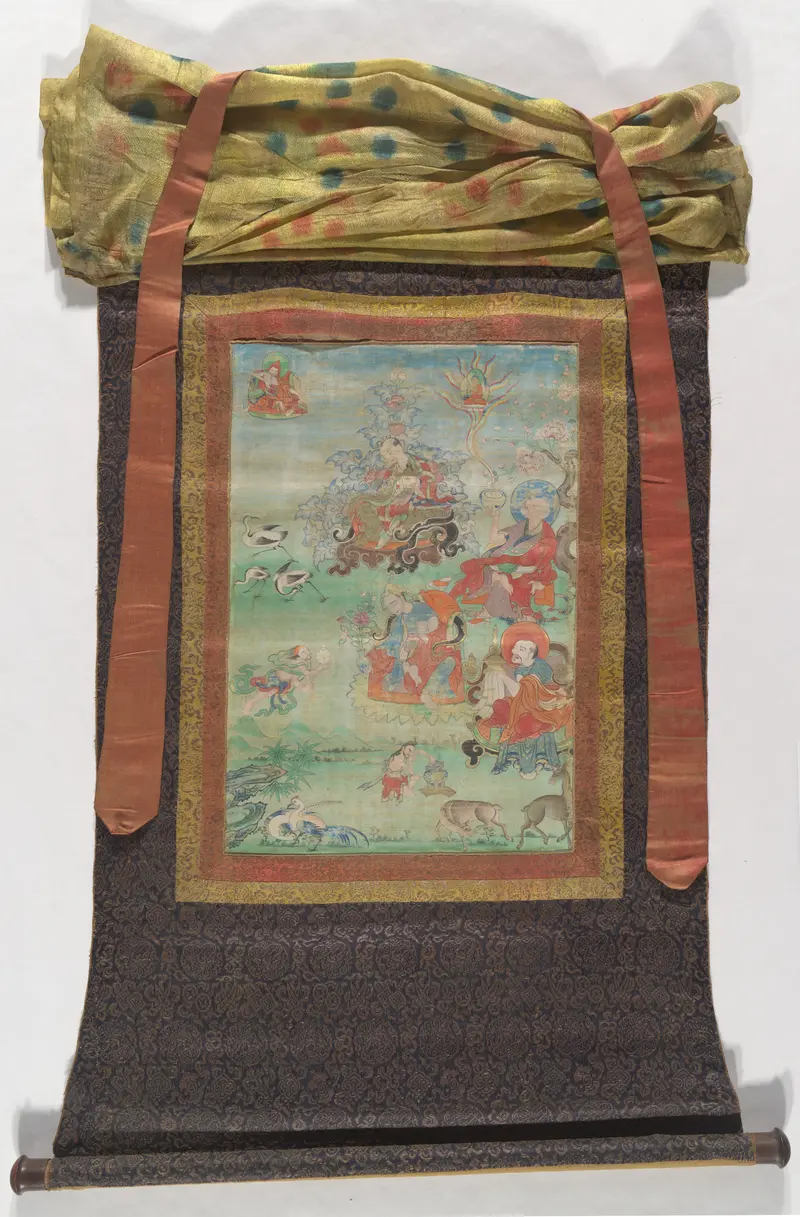
A thangka is a Tibetan hanging scroll, usually painted on cotton, mounted in silk brocade and kept rolled up around a wooden dowel, the Rubin Museum of Art explains; similar paintings from Nepal are called paubha. These come from Tibet and Nepal, 14th–19th century, with a small initiation card used in Tibetan Buddhist ritual.
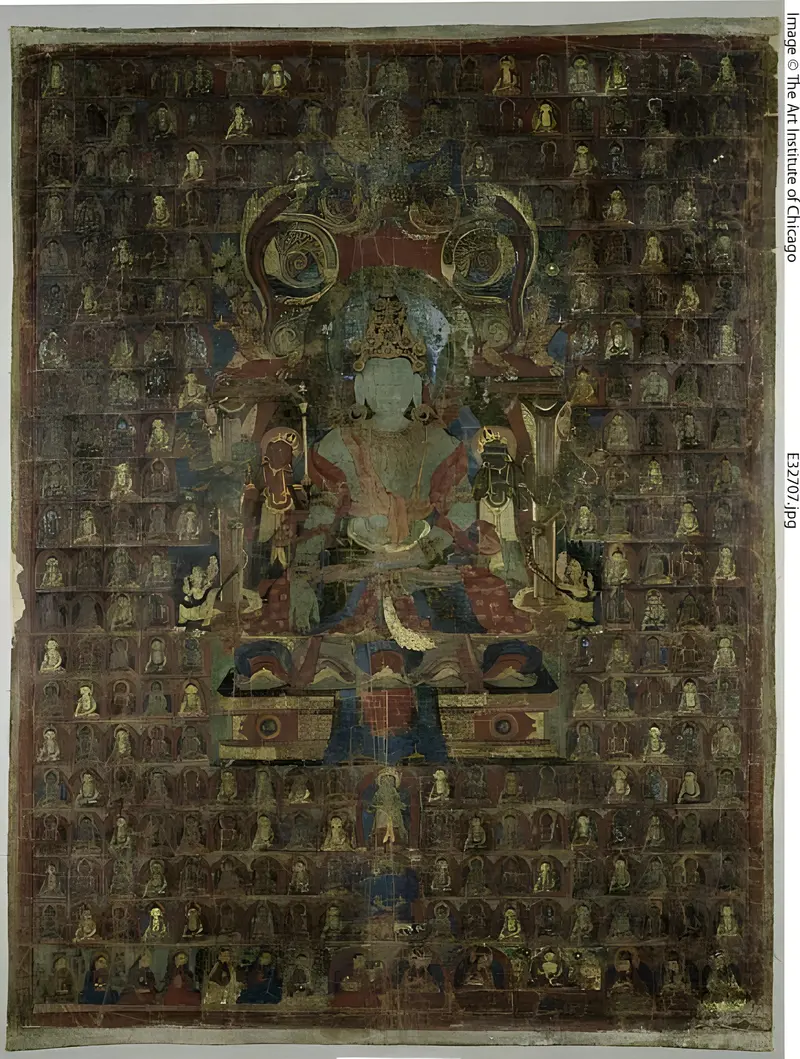
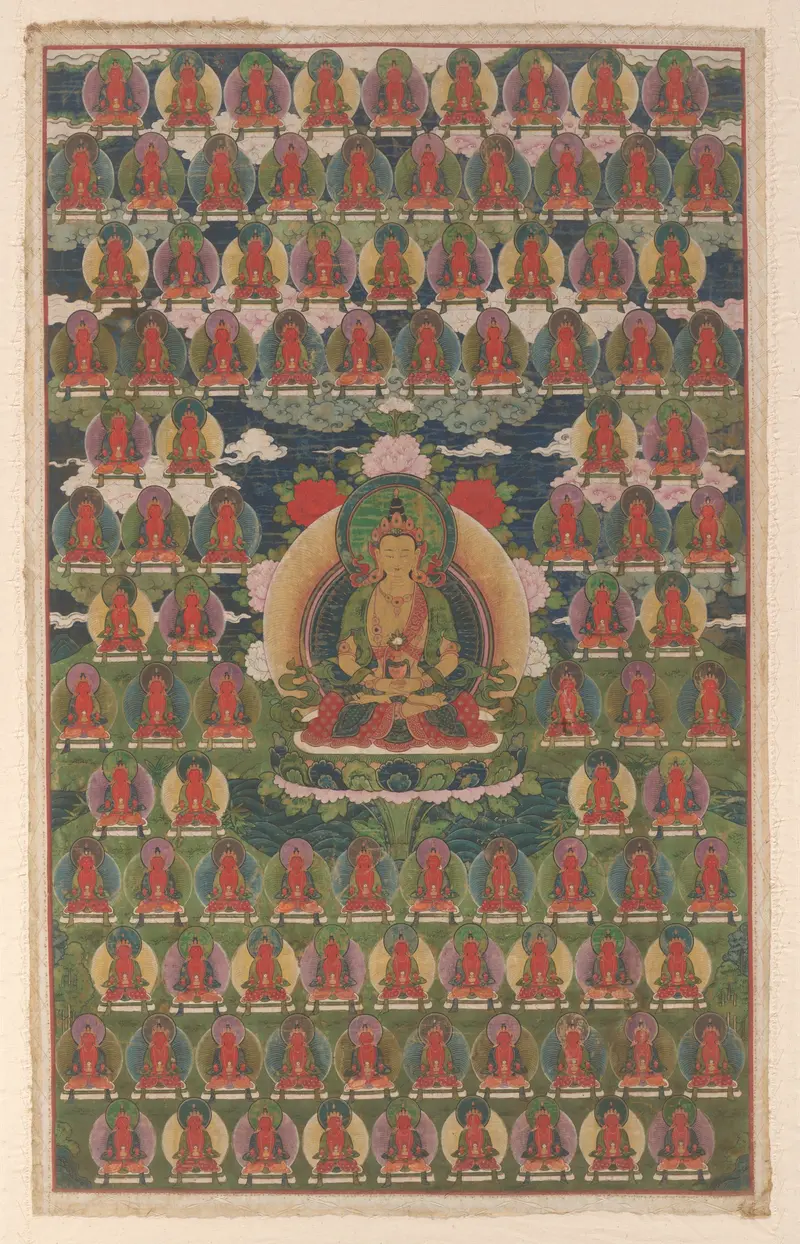 Amitayus Buddha Surrounded by One Hundred BuddhasUnknown artist, Tibet
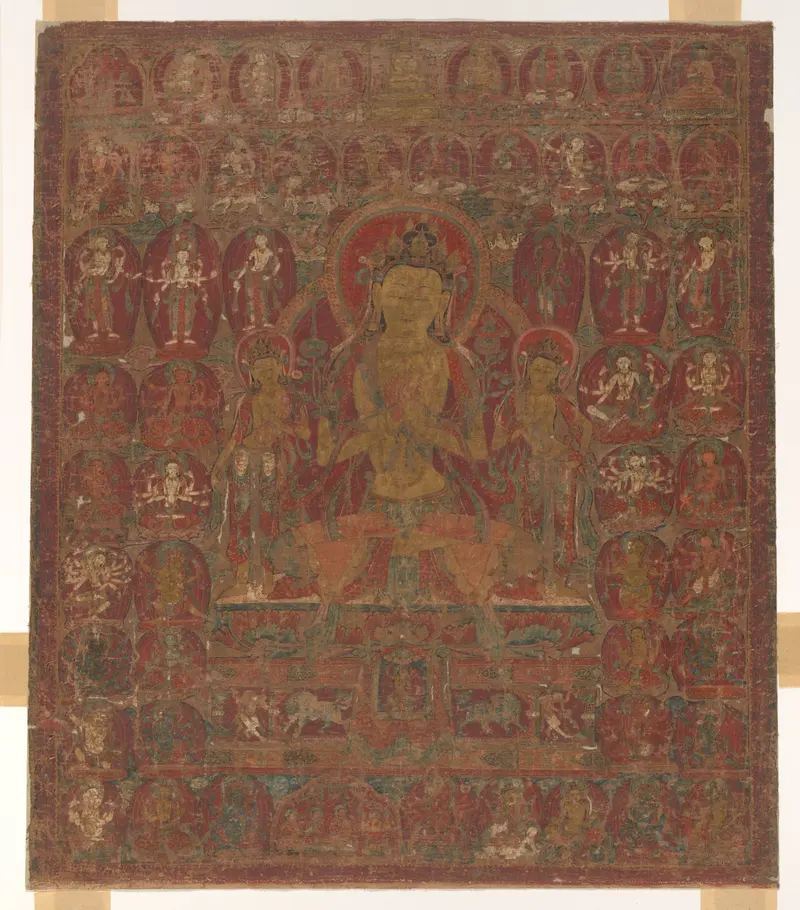 Manjushri with Vajrapani and Padmapani, the Three Lords of the WorldUnknown artist, western Tibet
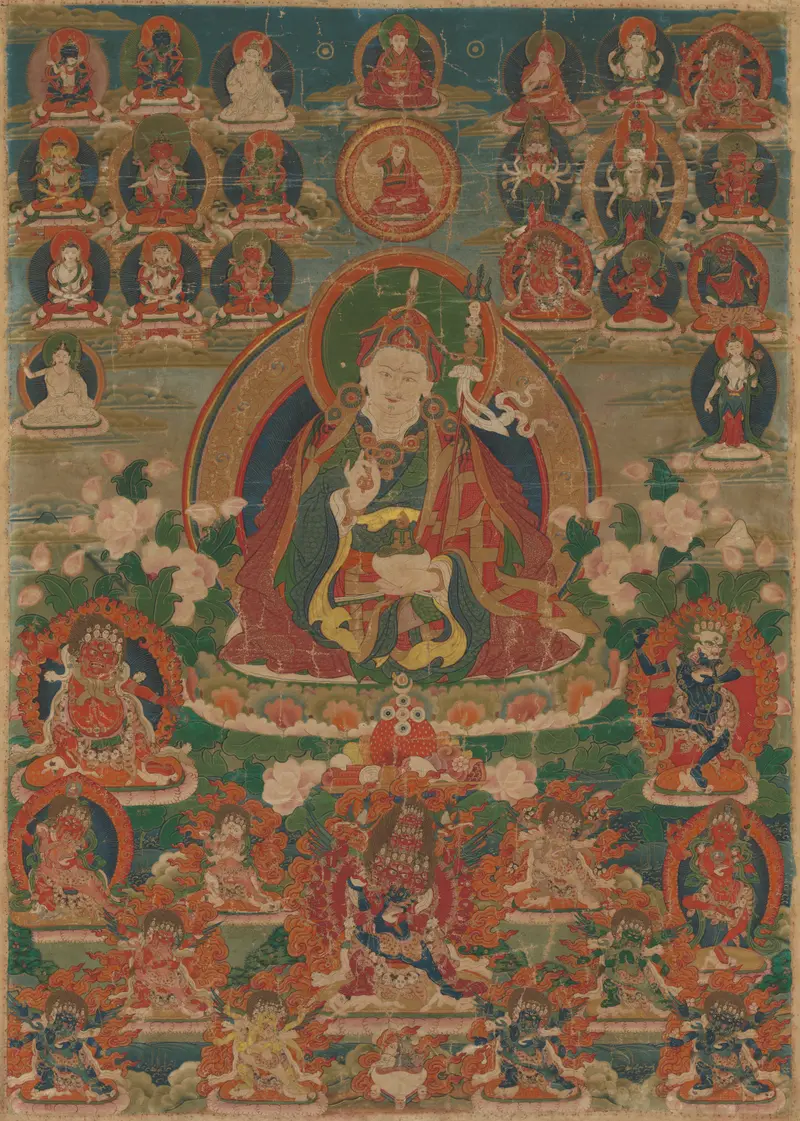 Guru Rinpoche (Padmasambhava) in Multiple FormsUnknown artist, Tibet
 Ushnishavijaya Within a ChaityaUnknown artist, Nepal
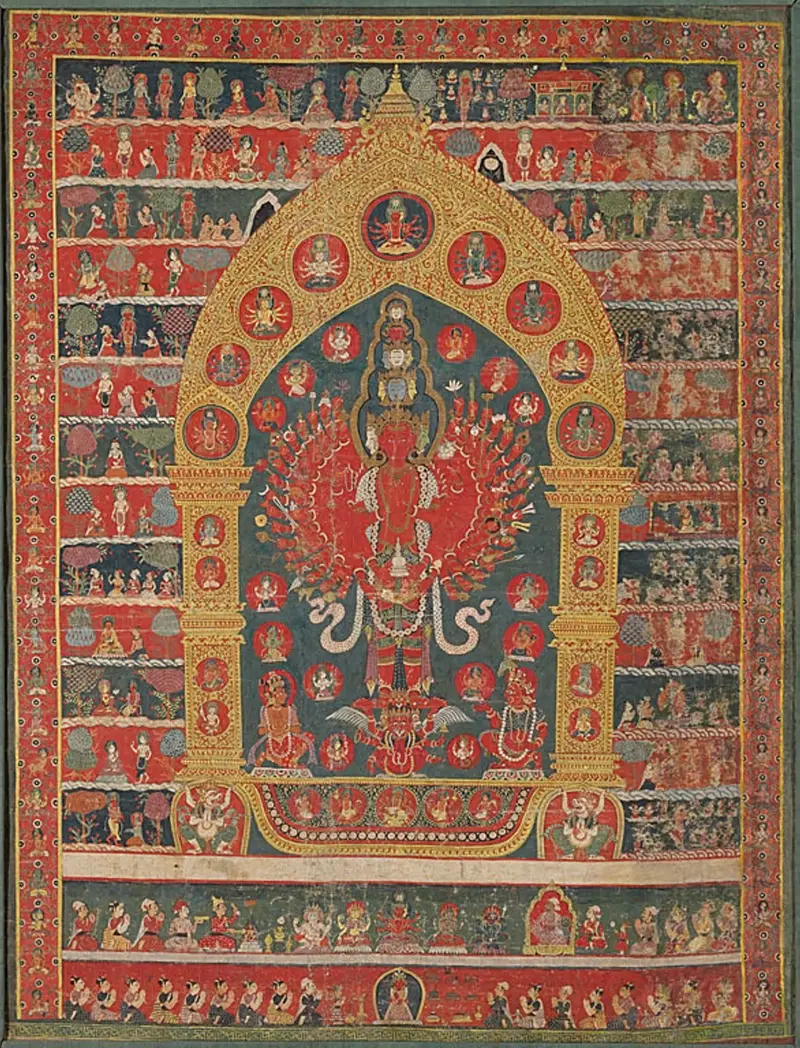 Red AvalokiteshvaraUnknown artist, Nepal
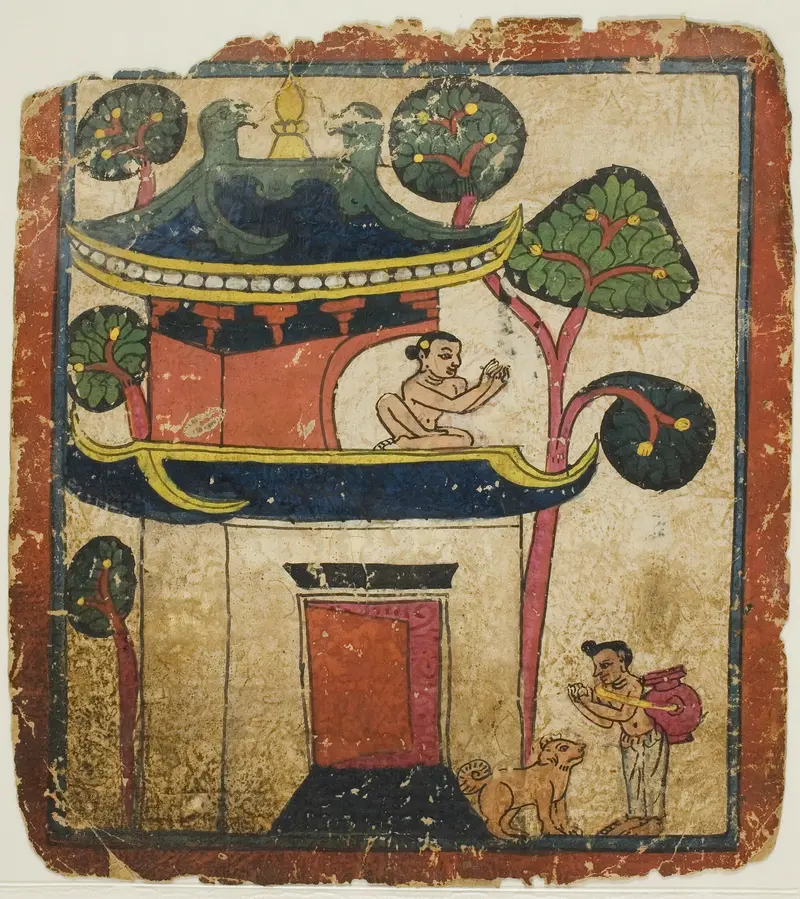 Scene from the Story of Buddha Ushnisha, from a Set of Initiation Cards (Tsakali)Unknown artist, southern Tibet
Buddhist paintings from China and Japan
In China and Japan, Buddhist painting meant banners and hanging scrolls on silk and cotton, drawings that recorded the forms of deities, and sutras copied in gold. In Japan, the Art Institute of Chicago notes, decorated sutras such as the Jingoji Sutra were commissioned in the belief that everyone involved received merit and a favorable rebirth in paradise.
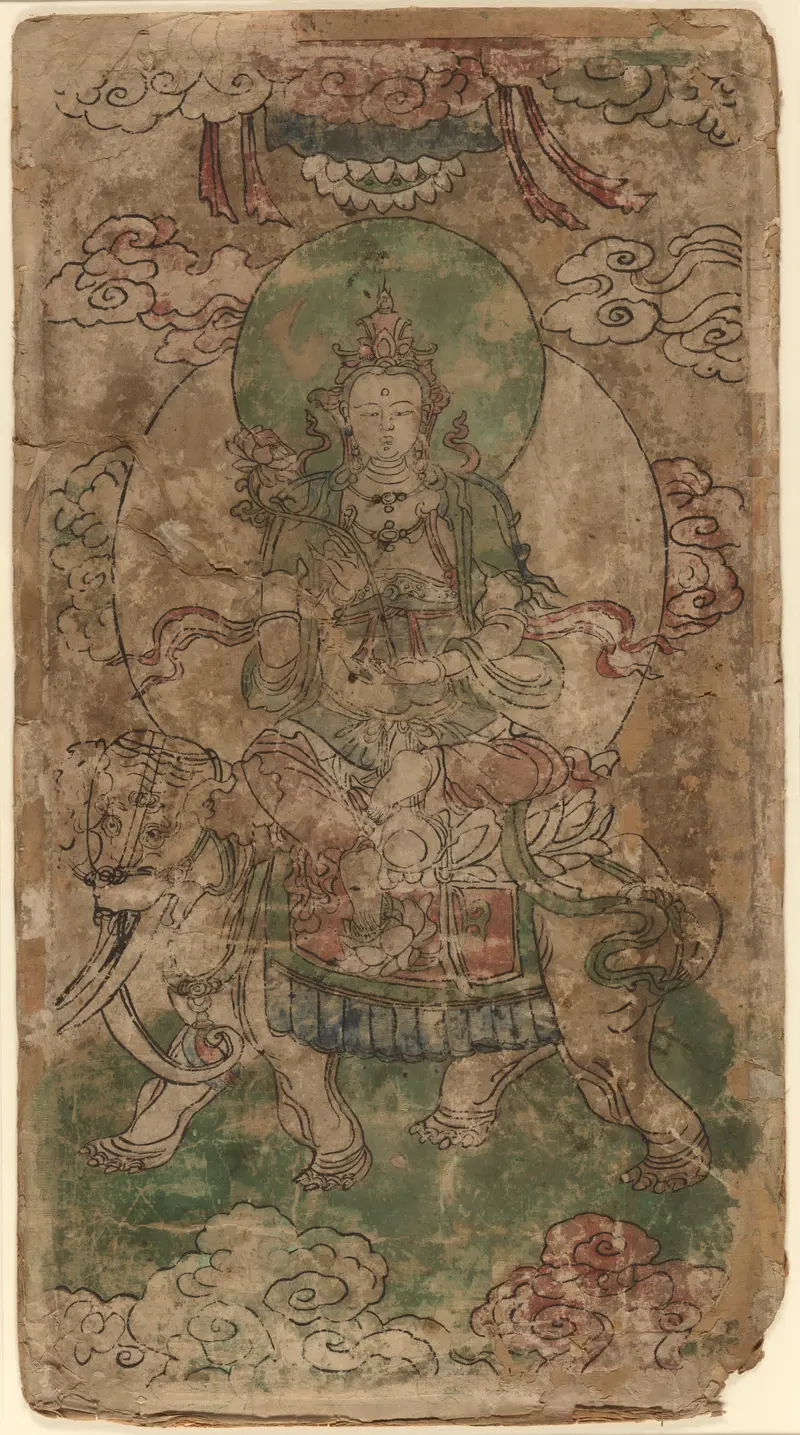 Puxian, the Bodhisattva of BenevolenceUnknown artist, China (Yuan dynasty)
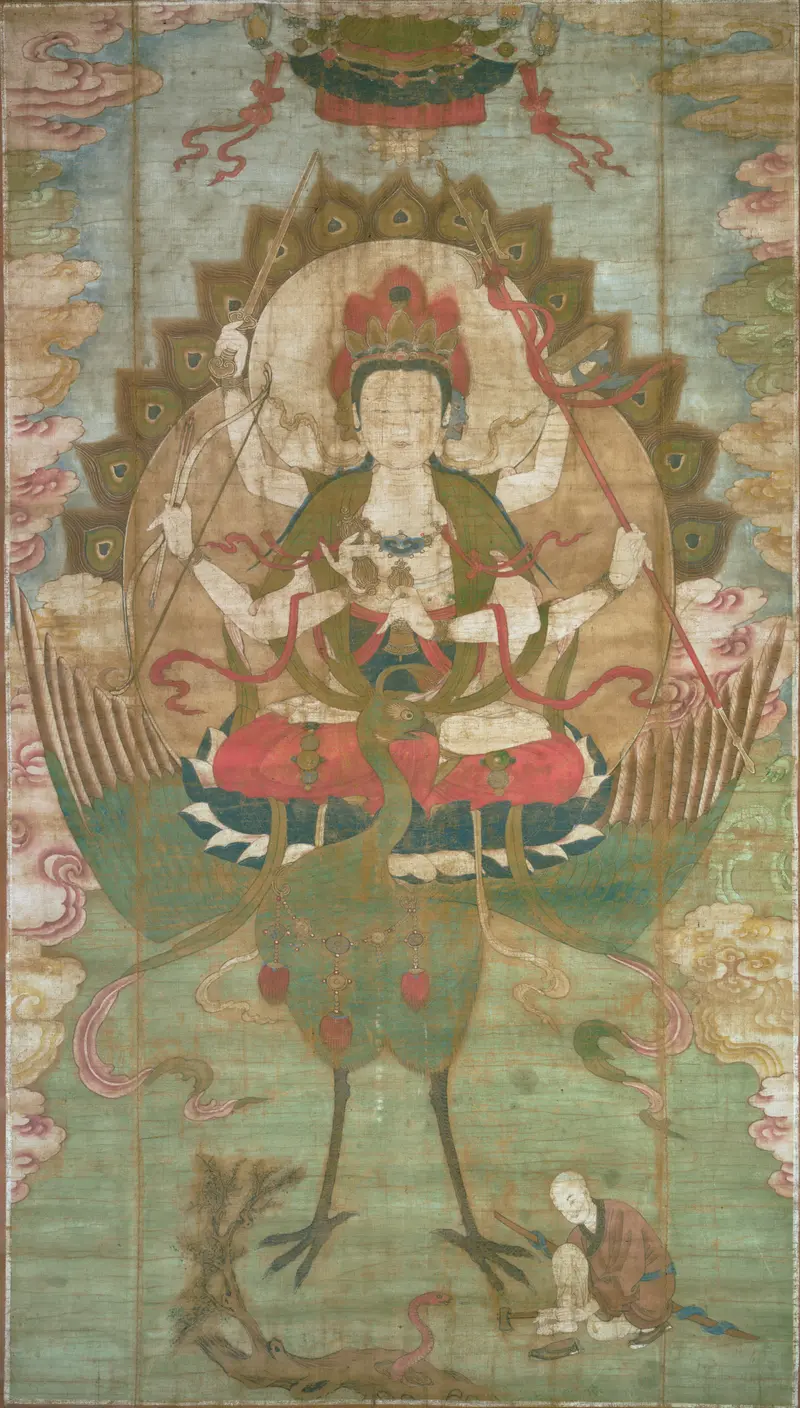 Mahamayuri VidyarajaUnknown artist, China (Liao dynasty)
 Eighteen LohansWan Shouqi
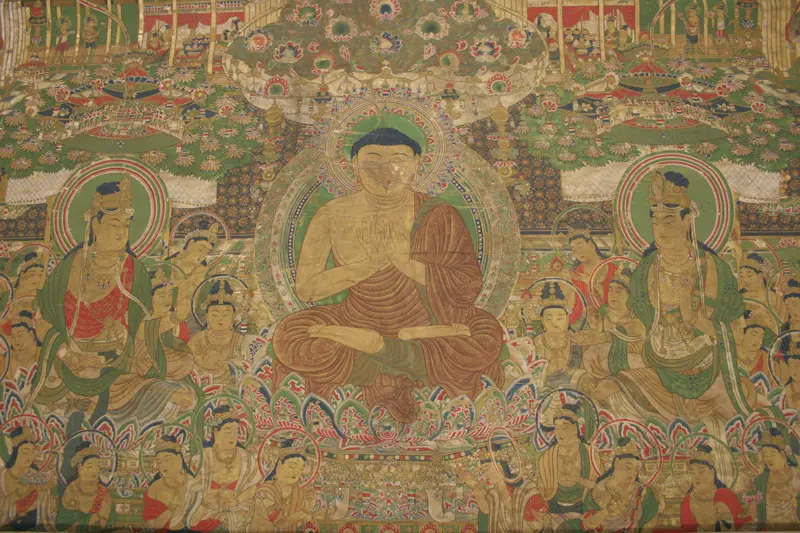 Taima MandalaUnknown artist, China
 Seated Bodhisattva (Kongōhō Bosatsu), from a Diamond World Mandala notebookTakuma Tametō
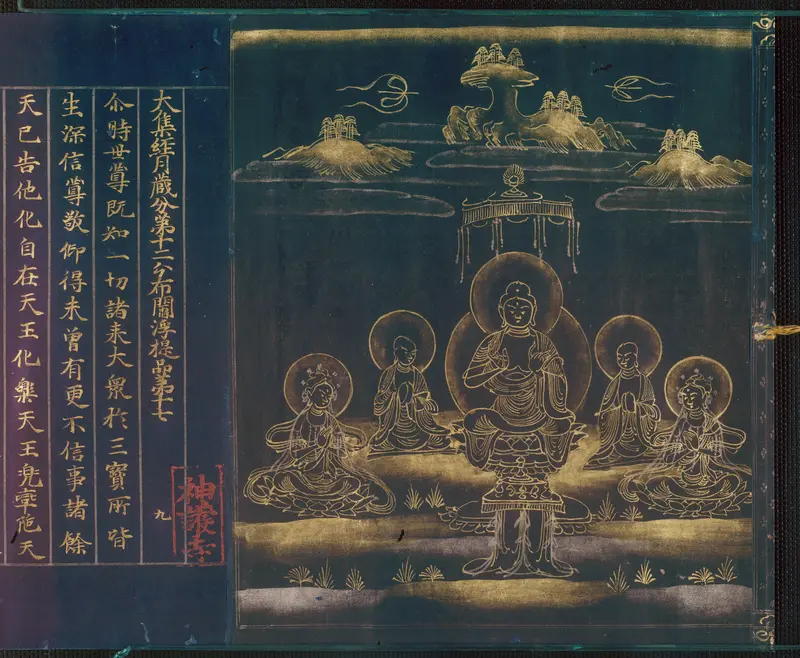 Jingoji SutraUnknown artist, Japan
Characteristics of Buddhist art: how to recognize it

A buddha at the center
The blue Medicine Buddha sits in the middle, his left hand in the gesture of meditation and his right holding a medicinal myrobalan plant, with the bodhisattvas of the sun and moon at his sides. The Art Institute of Chicago says the lapis blue of his body is likened to the sky, for wisdom and compassion as vast as the sky.
Painted Banner (Thangka) with the Medicine Buddha (Bhaishajyaguru), Central Tibet
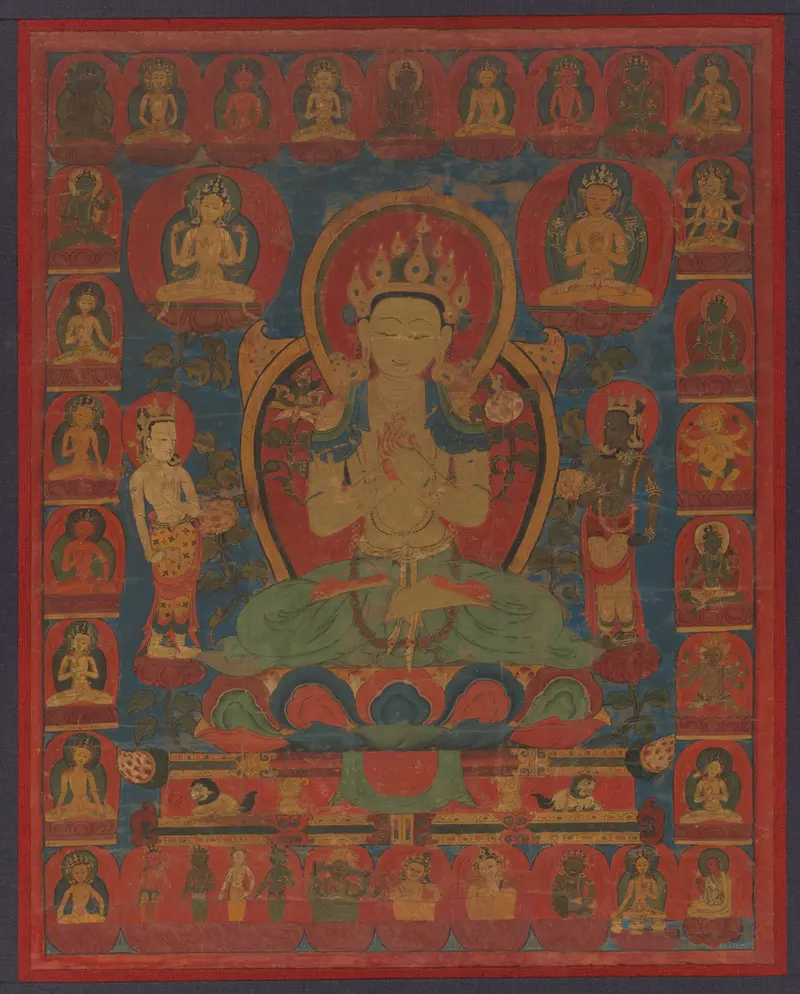
Iconography: attributes tell the figures apart
Maitreya, the Buddha of the future, is identified by the tiny gold water pot on the lotus by his shoulder. Hand gestures (mudras) and objects like this are relatively standardized parts of each deity's iconography, the Rubin Museum of Art explains, so that each figure can be identified.
Painted Banner (Thangka) of Bodhisattva Maitreya Surrounded by his Retinue, Tibet Southern Tibet
The mandala, a palace seen from above
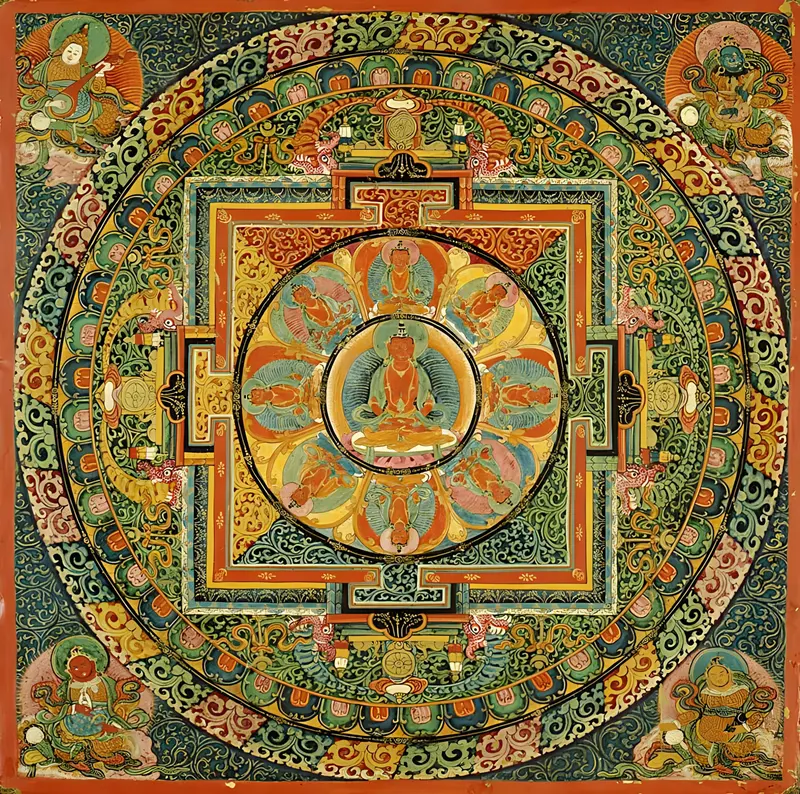
A mandala shows a deity's cosmic abode: a circle with a square inside, the deity enthroned at the center and the retinue around, as the Rubin Museum of Art describes it. In this Womb World mandala from Tō-ji in Kyoto, hundreds of deities sit in courts around a red lotus; the Asian Art Museum of San Francisco calls the Tō-ji pair the oldest surviving color mandalas in Japan.
Womb World Mandala (Mandala of the Two Realms), Unknown Artist
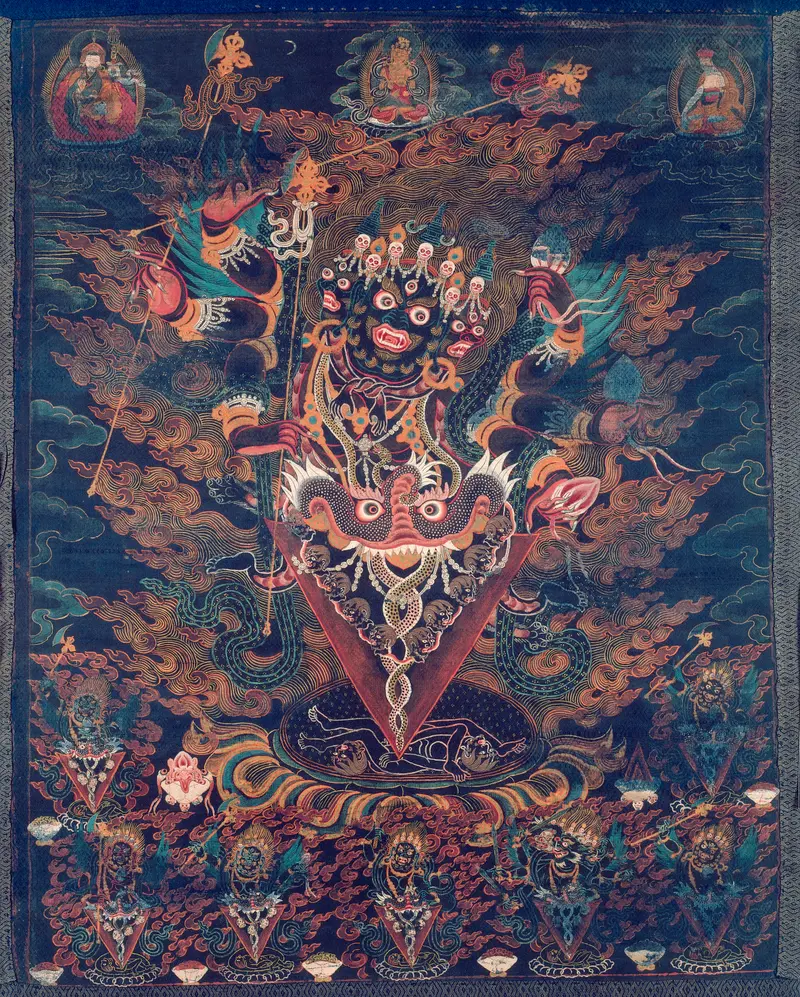
Fierce protectors
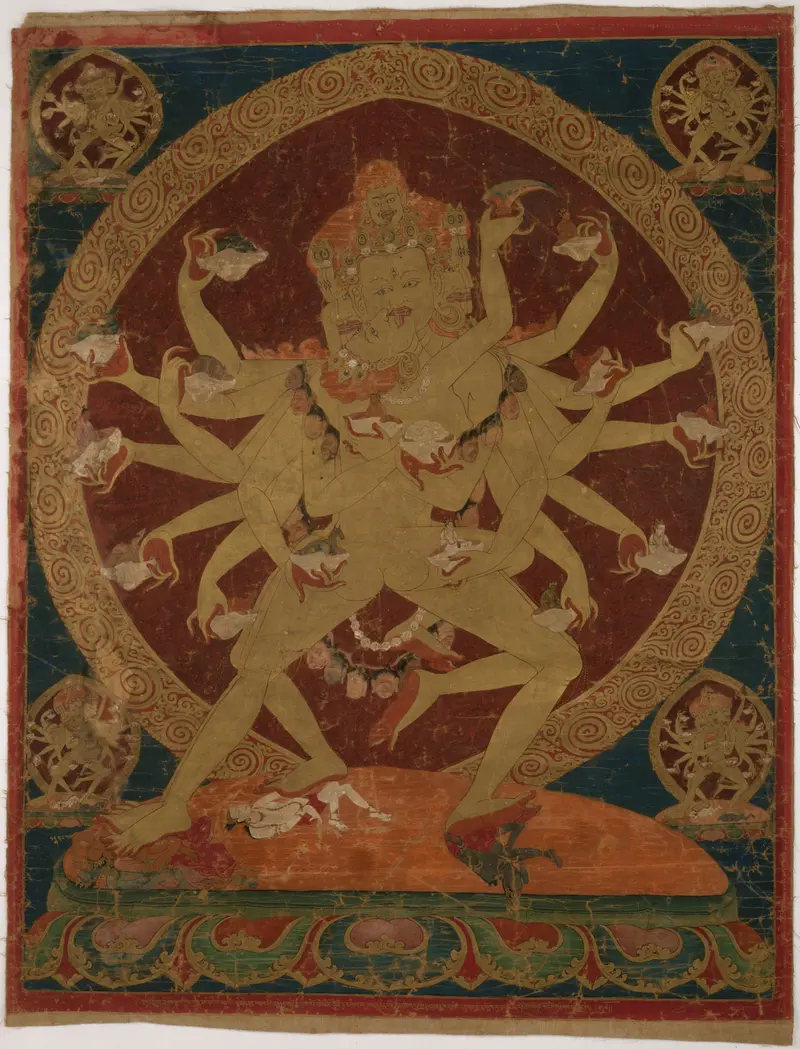
Wrathful deities take on fierce forms to combat obstructions on the path to enlightenment, the Art Institute of Chicago explains. Rakta Yamari, a wrathful form of Manjushri, has three faces, six arms and wings, and his body ends in a ritual dagger that pins down ignorance.
Stories told on handscrolls
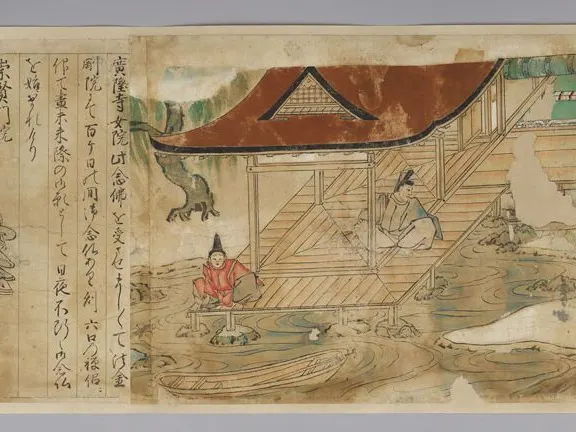
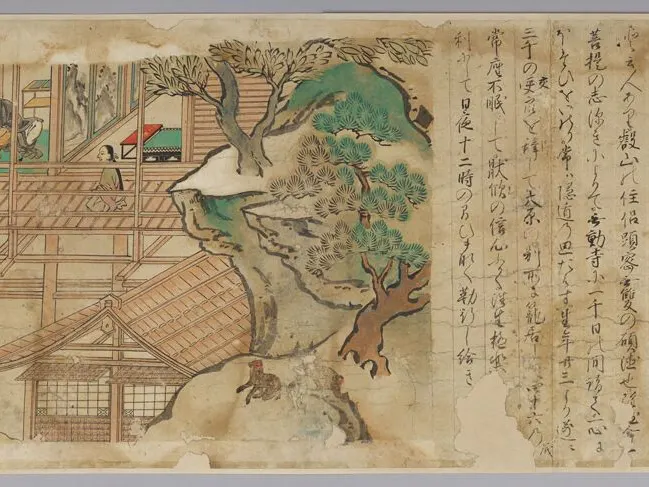
In Japan, temple legends and the lives of monks were painted on long handscrolls, unrolled scene by scene. Here a granary flies off beneath a monk's alms bowl, one of the miracle tales of the monk Myōren. The long, continuous narrative of such scrolls draws viewers into the story, the Kyoto National Museum notes.
Legends of Mount Shigi: The Flying Granary, Unknown Artist
Zen ink and riddles
Ink monochrome painting is the art form most closely linked with Zen, the Met says, and the first Japanese painters in ink were Zen monks. Josetsu painted this riddle, how to catch a slippery catfish with a smooth gourd, for the shogun, and 31 Zen priests answered it in poems above: an intellectual Zen game, the Kyoto National Museum calls it.
Catching a Catfish with a Gourd, Josetsu
Buddhist art and the painting traditions of Asia
- Buddhist art10th–19th century
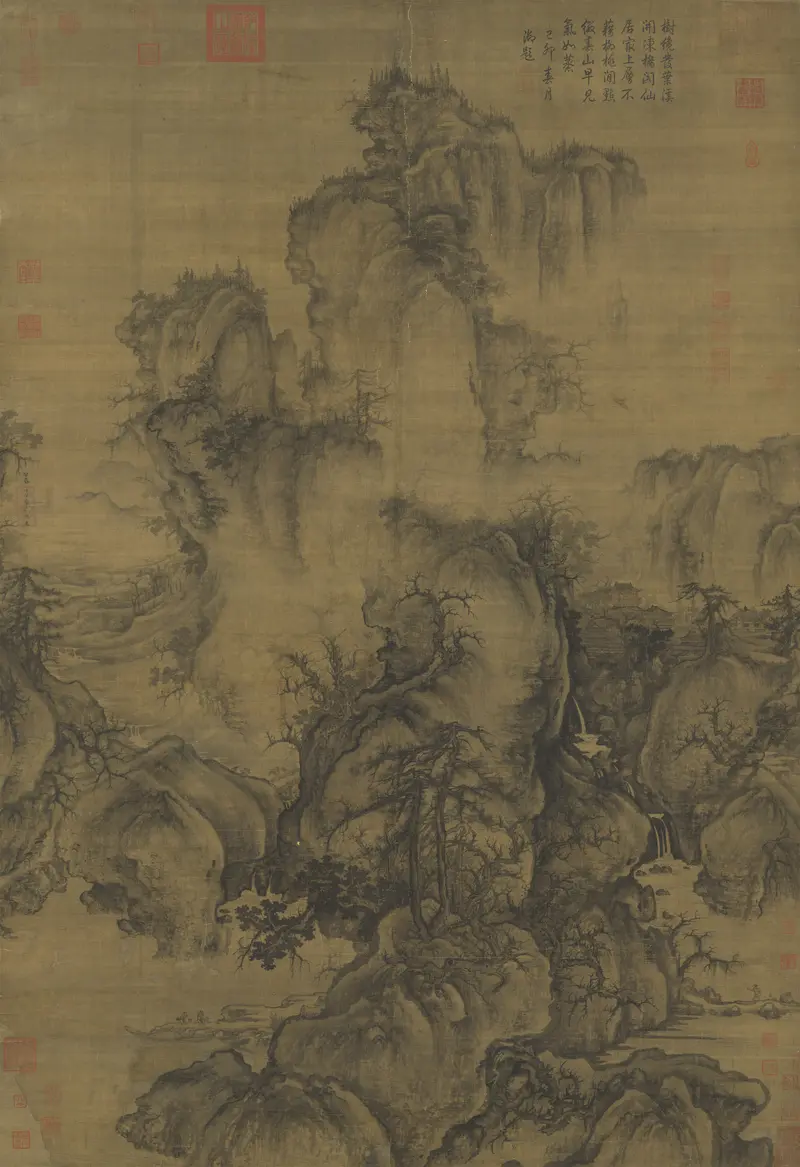 Chinese painting10th–19th century
 Japanese painting10th–19th century
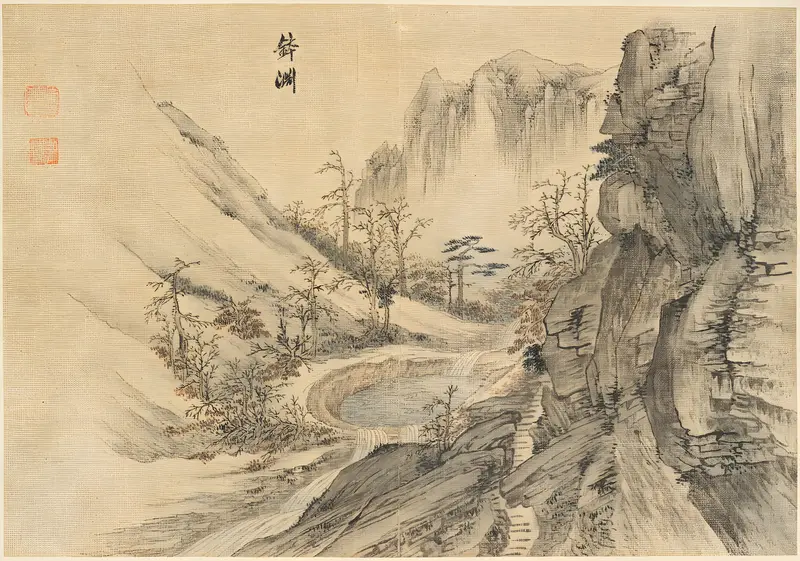 Korean painting1392–1910
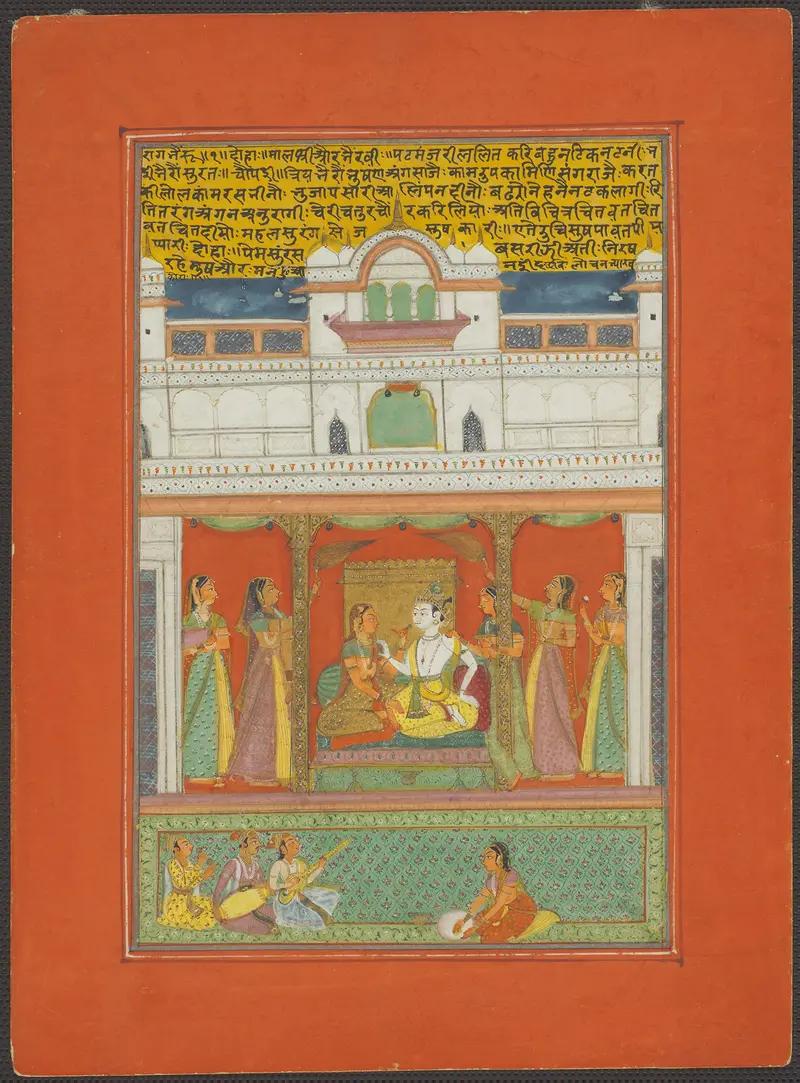 Indian painting16th–19th century
Buddhist art vs Chinese painting and Japanese painting
| Compared | Chinese painting | Buddhist art | Japanese painting |
|---|---|---|---|
| When | 10th–19th century | 10th–19th century | 10th–19th century |
| Subjects | Landscapes, bamboo, birds and flowers | Buddhas, bodhisattvas, deities and revered teachers | Classical court tales, seasonal nature, landscapes |
| Formats | Ink and brush on silk or paper | Cloth scrolls (thangkas), silk hanging scrolls, sutras, temple walls | Folding screens, sliding doors and scrolls, often set against gold |
| Famous example | Zhang Zeduan, Along the River During the Qingming Festival | Womb World Mandala, Tō-ji, 9th century | Hasegawa Tōhaku, Pine Trees |
| Key artists | Ma Yuan, Shen Zhou, Wen Zhengming, Dong Qichang, Bada Shanren | Mostly anonymous monks and workshop painters | Tosa Mitsunobu, Kano Tan'yū, Ogata Kōrin |
List of famous Buddhist paintings and where to see them
The famous Buddhist paintings: what they show, when they were made, and where each one is today.
Show the listHide the list
| Painting | Painted by | Year | Medium | Size | Located in | City |
|---|---|---|---|---|---|---|
| Womb World Mandala (Mandala of the Two Realms) | Unknown artist | 9th century | Hanging scroll, color on silk | Tō-ji | Kyoto | |
| Legends of Mount Shigi: The Flying Granary | Unknown artist | 12th century | Handscroll, ink and color on paper | 31 cm high | Chōgosonshi-ji | Nara |
| Illustrated Biography of the Monk Ippen, Scroll 12 | En'i | 1299 | Handscroll, color on silk | Shōjōkō-ji | Fujisawa | |
| Circle, Triangle, Square | Sengai | early 19th century | Ink on paper | 28.4 × 48.1 cm (11.2 × 18.9 in) | Idemitsu Museum of Arts | Tokyo |
| Portrait of Emperor Go-Daigo | Monkan | 1339 | Hanging scroll, color on silk | 94 × 49.8 cm (37 × 19.6 in) | Shōjōkō-ji | Fujisawa |
| Illustrated Sutra of Past and Present Karma (E Ingakyō) | Unknown artist | 8th century | Handscroll, ink and color on paper | MOA Museum of Art | Atami | |
| The Subjugation of Mara | Unknown artist | 10th century | Banner, ink and color on silk | Musée Guimet | Paris | |
| Heike Nōkyō: Frontispiece of the Kanfugen Sutra | Unknown artist | 1164 | Ink, color, gold and silver on paper | Itsukushima Shrine | Hatsukaichi | |
| Legends of the Kegon Patriarchs: Zenmyō as a Dragon | Unknown artist | 13th century | Handscroll, ink and color on paper | Kōzan-ji | Kyoto | |
| Fragment of the Illustrated Life of Priest Hōnen | Unknown artist | 13th–early 14th century | Handscroll fragment, ink and color on paper | Honolulu Museum of Art | Honolulu | |
| Illustrated Biography of Shinran (Rin'a Version) | Unknown artist | 14th century | Handscroll, ink and color on paper | Nishi Hongan-ji | Kyoto | |
| Catching a Catfish with a Gourd | Josetsu | c. 1413–1415 | Hanging scroll, ink and light color on paper | 111.5 × 75.8 cm (43.9 × 29.8 in) | Taizō-in | Kyoto |
Buddhist art: questions and answers
What does Buddhist art mean?
Buddhist art means the images made in the service of Buddhism, the religion that began in India with the Buddha in the fifth and fourth centuries BC: paintings and sculptures of buddhas, bodhisattvas, deities and teachers, and the stupas built over the Buddha's relics. The images were made to be worshipped and to support meditation; the Met says a Tibetan image became a base for the presence of the deity in the worshipper's mind. From India the tradition spread with the faith to Nepal and Tibet, Sri Lanka and Southeast Asia, and along the Silk Road to China.
Sources: The Met: Buddhism and Buddhist Art · The Met: Tibetan Buddhist Art
When did Buddhist art begin?
Buddhist art began in India in the first century BC, when stone railings and gateways carved with scenes from the Buddha's life and previous lives were added to stupas, the mounds that held his relics. In this earliest art the Buddha was not shown in human form but by a sign, such as a pair of footprints, an empty seat or a parasol. His human image appeared in the first century AD, in Gandhara on India's northwestern frontier and at Mathura.
Sources: The Met: Buddhism and Buddhist Art
What is a thangka painting?
A thangka is a Tibetan hanging scroll, usually painted on cotton and mounted in silk brocade, with a wooden dowel at the bottom so it can be kept rolled up, as the Rubin Museum of Art defines it. The Getty's art vocabulary traces the word to the Tibetan for "something rolled up" and says thangkas were hung in temples or carried in processions. Almost all show religious subjects; similar paintings from Nepal are called paubha. Our collection holds about two dozen.
Sources: Rubin Museum of Art: Thangka (glossary) · Getty AAT: tankas (scrolls or banners) · Rubin Museum of Art: Paubha (glossary)
What is a mandala in Buddhist art?
In Buddhist art a mandala is the cosmic abode of a deity, usually drawn as a circle with a square inside that stands for the deity's palace, with the deity enthroned at the center and the retinue around, the Rubin Museum of Art explains. Mandalas can be painted, built as models or temples, or arranged as groups of images; they are used in initiations and in meditation, and offered as images of the whole universe. The Getty describes them as deities in purified geometric precincts, often circular and symbolic of the universe.
Sources: Rubin Museum of Art: Mandala (glossary) · Getty AAT: mandalas
How is the Buddha shown in art?
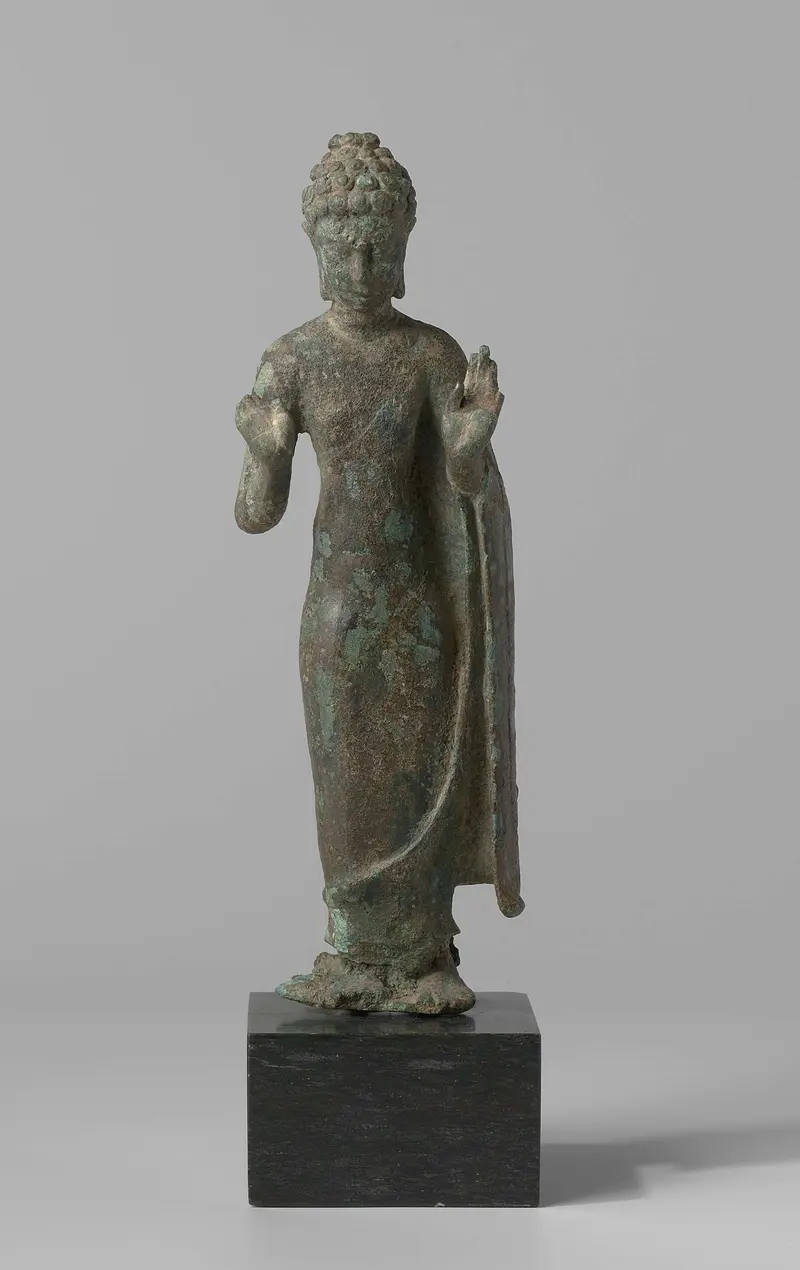
The Buddha is shown as a monk in a plain robe, seated or standing, often with his hands in a fixed gesture (mudra). The Met traces three early types: in Gandhara, youthful Buddhas with wavy curls like statues of Apollo and a robe in heavy folds like a toga; at Mathura, a body expanded by sacred breath with the right shoulder bare; and in the Gupta period (4th–6th century), an "ideal image" with tiny curls and a downward glance that became the model for later artists in India, Nepal, Thailand and Indonesia.
Sources: The Met: Buddhism and Buddhist Art · Rubin Museum of Art: Mudra (glossary)
What is Greco-Buddhist art from Gandhara?
Greco-Buddhist is a common name for the art of Gandhara, the region of present-day Pakistan and Afghanistan at the heart of the Kushan empire. The Met says that there, in the first centuries AD, artistic elements from the Hellenistic world combined with Indian Buddhist symbolism: some of the first images of the Buddha in human form and the earliest bodhisattvas date to the Kushan era. Gandharan artists worked in stone and stucco, so this art is mainly sculpture rather than painting.
Sources: The Met: Buddhism and Buddhist Art · The Met: Kushan Empire
What is a bodhisattva?
In Buddhist art a bodhisattva is usually shown as a princely, jeweled figure, unlike a buddha in a plain monk's robe. The Met describes Maitreya, the Buddha of the Future, shown as a princely bodhisattva before his enlightenment, and says later Buddhism added heavenly bodhisattvas and goddesses, of whom the most popular was Tara. On the Art Institute of Chicago's thangka of Maitreya, he stands with Manjushri and Vajrapani, who embody the Buddha's compassion, wisdom and power.
Sources: The Met: Buddhism and Buddhist Art · Art Institute of Chicago: Bodhisattva Maitreya Surrounded by His Retinue · Art Institute of Chicago: Amitayus Buddha Surrounded by One Hundred Buddhas
What is Tibetan Buddhist art?
Tibetan Buddhist art is the painting and sculpture made for Buddhism in Tibet, which was introduced by the seventh century and revived from the late tenth. The Met says Pala India was the main influence in the late 11th and 12th centuries, Nepalese artists worked for Tibetan patrons from the 13th, and by the 15th century Nepalese and Chinese styles had fused into a truly Tibetan synthesis. Images were made as aids for meditation and to mark births, deaths and wishes for long life, and commissioning one was believed to bring merit.
Sources: The Met: Tibetan Buddhist Art
What is Chinese Buddhist painting?
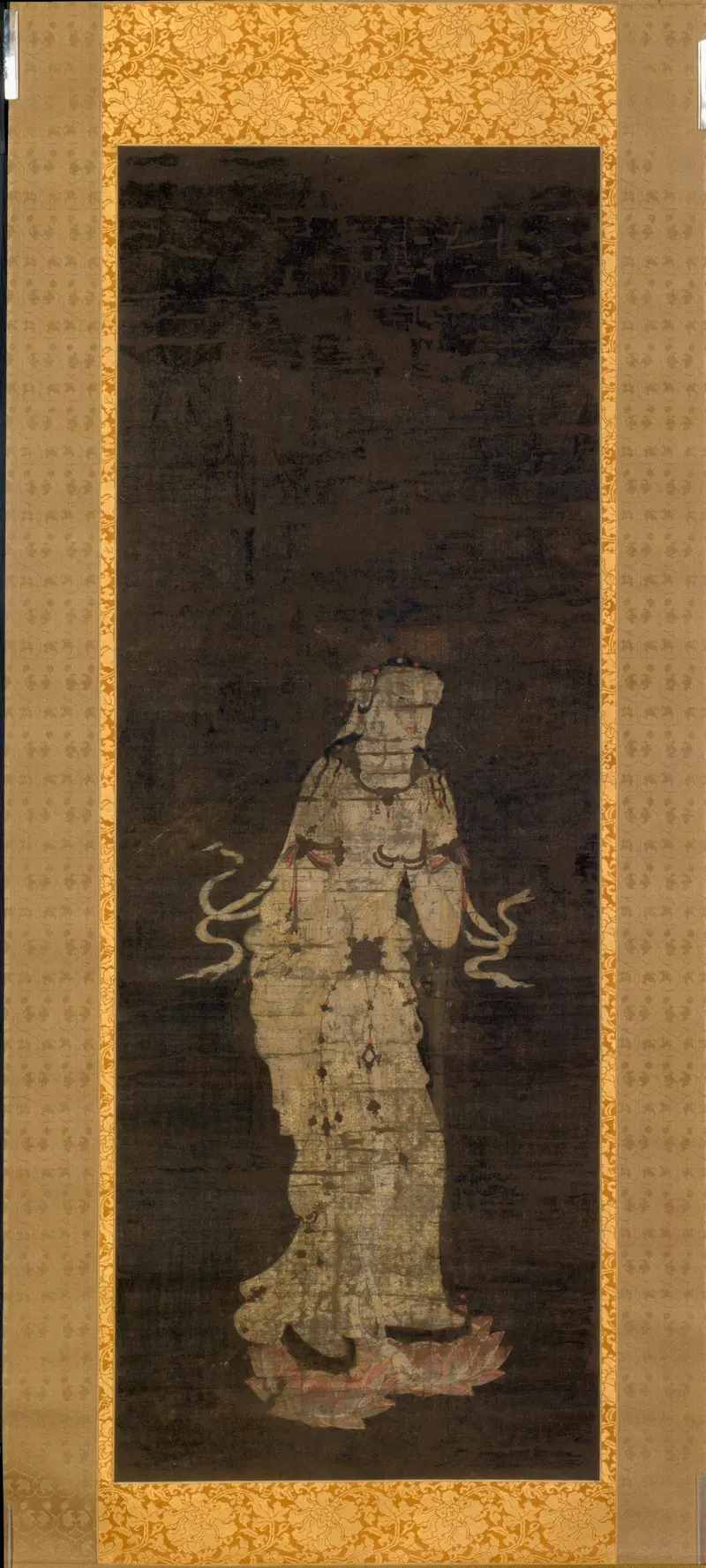
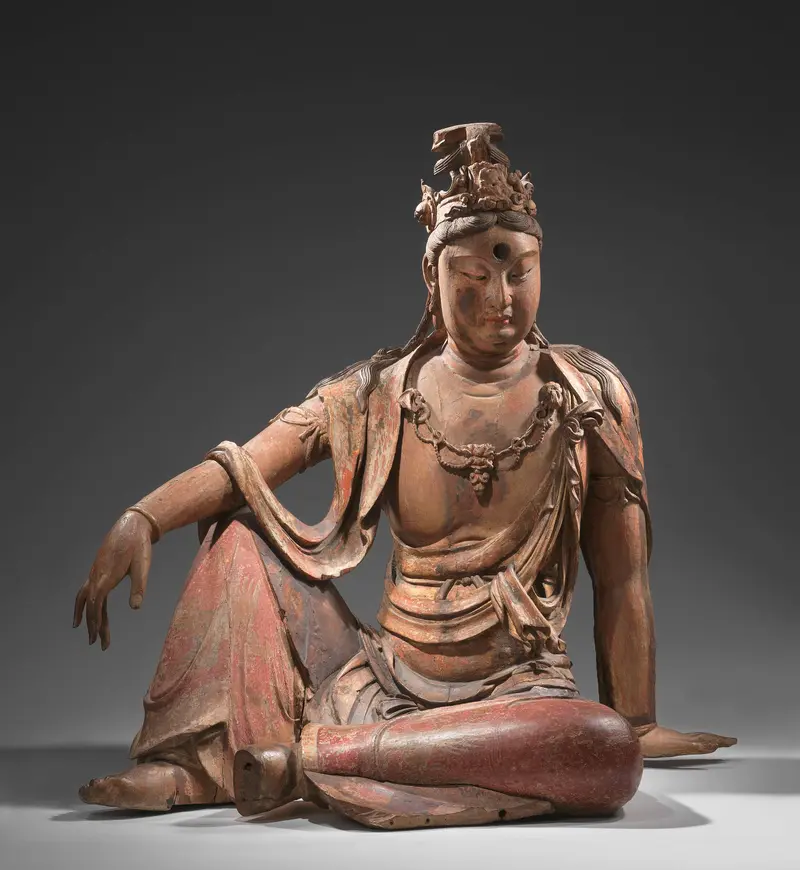
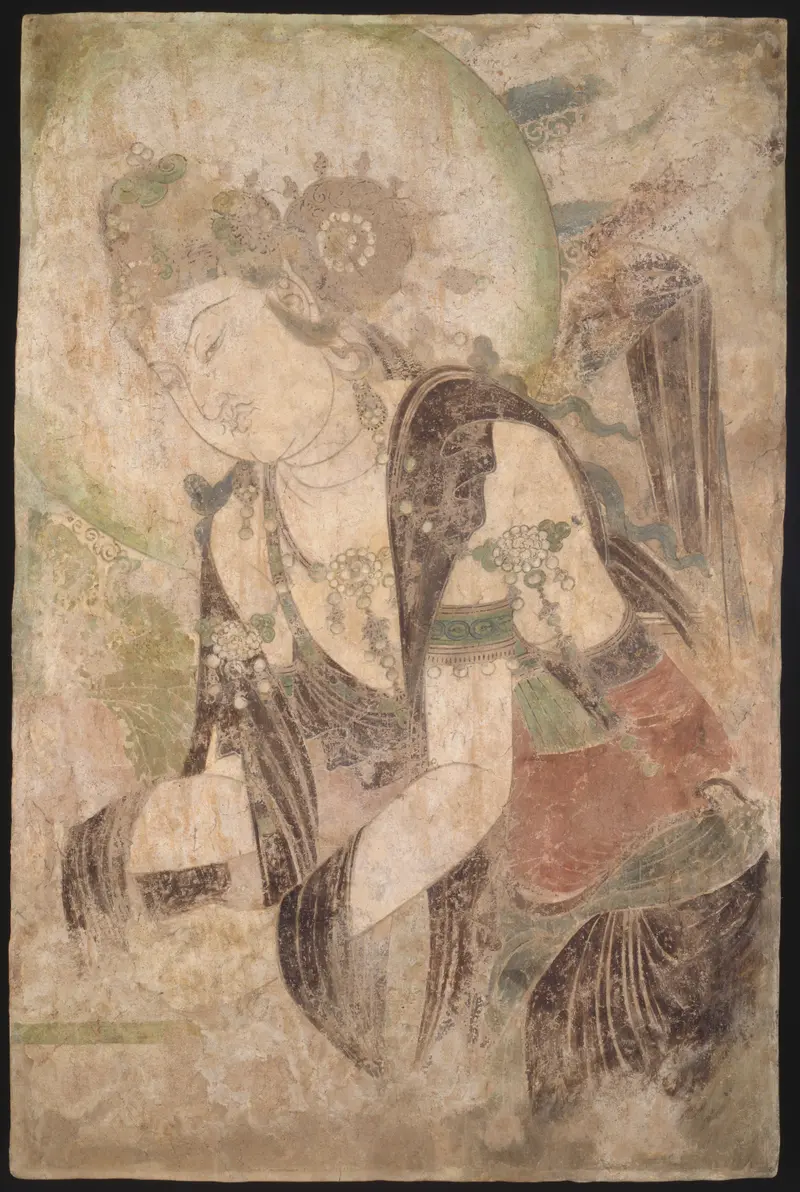
Chinese Buddhist painting ranges from huge temple murals to small hanging scrolls. The Met's Buddha of Medicine Bhaishajyaguru, a wall painting of about 1319 from Shanxi, is more than 15 meters wide. Southern Song painters made ink scrolls of the White-Robed Guanyin, the bodhisattva of compassion venerated in Chan Buddhism, and scrolls of Amitabha for the Pure Land faith, whose followers recite his name to enter his Western Paradise, the Cleveland Museum of Art notes.
Sources: The Met: Buddha of Medicine Bhaishajyaguru (Yaoshi fo) · Cleveland Museum of Art: White-Robed Guanyin · Cleveland Museum of Art: Buddha Amitabha with Two Attending Bodhisattvas
What is the role of Buddhism in Japanese art?
In Japan, Buddhism inspired icons of buddhas and bodhisattvas, sutras copied in gold and narrative scrolls of temple legends. In the late 12th century, the Art Institute of Chicago notes, aristocrats who felt they lived in an age of Buddhist decline commissioned sutras copied in gold, believing that all involved gained merit. Zen, which took root in Japan in the 13th century, brought ink painting: the first Japanese artists in the medium were Zen monks, the Met says.
Sources: Art Institute of Chicago: Jingoji Sutra and Wrapper · The Met: Zen Buddhism
What is Zen art?
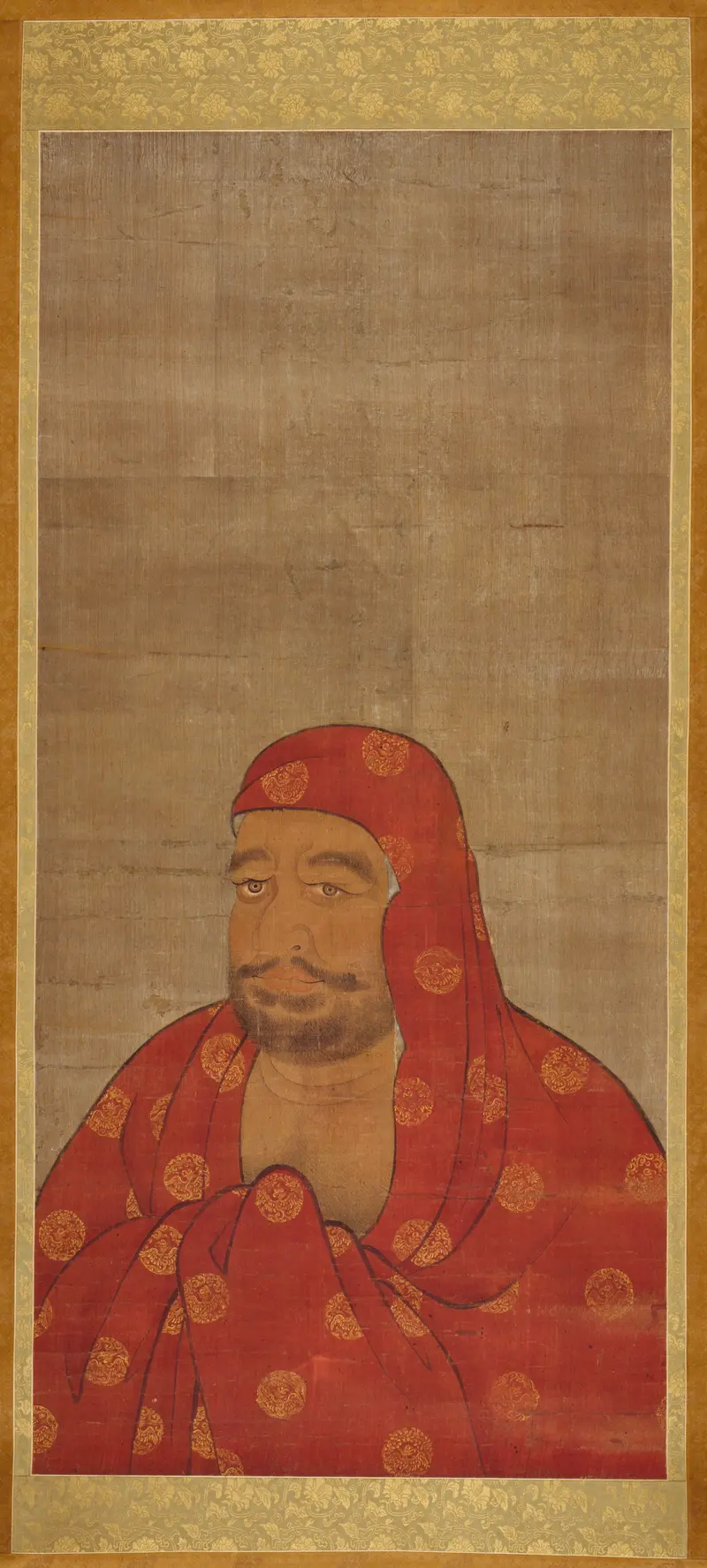
Zen art is the art of Zen (in China, Chan) Buddhism, and today ink monochrome painting is the art form most closely linked with it, the Met says. The first Japanese painters in ink were Zen monks who painted quickly to express their convictions, and their favorite subjects were Zen patriarchs, teachers and enlightened individuals. Images of patriarchs such as Daruma (Bodhidharma), the semilegendary founder of Zen, were revered because the bond between master and disciple carried the teaching, the Art Institute of Chicago explains.
Sources: The Met: Zen Buddhism · Art Institute of Chicago: Daruma
Who made Buddhist paintings?
Most Buddhist paintings were made by anonymous artists. In Tibet, the Met says, numerous monks were artists, and lay artists also traveled from monastery to monastery; few signed their work, though some names survive in texts, inscriptions and murals, including Indian, Nepalese, Central Asian and Chinese artists. In Japan, the first painters to work in ink were Zen monks, the Met says.
Sources: The Met: Tibetan Buddhist Art · The Met: Zen Buddhism
Where can you see famous Buddhist paintings?
Many of the famous Buddhist paintings on this page still belong to temples in Japan, such as Tō-ji and Kōzan-ji in Kyoto, and several are kept at the national museums of Kyoto and Nara, like the Legends of Mount Shigi. In the United States, the Metropolitan Museum of Art in New York shows the wall painting of the Buddha of Medicine Bhaishajyaguru, about 7.5 meters high and 15 meters wide; the Art Institute of Chicago holds most of the thangkas on this page, and the Cleveland Museum of Art holds a central Tibetan Green Tara of the 1260s.
Sources: Asian Art Museum of San Francisco: Mandala of the Womb World (Google Arts & Culture) · Kyoto National Museum: Legends of the Kegon Sect · The Met: Buddha of Medicine Bhaishajyaguru (Yaoshi fo) · Art Institute of Chicago: The Medicine Buddha Bhaishajyaguru · Cleveland Museum of Art: Green Tara
Is Buddhist art in the public domain, and can I download it free?
Yes, almost all of it. The works in this collection were made centuries ago, mostly by anonymous artists, so they are in the public domain in the United States and in countries where copyright ends 70 years after the artist's death. Most of our images come from the Art Institute of Chicago, which releases its public-domain images under a CC0 license for free, unrestricted use. A few countries have their own rules on photographs of artworks, so check them if you publish outside the U.S.
Sources: Cornell University Library: Copyright Term and the Public Domain · Art Institute of Chicago: Open access images
How we chose the famous paintings
The famous paintings on this page are the Buddhist paintings known most widely around the world, measured by the number of languages that have an encyclopedia entry about each one, checked in November 2026. Buddhist painting is mostly anonymous, so the limit of three works per painter rarely applies; a set of scrolls, such as the Legends of Mount Shigi or the Kegon scrolls, counts as one work and is shown by one scene.
We include paintings, sutra frontispieces and mandalas with a Buddhist subject, and we leave out sculpture and works famous for other reasons, such as the satirical scrolls of frolicking animals at Kōzan-ji. A few famous paintings are missing because no image we can publish shows them whole and unframed, among them the Met's wall painting of the Medicine Buddha, which hangs in a gallery and is photographed with the wall around it.
Dates, sizes and locations come from the museums' own records and from Wikidata.
Spotted a mistake? Tell us and we will correct it.