
In Autumn’s Golden Glow — History & Facts
Can beauty exist without sorrow? In Autumn’s Golden Glow captures the transient moment when nature, resplendent in hues of gold and amber, evokes a bittersweet sense of longing. Look to the left at the path winding through the trees, dappled with sunlight filtering gently through the foliage. The artist's use of warm colors creates an inviting atmosphere, while the soft brushstrokes lend a dreamlike quality to the scene. The contrast between the vibrant leaves and the encroaching shadows hints at the inevitable passage of time, drawing the viewer into a reflective mood. Notice how the figures in the foreground, mere silhouettes, stand at the threshold of this luminous world, caught between the solace of nature’s beauty and the unsettling awareness of its impermanence.
The interplay of light and shadow creates a tension that speaks to the fragility of life itself. Each detail reveals a duality—autumn’s glow is both enchanting and fleeting, a reminder of what is lost as the season shifts toward winter. During the late 19th century, Grimshaw painted this piece amid a burgeoning interest in capturing atmospheric effects in art. As an English artist based in Leeds, he was influenced by the Pre-Raphaelite movement and the emerging Symbolism, reflecting society's changing relationship with nature in the wake of industrialization.
This work, though undated, embodies his signature style, emphasizing mood and emotion over mere representation.
More Artworks by John Atkinson Grimshaw
Browse all →
Under the Silvery Moonbeams
John Atkinson Grimshaw
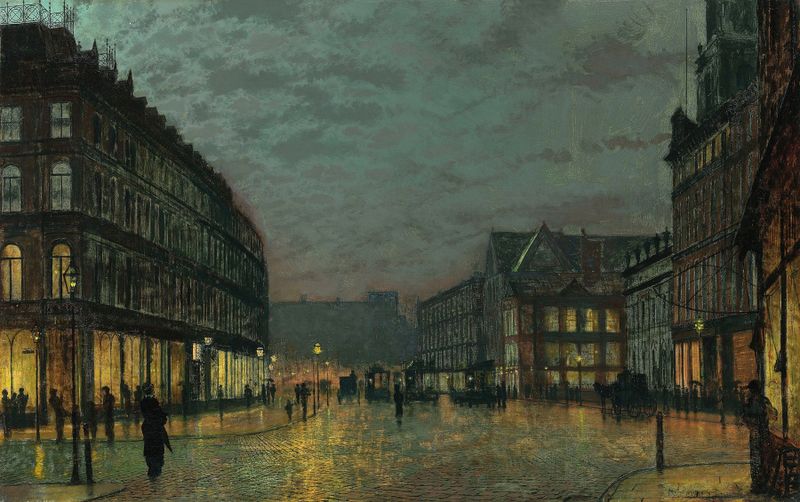
Boar Lane, Leeds by lamplight
John Atkinson Grimshaw
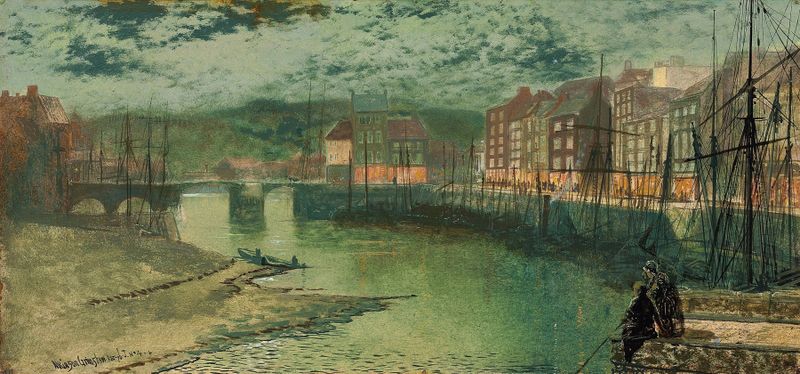
Whitby docks
John Atkinson Grimshaw

Old Chelsea
John Atkinson Grimshaw

Late October
John Atkinson Grimshaw
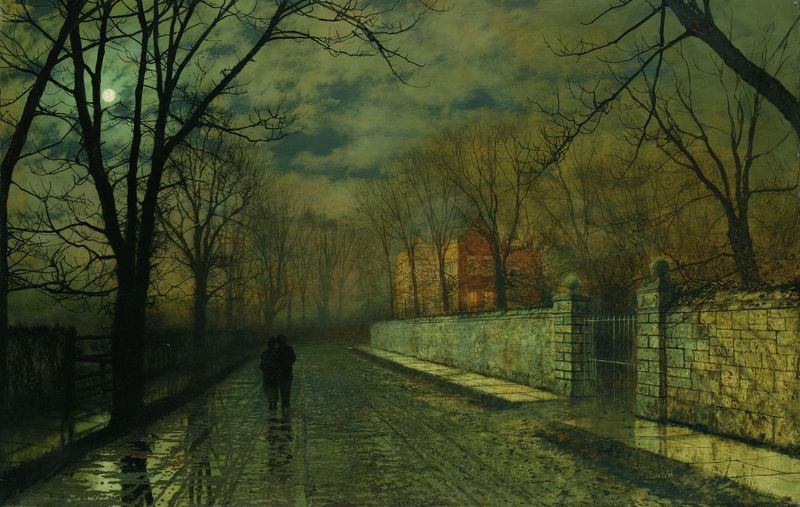
Figures In A Moonlit Lane After Rain
John Atkinson Grimshaw

Liverpool Lights
John Atkinson Grimshaw
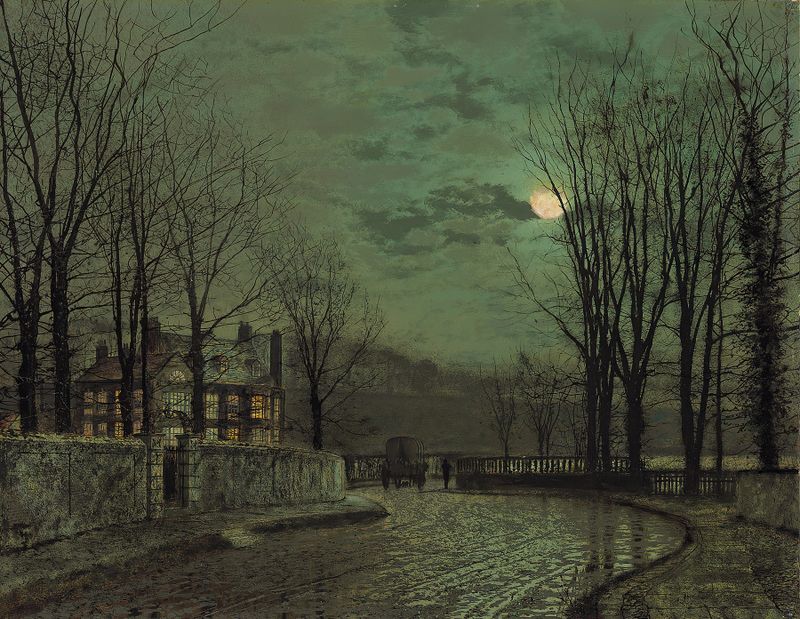
November Moonlight
John Atkinson Grimshaw
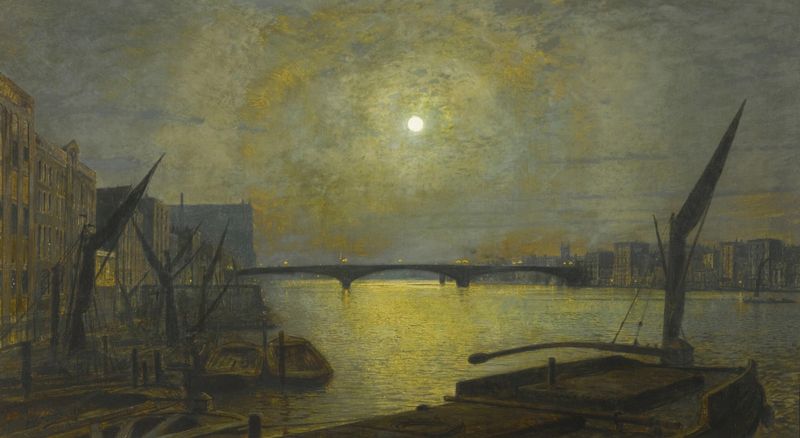
Southwark Bridge from Blackfriars by Moonlight
John Atkinson Grimshaw

Whitby From Scotch Head, Moonlight On The Esk
John Atkinson Grimshaw





