
In Dustin Traditional church — History & Facts
When Taras Shevchenko created In Dustin Traditional church in 1845, he was not only a celebrated poet but also a passionate advocate for Ukrainian cultural identity, then under threat from imperial Russian policies. This work stands out as one of the few visual records from Shevchenko’s prolific 1845 journey through central Ukraine, a period when he documented local architecture and customs with a sense of urgency and reverence. Scholars have often noted that, unlike many of his contemporaries, Shevchenko chose to focus on vernacular subjects, elevating everyday Ukrainian life to the realm of history painting.
The church depicted here is believed to be one of the wooden parish churches typical of the Poltava region, structures that were already vanishing by the mid-19th century. At the heart of the scene is a congregation gathered outside the church, their postures and clothing rendered with careful attention to regional detail. Shevchenko captures a moment just after the conclusion of a Sunday service: villagers linger in the churchyard, exchanging news and blessings beneath the sloping eaves and onion domes. The artist’s eye lingers on the interplay of light across weathered timber and embroidered garments, while the church itself stands as both a spiritual and communal anchor.
The composition’s humility and warmth recall the village scenes of Jean-François Millet, though Shevchenko’s focus is less on rural labor and more on the endurance of tradition. The modest bell tower, slightly off-center, draws the viewer’s gaze upward, suggesting faith as a quiet but persistent force. The precise medium of In Dustin Traditional church remains uncertain, as the work’s documentation is sparse and it has passed through several private hands before entering a public collection. Unlike many of Shevchenko’s works, which were often confiscated or censored due to his political activities, this piece survived intact, perhaps because its subject was deemed innocuous.
Today, it is recognized as an important example of Shevchenko’s visual art, complementing his literary legacy and offering rare insight into Ukrainian ecclesiastical architecture. It is now held in a Ukrainian museum, where it serves as a touchstone for those tracing the evolution of national identity through art.
More Artworks by Taras Shevchenko
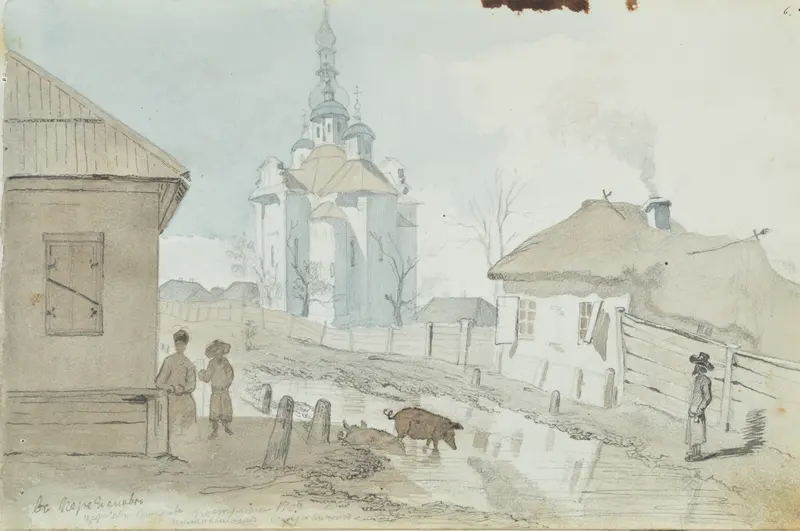
1845 Sh Sketchbook f.06r
Taras Shevchenko

1845 Sh Sketchbook f.04r
Taras Shevchenko

1848 Bilia vohnu
Taras Shevchenko
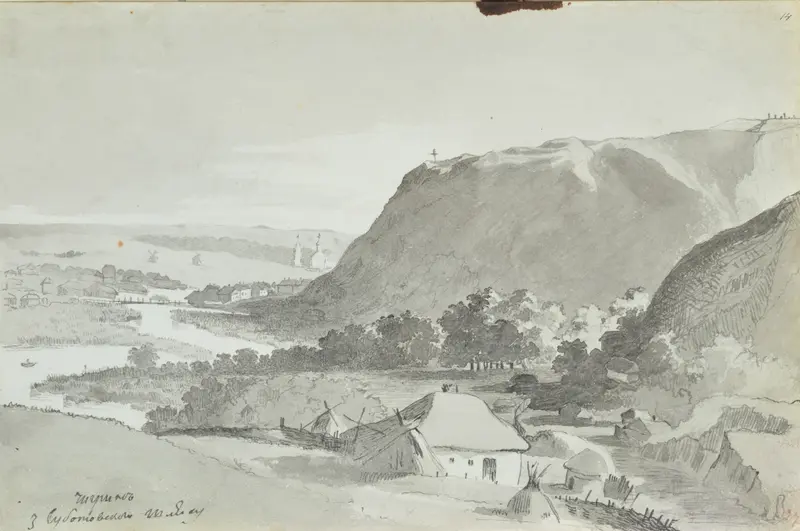
1845 Sh Sketchbook f.14r
Taras Shevchenko
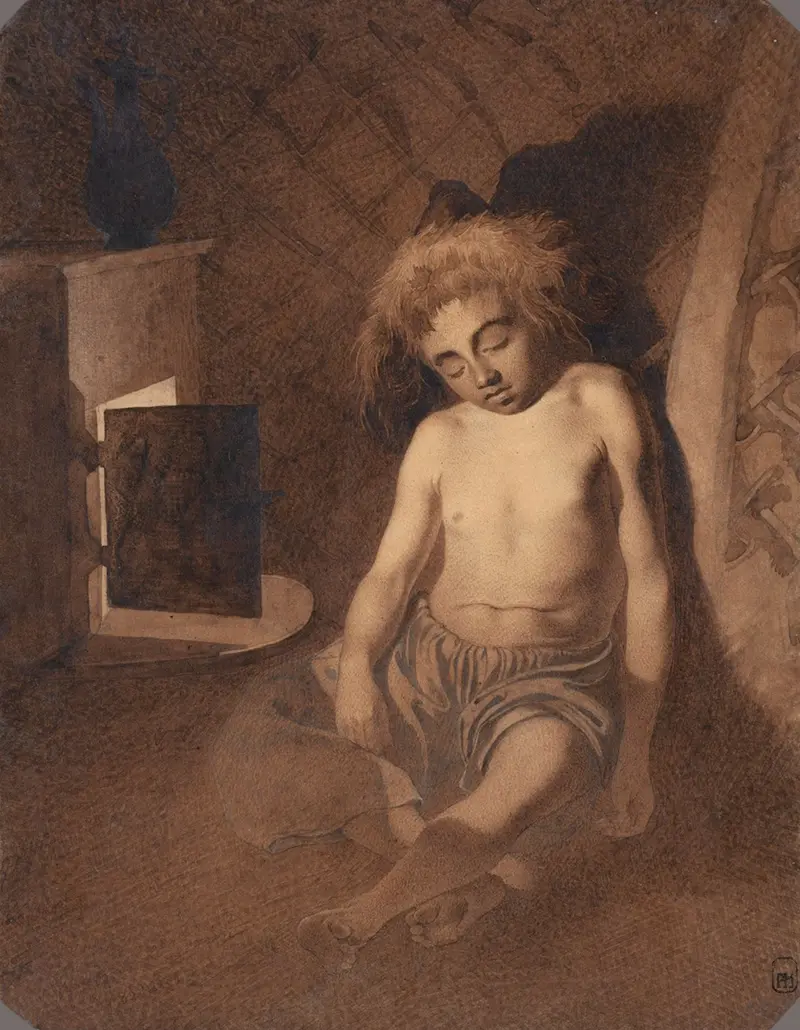
1848 Hlopcyk zasnuv
Taras Shevchenko
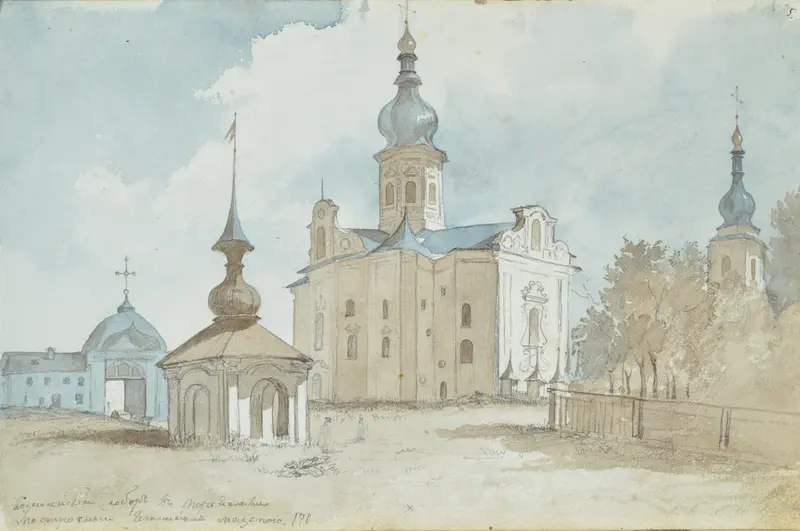
1845 Sh Sketchbook f.05r
Taras Shevchenko
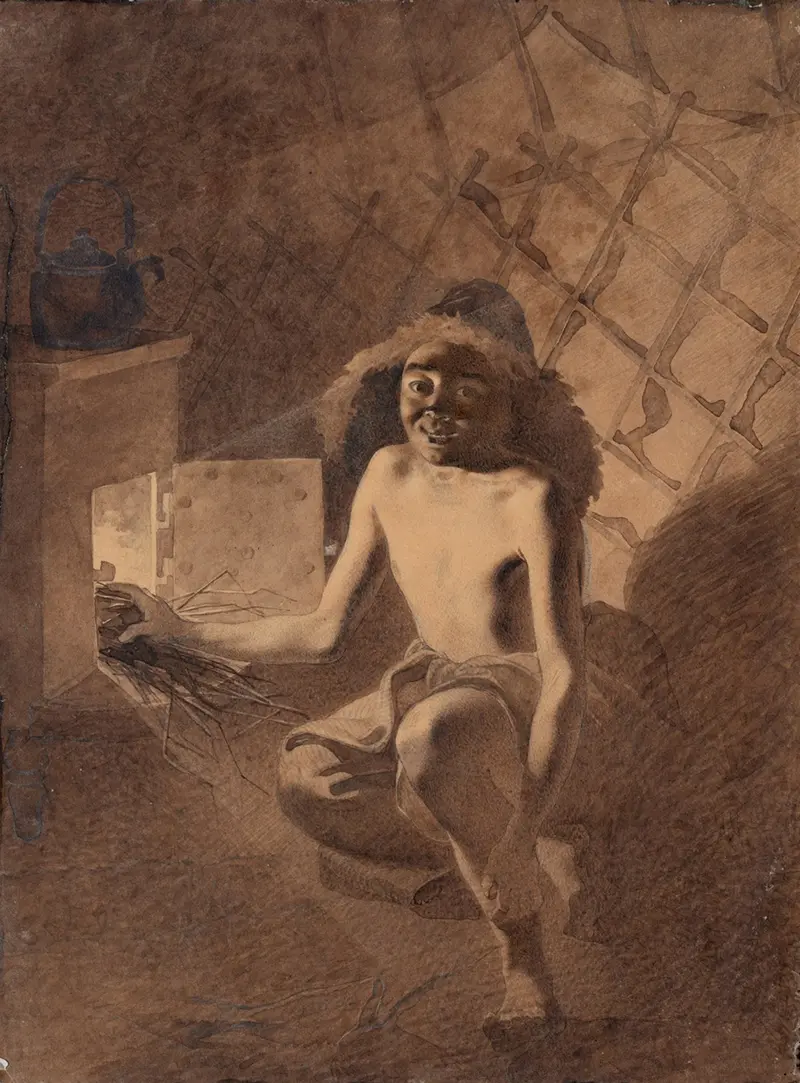
1848 Hlopcyk rozpalije
Taras Shevchenko
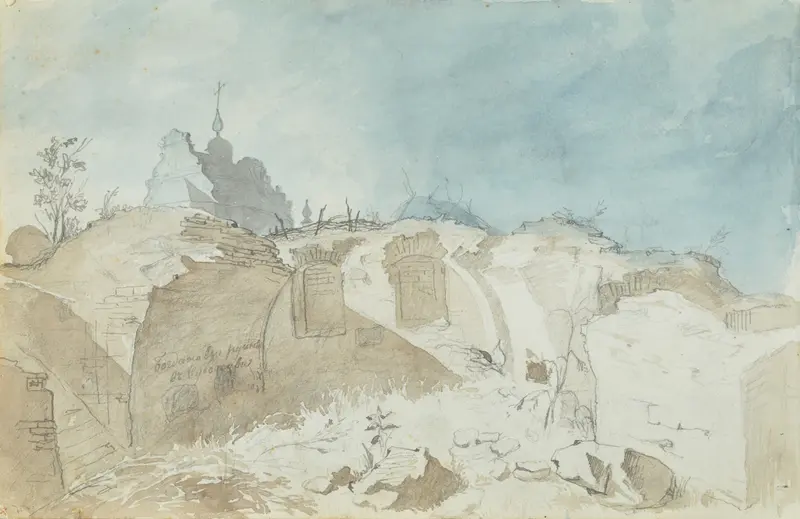
1845 Sh Sketchbook f.12v
Taras Shevchenko
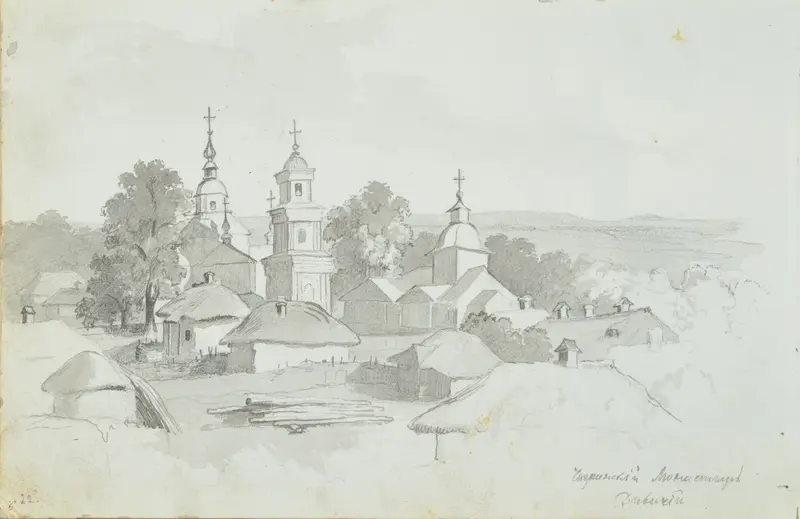
1845 Sh Sketchbook zz f.11v
Taras Shevchenko
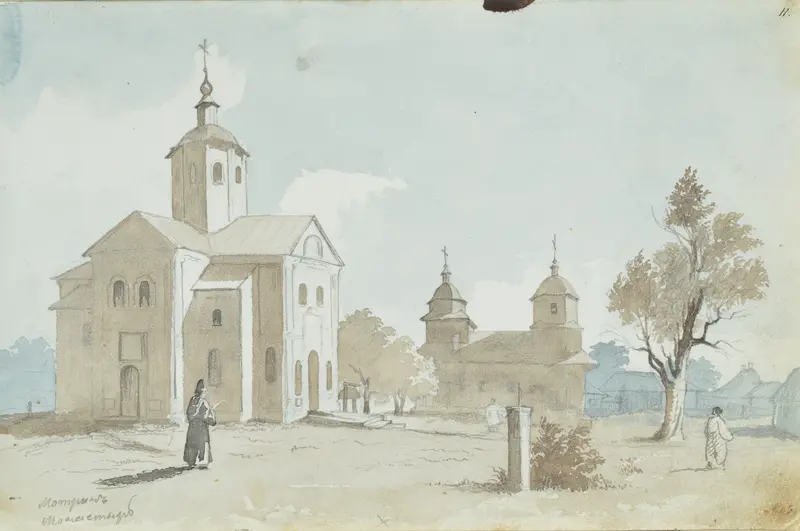
1845 Sh Sketchbook f.11r
Taras Shevchenko
More Genre Scene Art

Banquet of the Officers of the St George Civic Guard
Frans Hals

Rembrandt and Saskia in the Scene of the Prodigal Son
Rembrandt van Rijn

Bal du moulin de la Galette
Pierre-Auguste Renoir

Quadrille at the Moulin Rouge
Henri de Toulouse-Lautrec

A Burial at Ornans
Gustave Courbet

When Will You Marry?
Paul Gauguin