
In Front of a Shop — History & Facts
When Katsushika Hokusai created In Front of a Shop in 1780, he was just entering his twenties, still signing his works as "Shunrō." This early piece is remarkable for capturing the everyday life of Edo (now Tokyo) decades before Hokusai would achieve worldwide fame with Thirty-six Views of Mount Fuji. The artwork stands as one of the earliest surviving glimpses into the artist’s formative years, offering a rare window into both his developing style and the bustling urban world that inspired him. At the heart of In Front of a Shop, a cluster of figures gathers around a merchant’s stall, their gestures animated with the small dramas of daily commerce. A woman leans forward, inspecting wares—perhaps a bolt of fabric or a tray of sweets—while a child tugs at her sleeve, impatient for a treat.
The shopkeeper, poised behind his goods, wears the calm, attentive expression of someone accustomed to the rhythms of city trade. The composition brims with the textures of Edo’s merchant class: wooden signboards, patterned kimono, and the sweep of a noren curtain. Unlike the grand historical scenes favored by contemporaries like Utamaro, Hokusai here focuses on the ordinary, elevating the street corner to a stage of human connection. The exact medium of this work remains uncertain, though it likely belongs to the tradition of ukiyo-e painting or early printmaking.
Little is known about the original patron or the journey of the piece before its arrival in public collections, a common fate for early Hokusai works. Its survival is significant, as many of his youthful paintings have been lost or misattributed. Today, In Front of a Shop is valued not just for its lively depiction of Edo life, but for marking the first steps of an artist who would later transform Japanese visual culture.
More Artworks by Katsushika Hokusai

The Great Wave off Kanagawa
Katsushika Hokusai
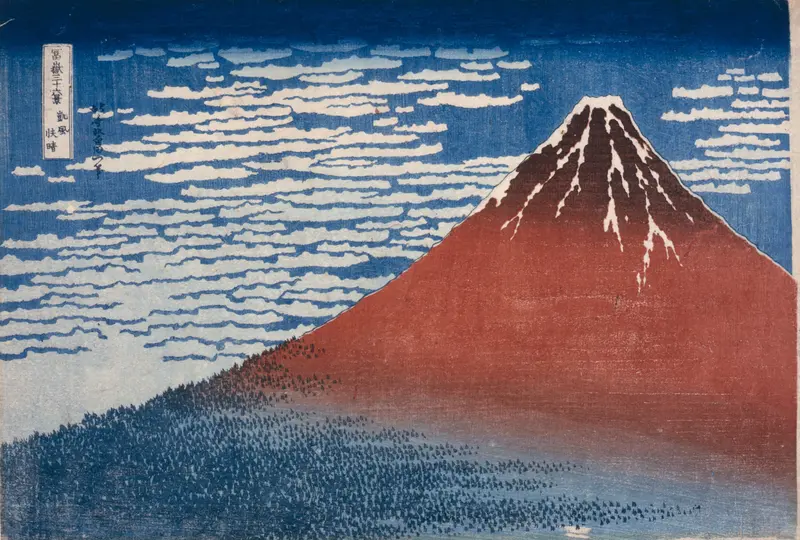
Fine Wind, Clear Morning (Red Fuji)
Katsushika Hokusai
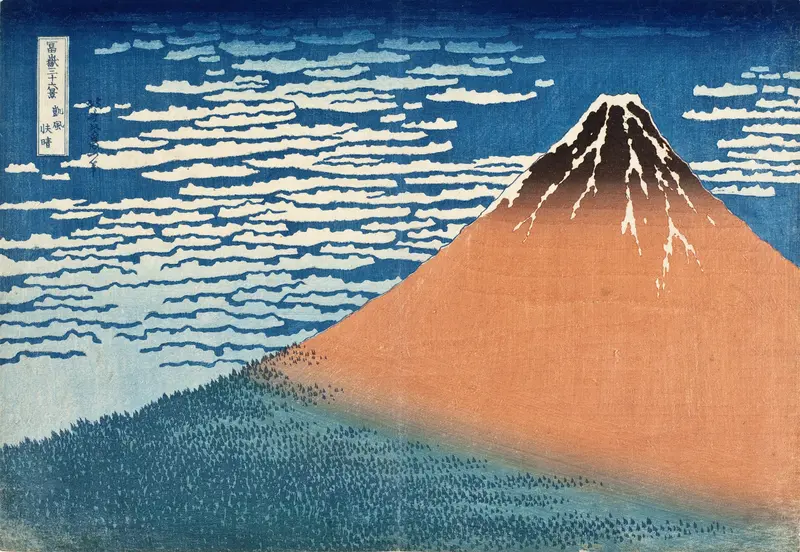
South Wind, Clear Dawn
Katsushika Hokusai
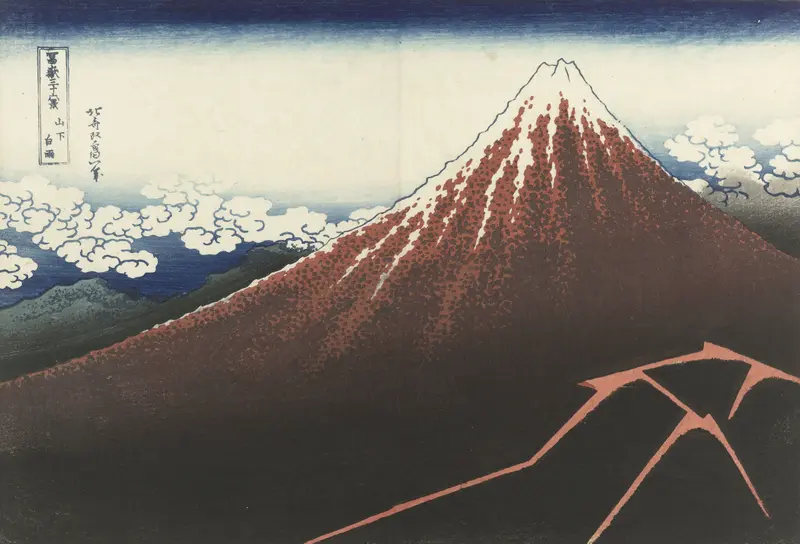
Rainstorm Beneath the Summit
Katsushika Hokusai
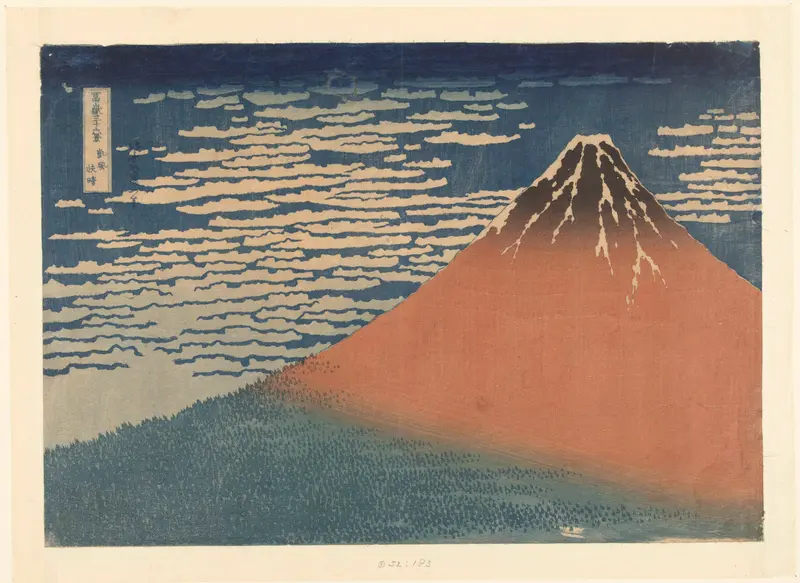
Clear Weather with a Southerly Wind
Katsushika Hokusai
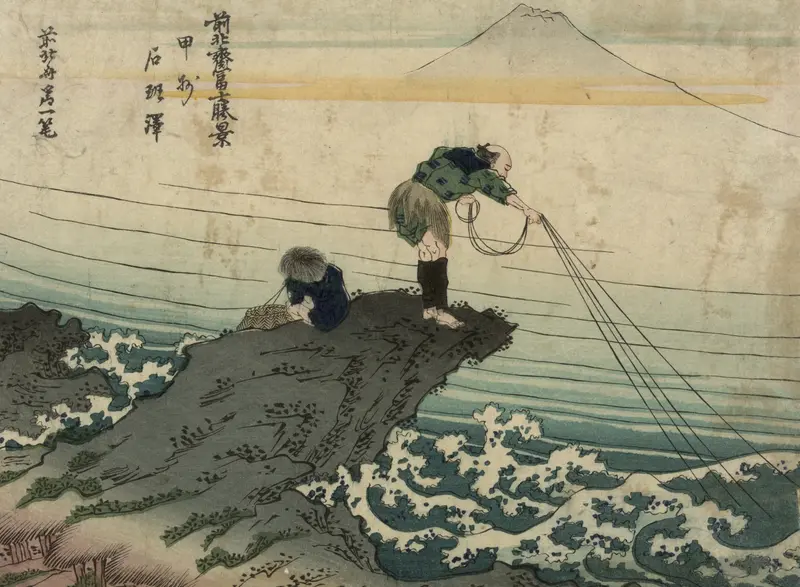
Kōshū kajikazawa
Katsushika Hokusai
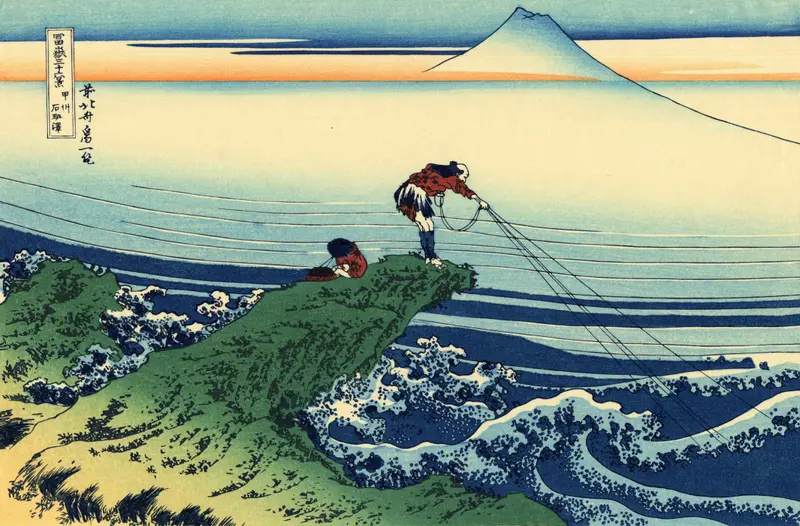
Kōshū kajikazawa 2
Katsushika Hokusai
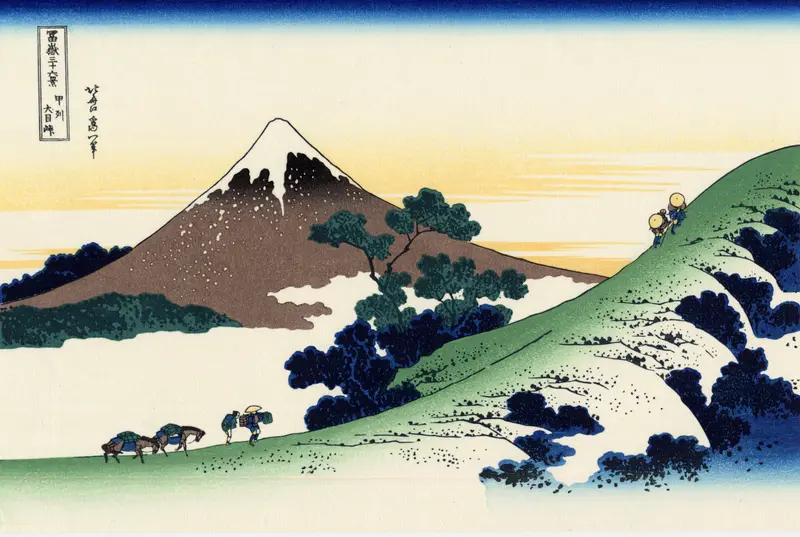
Inume Pass in Kai Province (Kôshû inume-tôge)
Katsushika Hokusai

Yoro Falls in Mino Province (Mino no Yoro no taki), from the series "A Tour of Waterfalls in Various Provinces (Shokoku taki meguri)"
Katsushika Hokusai
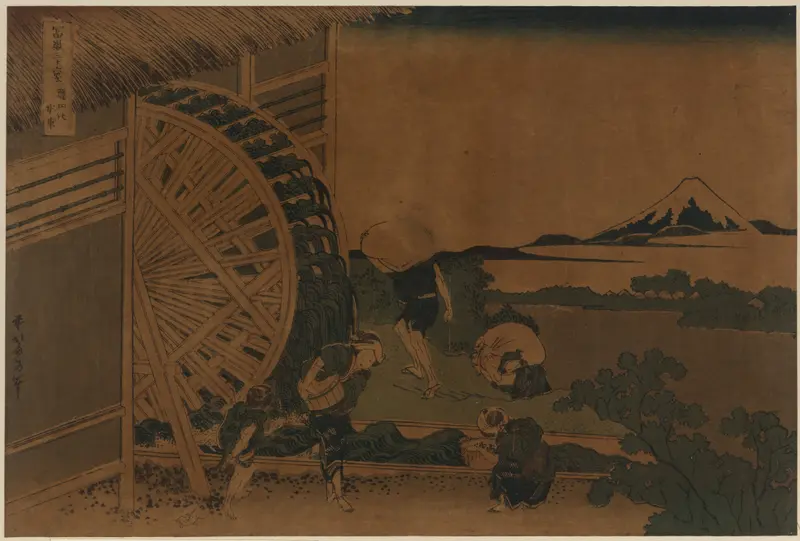
Onden no suisha
Katsushika Hokusai
More Genre Scene Art

Banquet of the Officers of the St George Civic Guard
Frans Hals

Rembrandt and Saskia in the Scene of the Prodigal Son
Rembrandt van Rijn

Bal du moulin de la Galette
Pierre-Auguste Renoir

Quadrille at the Moulin Rouge
Henri de Toulouse-Lautrec

A Burial at Ornans
Gustave Courbet

When Will You Marry?
Paul Gauguin