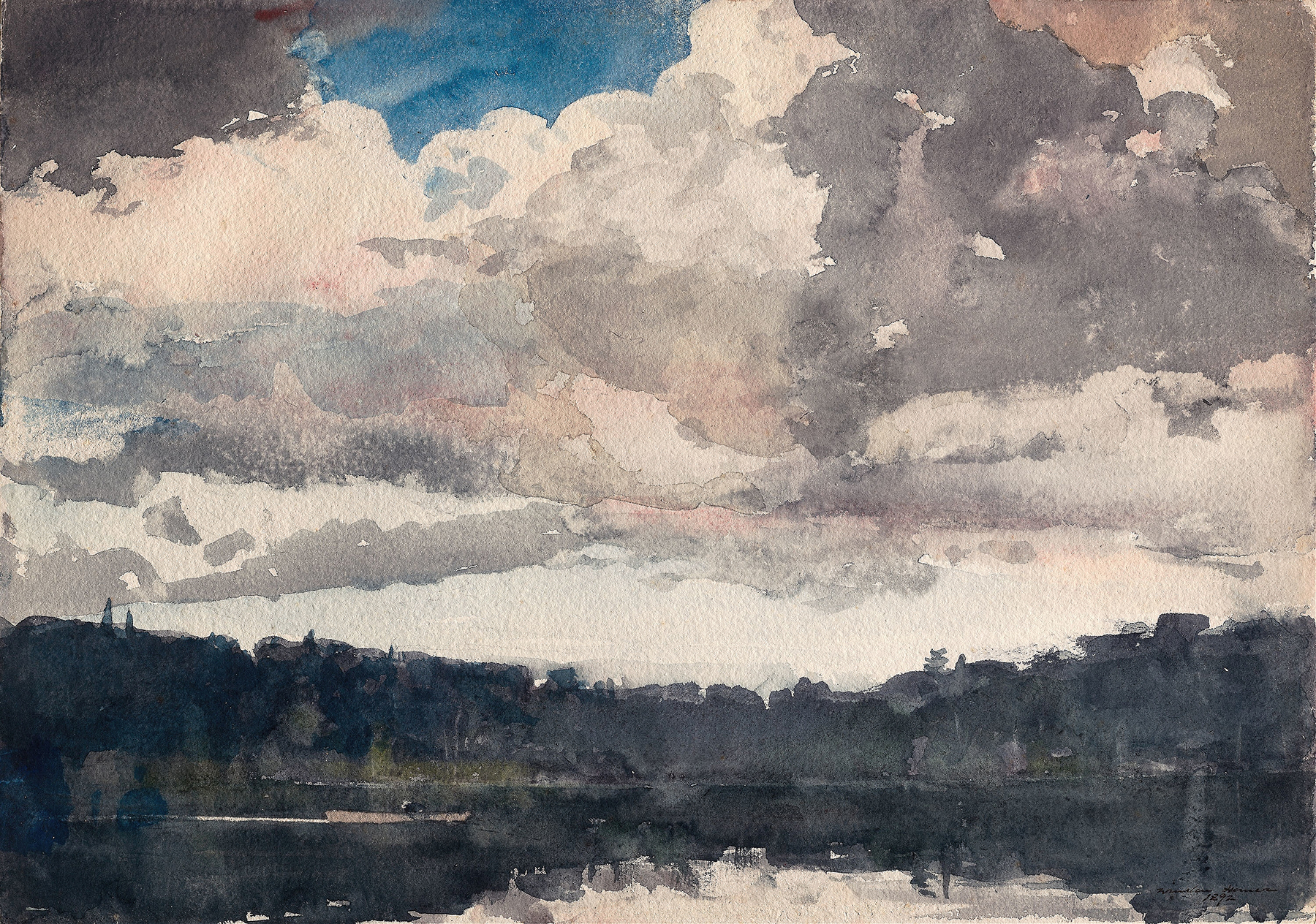
Incoming Tide, Scarboro, Maine — History & Analysis
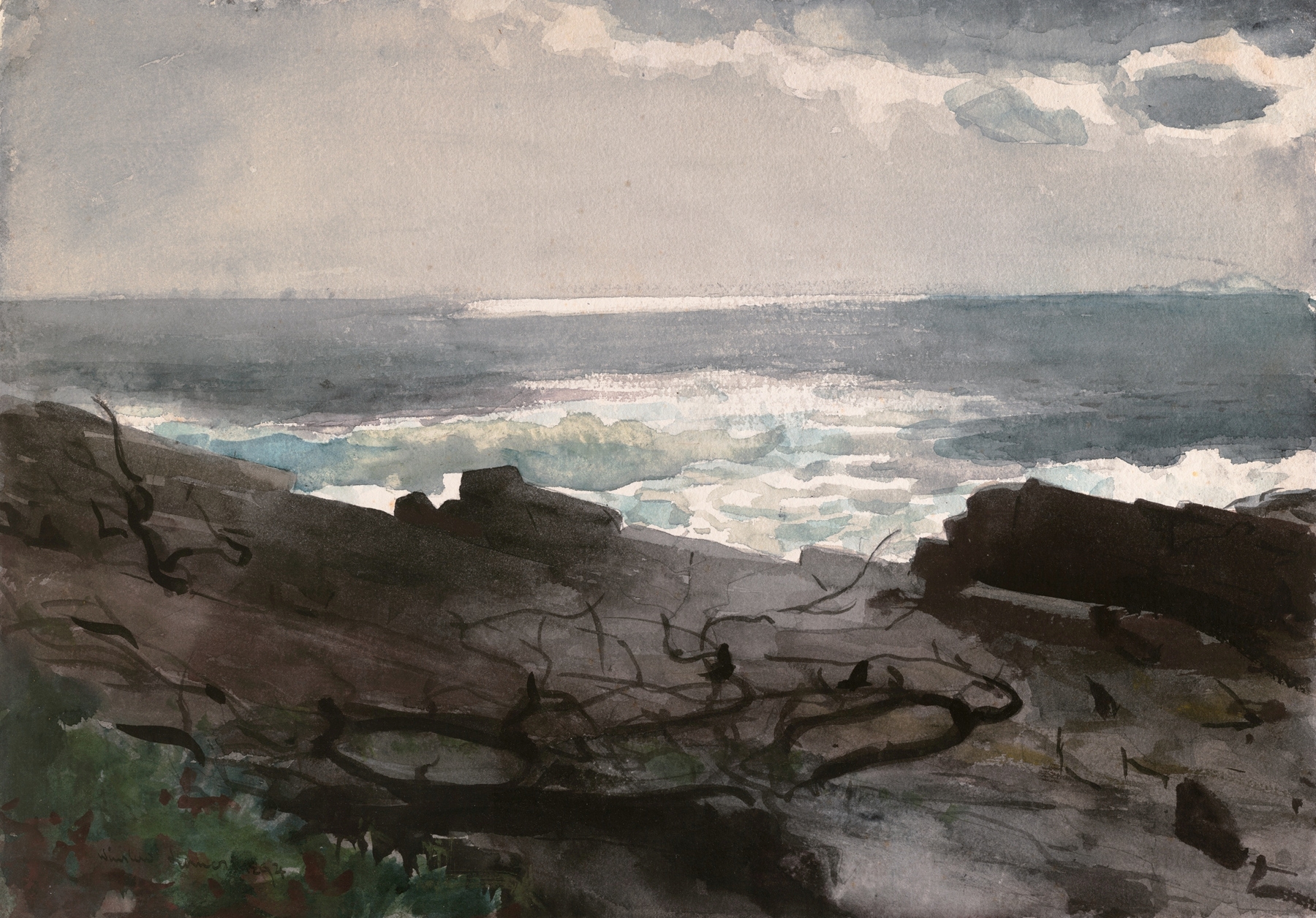
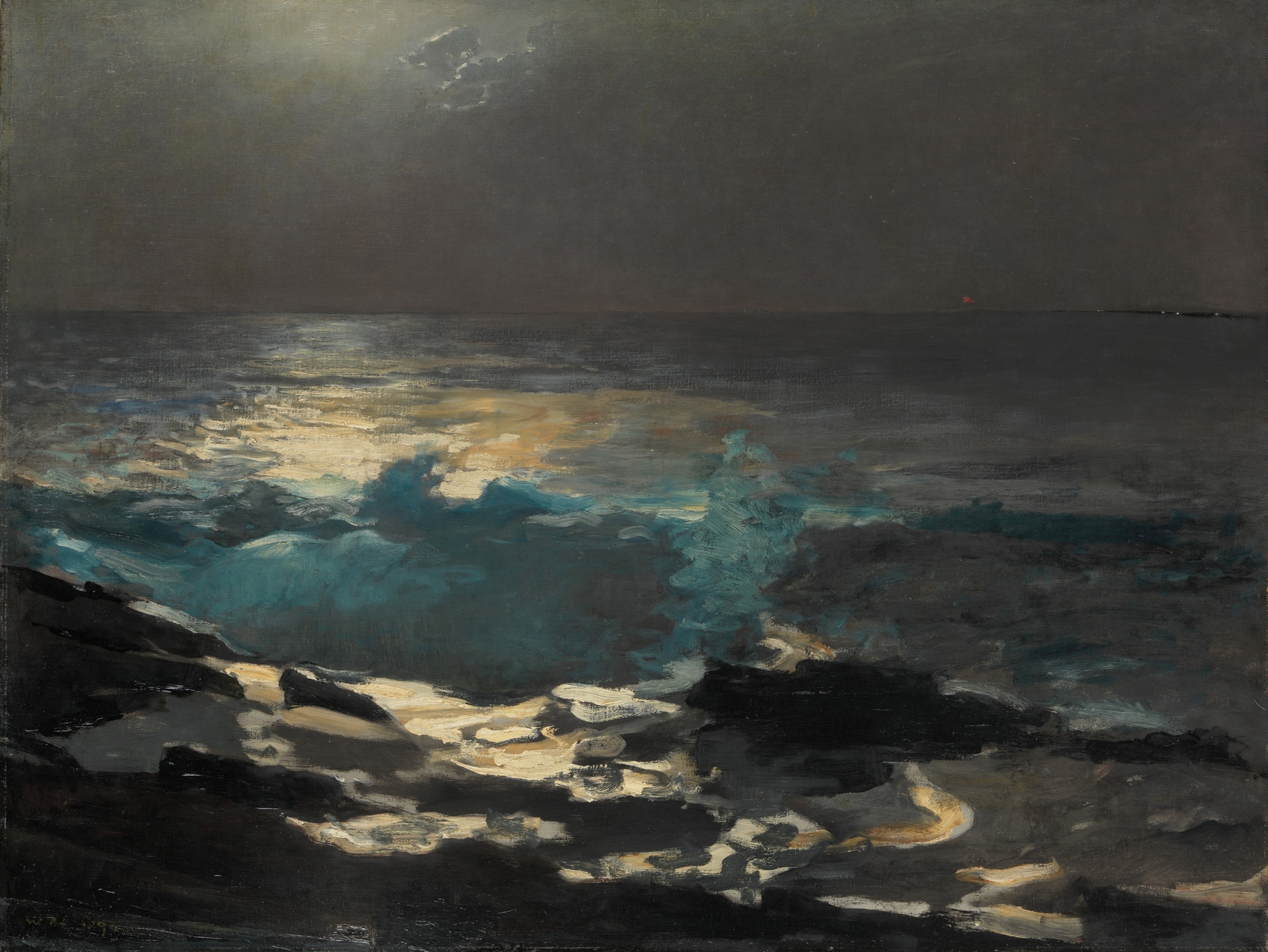
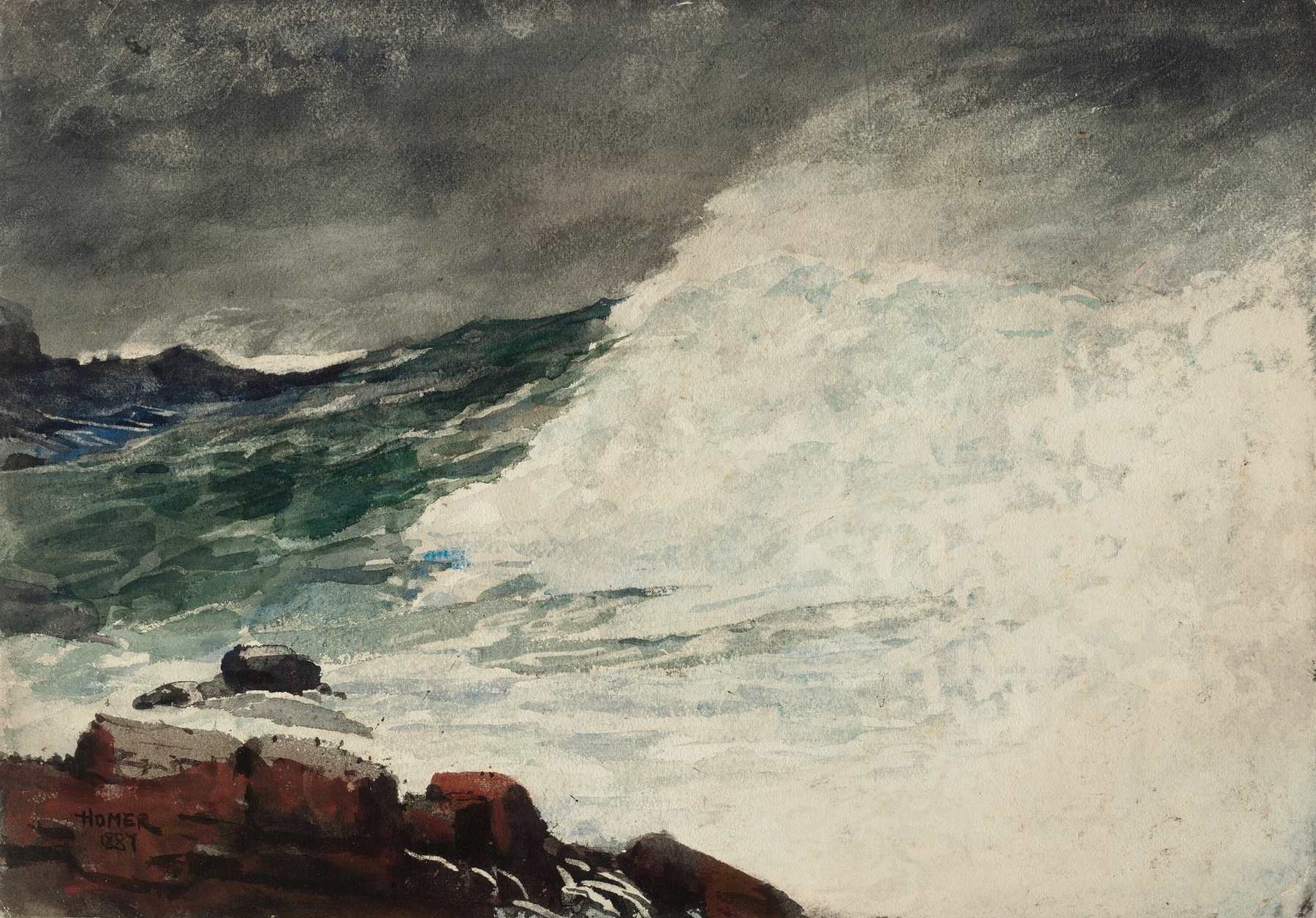
Could beauty survive in a century of chaos? The question lingers like the distant echo of waves crashing against the shore, inviting contemplation of nature’s resilience amid human fragility. Look closely at the foreground, where the coastline meets the restless ocean. Notice how the painter captures the incoming tide with deft brushstrokes, the water shimmering under a muted sky. The carefully layered blues and greens create a sense of depth and movement, while soft, frothy whites delineate the froth of the waves as they approach the rugged shore.
The jagged rocks, dark and stoic, serve as a reminder of nature's unyielding presence against the transience of human existence. Underneath the surface, this scene resonates with a deep melancholy. The lone figure, silhouetted against the expansive seascape, embodies both solitude and contemplation—a silent witness to the relentless rhythm of the tides. The juxtaposition of the calm sky against the turbulent water hints at the complexity of emotions, reflecting both beauty and turmoil.
Here lies a moment frozen in time, where the balance between nature’s grandeur and human vulnerability evokes a sense of shared introspection. In 1883, Winslow Homer was immersed in a period of prolific creativity, residing in Maine where he painted this piece. After the tumult of the Civil War and the changing dynamics of American society, he sought solace and inspiration from the New England landscape. This work reflects not only his technical mastery but also his deeper philosophical musings on solitude, nature, and the passage of time, capturing the essence of a moment that resonates through the ages.