
Italian coast — History & Facts
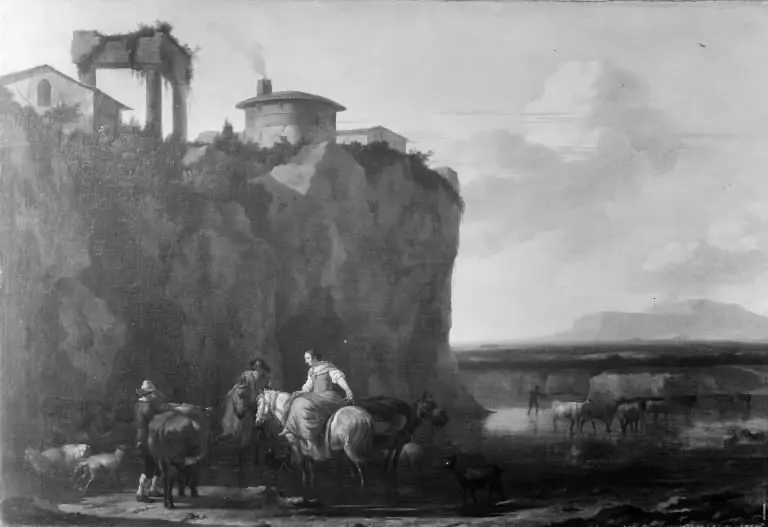
A shaft of sunlight cuts across the scene, guiding the eye from the shadowed huddle of figures at the left to the open, bustling activity at the water’s edge. The drama here is not in grand gestures or stormy weather, but in the quiet choreography of daily life: travelers or merchants pause beside their goods, goats graze indifferently, and a ship waits in the calm bay, its sails catching the same golden light that bathes the distant cliffs. The monumental ruin at the left, its surface softened by moss, hints at the long history of this coast, while the relaxed postures and casual exchanges suggest a moment of peace and prosperity.
Begeyn’s palette, dominated by ochres and blues, lends the scene a gentle warmth, while the low horizon gives the sky a starring role, its billowing clouds echoing the sense of movement below. Painted in 1659, this work belongs to the world of the Dutch Italianate painters, who looked south for inspiration and brought home visions of sunlit ruins and Mediterranean shores. In the mid-seventeenth century, such scenes were prized by collectors who longed for the exoticism and grandeur of Italy, even if they never left the Netherlands. Abraham Jansz.
Begeyn was part of this movement, blending northern precision with southern light. While history has kept few traces of this particular painting’s early journey, it survives now as a window onto both a distant coastline and a moment in art history when the everyday could be rendered with as much care as the heroic. The longer you look, the more the painting rewards you with its small, human stories.
More Artworks by Abraham Jansz. Begeyn

Landscape with people and cattle
Abraham Jansz. Begeyn
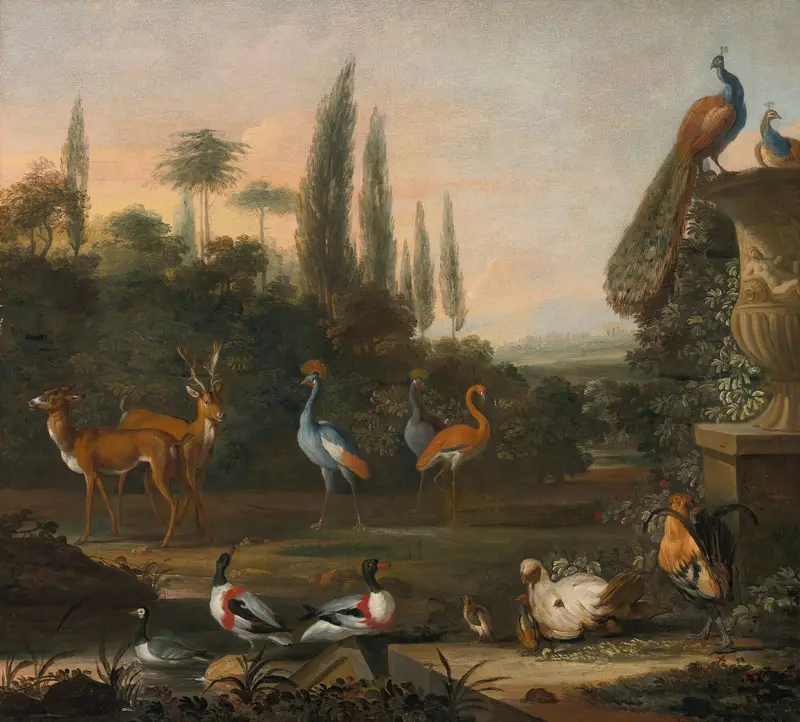
Landscape with deer and exotic birds
Abraham Jansz. Begeyn
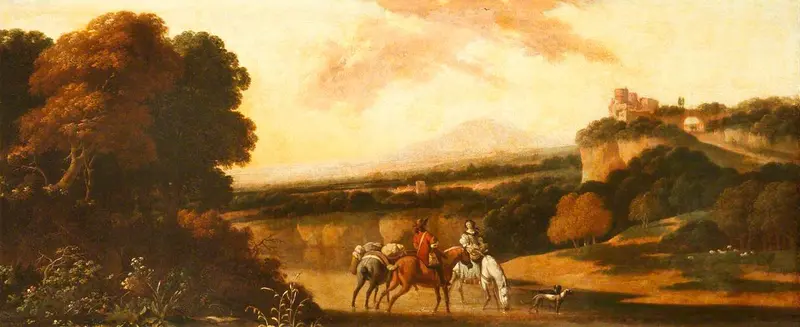
Landscape with Travellers
Abraham Jansz. Begeyn
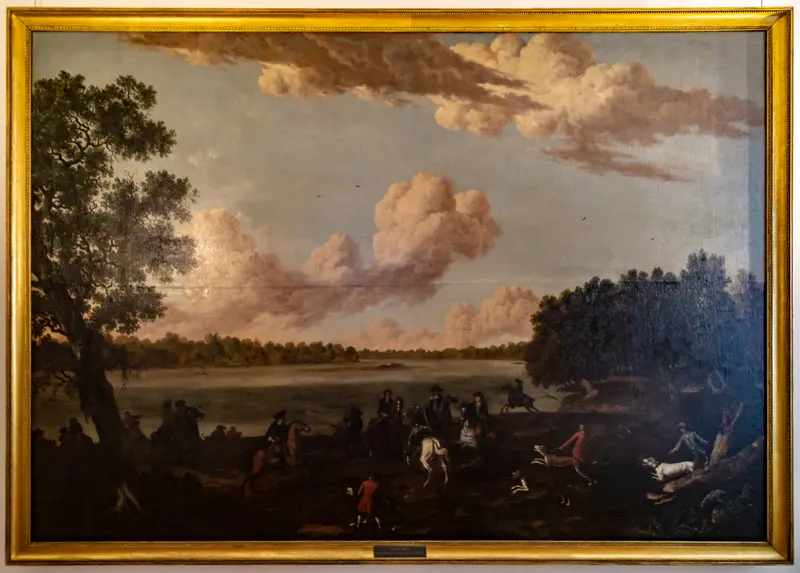
Prince Elector Frederick III of Prussia hunting at the Havel
Abraham Jansz. Begeyn
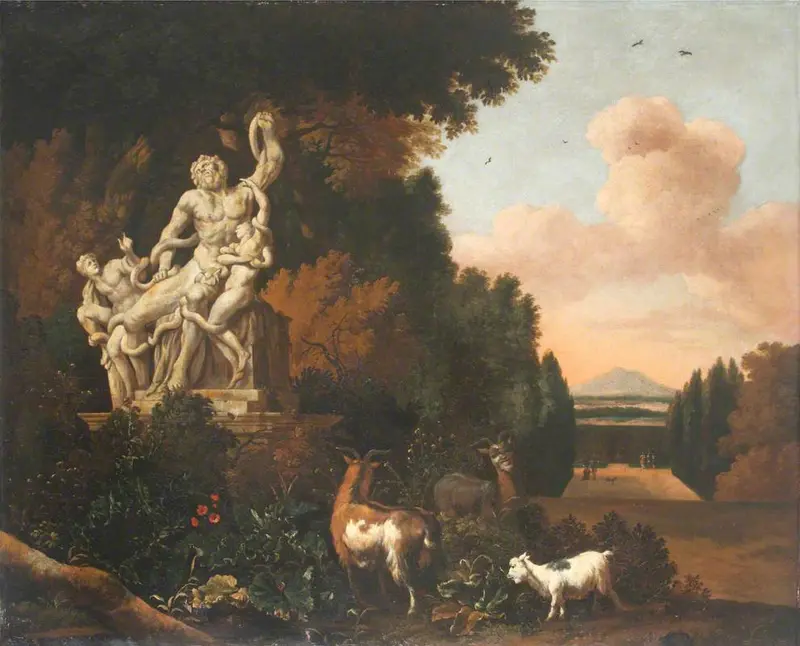
Landscape with Goats and a Statue of Laocoön
Abraham Jansz. Begeyn
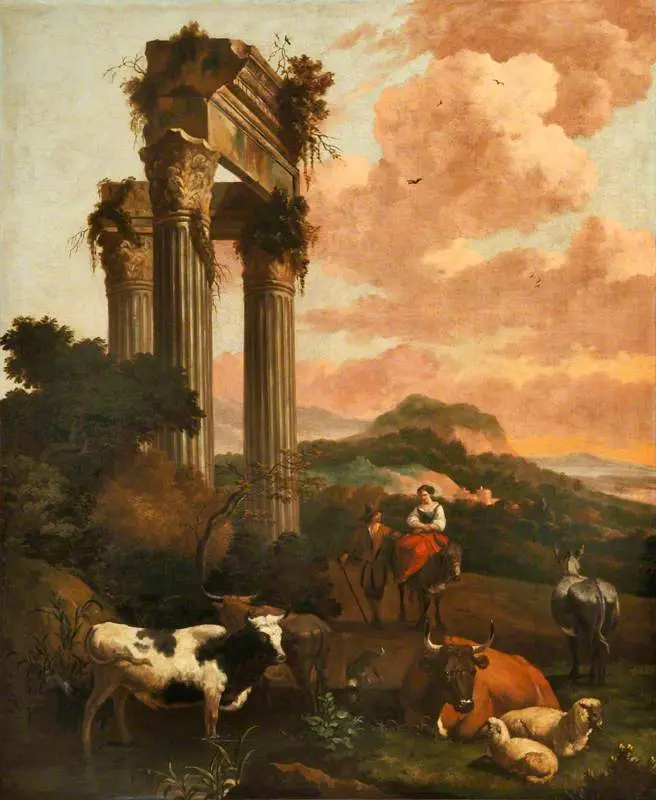
Landscape with Figures, Cattle and Sheep among Classical Ruins
Abraham Jansz. Begeyn
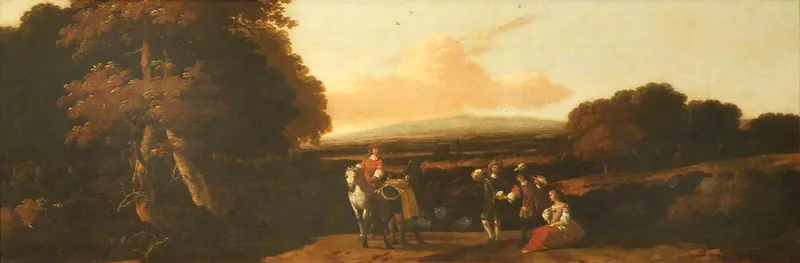
Landscape with Figures on a Road
Abraham Jansz. Begeyn
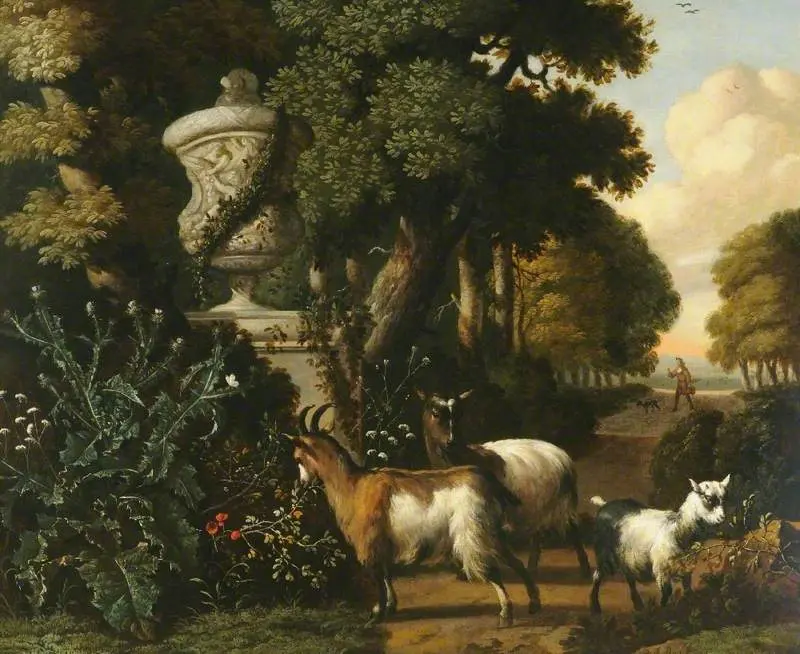
Landscape with Goats
Abraham Jansz. Begeyn
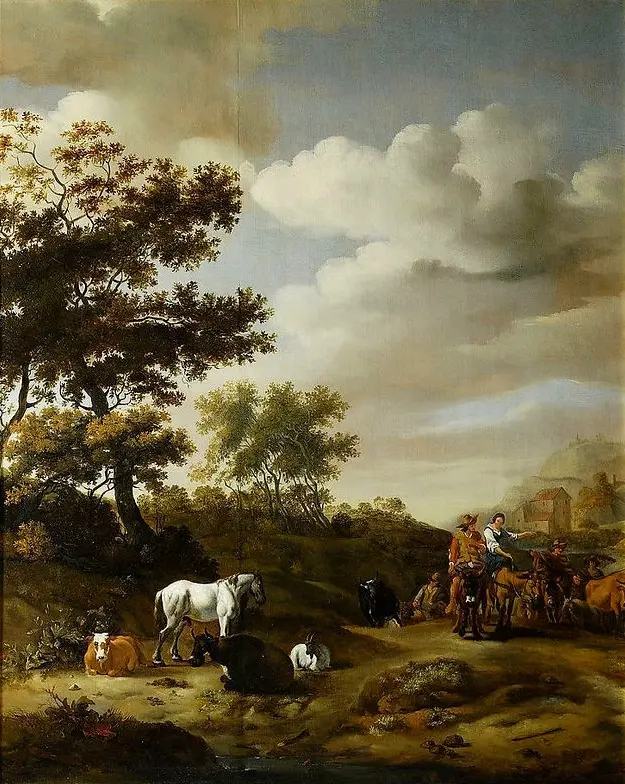
Landscape with travelers and cattle.
Abraham Jansz. Begeyn
The Ford
Abraham Jansz. Begeyn
More Landscape Art

The Starry Night
Vincent van Gogh

View of Delft
Johannes Vermeer

Water Lilies
Claude Monet

The Grand Canal, Venice, looking north-west from the Ca' Corner to the Ca' Contarini degli Scrigni, with the campanile of Santa Maria della Carità
Canaletto

Windsor Castle
Canaletto

The Grand Canal looking North-East from the Palazzo Dolfin-Manin to the Rialto Bridge
Canaletto