
Italian Port — History & Facts
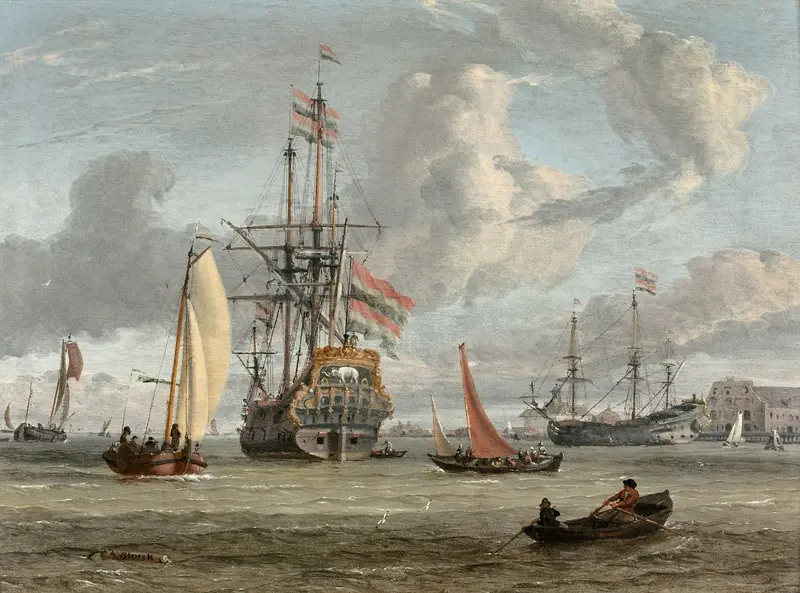
A sky full of drama and a harbor teeming with life: what first catches the eye in Italian Port is the sense of anticipation, as if the entire scene is holding its breath. The sunlight breaks through a swirl of clouds, spotlighting the busy dock where merchants, sailors, and animals converge in a lively exchange. The ships, their sails taut and flags unfurled, are not just background—they are actors in a grand performance, their presence magnified by the low horizon and the sweep of the architecture behind.
Notice how the figures on the quay draw us in: a man hoists a barrel, another gestures toward the sea, while a dog noses at the feet of a traveler. The palette, all golden ochres and cool blues, sets a mood both bustling and contemplative, inviting the viewer to imagine the stories behind each figure and vessel. Works like this, painted by Abraham Storck in the 17th century, belong to a tradition of seaport views that flourished in the Dutch Golden Age, when maritime trade shaped the fortunes and imaginations of Europe. These paintings were often commissioned by wealthy merchants or collectors eager to display their ties to distant lands and the promise of commerce.
While history has kept few traces of this particular canvas beyond its recent documentation (self-photographed in 2020), its style and subject echo a world where the boundaries between reality and fantasy ports blurred—where Italian ruins, Dutch ships, and Mediterranean light could coexist on a single stage. Stand before it and you can almost hear the creak of rigging and the shouts of traders, the pulse of an age when the world seemed both wider and closer than ever before.
More Artworks by Abraham Storck

The Muscovite legation visiting Amsterdam, 29 August 1697
Abraham Storck
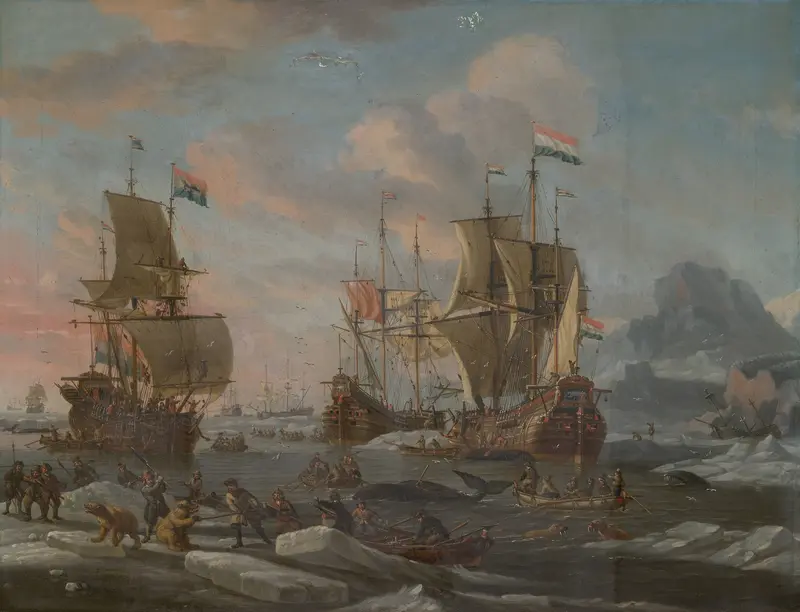
The Dutch Whaling Fleet
Abraham Storck
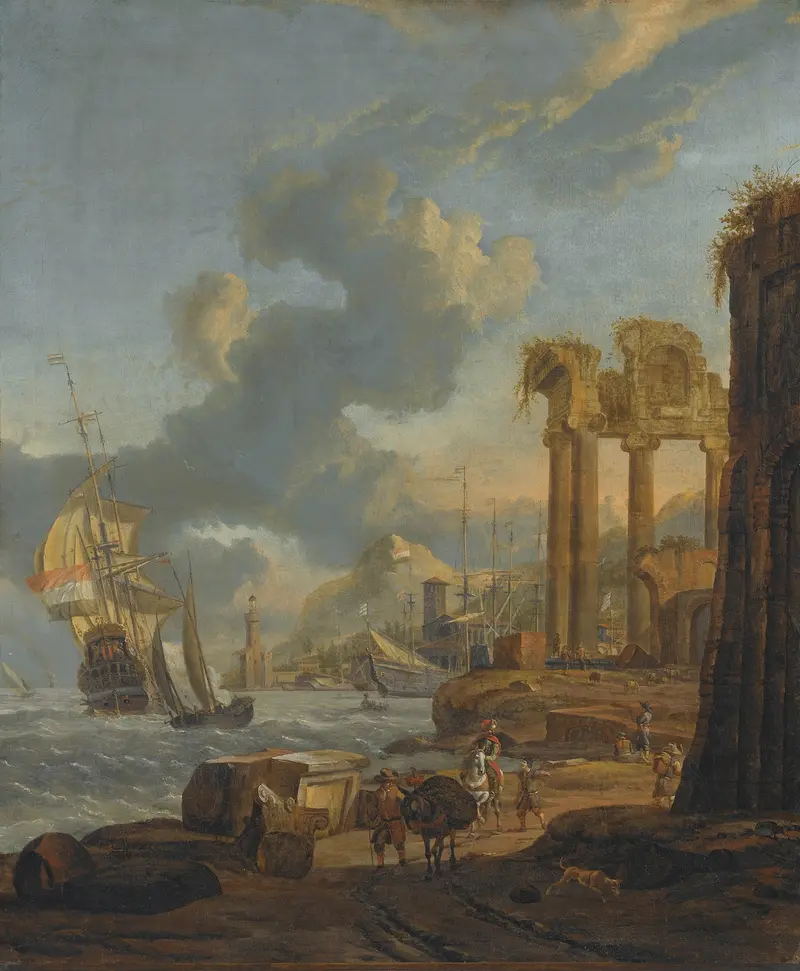
A Mediterranean Harbour Scene With Travellers On The Shore, A Dutch Man-Of-War On The Left
Abraham Storck
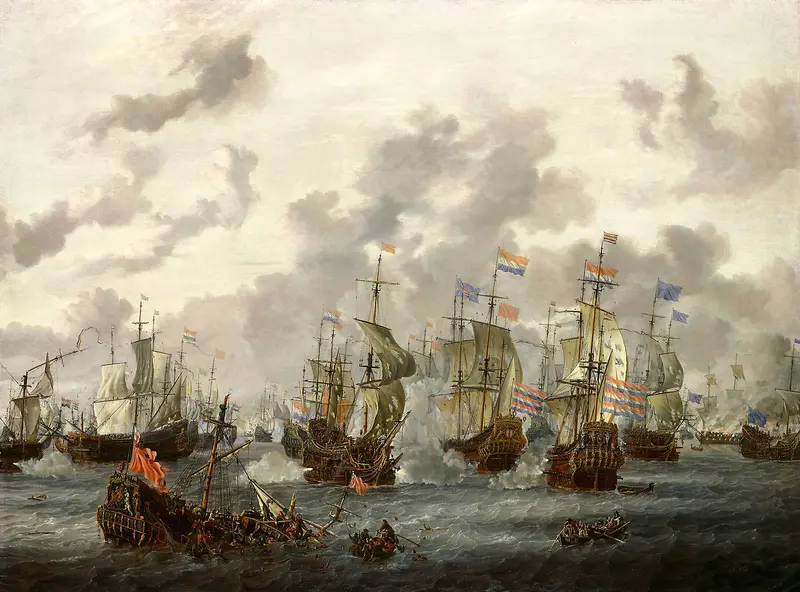
The Four Days’ Battle
Abraham Storck
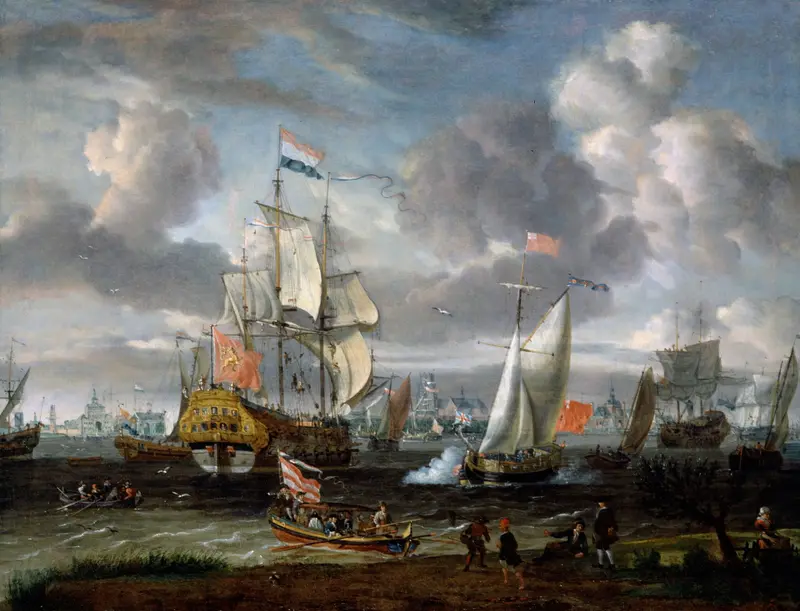
An English Yacht saluting a Dutch Man-of-War in the port of Rotterdam
Abraham Storck
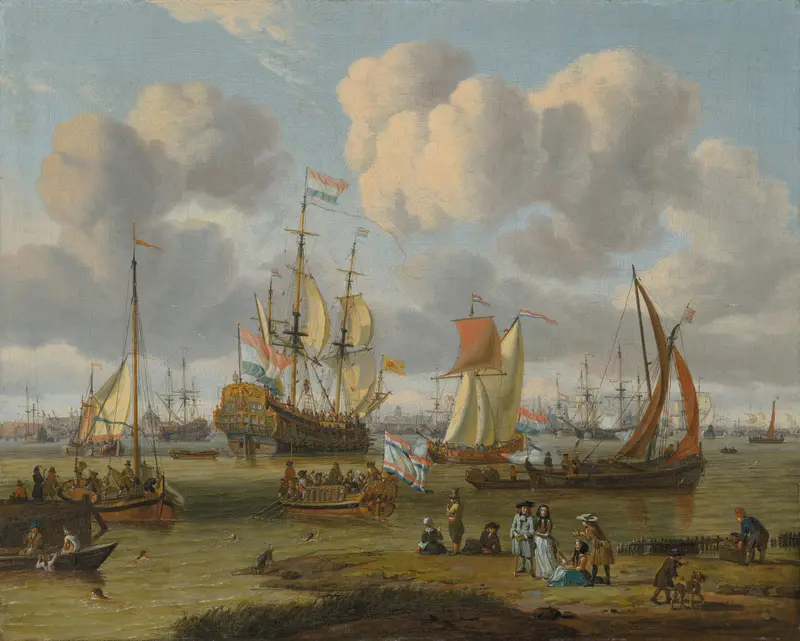
Shipping off Amsterdam with figures on a quay
Abraham Storck
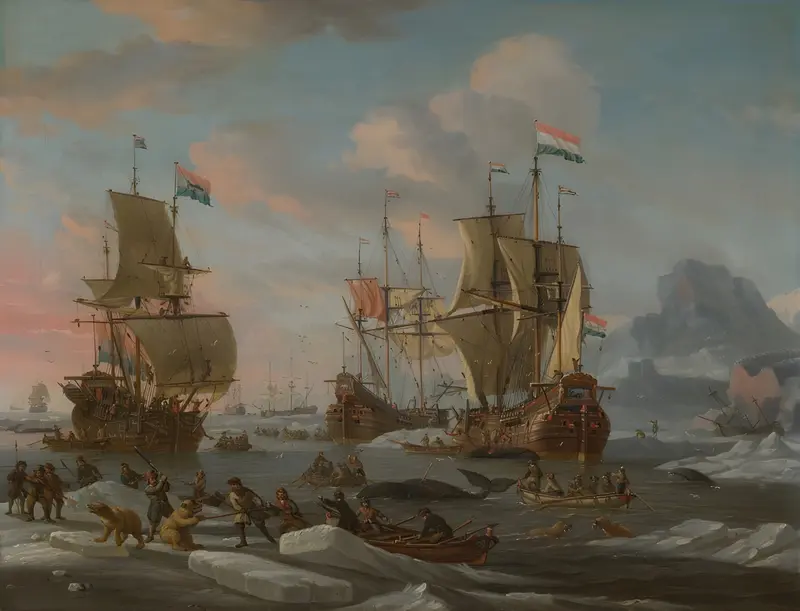
The Dutch Whaling Fleet
Abraham Storck
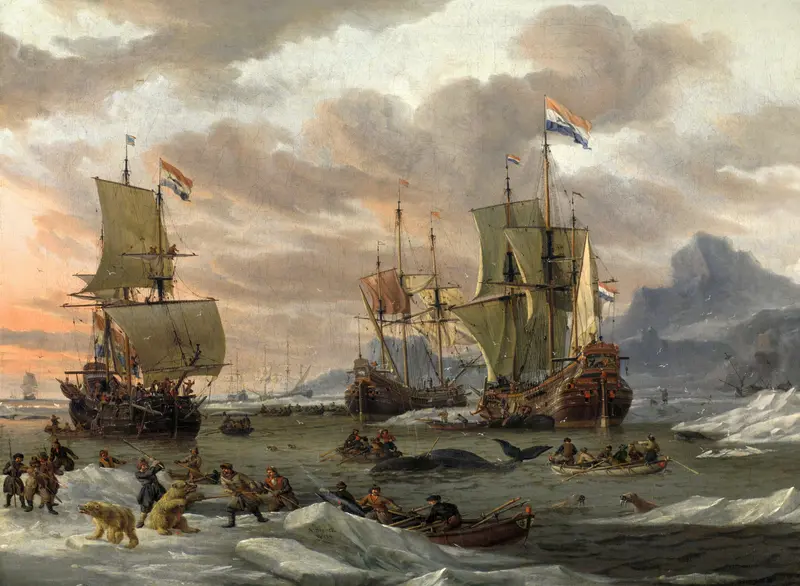
Whaling Grounds in the Arctic Ocean
Abraham Storck
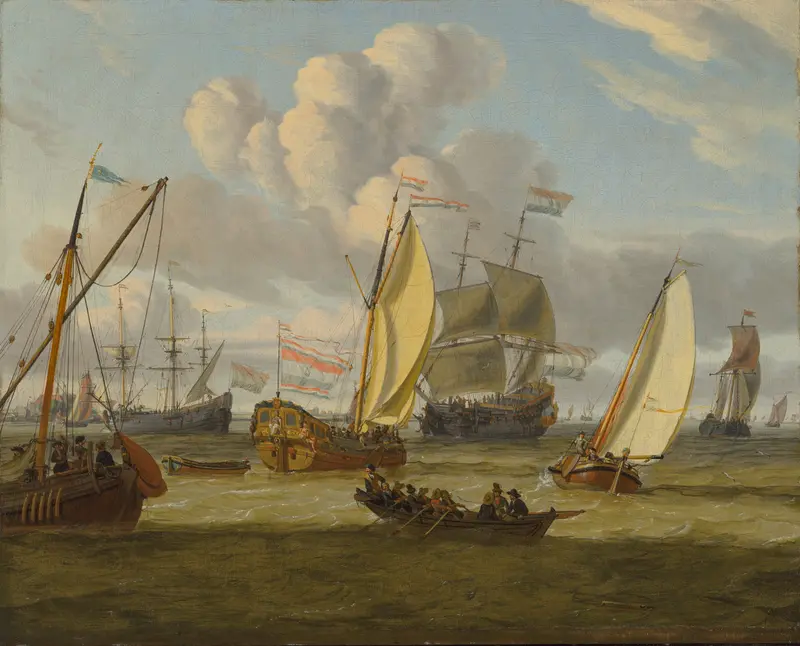
Shipping in an estuary
Abraham Storck
Grand navire de la couronne du Danemark près d’un littoral
Abraham Storck





