
Italianate Harbour View with a Fantasy Building and Man-of-War — History & Facts
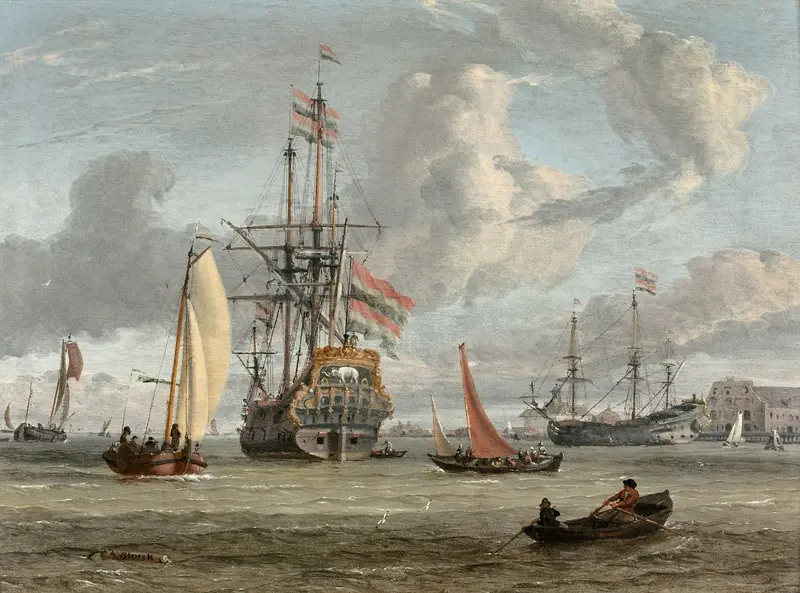
The eye is drawn first to the towering obelisk, sunlit and central, anchoring a scene alive with the bustle of trade and anticipation. Figures gather around the fountain at its base—some in animated conversation, others intent on their tasks—while a man leans in, peering into the water as if searching for something lost or perhaps simply pausing amid the commotion. The monumental building to the left, with its arcaded façade and grand stair, rises like a stage set, its windows catching the cool light and hinting at a world of commerce and power within.
Across the quay, bales marked with lettering become makeshift seats for travelers or merchants, their presence a reminder that this harbor is a crossroads of goods and stories. The sails of the man-of-war billow with promise, its flags catching the wind and signaling the reach of distant empires, while the palette—cool blues and warm ochres—casts the whole scene in a mood of expectation and possibility. Painted by Abraham Storck in 1697, this harbor view belongs to a tradition that flourished in the Dutch Golden Age: the Italianate fantasy, where northern artists conjured Mediterranean ports teeming with life and architectural marvels. Such works were prized by merchants and collectors who dreamed of far-off lands, or who sought to display their own cosmopolitan ambitions.
The obelisk and fountain, the grand palazzo, and the stately ship are less a record of a real place than a vision of what a harbor might be—ordered, prosperous, and open to the world. History has kept few traces of the specific journeys of this painting, but its energy and invention still invite us to step into its imagined port, where every figure has a part to play in the drama of arrival and exchange.
More Artworks by Abraham Storck

The Muscovite legation visiting Amsterdam, 29 August 1697
Abraham Storck
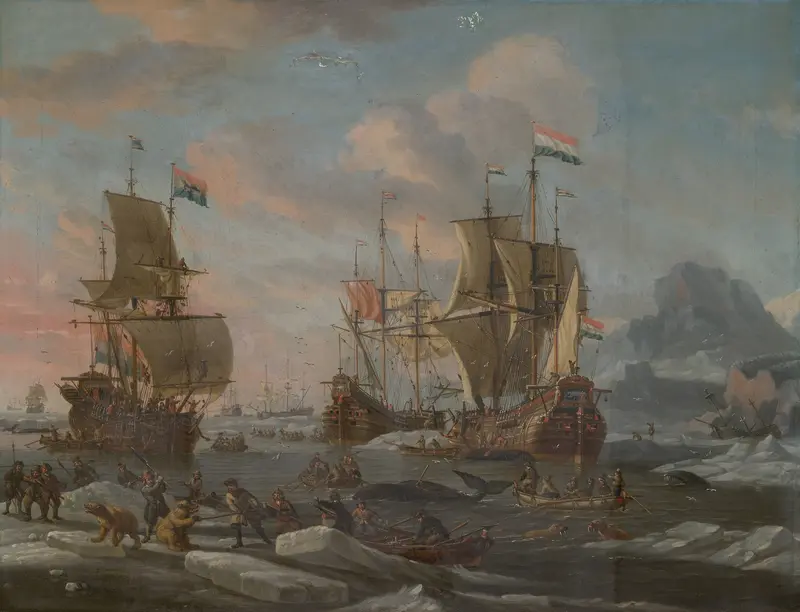
The Dutch Whaling Fleet
Abraham Storck
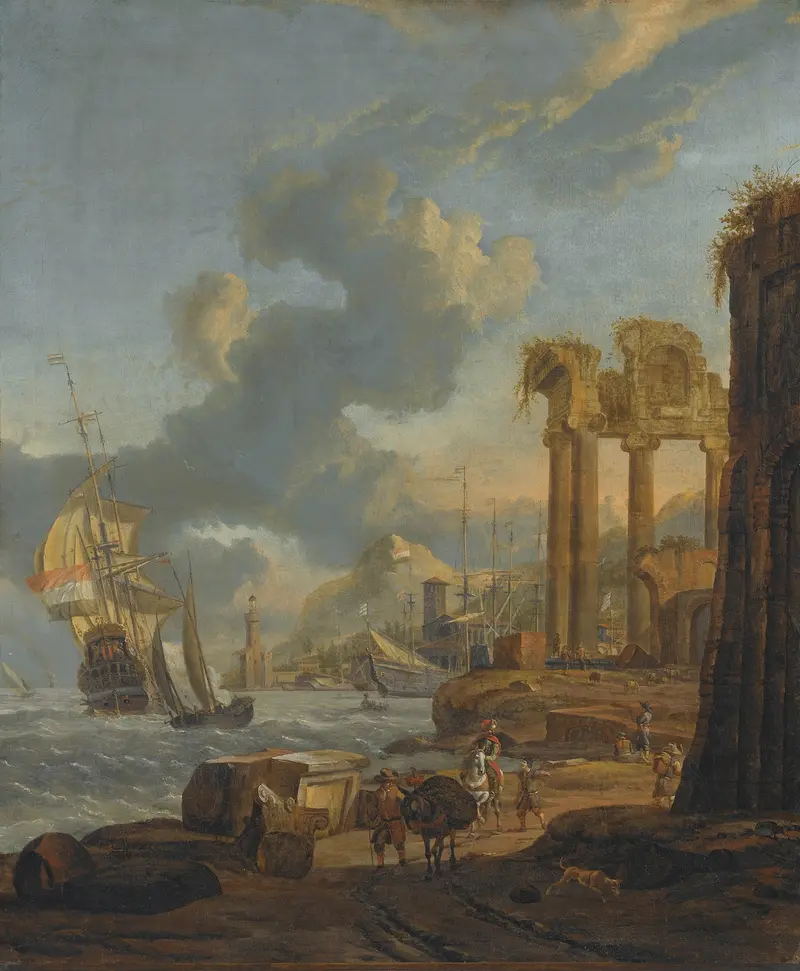
A Mediterranean Harbour Scene With Travellers On The Shore, A Dutch Man-Of-War On The Left
Abraham Storck
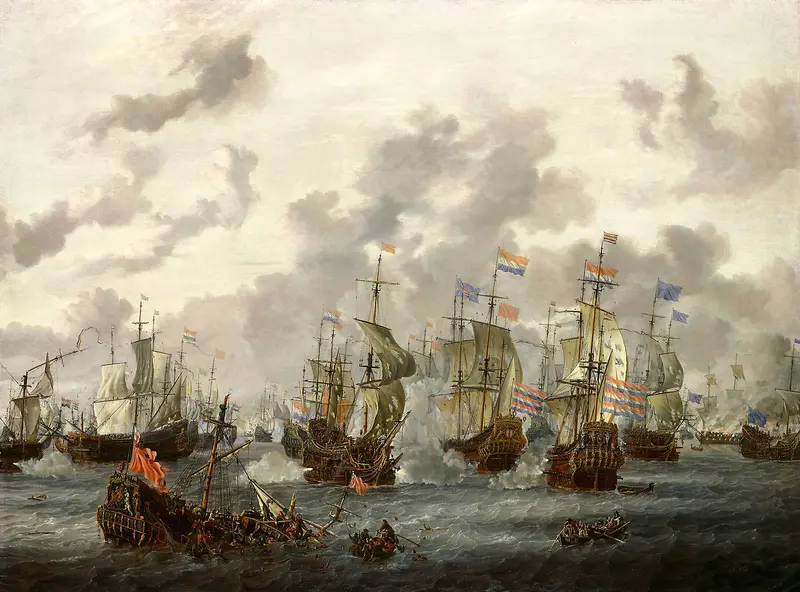
The Four Days’ Battle
Abraham Storck
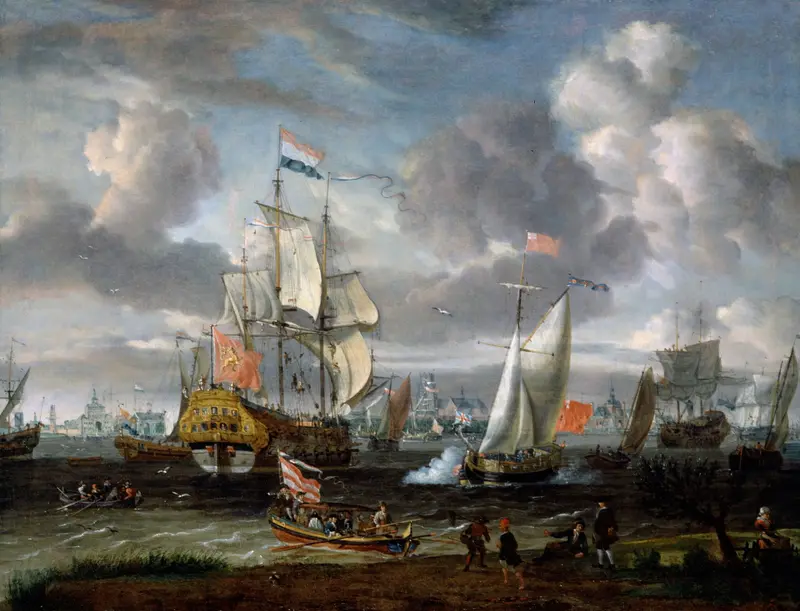
An English Yacht saluting a Dutch Man-of-War in the port of Rotterdam
Abraham Storck
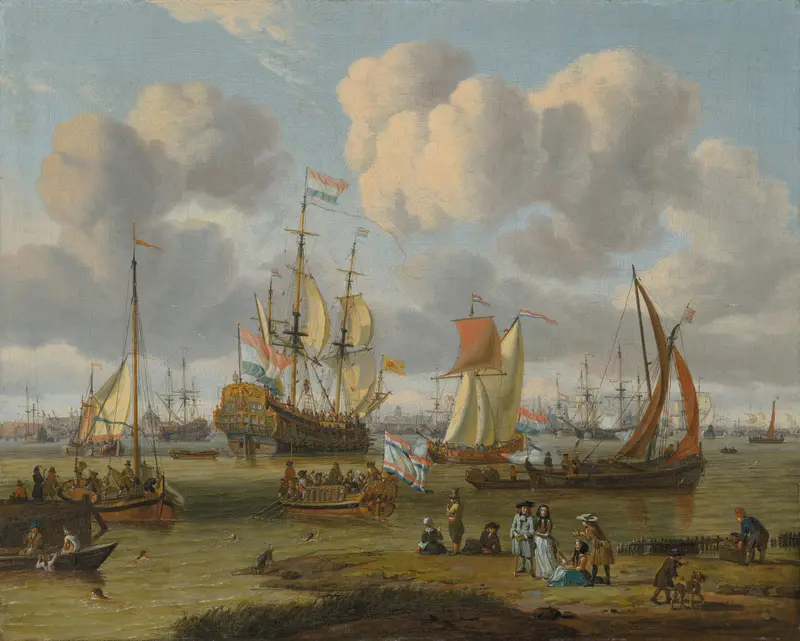
Shipping off Amsterdam with figures on a quay
Abraham Storck
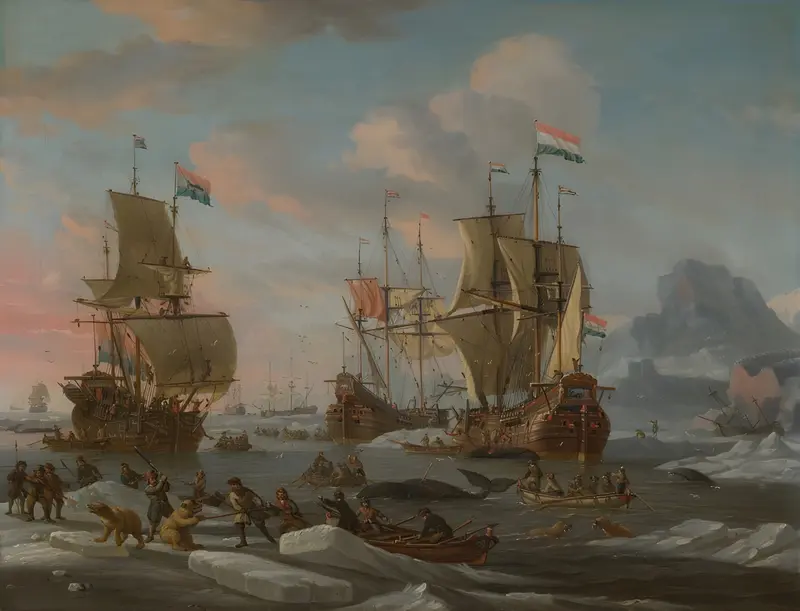
The Dutch Whaling Fleet
Abraham Storck
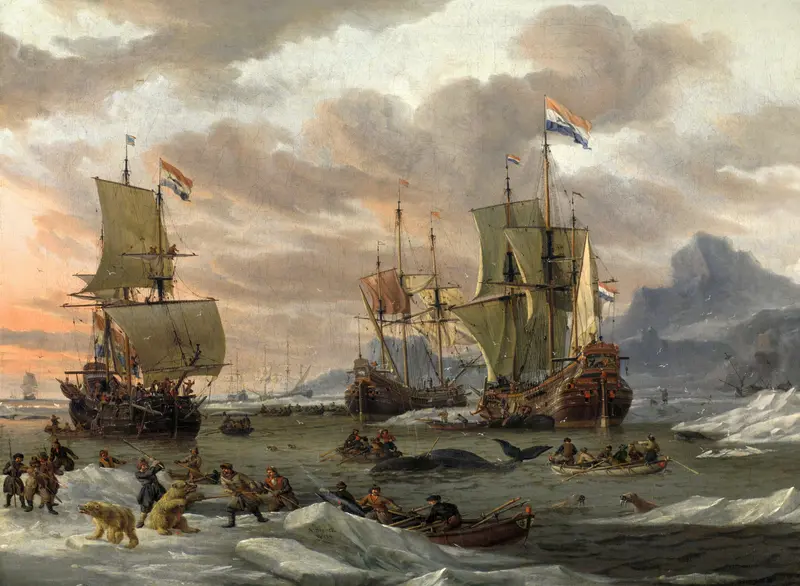
Whaling Grounds in the Arctic Ocean
Abraham Storck
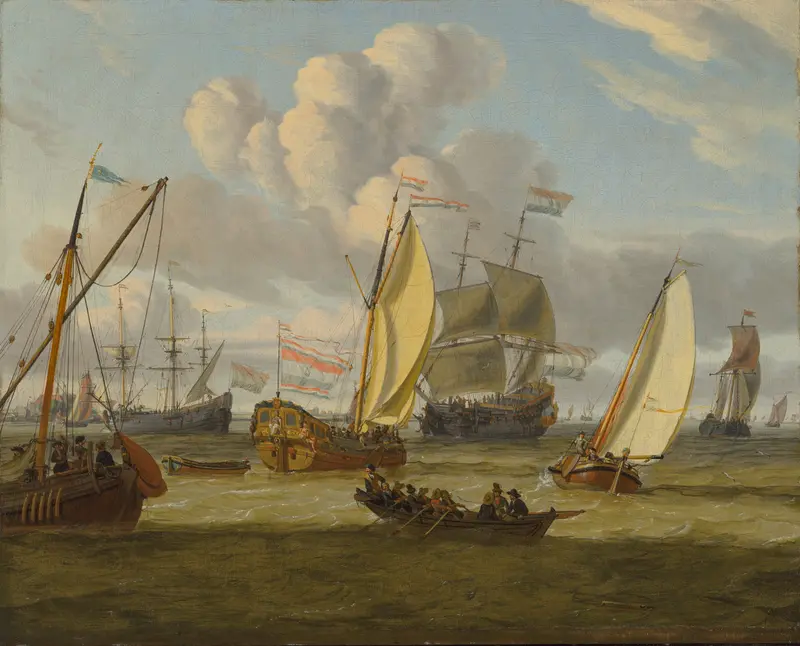
Shipping in an estuary
Abraham Storck
Grand navire de la couronne du Danemark près d’un littoral
Abraham Storck





