Ivory-breasted Pitta — History & Facts
What first catches the eye in Ivory-breasted Pitta is the almost theatrical pose of the two birds: one stands tall, chest thrust forward, while the other lifts its wing in a gesture that seems both defensive and revealing. The water glistens on their legs and feathers, suggesting a moment just after bathing or foraging, and the delicate gradations of color—emerald, scarlet, and jet—make the birds seem vivid against the gentle, misty background. The artist draws your attention not just to the birds’ plumage, but to their alertness and mutual awareness, as if you’ve stumbled into a private scene in the wild.
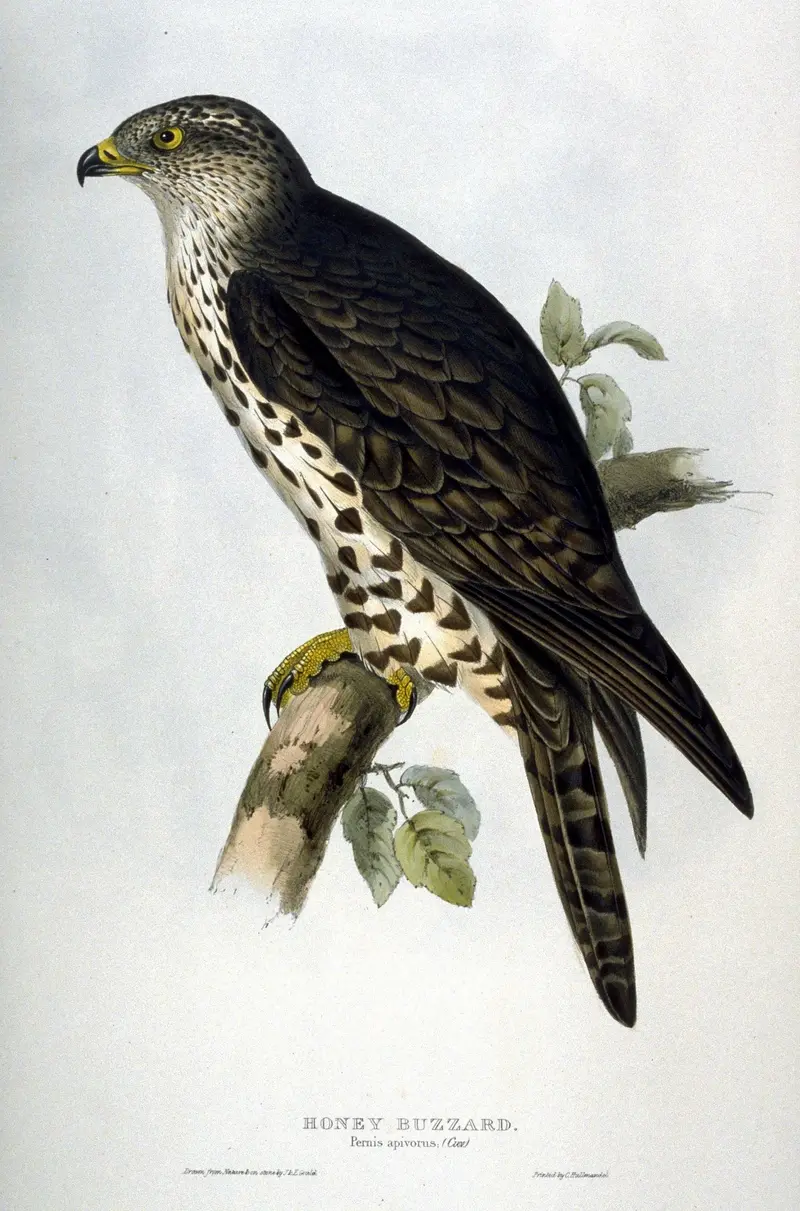
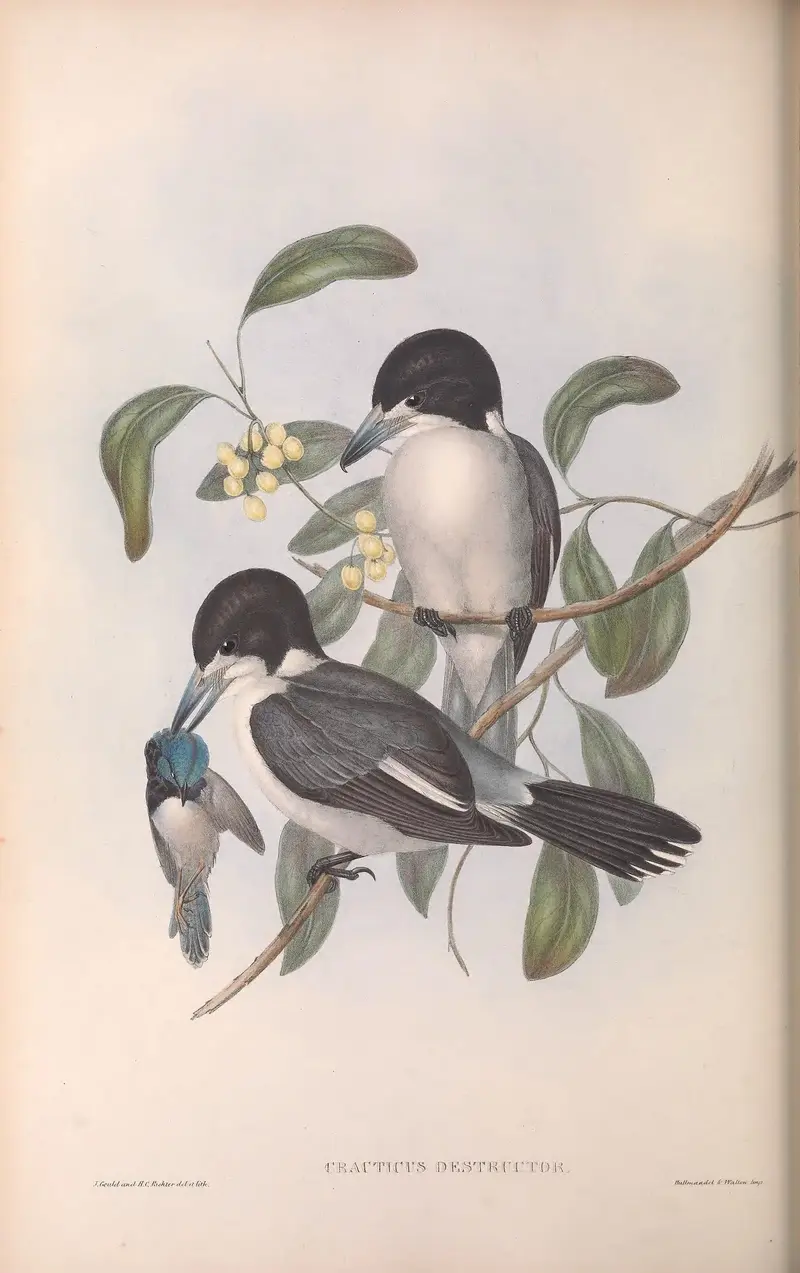
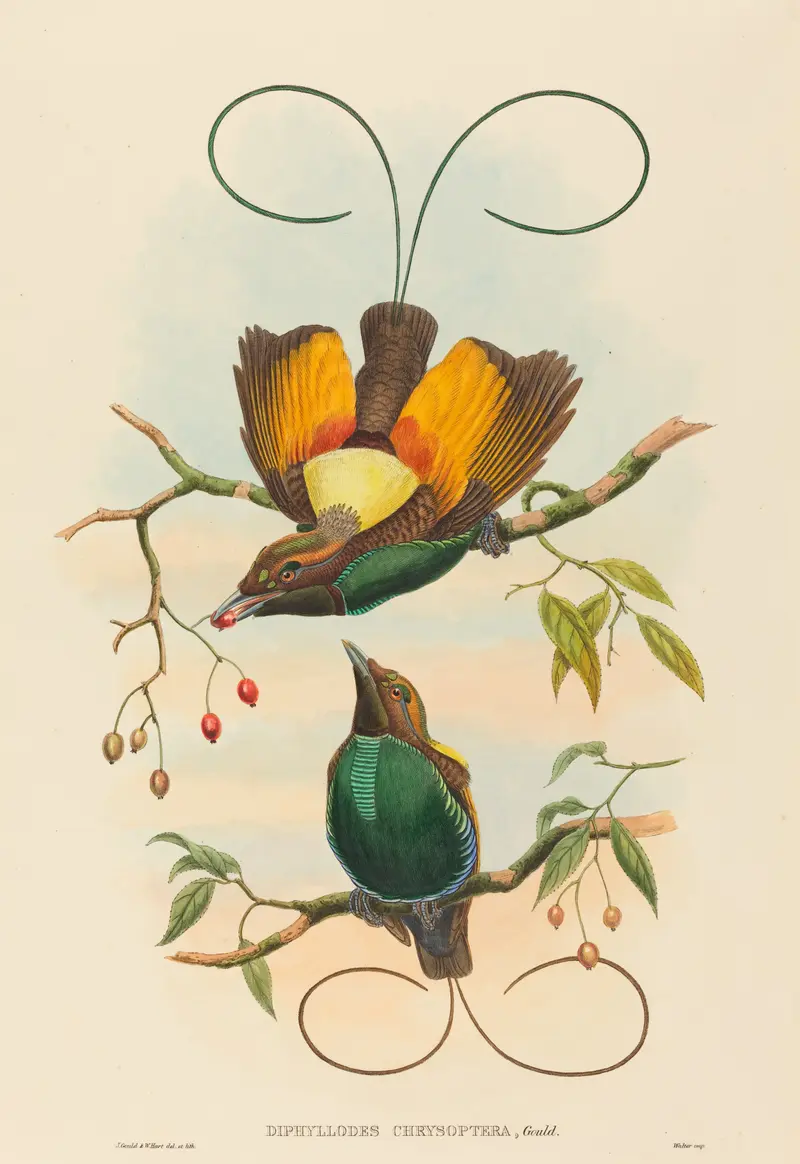
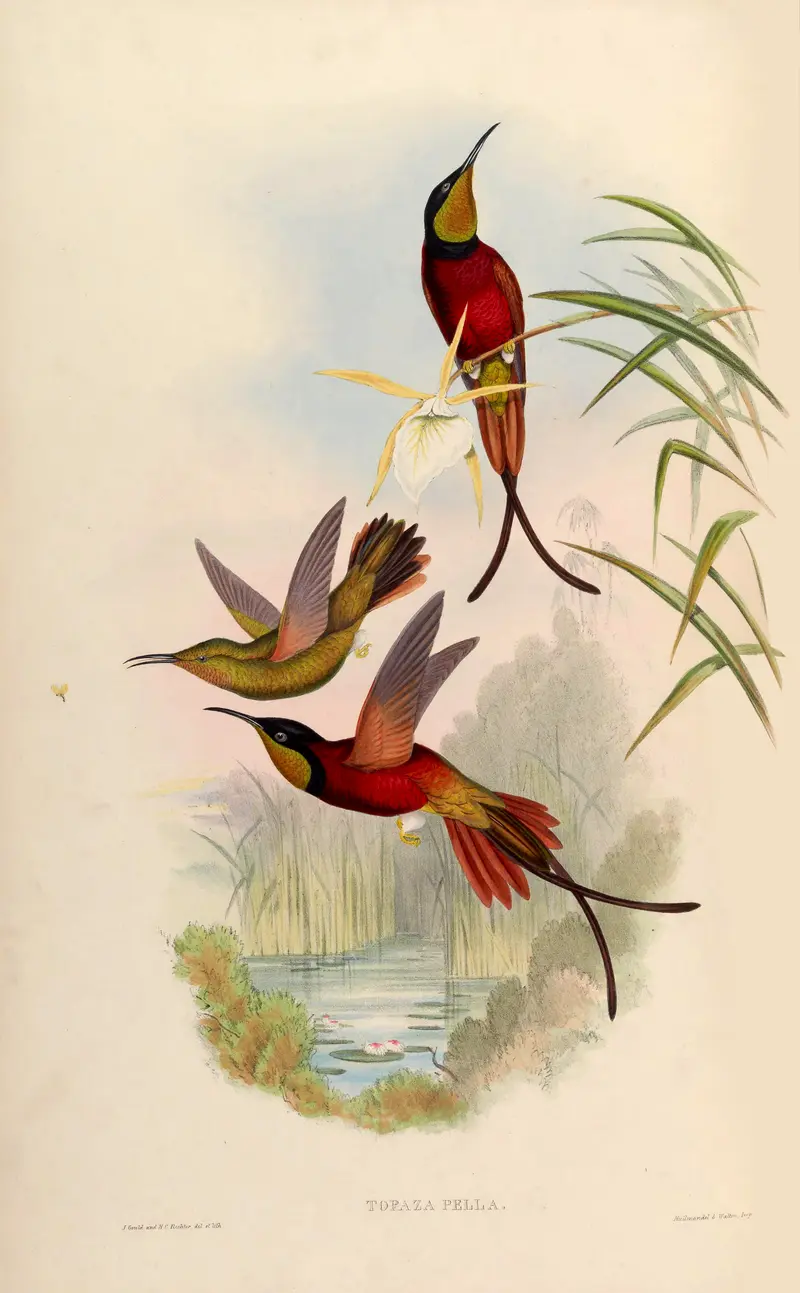
The careful rendering of the ripples and the ferns behind them roots the moment in a living, breathing habitat, while the creamy paper and soft horizon give the whole scene a sense of quiet observation. Works like this, created before 1881 and preserved in the Biodiversity Heritage Library, belong to a period when natural history illustration was as much about wonder as about science. Artists such as John Gould produced these images for monographs and collectors eager to see the world’s rarest creatures, often before photography could capture such detail. These illustrations were both field guide and art object, intended to educate, delight, and sometimes astonish their viewers with the diversity of life.
Little is recorded about the specific journey of this sheet, but its survival in a digital archive today lets us step into the shoes of a nineteenth-century naturalist, discovering the unknown with every careful brushstroke. Look again at the birds’ eyes, and you may feel that same sense of encounter.