
Jack and the Beanstalk — History & Facts
What first seizes the eye in Jack and the Beanstalk by Arthur Rackham is the looming, angular figure of the giant, his head bent beneath the low beams, peering with suspicion and hunger. His exaggerated proportions and sharp features dominate the cramped, rustic kitchen, while his enormous bare feet and the dangling carcasses at his side remind us of the threat he poses. The old woman at the hearth, her face a mask of worry, glances sideways as if anticipating the next move.
Every detail—Rackham’s signature wiry line, the muted browns and greys, the clutter of crockery on the mantel—draws us into a world where danger and the everyday collide. The light, filtered and pale, barely softens the menace; it instead heightens the tension, guiding our gaze from the giant’s searching eyes to the woman’s anxious hands. Created in 1918 for Flora Annie Steel’s English Fairy Tales, this illustration stands at the crossroads of Edwardian nostalgia and the darker, psychological undercurrents that defined fairy tale art in the early twentieth century. Rackham was celebrated for transforming familiar stories into scenes at once whimsical and unsettling, his work often commissioned for gift editions meant to enchant both children and adults.
The world that produced this image was one hungry for escape and enchantment, yet newly aware of the shadows lurking in old tales. While little is recorded about the journey of this specific drawing, its place in a beloved collection speaks to the enduring power of fairy tales to unsettle and delight—inviting us, still, to peer closer at the faces in the firelight.
More Artworks by Arthur Rackham
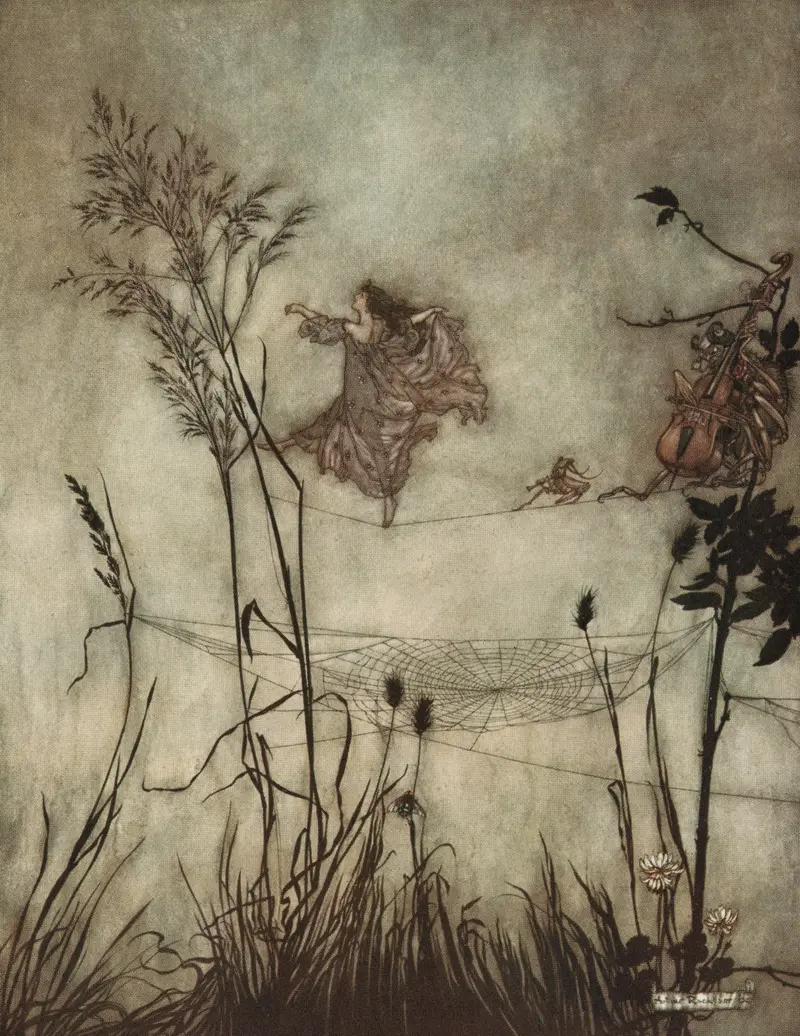
The Fairies Are Exquisite Dancers
Arthur Rackham
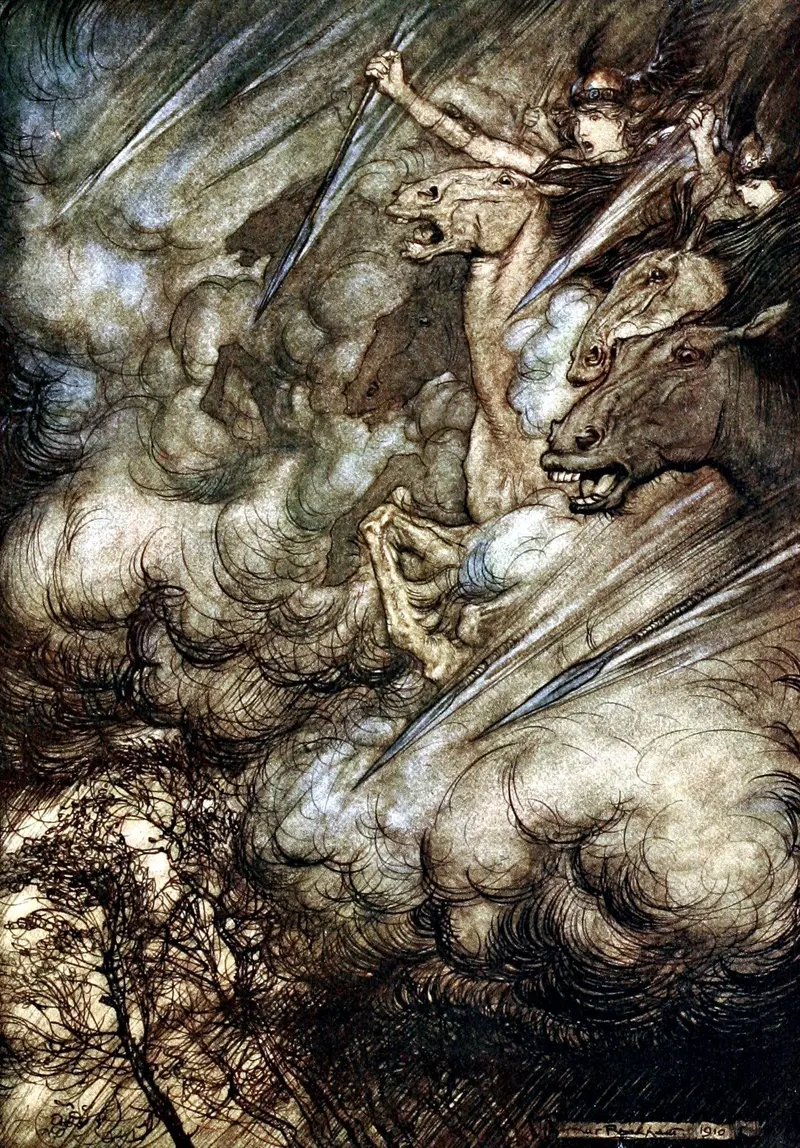
The Ride of the Valkyries
Arthur Rackham

Arthur Rackham ('A Transpontine Cockney')
Arthur Rackham
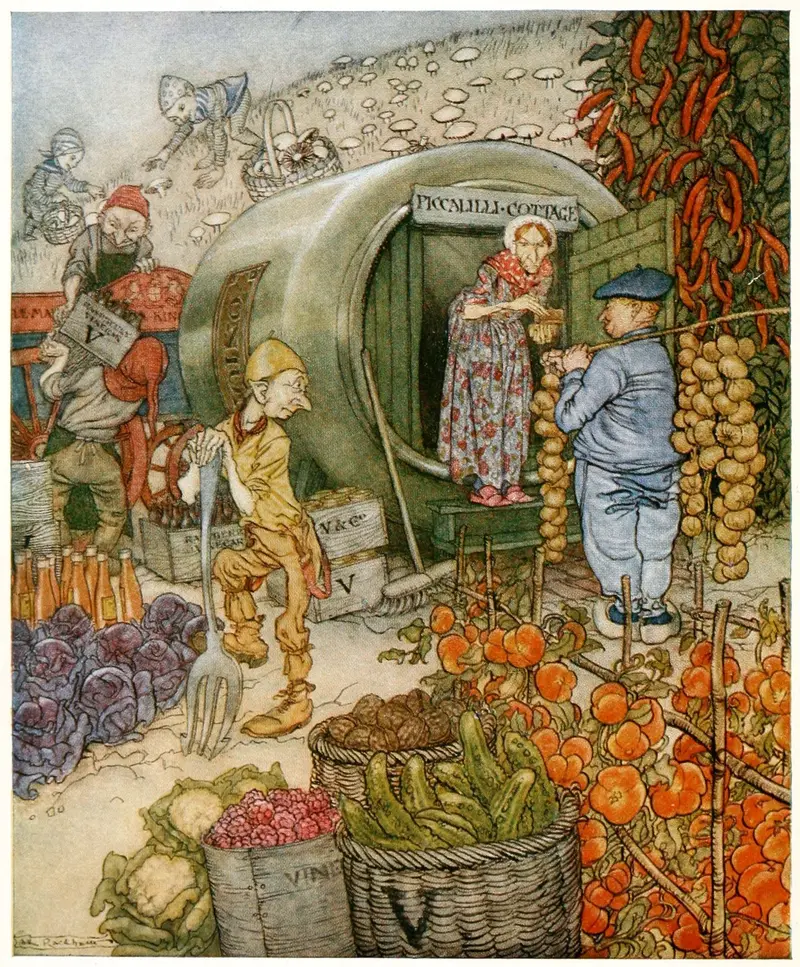
English Fairy Tales (Frontispiece)
Arthur Rackham
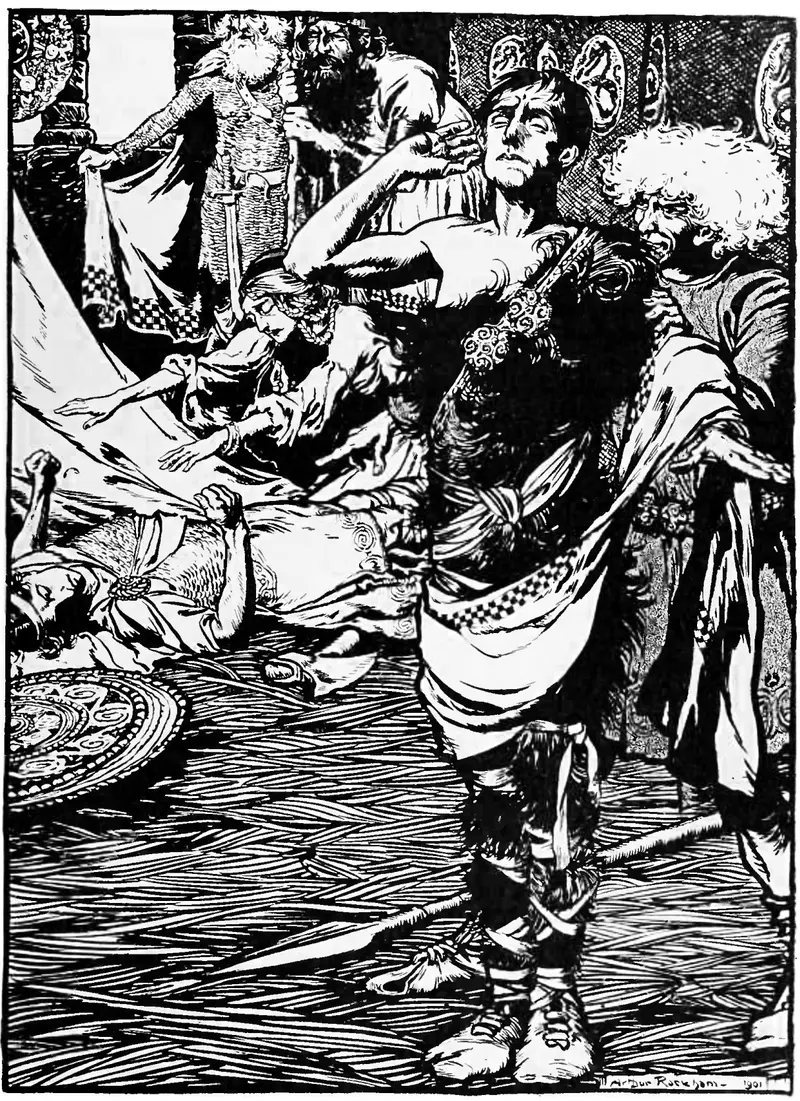
There Broke Forth a Wailing and a Lamentation
Arthur Rackham
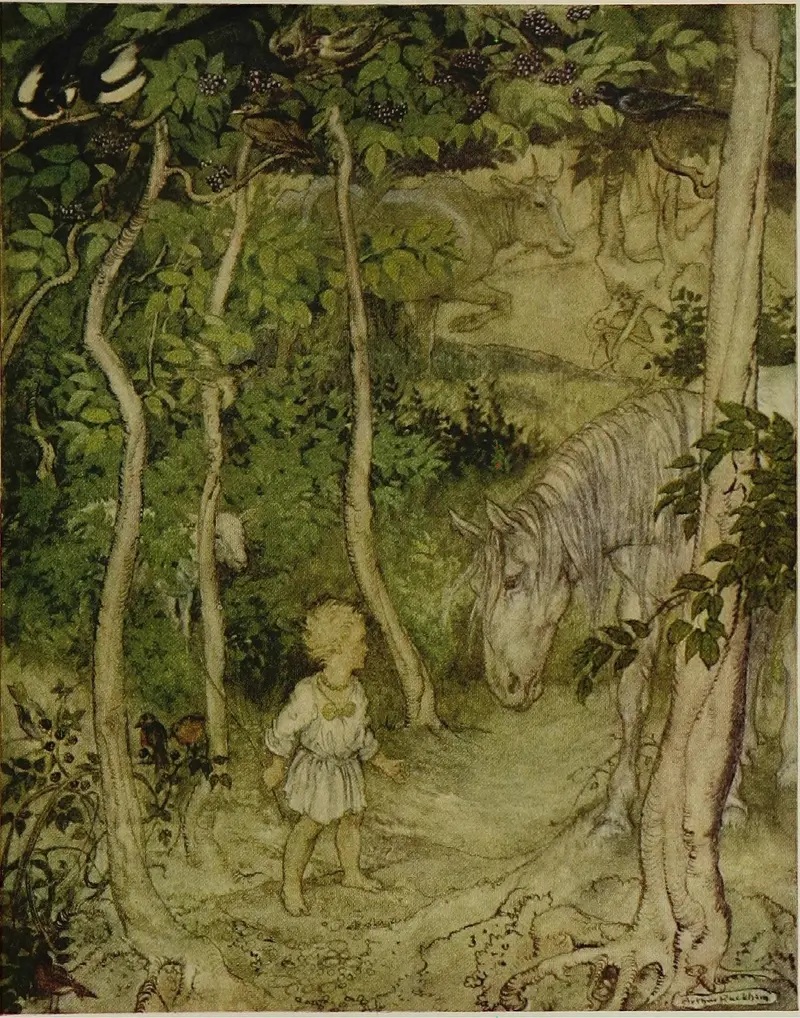
Irish Fairy Tales
Arthur Rackham
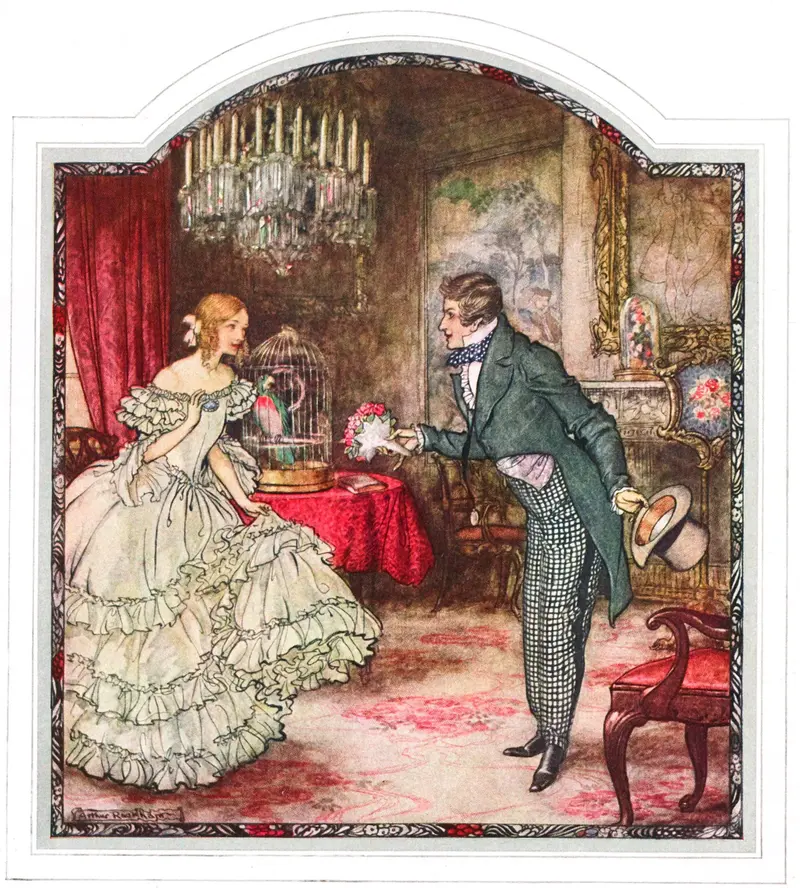
The Bouquet
Arthur Rackham

Mother Goose: The Old Nursery Rhymes
Arthur Rackham
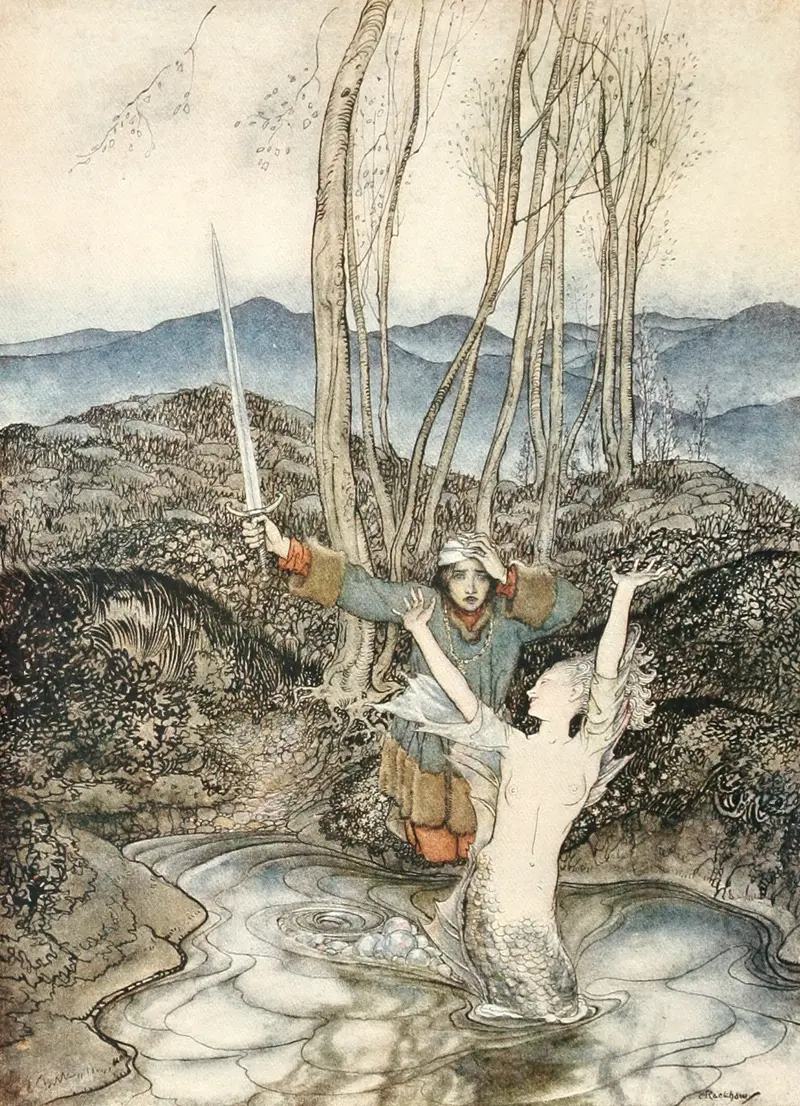
Clerk Colvill and the Mermaid
Arthur Rackham
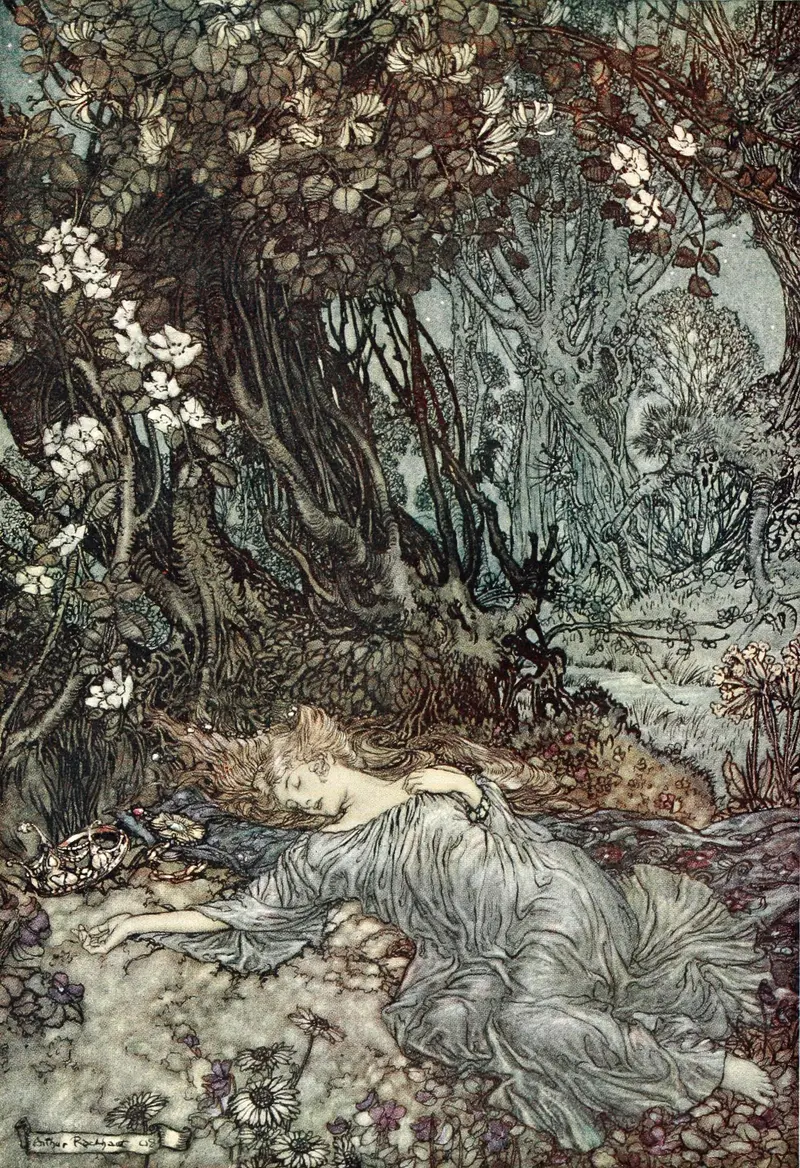
Titania Lying Asleep (A Midsummer Night's Dream)
Arthur Rackham





