
Jean-Jacques Rousseau plockar blommor vid den bubblande källan nära grottan i den norra parken vid Ermenonville — History & Facts
A gentle drama unfolds at the edge of a shaded forest, where a solitary figure bends to pluck wildflowers beside a bubbling spring. The light, filtered through a dense canopy, draws the viewer’s gaze to this quiet act, while the surrounding greens and browns deepen the sense of seclusion. The man’s posture—intent, almost reverent—suggests a moment of private communion with nature, while the rough stone arch to the right hints at the presence of history and memory within the landscape.
In the distance, another figure lingers on the path, half-concealed by shadow, as if to remind us that even in solitude, we are never entirely alone. The palette is earthy, the brushwork careful, inviting the eye to linger on every leaf and reflection. Works like this by Alexandre-Hyacinthe Dunouy belong to a tradition that flourished in late eighteenth- and early nineteenth-century France, when artists and patrons alike were captivated by the idea of nature as a place of reflection and renewal. Scenes set in parks and gardens—especially those associated with famous thinkers or writers—were prized for their ability to evoke both a real place and a state of mind.
The setting here, Ermenonville, was celebrated as a retreat for the philosopher Rousseau, whose legacy shaped the taste for such intimate landscapes. Now part of the Nationalmuseum collection, this painting stands as a quiet testament to an age when the boundaries between art, philosophy, and the natural world seemed porous—an invitation to step closer and see what the figure stoops to gather.
More Artworks by Alexandre-Hyacinthe Dunouy

The Strait of Messina, Sicily from the west, with a view of the fortifications and port
Alexandre-Hyacinthe Dunouy

Vattendrag vid skogsglänta med altare tillägnat Kärleken i den norra parken vid Ermenonville
Alexandre-Hyacinthe Dunouy
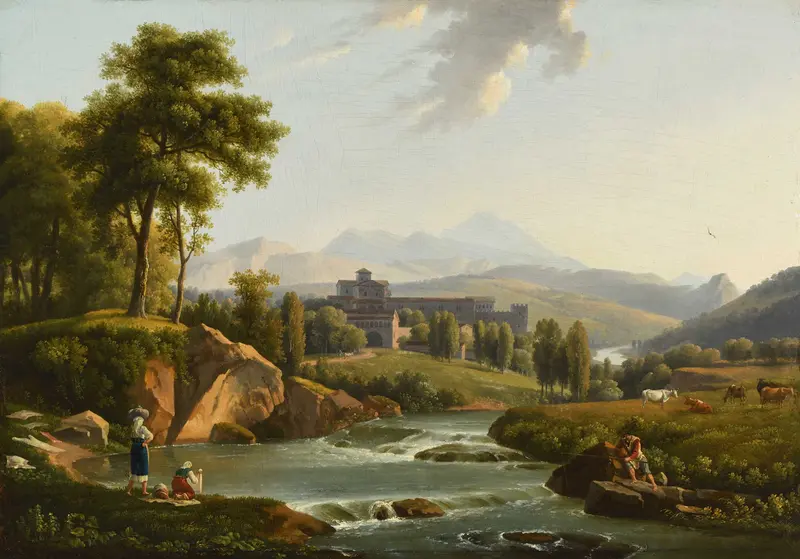
View of Casamari Abbey
Alexandre-Hyacinthe Dunouy
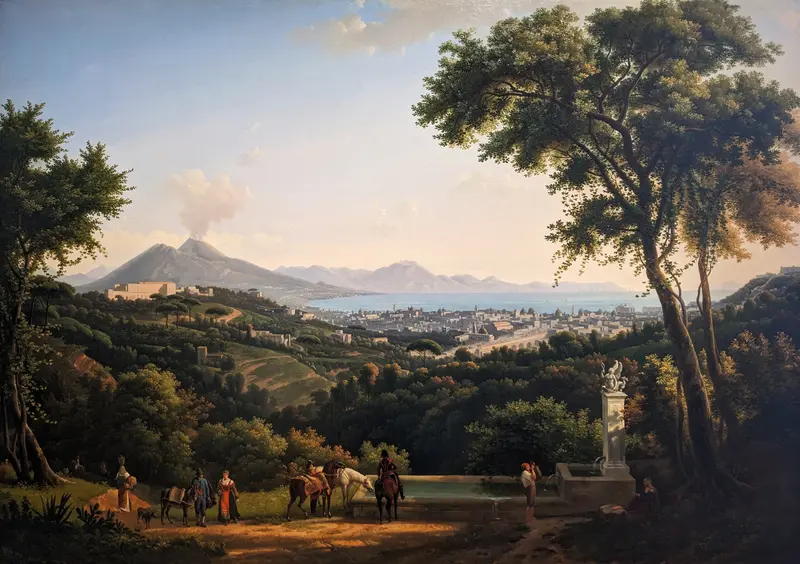
View of Naples from Capodimonte
Alexandre-Hyacinthe Dunouy
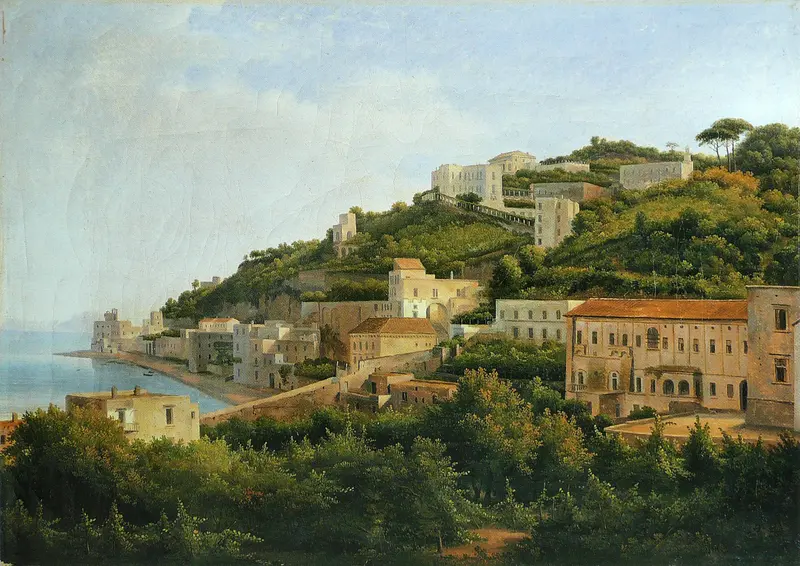
La Plage de Mergellina et la colline de Pausillipe
Alexandre-Hyacinthe Dunouy
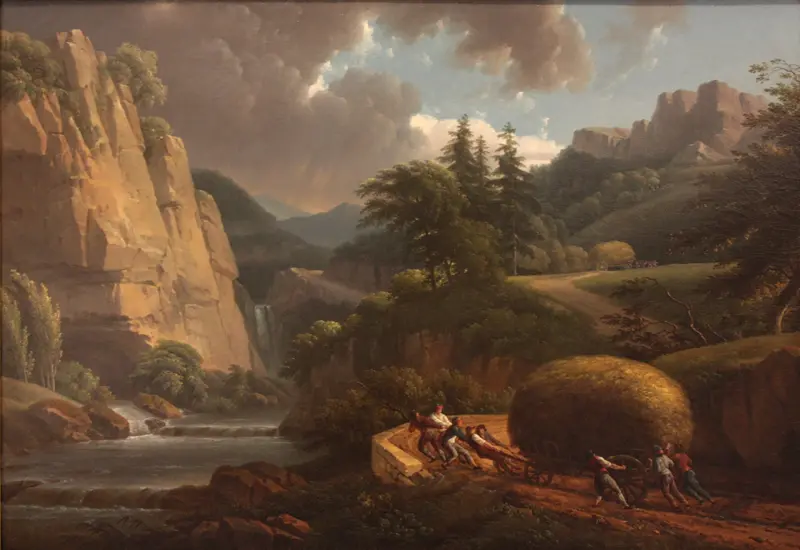
Citoyens de Remiremont
Alexandre-Hyacinthe Dunouy
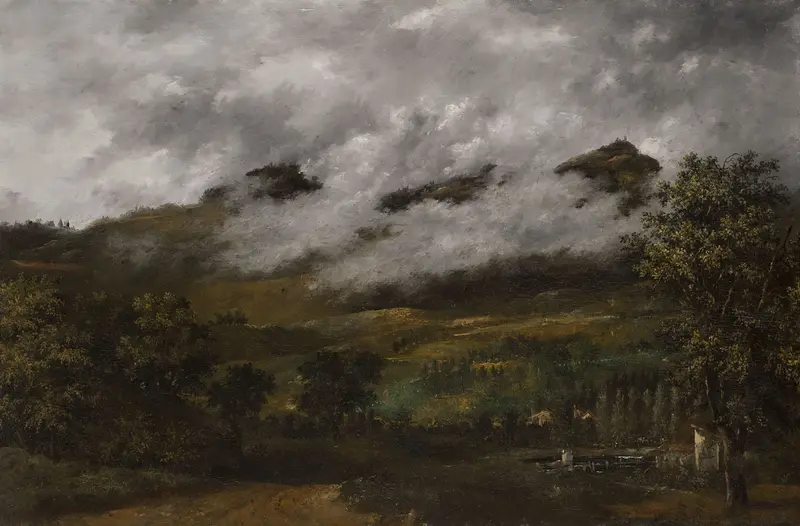
Paysage avec des nuages sur les montagnes, Italie, vers 1780 Fondation Custodia
Alexandre-Hyacinthe Dunouy
More Landscape Art

The Starry Night
Vincent van Gogh

View of Delft
Johannes Vermeer

Water Lilies
Claude Monet

The Grand Canal, Venice, looking north-west from the Ca' Corner to the Ca' Contarini degli Scrigni, with the campanile of Santa Maria della Carità
Canaletto

Windsor Castle
Canaletto

The Grand Canal looking North-East from the Palazzo Dolfin-Manin to the Rialto Bridge
Canaletto