
La Plage de Mergellina et la colline de Pausillipe — History & Facts
A gentle cascade of sunlit villas and lush greenery draws the viewer’s gaze up the hillside, where architecture and nature seem to climb together toward the sky. In La Plage de Mergellina et la colline de Pausillipe, Alexandre-Hyacinthe Dunouy chooses a vantage that lets the eye wander from the tranquil shoreline, where the sea laps quietly against the buildings, up through layers of terraced gardens and stately houses. The careful gradation of light, from the cool blue haze of the distant water to the warm ochres and greens of the hillside, guides us through a landscape that feels both inhabited and serene.
Each structure is rendered with crisp precision, yet softened by the encroaching foliage, suggesting a delicate balance between human ambition and the persistent growth of the Mediterranean landscape. Painted in the mid-19th century, this work belongs to a tradition of Italian landscape views that flourished as artists and collectors alike became enchanted with the picturesque beauty of the peninsula. Such scenes were often sought by travelers on the Grand Tour, eager to bring home a vision of Italy’s celebrated vistas. The painting’s inclusion in the 2001 exhibition Paysages d’Italie : les peintres du plein air (1780-1830) at the Galeries nationales du Grand Palais, Paris, underscores its connection to the plein-air movement, when painters ventured outdoors to capture the fleeting effects of light and atmosphere.
History has kept few traces of this particular canvas beyond its exhibition, but its quiet invitation to linger over sunlit terraces and distant waters remains as compelling now as it was for its first viewers—look closely, and you may find yourself tracing the same paths up the hillside.
More Artworks by Alexandre-Hyacinthe Dunouy

The Strait of Messina, Sicily from the west, with a view of the fortifications and port
Alexandre-Hyacinthe Dunouy

Vattendrag vid skogsglänta med altare tillägnat Kärleken i den norra parken vid Ermenonville
Alexandre-Hyacinthe Dunouy
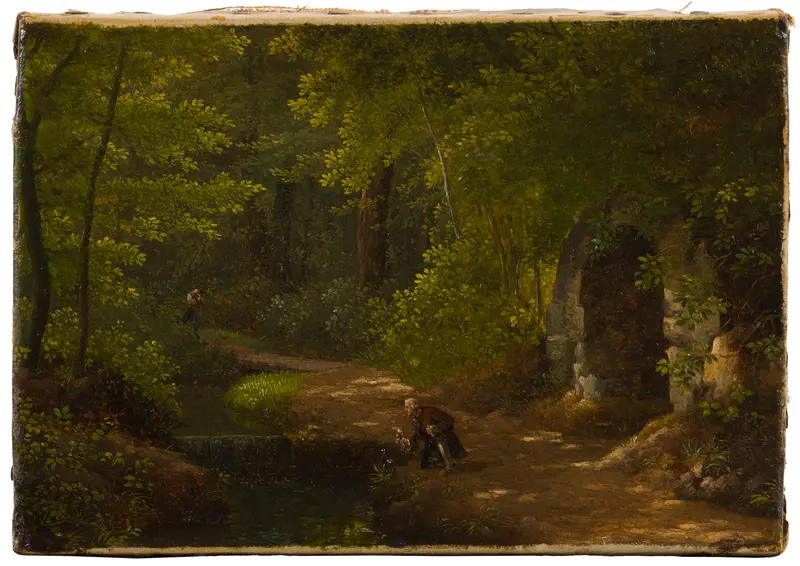
Jean-Jacques Rousseau plockar blommor vid den bubblande källan nära grottan i den norra parken vid Ermenonville
Alexandre-Hyacinthe Dunouy
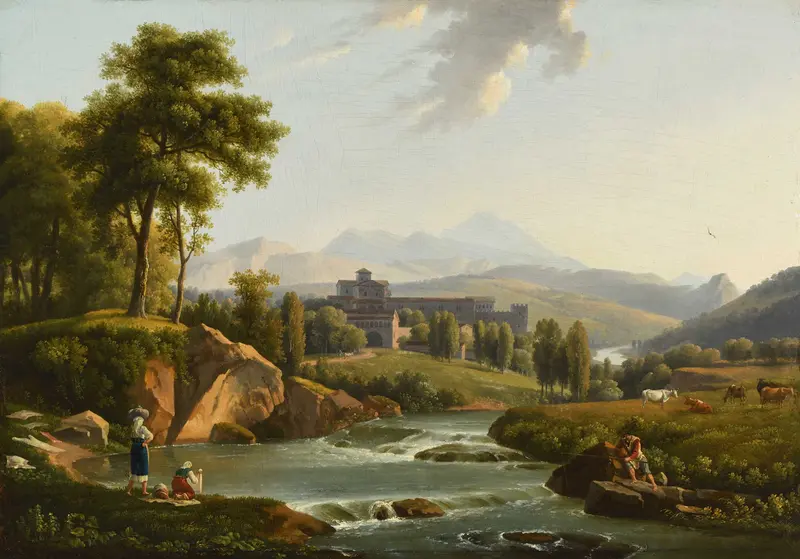
View of Casamari Abbey
Alexandre-Hyacinthe Dunouy
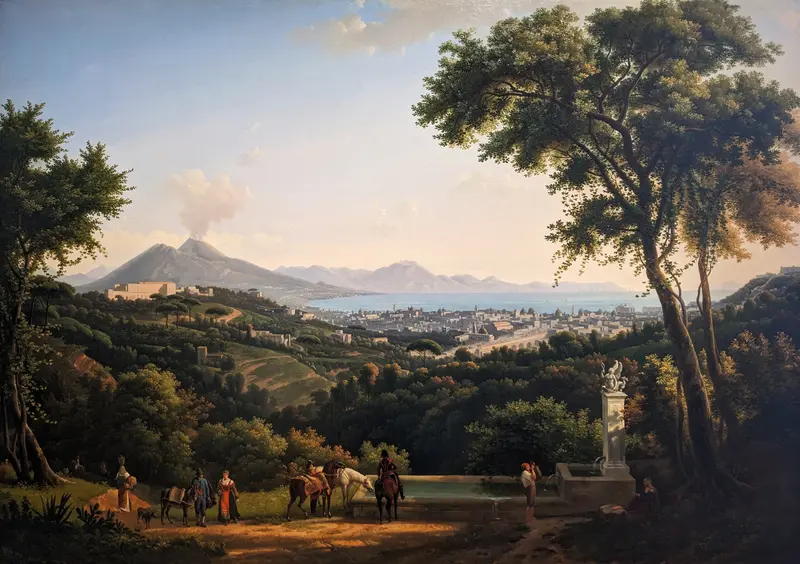
View of Naples from Capodimonte
Alexandre-Hyacinthe Dunouy
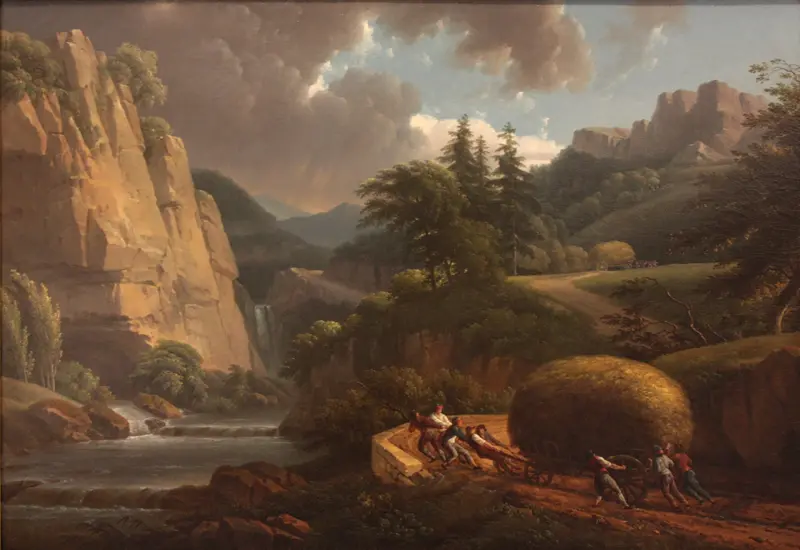
Citoyens de Remiremont
Alexandre-Hyacinthe Dunouy
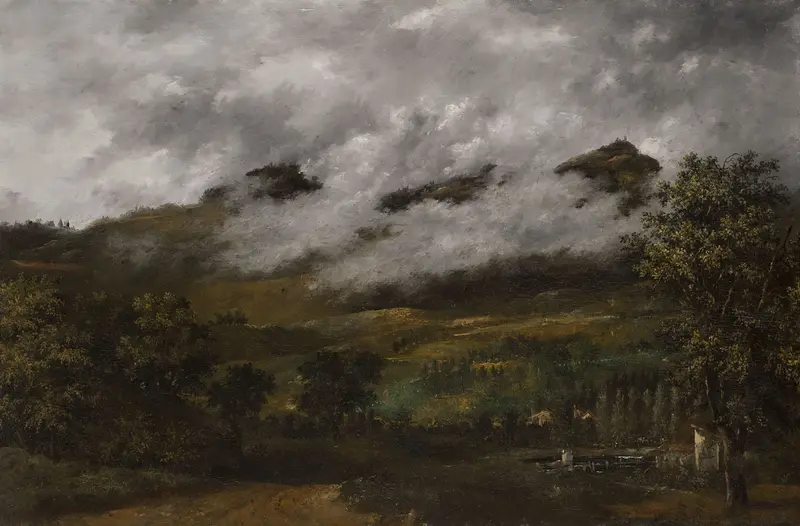
Paysage avec des nuages sur les montagnes, Italie, vers 1780 Fondation Custodia
Alexandre-Hyacinthe Dunouy
More Landscape Art

The Starry Night
Vincent van Gogh

View of Delft
Johannes Vermeer

Water Lilies
Claude Monet

The Grand Canal, Venice, looking north-west from the Ca' Corner to the Ca' Contarini degli Scrigni, with the campanile of Santa Maria della Carità
Canaletto

Windsor Castle
Canaletto

The Grand Canal looking North-East from the Palazzo Dolfin-Manin to the Rialto Bridge
Canaletto