
Vattendrag vid skogsglänta med altare tillägnat Kärleken i den norra parken vid Ermenonville — History & Facts
A patch of sunlight falls like a benediction on the grass, drawing your eye to a solitary figure at the edge of a woodland stream. The man leans against a stone altar, his posture relaxed, almost dreamy, as if the hush of the forest has pressed pause on the world beyond. The water, caught mid-cascade over a tiny fall, glimmers with the same golden light that dapples the clearing, inviting the viewer to linger in this moment of quiet intimacy.
Every detail—the lush, almost tactile greens, the careful play of shadow under the trees—guides you to the heart of the scene: a private communion with nature, and perhaps with love itself, as the altar’s dedication suggests. Paintings like this one by Alexandre-Hyacinthe Dunouy belong to an era when landscape was more than backdrop; it was a stage for reflection, sentiment, and the ideals of the Enlightenment. In late eighteenth- and early nineteenth-century France, such scenes were prized by collectors seeking both beauty and meaning, often for display in private homes or salons. The title places us in the northern park at Ermenonville, a site famous for its romantic gardens and associations with Rousseau, and now this work resides in the collection of the Nationalmuseum.
History has kept few traces of this painting’s early life, but its invitation remains clear: follow the path, listen to the water, and let your gaze rest where the light falls.
More Artworks by Alexandre-Hyacinthe Dunouy

The Strait of Messina, Sicily from the west, with a view of the fortifications and port
Alexandre-Hyacinthe Dunouy
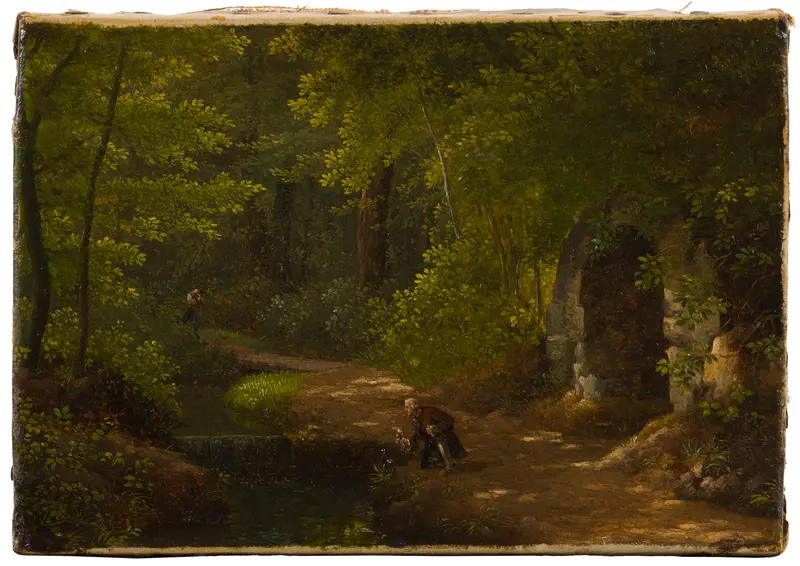
Jean-Jacques Rousseau plockar blommor vid den bubblande källan nära grottan i den norra parken vid Ermenonville
Alexandre-Hyacinthe Dunouy
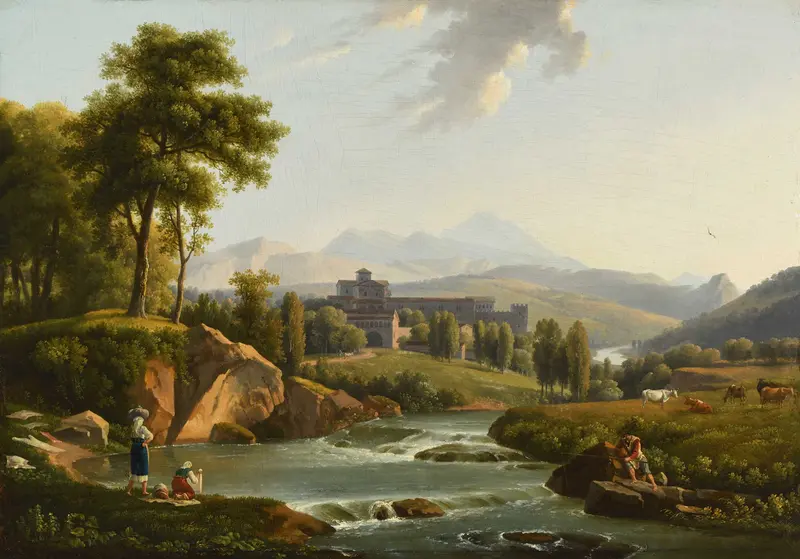
View of Casamari Abbey
Alexandre-Hyacinthe Dunouy
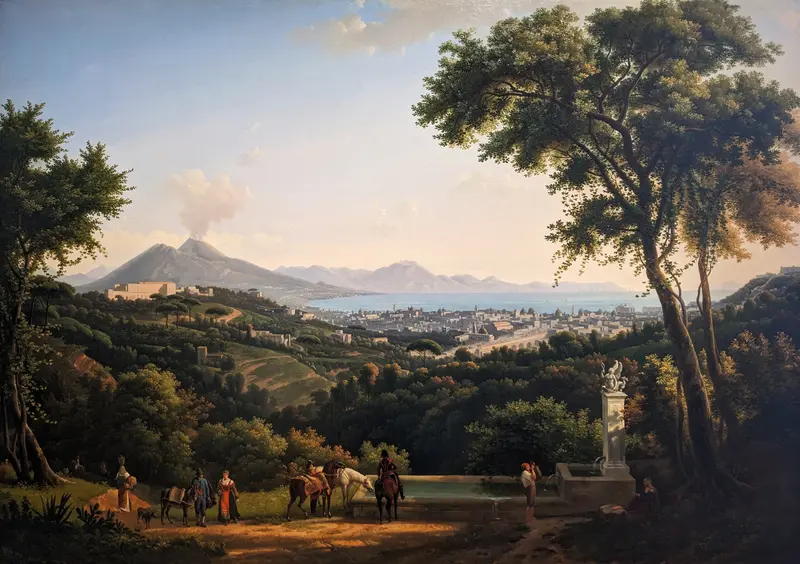
View of Naples from Capodimonte
Alexandre-Hyacinthe Dunouy
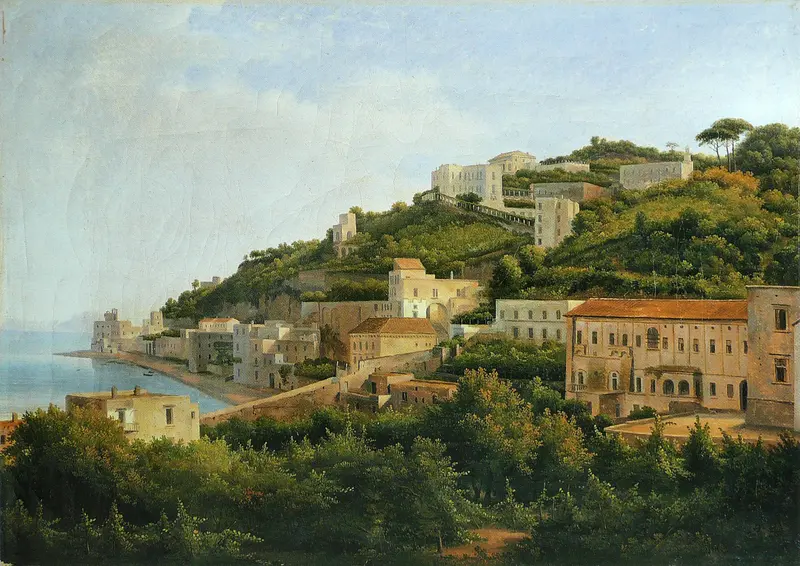
La Plage de Mergellina et la colline de Pausillipe
Alexandre-Hyacinthe Dunouy
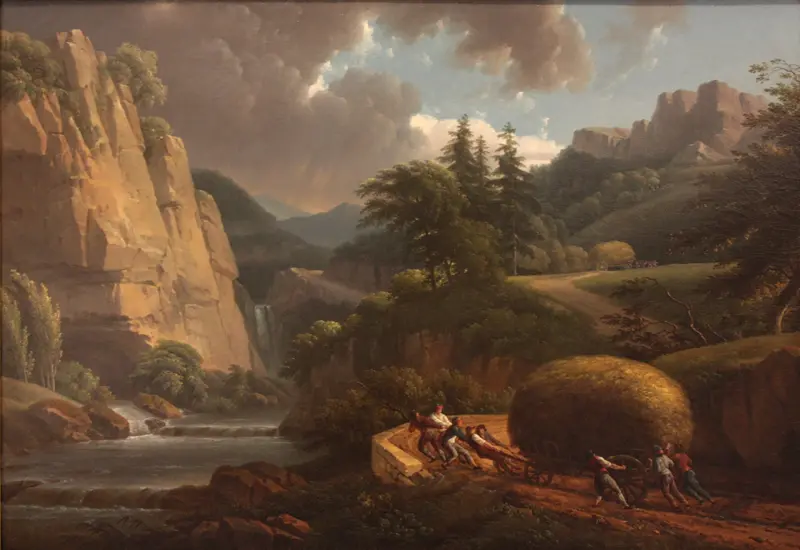
Citoyens de Remiremont
Alexandre-Hyacinthe Dunouy
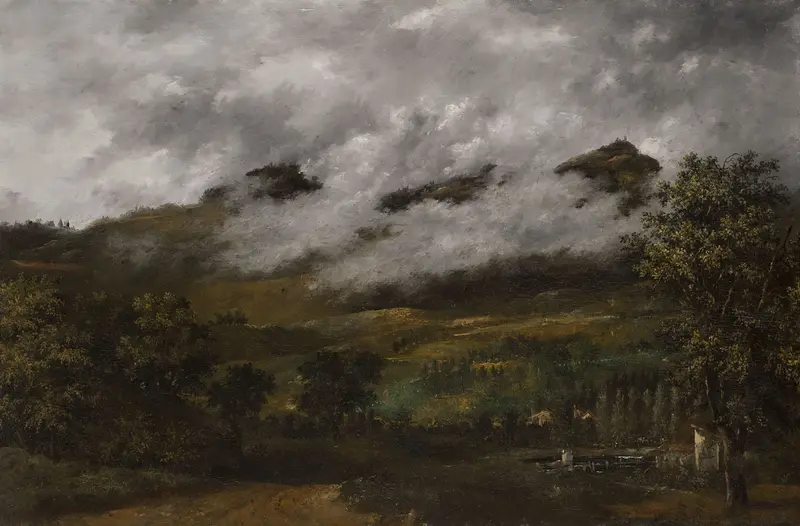
Paysage avec des nuages sur les montagnes, Italie, vers 1780 Fondation Custodia
Alexandre-Hyacinthe Dunouy
More Landscape Art

The Starry Night
Vincent van Gogh

View of Delft
Johannes Vermeer

Water Lilies
Claude Monet

The Grand Canal, Venice, looking north-west from the Ca' Corner to the Ca' Contarini degli Scrigni, with the campanile of Santa Maria della Carità
Canaletto

Windsor Castle
Canaletto

The Grand Canal looking North-East from the Palazzo Dolfin-Manin to the Rialto Bridge
Canaletto