
View of Naples from Capodimonte — History & Facts
The first thing that draws the eye in View of Naples from Capodimonte is the sense of distance—how the city, the bay, and the famous smoking cone of Vesuvius all unfold in a single sweep, as if the painter wanted to gather the whole world of Naples into one embrace. The light, clear and measured, pours across the scene from the right, catching the edges of trees and the marble gleam of a fountain in the foreground. Figures and animals pause along a sunlit path, their bright costumes and gestures animating the quiet grandeur of the landscape.
Every detail seems chosen to guide the viewer deeper: the winding road leading the eye toward the city, the careful framing of the view by massive trees, the subtle haze that softens the distant mountains and sea. This is not just a record of a place, but an invitation to linger and imagine the stories unfolding within it. Painted in 1813, this work belongs to a moment when views like this were both souvenirs and status symbols—treasured by travelers on the Grand Tour or by locals eager to celebrate their city’s beauty. Artists such as Alexandre-Hyacinthe Dunouy specialized in these panoramic landscapes, blending topographical accuracy with an idealized calm that appealed to the tastes of the early nineteenth century.
The presence of Vesuvius, quietly active, would have been a reminder of both danger and fascination for contemporary viewers, while the figures in the foreground root the scene in everyday life. History has kept few traces of this particular painting’s journey, but its careful composition and luminous atmosphere speak to a world in which nature, city, and human presence were all part of a harmonious vision—one that still rewards a long, attentive look.
More Artworks by Alexandre-Hyacinthe Dunouy

The Strait of Messina, Sicily from the west, with a view of the fortifications and port
Alexandre-Hyacinthe Dunouy

Vattendrag vid skogsglänta med altare tillägnat Kärleken i den norra parken vid Ermenonville
Alexandre-Hyacinthe Dunouy
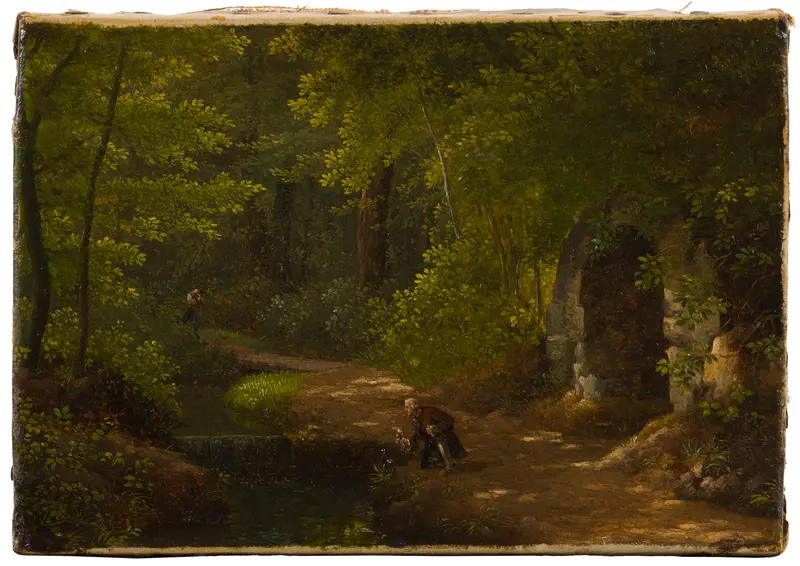
Jean-Jacques Rousseau plockar blommor vid den bubblande källan nära grottan i den norra parken vid Ermenonville
Alexandre-Hyacinthe Dunouy
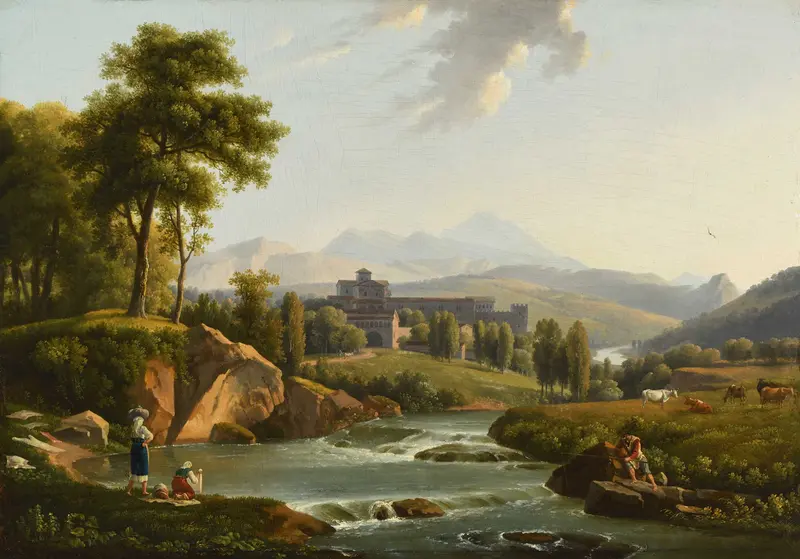
View of Casamari Abbey
Alexandre-Hyacinthe Dunouy
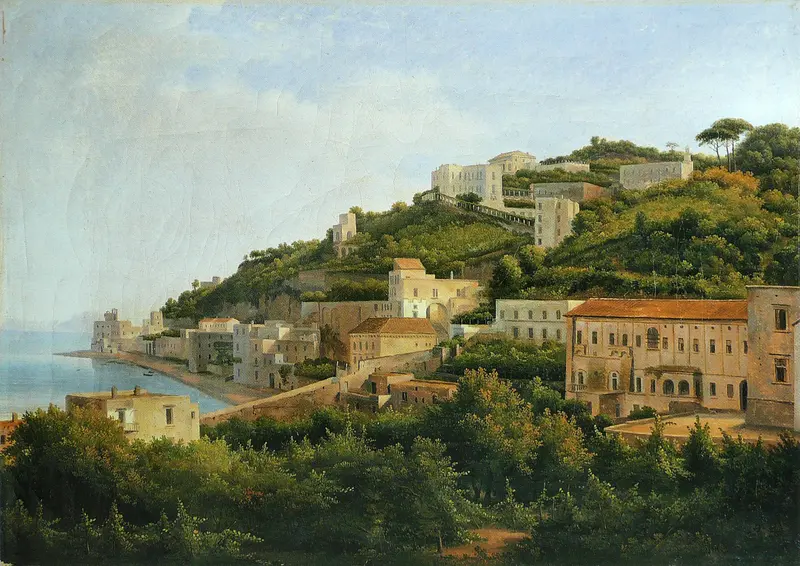
La Plage de Mergellina et la colline de Pausillipe
Alexandre-Hyacinthe Dunouy
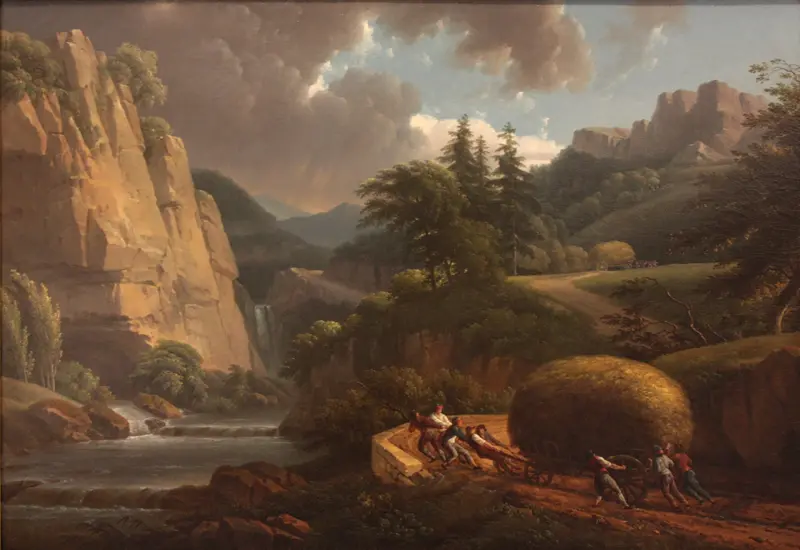
Citoyens de Remiremont
Alexandre-Hyacinthe Dunouy
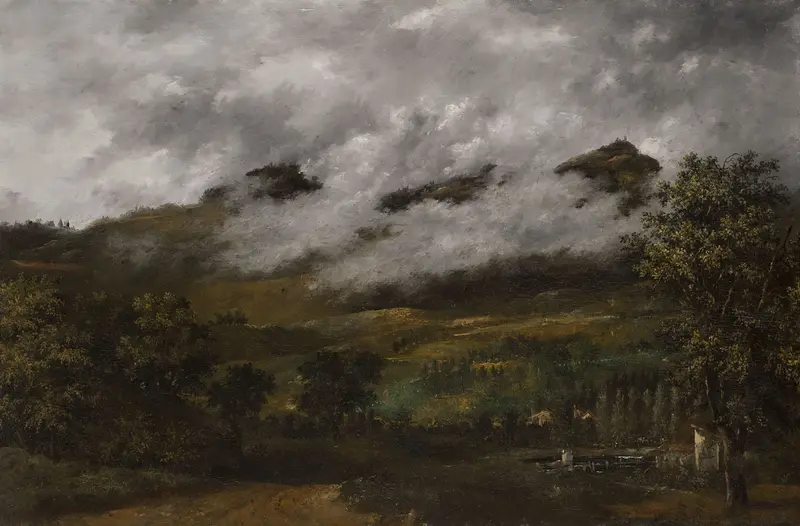
Paysage avec des nuages sur les montagnes, Italie, vers 1780 Fondation Custodia
Alexandre-Hyacinthe Dunouy
More Landscape Art

The Starry Night
Vincent van Gogh

View of Delft
Johannes Vermeer

Water Lilies
Claude Monet

The Grand Canal, Venice, looking north-west from the Ca' Corner to the Ca' Contarini degli Scrigni, with the campanile of Santa Maria della Carità
Canaletto

Windsor Castle
Canaletto

The Grand Canal looking North-East from the Palazzo Dolfin-Manin to the Rialto Bridge
Canaletto