
Citoyens de Remiremont — History & Facts
A steep mountain road, a cart laden with hay, and a handful of determined figures—what first catches the eye in Citoyens de Remiremont by Alexandre-Hyacinthe Dunouy is not the grandeur of the landscape, but the struggle of ordinary people against it. The painting draws you into the drama of effort: men in revolutionary caps strain together to push their heavy load up the ochre path, their bodies bent, their faces set. The weight of the cart is palpable, its round bundle of hay almost comically oversized, yet it is the unity of the group that commands attention.
The light falls warmly on their backs and the hay, while the shadows of the rocks and the gathering clouds above hint at the uncertainty and danger of their task. The landscape is not just a backdrop but a force in itself—towering cliffs, a rushing river, and a waterfall all reinforce the sense of nature’s challenge and the citizens’ resolve. Created around 1794, this work belongs to a moment when France was remaking itself, and images of collective civic effort were charged with new meaning. The title, documented as “Les citoyens de Remiremont conduisant les voitures de fourrage à l'armée du Rhin,” places these villagers within the vast machinery of the Revolutionary wars, supplying the armies that defended the new Republic.
Scenes like this, painted in the late eighteenth century, often celebrated the dignity of rural labor and the heroism of the everyday—subjects that would soon preoccupy the Romantics, but here are rendered with the clarity and structure of the Neoclassical landscape. Little is recorded about the later life of this specific painting, now preserved in a private collection, but its moment endures: the next time you look, follow the winding road into the distance, and imagine the long, shared journey that lies ahead.
More Artworks by Alexandre-Hyacinthe Dunouy

The Strait of Messina, Sicily from the west, with a view of the fortifications and port
Alexandre-Hyacinthe Dunouy

Vattendrag vid skogsglänta med altare tillägnat Kärleken i den norra parken vid Ermenonville
Alexandre-Hyacinthe Dunouy
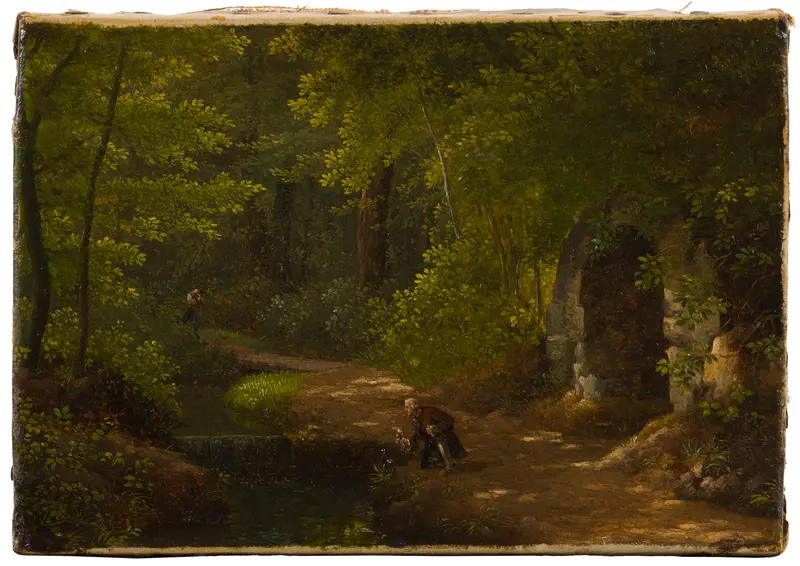
Jean-Jacques Rousseau plockar blommor vid den bubblande källan nära grottan i den norra parken vid Ermenonville
Alexandre-Hyacinthe Dunouy
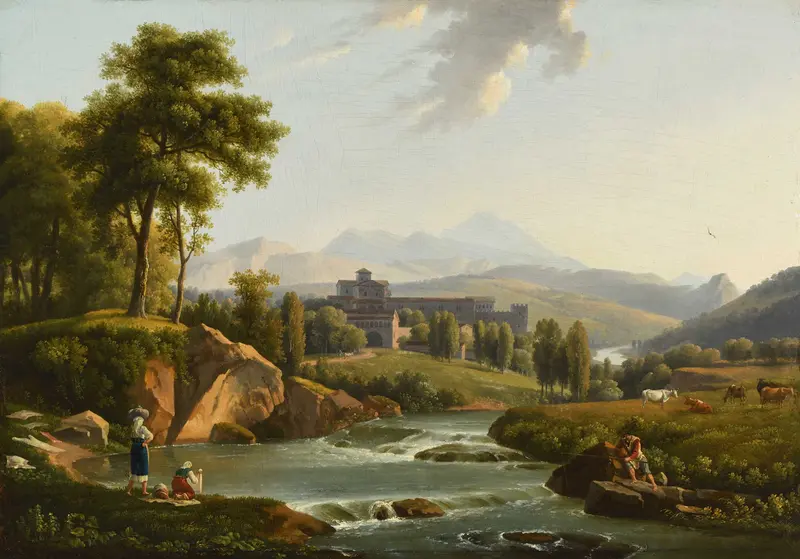
View of Casamari Abbey
Alexandre-Hyacinthe Dunouy
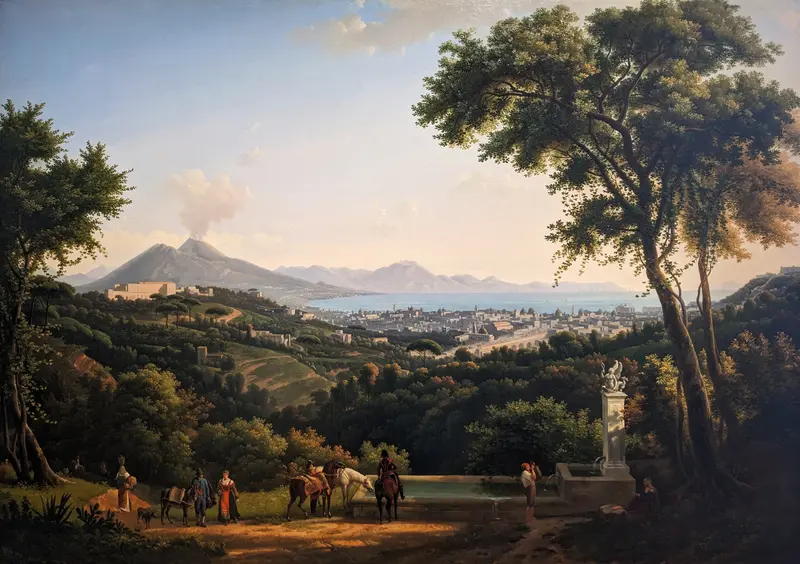
View of Naples from Capodimonte
Alexandre-Hyacinthe Dunouy
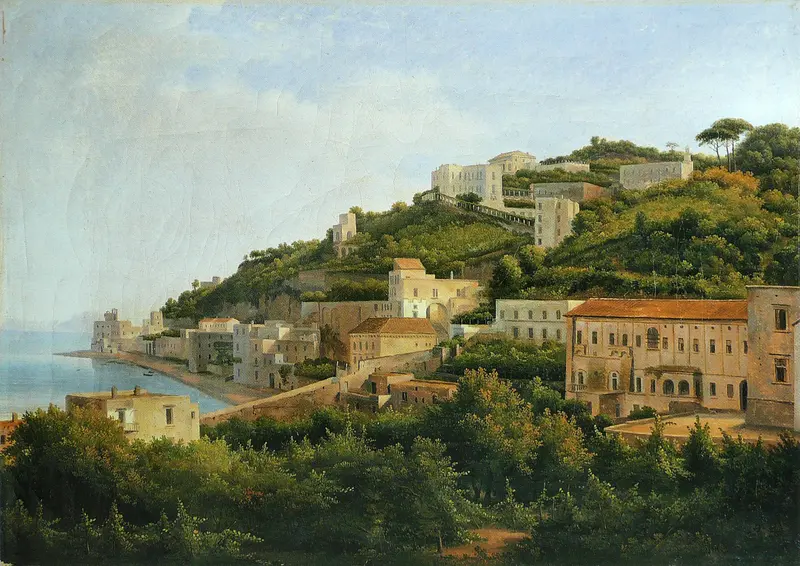
La Plage de Mergellina et la colline de Pausillipe
Alexandre-Hyacinthe Dunouy
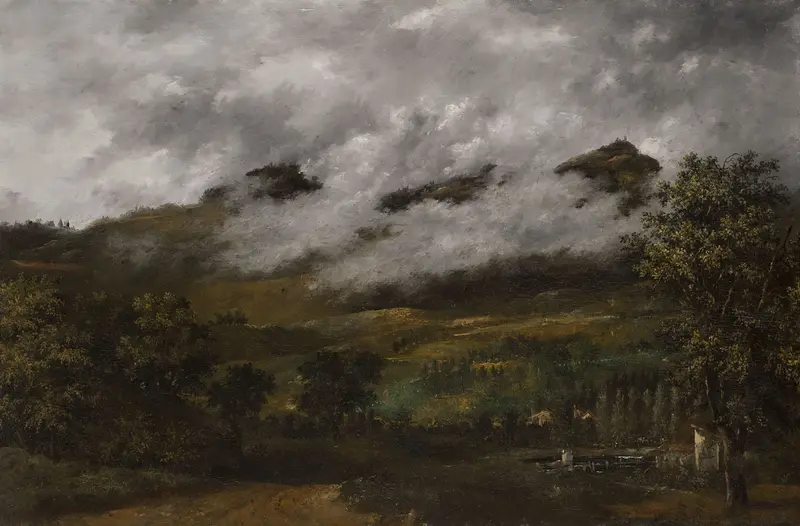
Paysage avec des nuages sur les montagnes, Italie, vers 1780 Fondation Custodia
Alexandre-Hyacinthe Dunouy
More Genre Scene Art

Banquet of the Officers of the St George Civic Guard
Frans Hals

Rembrandt and Saskia in the Scene of the Prodigal Son
Rembrandt van Rijn

Bal du moulin de la Galette
Pierre-Auguste Renoir

Quadrille at the Moulin Rouge
Henri de Toulouse-Lautrec

A Burial at Ornans
Gustave Courbet

When Will You Marry?
Paul Gauguin