
View of Casamari Abbey — History & Facts
The eye is drawn first to the luminous expanse of water tumbling gently over rocks, a ribbon of movement that anchors the entire scene. In View of Casamari Abbey, Alexandre-Hyacinthe Dunouy orchestrates a quiet drama between human presence and the monumental calm of nature. Figures gather at the riverbank: two women and a child in the foreground, their bright clothing a counterpoint to the green hush of the trees, and a solitary man intent on fishing.
The abbey itself rises solid and serene in the middle distance, its pale walls catching the afternoon light, while the soft geometry of distant mountains dissolves into the haze. Every element guides the viewer’s gaze deeper: the sweeping curve of the river, the gentle slope of the meadows, the way the cows graze undisturbed under the watchful sky. Dunouy’s palette, all sunlit greens and clear blues, sets a mood of measured peace—nature tamed, but not diminished. Painted circa 1796, this landscape belongs to a tradition that flourished in the late eighteenth century, when artists and collectors alike sought out views of storied sites and ancient ruins.
Such works were often commissioned by travelers on the Grand Tour, eager to bring home reminders of Italy’s layered past and tranquil countryside. Dunouy, a French painter known for his Italianate scenes, would have found in Casamari Abbey both a subject of historical gravitas and an opportunity to display his gift for clarity and order. While history has kept few traces of this particular painting’s early journey, it now resides in a collection that values the careful observation and gentle idealism of its era.
Stand before it, and let your eye wander—not only through the painted landscape, but into the world of quiet ambitions and cultivated taste that shaped its making.
More Artworks by Alexandre-Hyacinthe Dunouy

The Strait of Messina, Sicily from the west, with a view of the fortifications and port
Alexandre-Hyacinthe Dunouy

Vattendrag vid skogsglänta med altare tillägnat Kärleken i den norra parken vid Ermenonville
Alexandre-Hyacinthe Dunouy
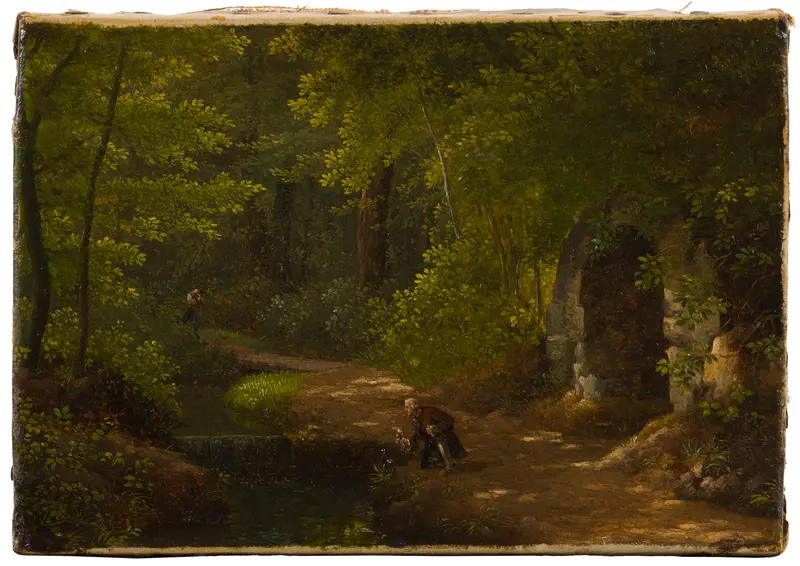
Jean-Jacques Rousseau plockar blommor vid den bubblande källan nära grottan i den norra parken vid Ermenonville
Alexandre-Hyacinthe Dunouy
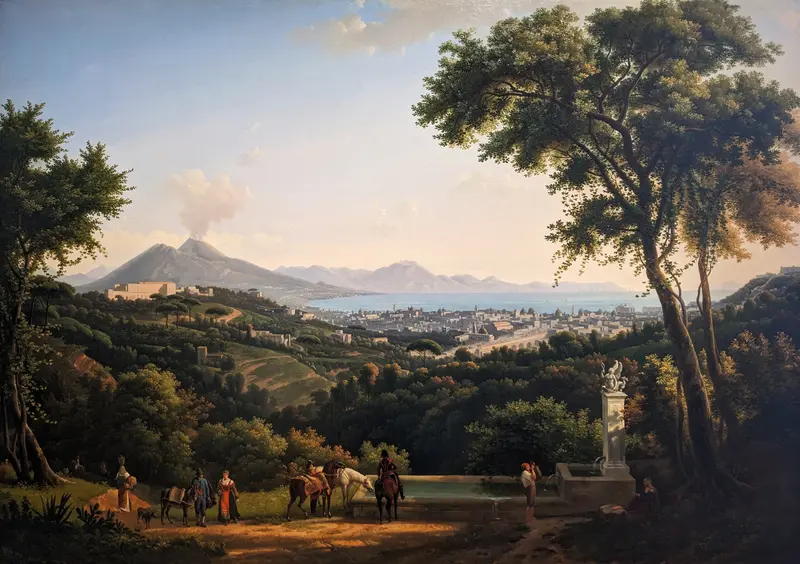
View of Naples from Capodimonte
Alexandre-Hyacinthe Dunouy
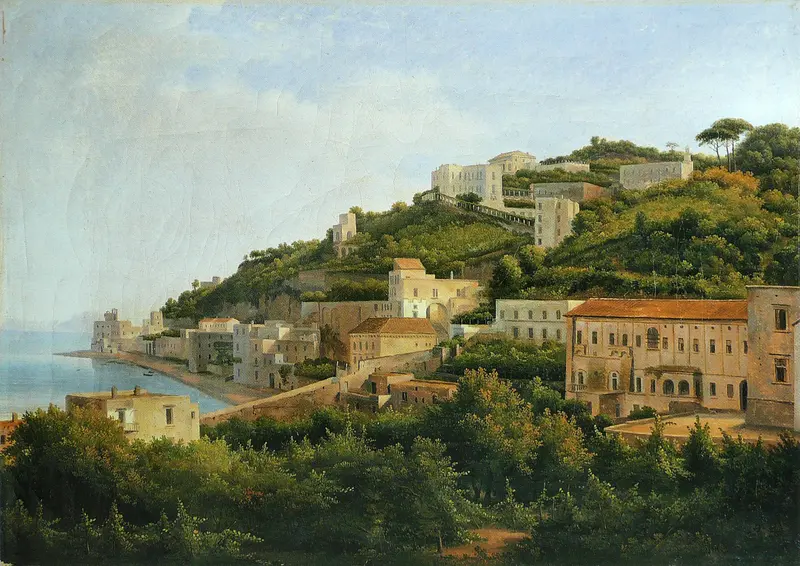
La Plage de Mergellina et la colline de Pausillipe
Alexandre-Hyacinthe Dunouy
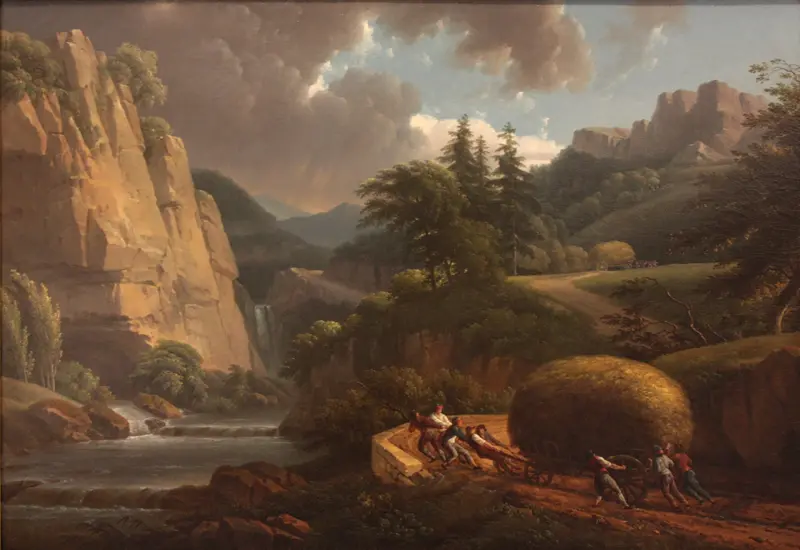
Citoyens de Remiremont
Alexandre-Hyacinthe Dunouy
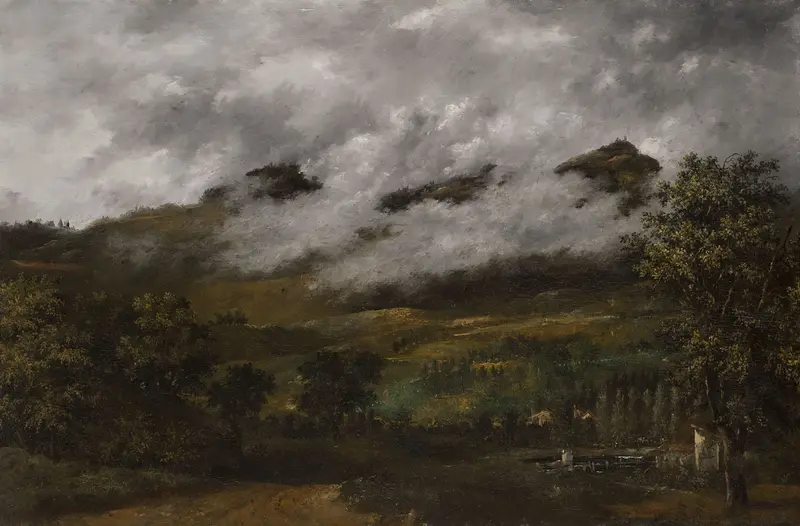
Paysage avec des nuages sur les montagnes, Italie, vers 1780 Fondation Custodia
Alexandre-Hyacinthe Dunouy
More Landscape Art

The Starry Night
Vincent van Gogh

View of Delft
Johannes Vermeer

Water Lilies
Claude Monet

The Grand Canal, Venice, looking north-west from the Ca' Corner to the Ca' Contarini degli Scrigni, with the campanile of Santa Maria della Carità
Canaletto

Windsor Castle
Canaletto

The Grand Canal looking North-East from the Palazzo Dolfin-Manin to the Rialto Bridge
Canaletto