Judith — History & Facts
What catches the eye first is the poised, almost ritual stillness of the figure: a woman, her gaze lowered with a composure that borders on the enigmatic, holds a tray bearing a decanter of deep red wine and two empty glasses. The background is a clear, unmodulated blue, stripping away all distraction and focusing attention on her face and the objects she carries. The light falls evenly, lending the glass and liquid a weight and presence that feels nearly ceremonial.
The woman's expression, caught between detachment and intent, invites the viewer to wonder about her thoughts and the unseen recipient of her offering. Böcklin’s brushwork is confident yet restrained, using broad, soft strokes to model the forms, and the palette—dominated by cool blue and muted flesh tones—sets a mood of quiet anticipation. Painted in 1888, this work belongs to a period when artists across Europe were exploring the boundaries between symbolism and realism, often turning to myth, allegory, or psychological suggestion rather than straightforward narrative. Arnold Böcklin, a Swiss painter known for his dreamlike and sometimes unsettling imagery, was a key figure in this movement.
While history has kept few traces of this particular painting’s journey, its presence in the akg-images Tilman2007 collection marks it as a rare glimpse into Böcklin’s quieter, more enigmatic side. In a world where grand historical and mythological canvases dominated salons, such introspective works offered viewers a chance to pause and consider the mysteries of everyday gestures—and perhaps, as here, to look again at the silent drama contained in a single, carefully balanced moment.
More Artworks by Arnold Böcklin

Die Toteninsel III
Arnold Böcklin
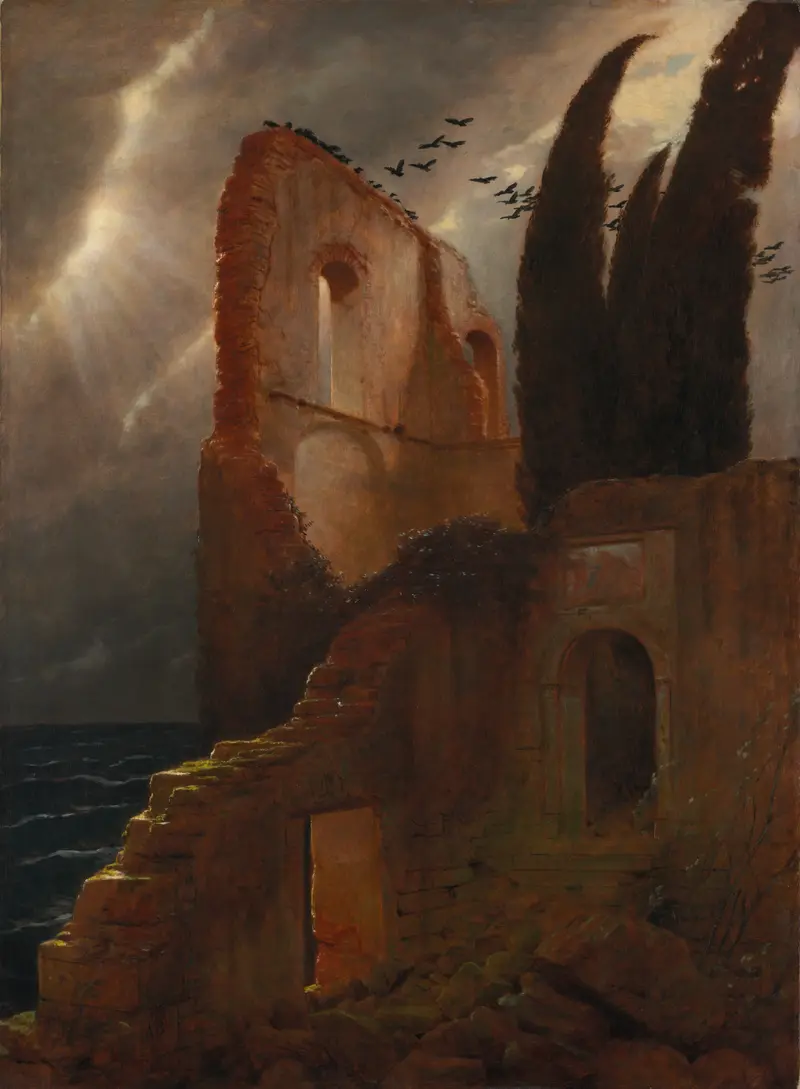
Ruin by the Sea
Arnold Böcklin
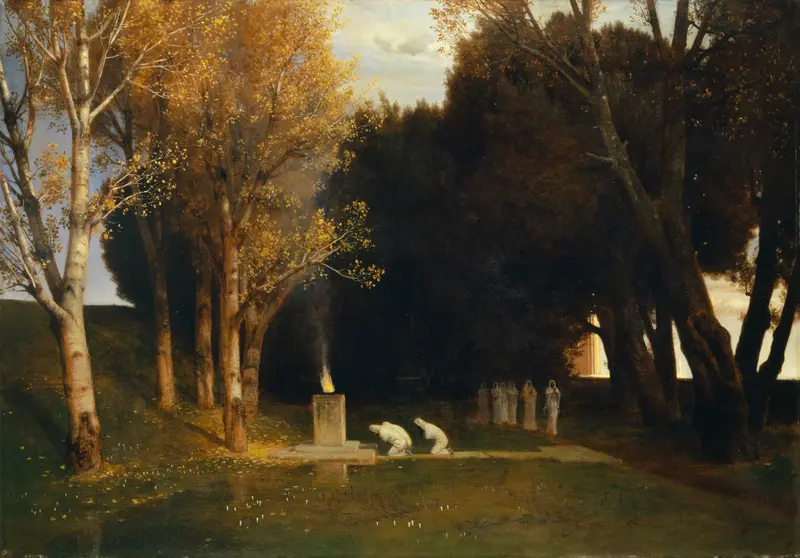
The Sacred Grove
Arnold Böcklin

Villa by the Sea
Arnold Böcklin
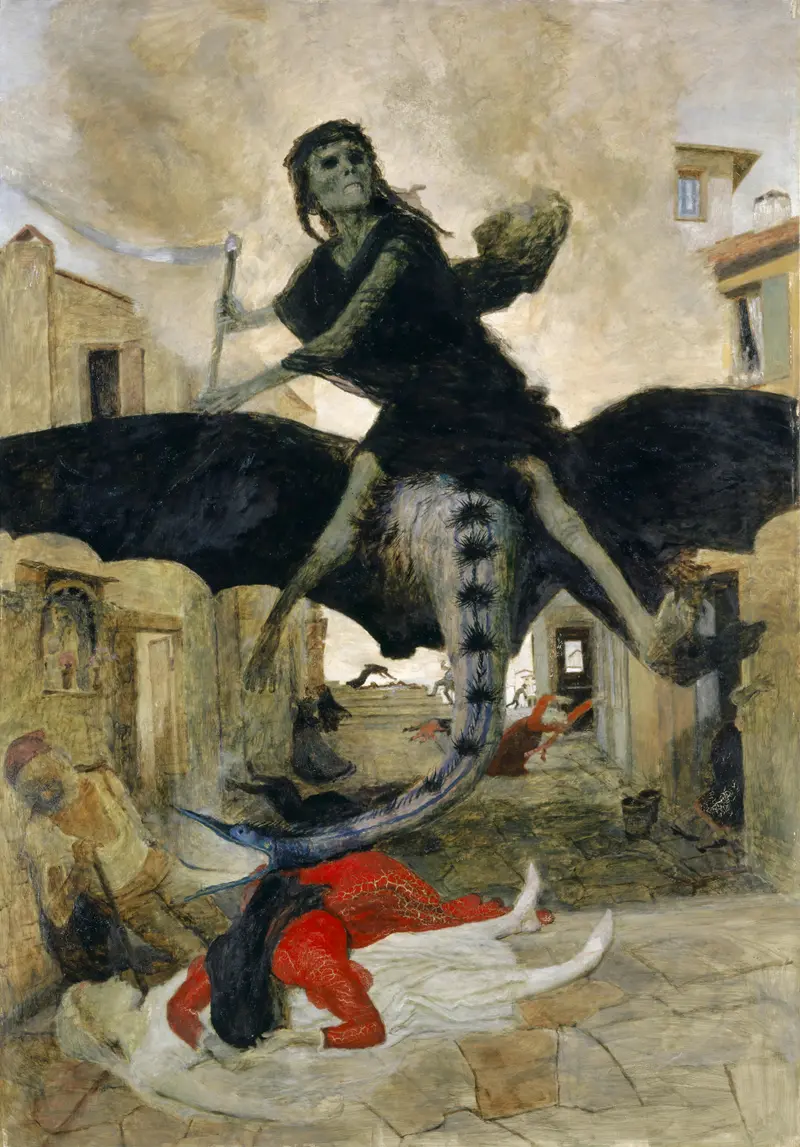
The Plague
Arnold Böcklin
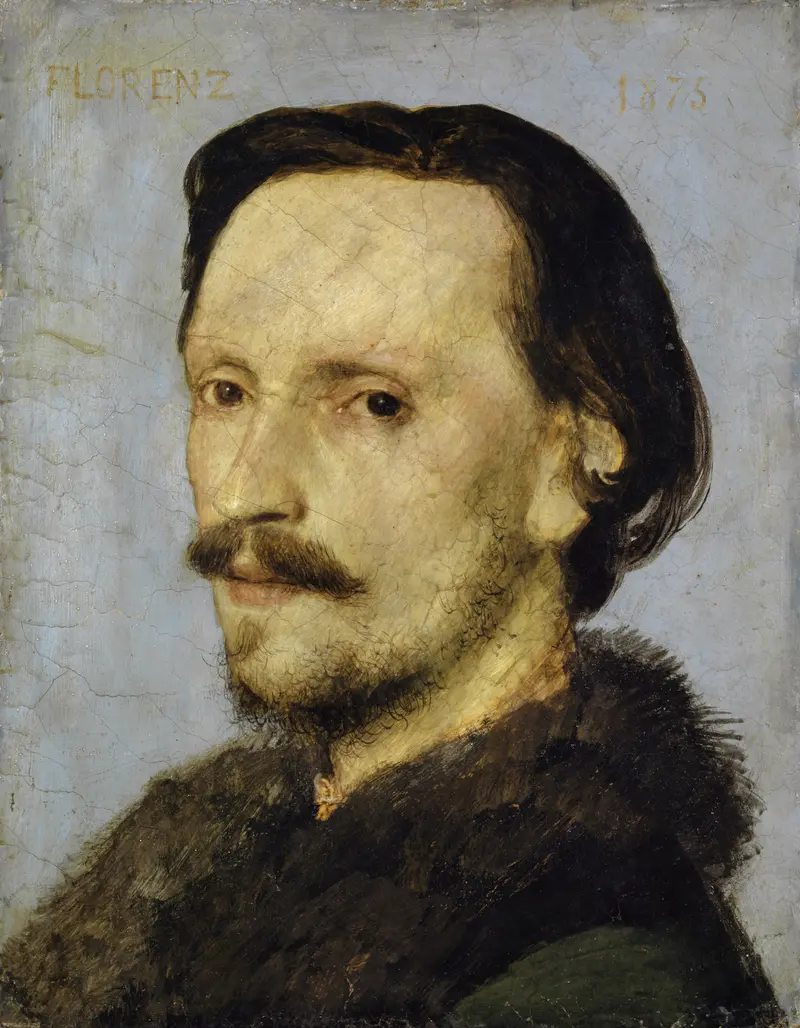
Böcklin Bildnis des Kunsthistorikers Adolph Bayersdorfer, 1875
Arnold Böcklin
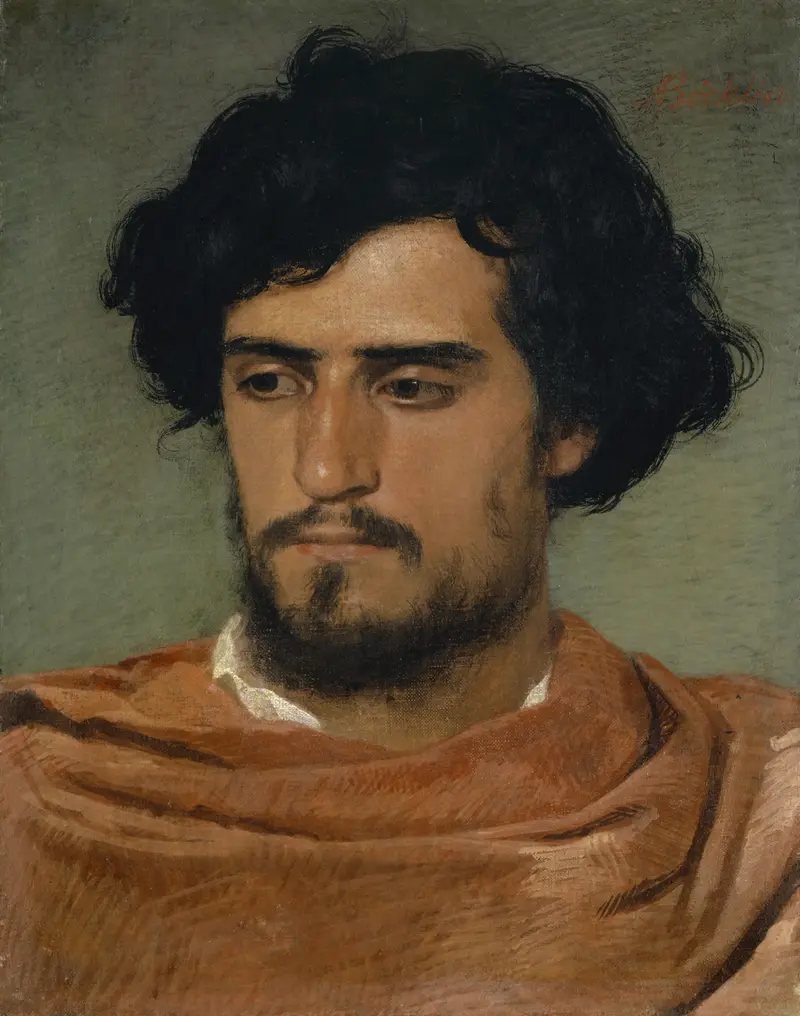
Head of a Roman
Arnold Böcklin
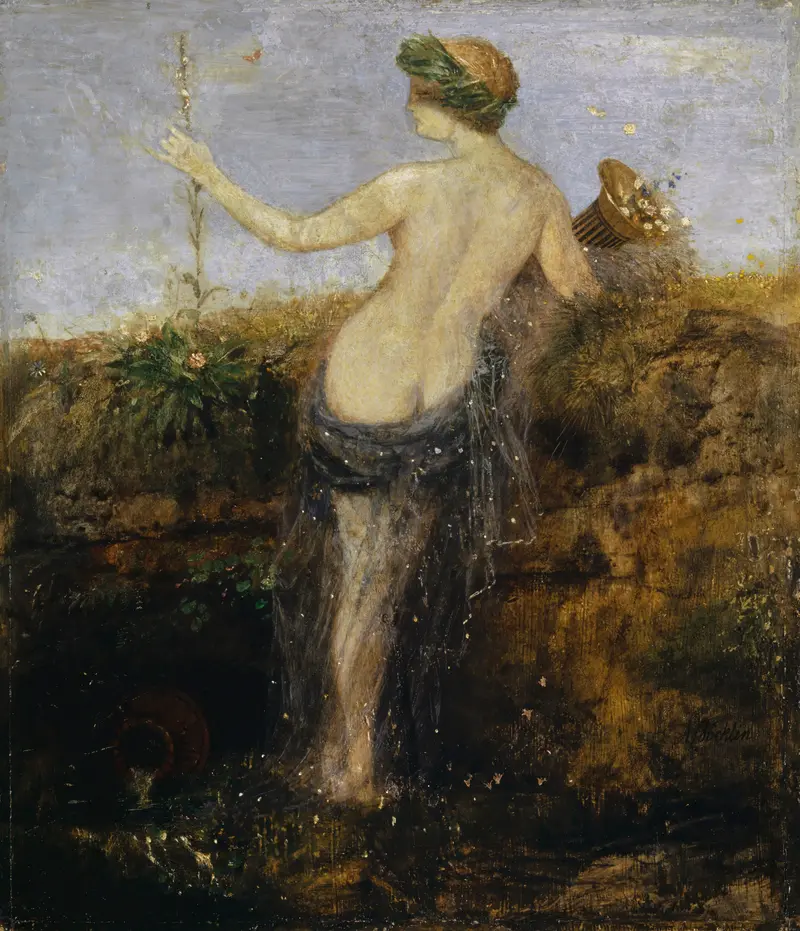
Nymphe with Horn of Plenty
Arnold Böcklin
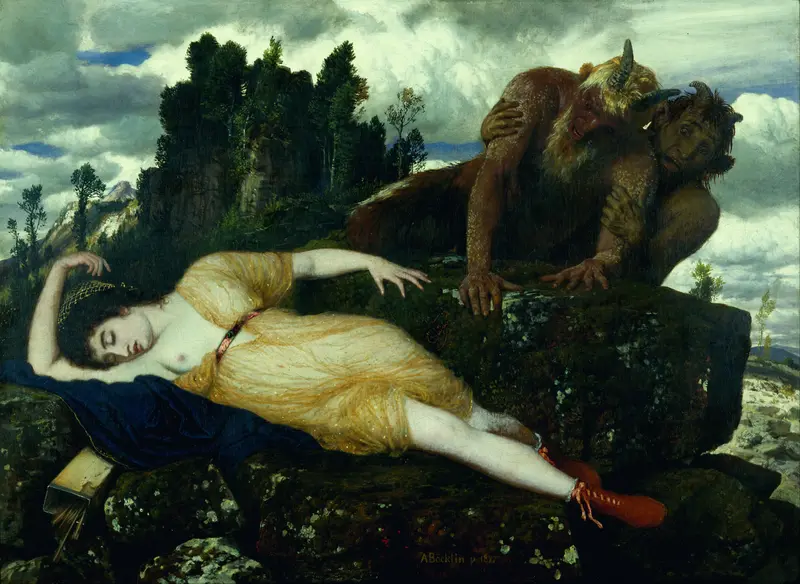
Sleeping Diana Watched by Two Fauns
Arnold Böcklin
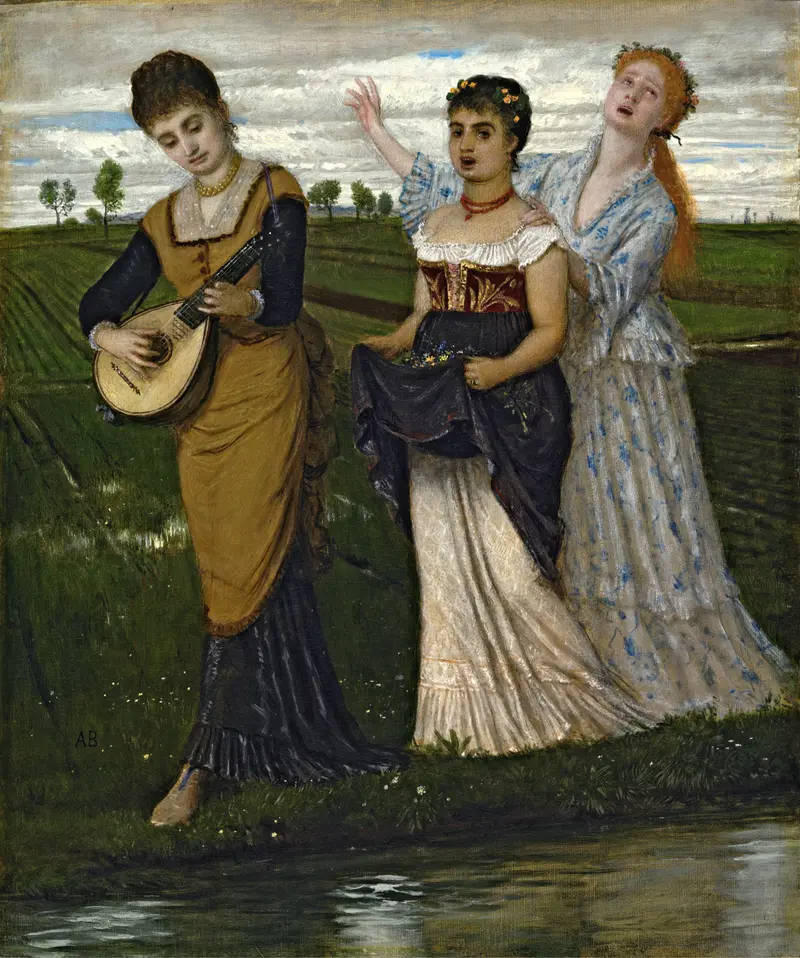
Spring (Songs of Spring)
Arnold Böcklin