
Head of a Roman — History & Facts
What first catches the eye in Head of a Roman is the intensity of the sitter’s gaze—lowered, almost brooding, as if lost in a private world. The dark, tousled hair frames a face marked by strong brows and a full beard, both rendered with a sculptor’s attention to volume and shadow. The ochre-red drapery that encircles his shoulders hints at classical costume, but the brushwork is loose, almost modern in its confidence.
The background is a muted green, holding the head in quiet isolation and drawing every ounce of attention to the sitter’s expression. Here, every detail—the set of the mouth, the careful modeling of cheek and jaw—works to create a sense of inwardness, as if the viewer has stumbled upon a moment of thought not meant to be shared. Painted in 1863, this work belongs to a period when artists across Europe were fascinated by the ancient world, often traveling to Italy to study its ruins and people. Arnold Böcklin, best known for his dreamlike mythological scenes, here turns to the living model, channeling the gravitas of Roman portraiture through a contemporary lens.
Such studies were prized by collectors and academies alike, both as exercises in technical mastery and as windows onto the imagined past. Today, the painting resides in the collection of the Kunstmuseum Basel, a reminder of a time when the line between past and present, myth and reality, was drawn not by history books, but by the artist’s hand. Let your eye linger on the sitter’s face, and consider how much of ancient Rome lives on in a single, searching look.
More Artworks by Arnold Böcklin

Die Toteninsel III
Arnold Böcklin
Ruin by the Sea
Arnold Böcklin
The Sacred Grove
Arnold Böcklin
Villa by the Sea
Arnold Böcklin
The Plague
Arnold Böcklin
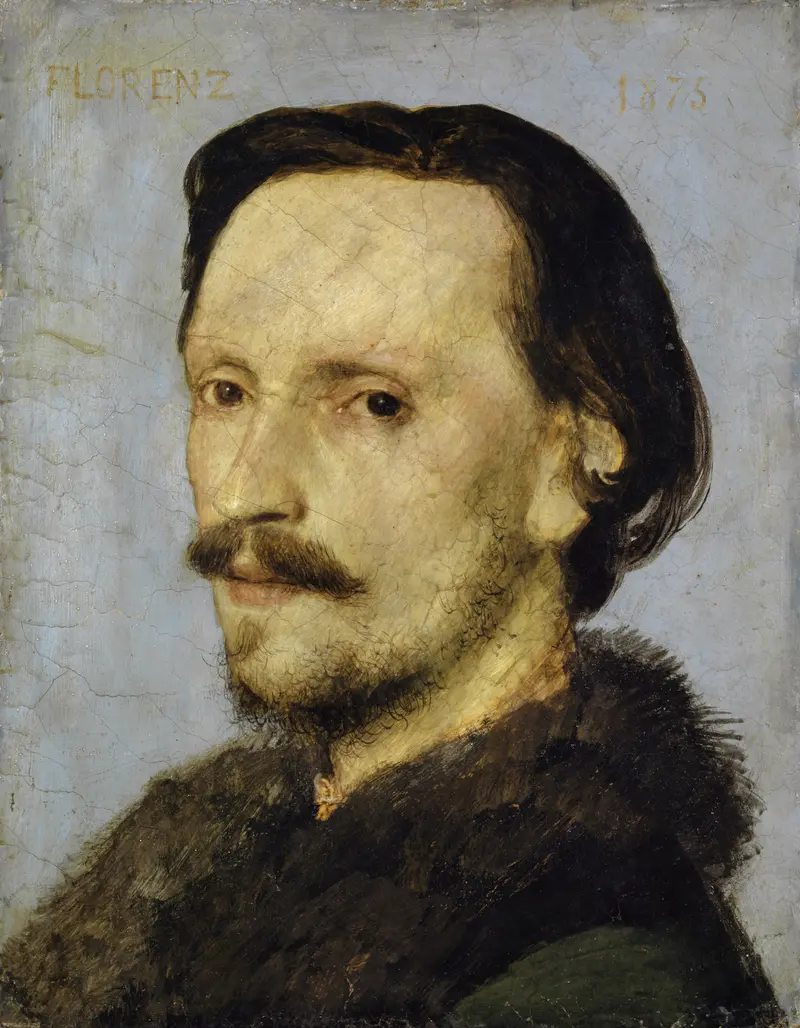
Böcklin Bildnis des Kunsthistorikers Adolph Bayersdorfer, 1875
Arnold Böcklin
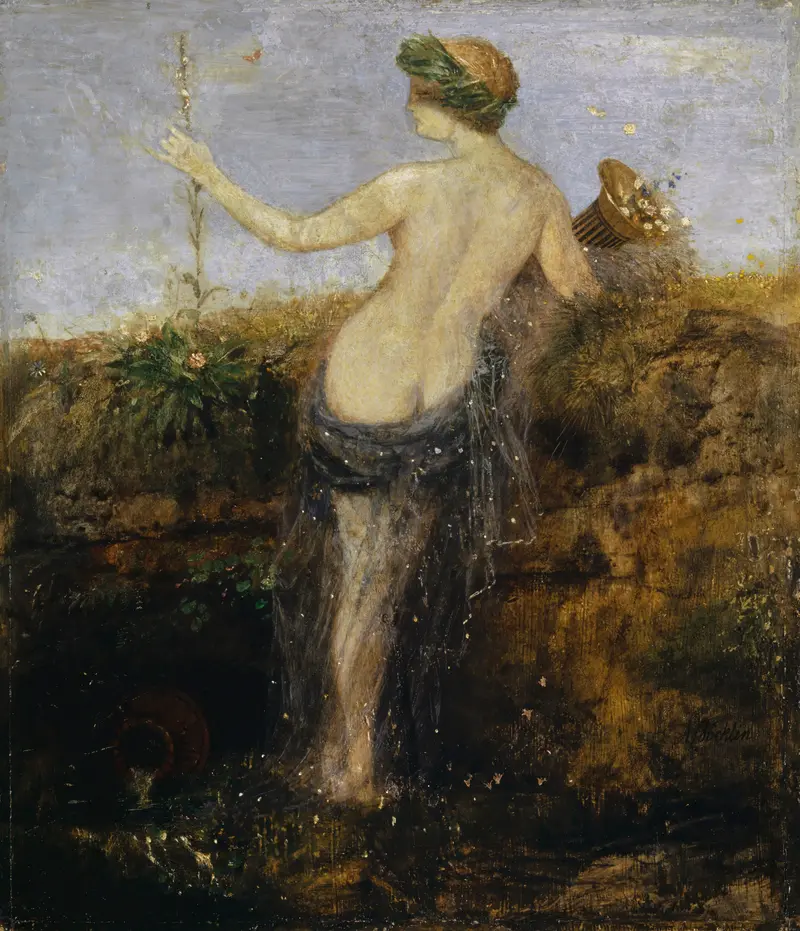
Nymphe with Horn of Plenty
Arnold Böcklin
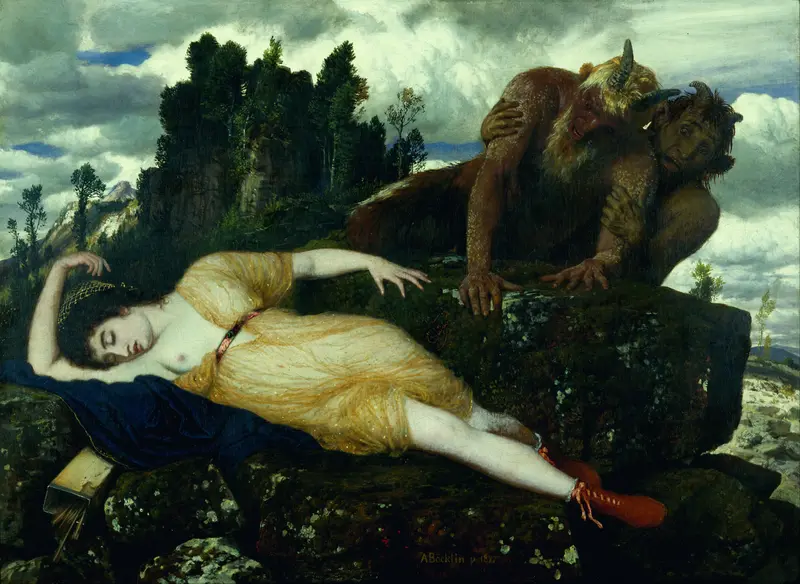
Sleeping Diana Watched by Two Fauns
Arnold Böcklin
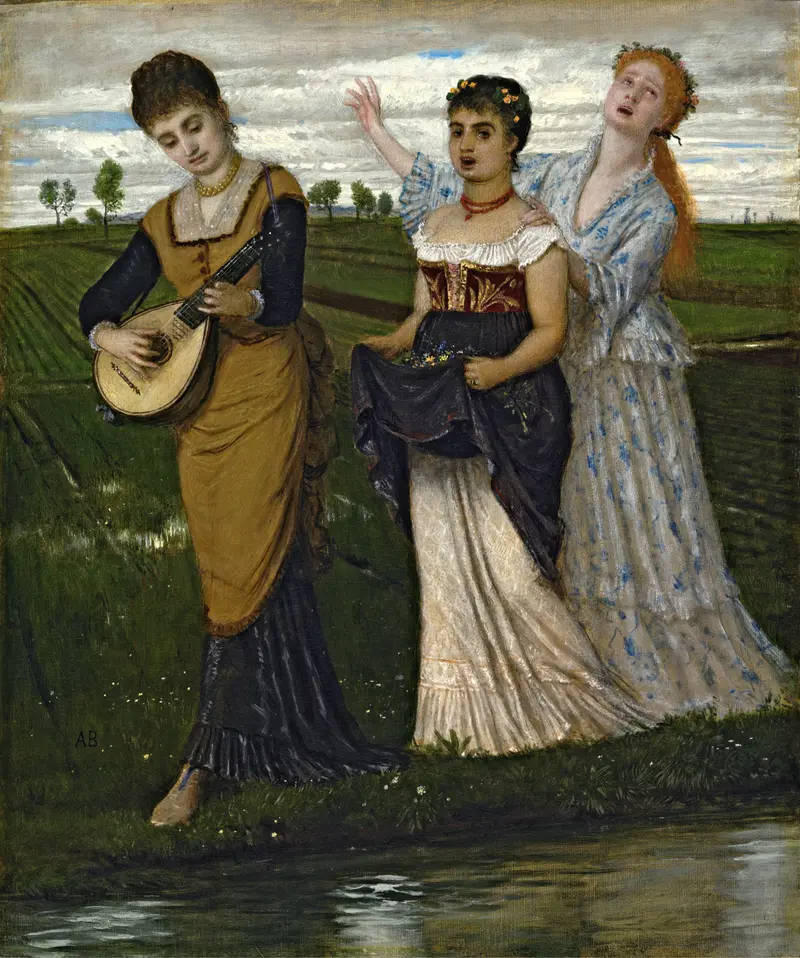
Spring (Songs of Spring)
Arnold Böcklin
The March of the Goths
Arnold Böcklin





