
Kinder im Wald — History & Facts
Few paintings from the 19th-century German tradition are as warmly remembered as Kinder im Wald by Felix Schlesinger, whose gentle scenes of childhood were once so popular that reproductions hung in homes across Europe and America. The exact date and circumstances of this work’s creation remain unclear, yet its enduring appeal is evident: in the early 20th century, prints of Kinder im Wald became cherished gifts, particularly in German-speaking households, where they were said to capture “the innocence of the forest.” The painting’s fame has outlasted many of its contemporaries, despite—or perhaps because of—the mystery surrounding its origins and original medium. At the heart of Kinder im Wald is a quiet narrative: children, nestled among the trees, are absorbed in the simple wonders of the woodland. Schlesinger chooses a moment of discovery—perhaps a mushroom found, or a bird glimpsed—where the children’s faces glow with curiosity and delight.
Their clothing, rendered with careful detail, speaks to a rural upbringing, while the dappled light filtering through the leaves casts a protective, almost intimate atmosphere over the scene. The fallen branches and scattered leaves underfoot are not mere background, but reminders of nature’s gentle disorder. In spirit, the work recalls the sentimental childhood scenes of Johann Georg Meyer von Bremen, yet Schlesinger’s forest is less a backdrop than a living character, sheltering and shaping the children’s world. The physical history of Kinder im Wald is as elusive as its date: no definitive record of its first exhibition or patron survives, and the original painting’s current whereabouts are uncertain.
What is known is that Schlesinger, active in Hamburg and later in Munich, specialized in genre scenes that celebrated the everyday lives of children and families, making him a favorite among collectors of the period. Works like Kinder im Wald circulated widely as engravings and chromolithographs, contributing to the artist’s reputation beyond Germany’s borders. Today, while the original may be lost or held in a private collection, its image endures in prints and postcards—a testament to the lasting charm of Schlesinger’s vision of childhood.
More Artworks by Felix Schlesinger

Fleißige Helfer in der Küche
Felix Schlesinger

Die Zeitungslektüre
Felix Schlesinger
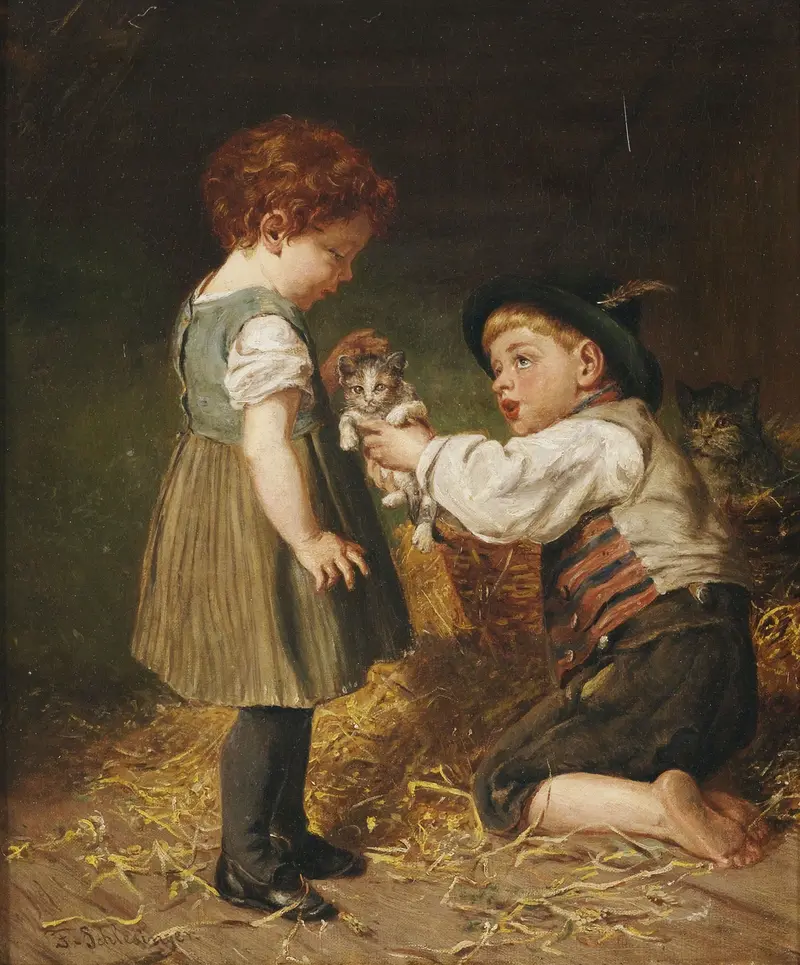
Zwei Kinder mit Kätzchen im Stall
Felix Schlesinger
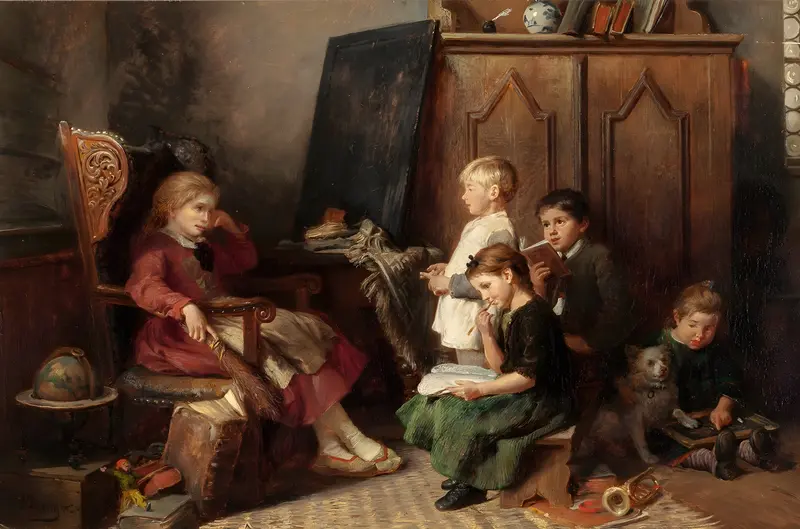
Children Reading
Felix Schlesinger
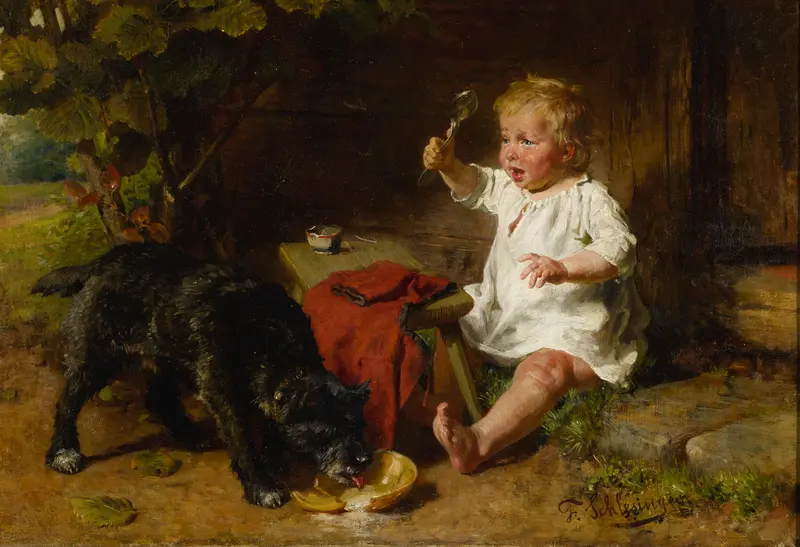
A Shared Meal
Felix Schlesinger
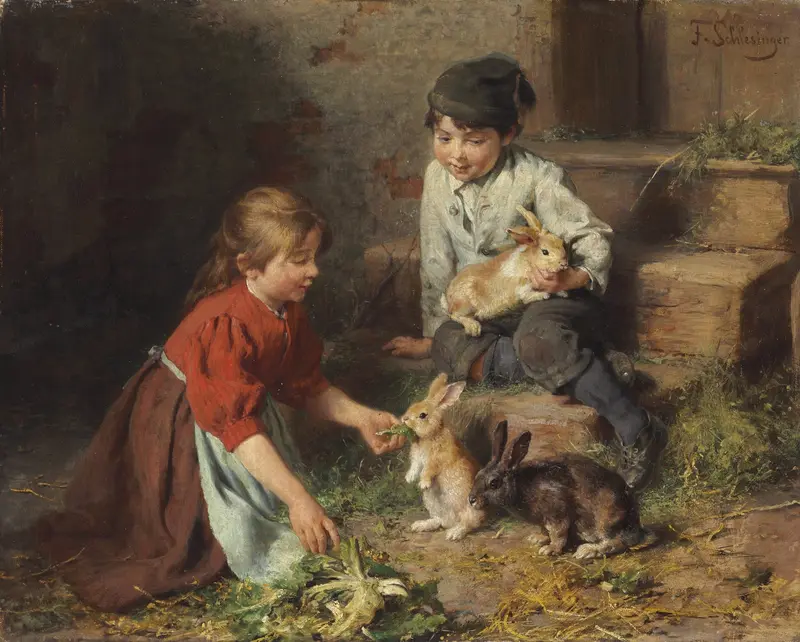
Fütterung Der Kaninchen
Felix Schlesinger
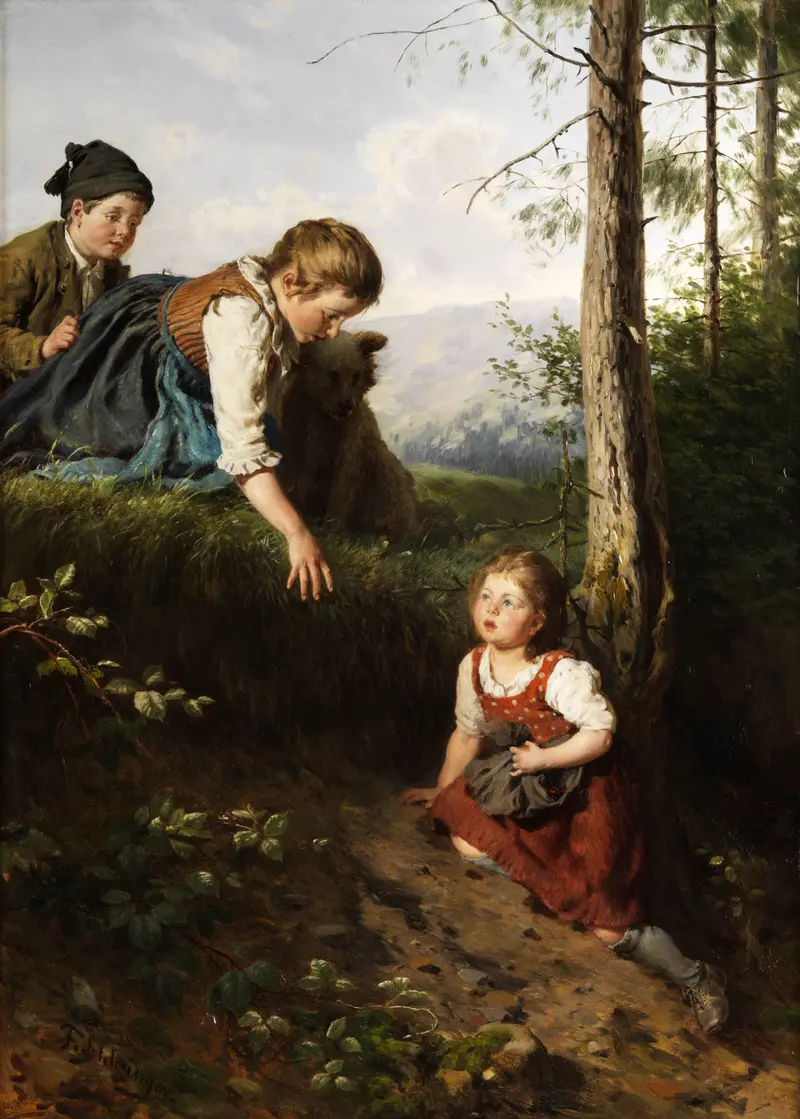
Drei Kinder im Wald beim Beerenpflücken
Felix Schlesinger
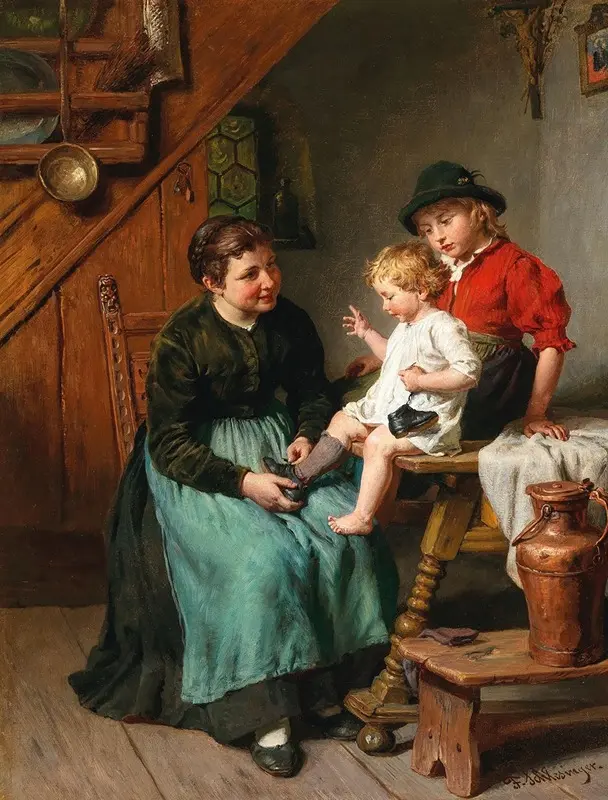
The First Shoe
Felix Schlesinger
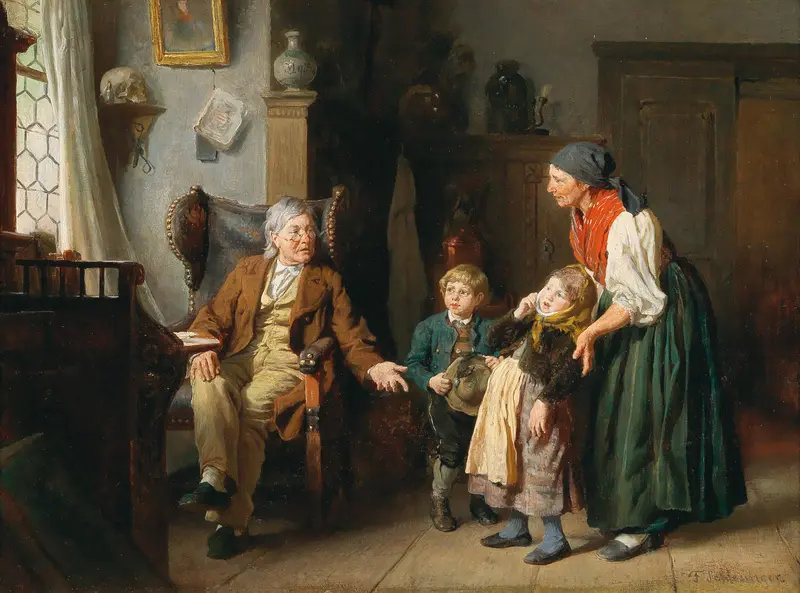
The village doctor
Felix Schlesinger
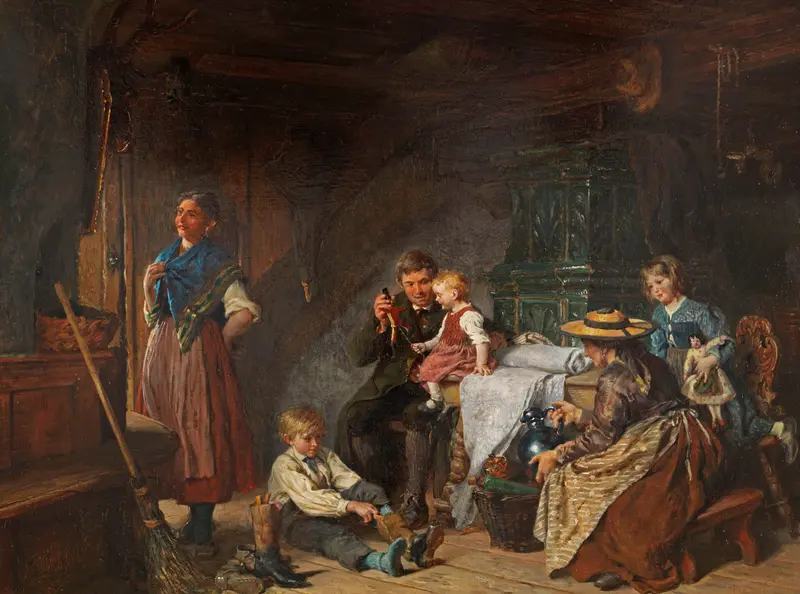
Familienszene
Felix Schlesinger
More Genre Scene Art

Banquet of the Officers of the St George Civic Guard
Frans Hals

Rembrandt and Saskia in the Scene of the Prodigal Son
Rembrandt van Rijn

Bal du moulin de la Galette
Pierre-Auguste Renoir

Quadrille at the Moulin Rouge
Henri de Toulouse-Lautrec

A Burial at Ornans
Gustave Courbet

When Will You Marry?
Paul Gauguin