
King Lake, California — History & Facts
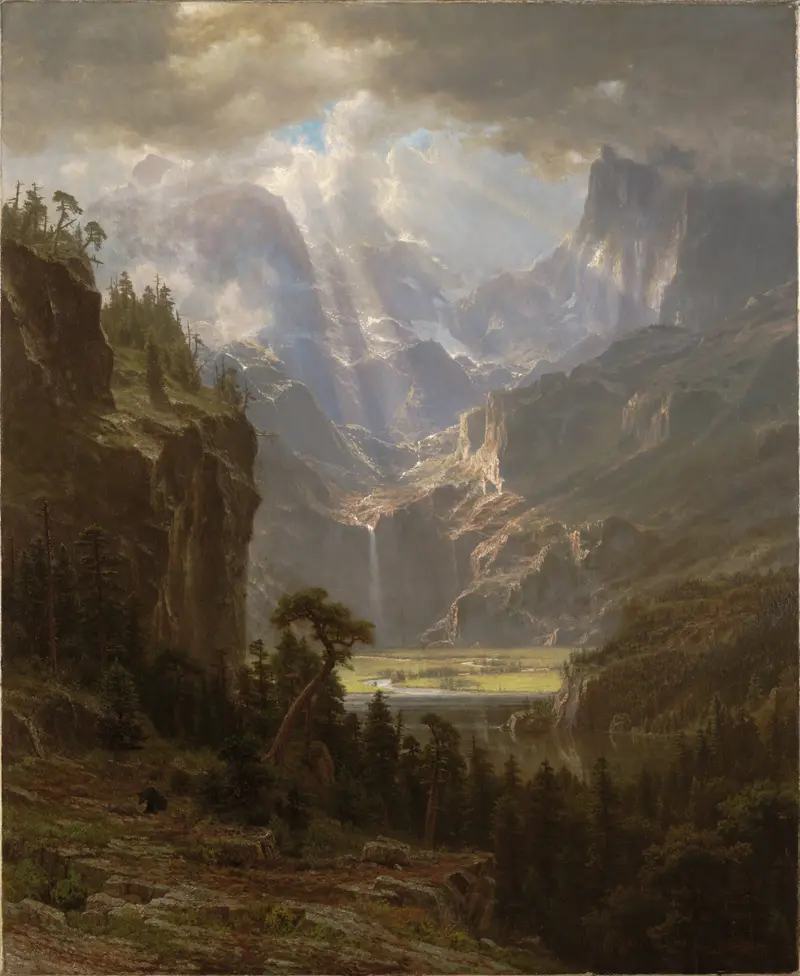
A shaft of light breaks through heavy cloud and mountain mist, drawing the eye to the heart of King Lake, California. The drama here is not in a single event but in the slow revelation of the landscape itself: a tranquil lake ringed by towering cliffs, their granite faces catching the pale glow, while a waterfall threads down in the distance. The foreground’s rugged slope, with its leaning pine and scattered boulder, gives way to a sweep of forest that frames the water below.
A lone bird wheels through the air, a small sign of life amid the vastness. Every element is placed to lead the viewer inward, from the angled trees to the subtle play of light and shadow, inviting us to cross the threshold from the known to the unknown. Painted in the years around 1870–1875, this work belongs to a moment when American artists like Albert Bierstadt sought to capture the grandeur and promise of the West. Such landscapes were often commissioned or collected by those eager to celebrate—or lay claim to—the newly “discovered” wilderness.
The painting’s home in the Columbus Museum of Art today is a reminder of how these images traveled far from their sources, shaping distant imaginations. History has kept few traces of this specific canvas’s early journey, but its vision remains: a world both inviting and unreachable, suspended between storm and sunlight. Stand before it and let your eye wander where the light leads.
More Artworks by Albert Bierstadt

A Storm in the Rocky Mountains, Mt. Rosalie
Albert Bierstadt
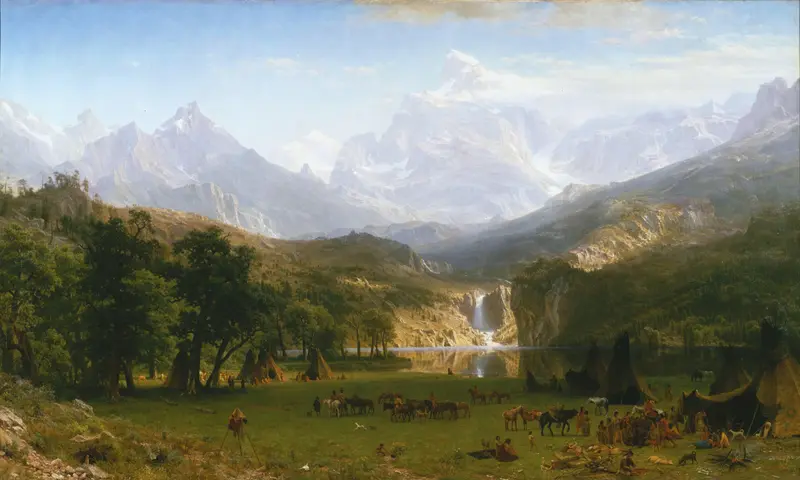
The Rocky Mountains, Lander's Peak
Albert Bierstadt
Niagara from the American Side
Albert Bierstadt
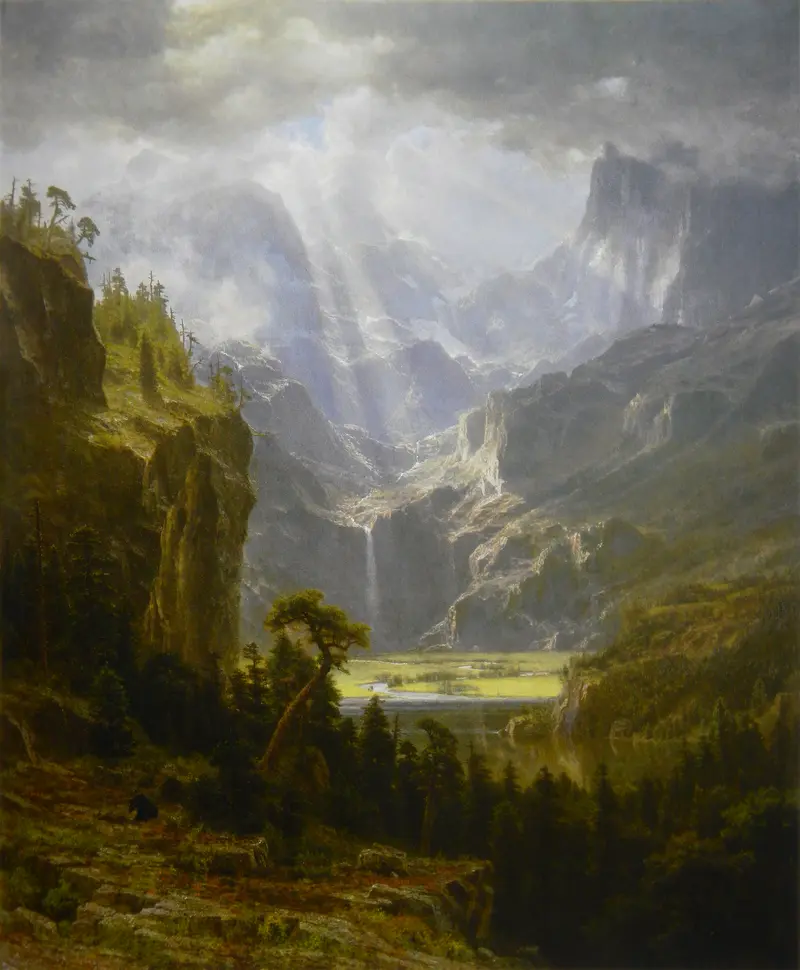
Rocky Mountains, Lander’s Peak
Albert Bierstadt

Valley of the Yosemite
Albert Bierstadt
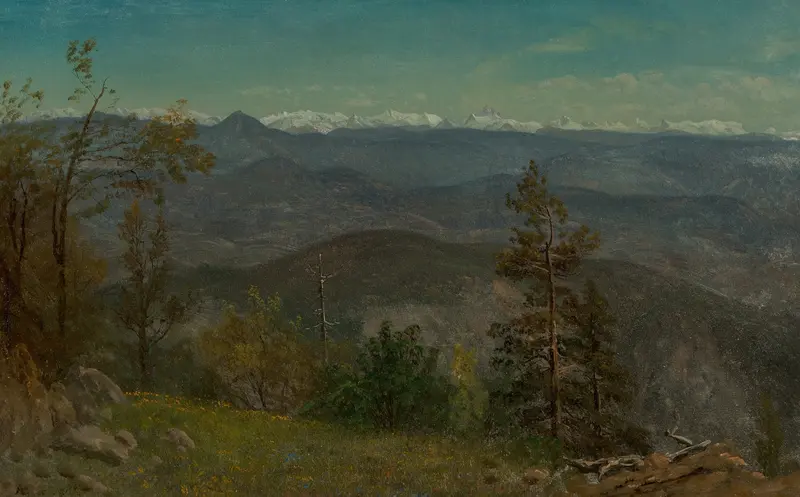
Yosemite Valley, California
Albert Bierstadt
Rocky Mountains, "Lander's Peak"
Albert Bierstadt

Laramie Peak
Albert Bierstadt
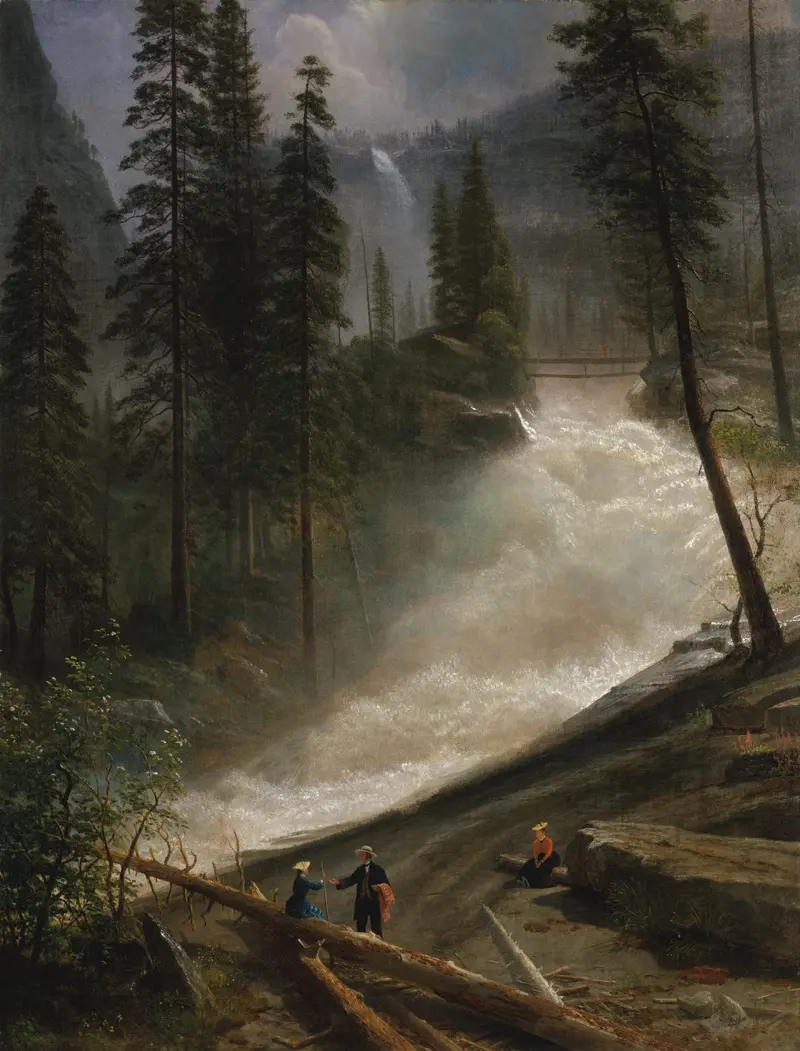
Nevada Falls, Yosemite
Albert Bierstadt
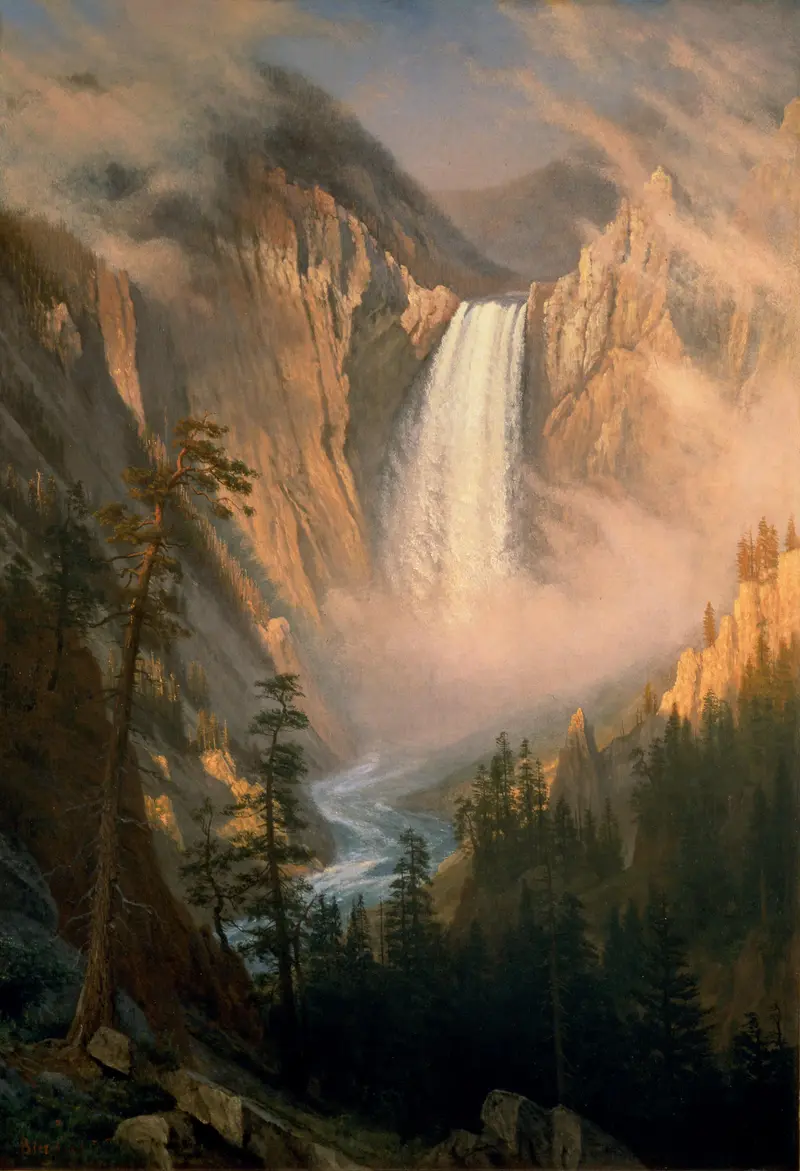
Yellowstone Falls
Albert Bierstadt
More Landscape Art

The Starry Night
Vincent van Gogh

View of Delft
Johannes Vermeer

Water Lilies
Claude Monet

The Grand Canal, Venice, looking north-west from the Ca' Corner to the Ca' Contarini degli Scrigni, with the campanile of Santa Maria della Carità
Canaletto

Windsor Castle
Canaletto

The Grand Canal looking North-East from the Palazzo Dolfin-Manin to the Rialto Bridge
Canaletto