
Kleine Houtstraat 116 — History & Facts
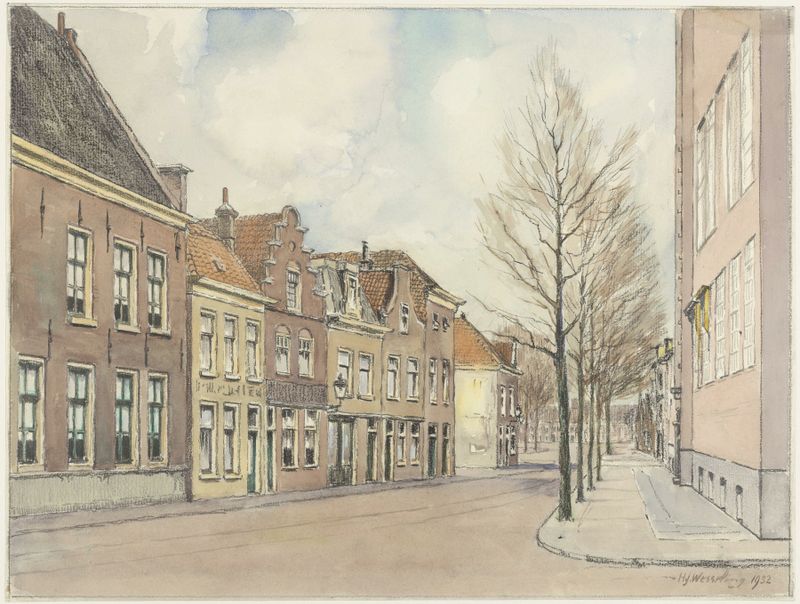
In the depths of shadow, a world often unseen emerges, whispering secrets to those willing to listen. Look to the left, where the muted hues of the buildings loom, their surfaces textured and weathered by time. Notice how the light dances subtly across the cobblestones, illuminating the path and leading your gaze deeper into the scene. Wesseling’s deliberate brushstrokes invite you to explore the interplay of shadows and colors, evoking a sense of quiet contemplation.
The composition is masterfully balanced, with dark corners that cradle the lighter tones, creating an atmosphere that feels both intimate and expansive. As you delve further, consider the tension between light and shadow. The interplay suggests moments of solitude and reflection, evoking an emotional narrative that transcends mere urban depiction. The shadows cast by the structures seem to hint at stories of lives lived within, suggesting both presence and absence.
This duality invites the viewer to ponder the hidden layers of the scene, evoking themes of memory and the passage of time. In 1930, Wesseling painted this piece while living in the Netherlands, a country grappling with the aftermath of World War I and experiencing significant social changes. The art movement of the time was shifting, with artists exploring realism and the psychological depth of their subjects. Wesseling’s work reflects this transitional period, bridging the familiar with the introspective, capturing an essence of life that resonates beyond the canvas.
More Artworks by Hendrik Jan Wesseling
Browse all →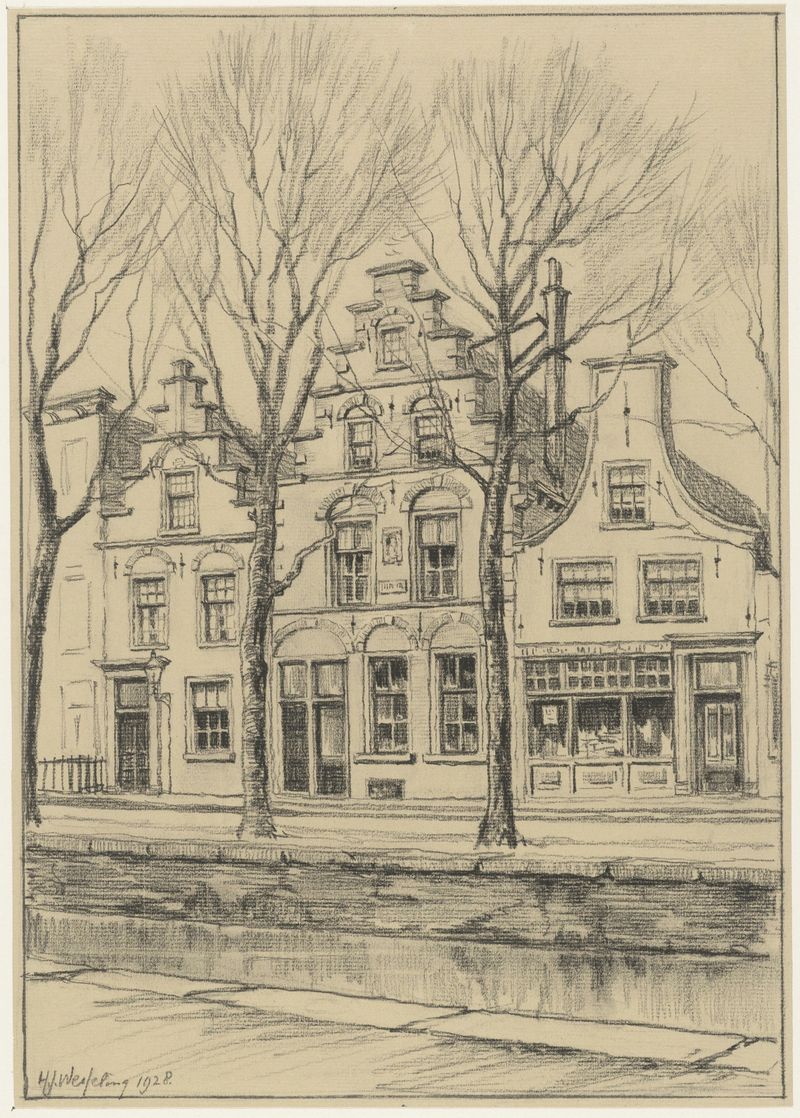
Bakenessergracht 55 (huis van Ph.Wouwerman) en aangrenzende huizen
Hendrik Jan Wesseling
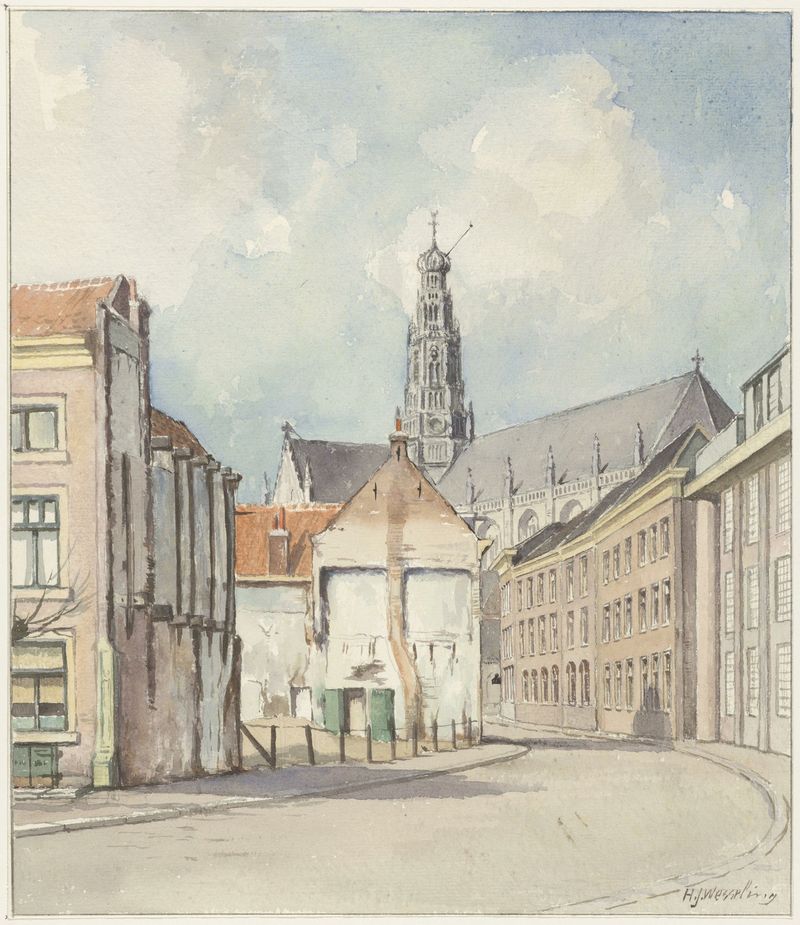
Damstraat, ziende naar het westen (tijdens afbraak der huizen aan de zuidzijde)
Hendrik Jan Wesseling

Lange Brug, zuidwestzijde en omgeving
Hendrik Jan Wesseling
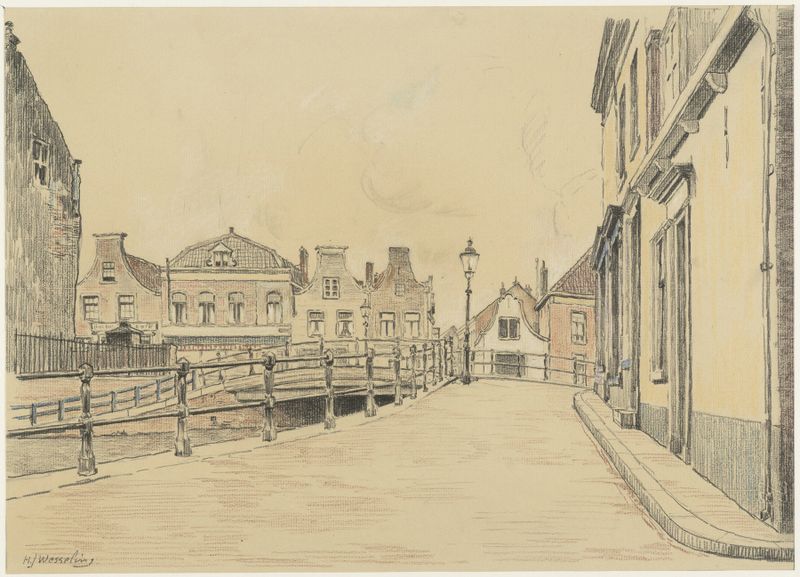
Korte Brug, westzijde, met Korte Spaarne en Burgwal
Hendrik Jan Wesseling
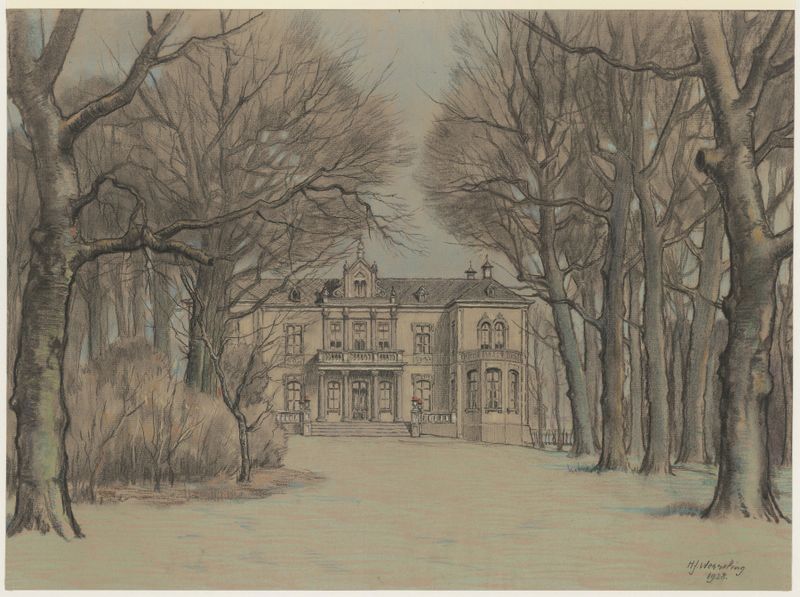
Gezicht op de voorgevel van de buitenplaats Spaar en Hout vanuit de tuin
Hendrik Jan Wesseling
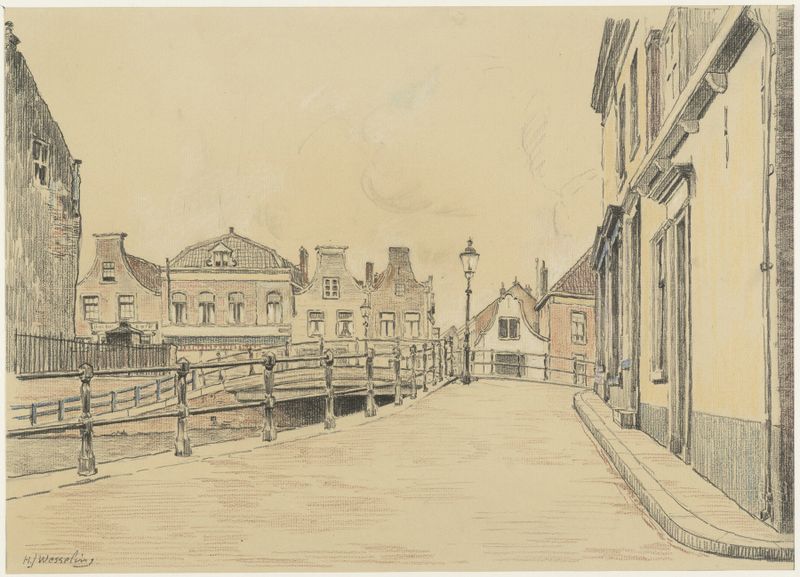
Korte Brug Westzijde Met Korte Spaarne en Burgwal
Hendrik Jan Wesseling
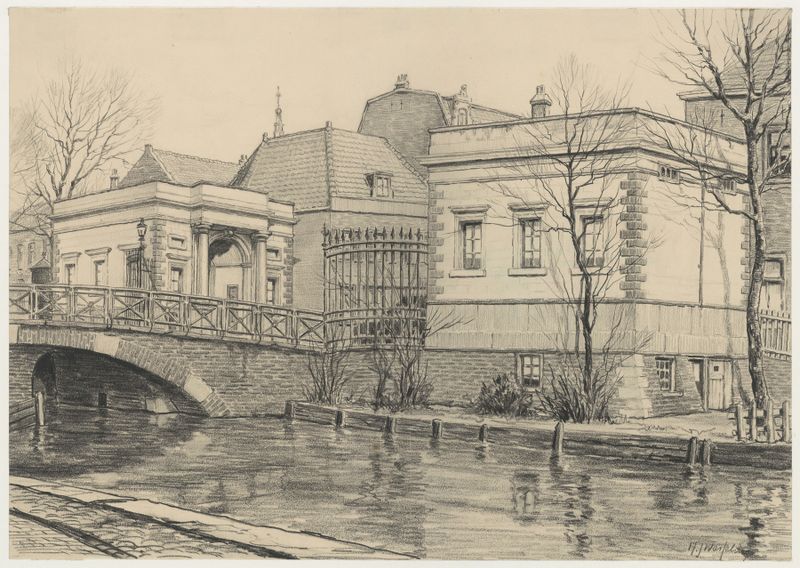
Kommiezenhuisjes, zuidoostzijde, en gedeelte der Grote Houtbrug
Hendrik Jan Wesseling
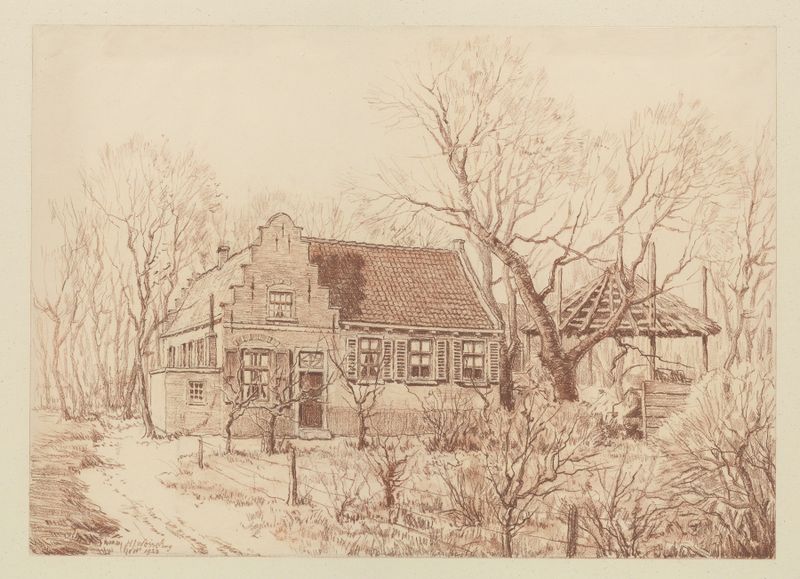
Gezicht op de boerderij Schoterbosch.
Hendrik Jan Wesseling
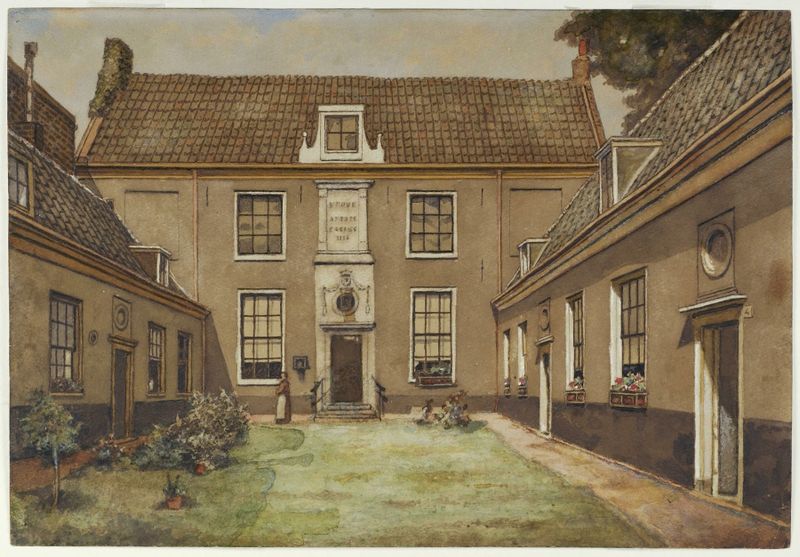
Het Vrouwe- en Antoniegasthuis aan het Klein Heiligland 64 te Haarlem
Hendrik Jan Wesseling
Raaks, ziende naar het westen
Hendrik Jan Wesseling
More Architecture Art
Browse all →
The statue of Liberty
Frédéric Auguste Bartholdi

View of Houses in Delft, Known as ‘The Little Street’
Johannes Vermeer

View of Houses in Delft, Known as ‘The Little Street’
Johannes Vermeer

The Cathedral in Rouen. The portal, Grey Weather
Claude Monet

The yellow house
Vincent van Gogh

The Church in Auvers-sur-Oise, View from the Chevet
Vincent van Gogh