
L'Aubette — History & Facts
A glance at L'Aubette by Theo van Doesburg is like stepping into a world where architecture and painting meet on equal terms. The eye is drawn first to the bold, primary colors—red, yellow, blue—anchored by fields of white and blocks of black, each shape locked in a careful grid. This is not a scene but a proposition: every rectangle and square is a building block, a possibility, a challenge to the way space is usually experienced.
The black circles punctuate the order, hinting at movement or entry points, while the subtle grid beneath the color suggests a plan, a blueprint for something larger than the canvas itself. Created in January 1927, this work stands at the crossroads of the De Stijl movement, which sought to harmonize art, design, and life itself. In the wake of World War I, artists like van Doesburg believed that abstraction and clarity could help rebuild society—literally and spiritually. The painting’s precise geometry and limited palette reflect the period’s fascination with universal harmony and the promise of a rational, ordered world.
History has kept few traces of this specific piece beyond its appearance in H.L.C. Jaffé’s 1983 monograph, but its spirit is unmistakable: a call to look again, to imagine how art might shape the very spaces we inhabit.
More Artworks by Theo van Doesburg
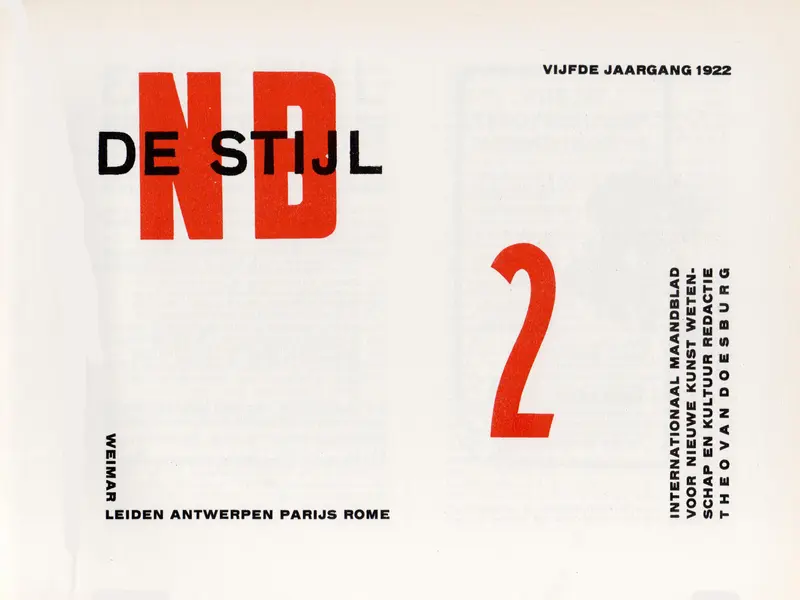
De Stijl, vol. 5, no. 2 (cover)
Theo van Doesburg
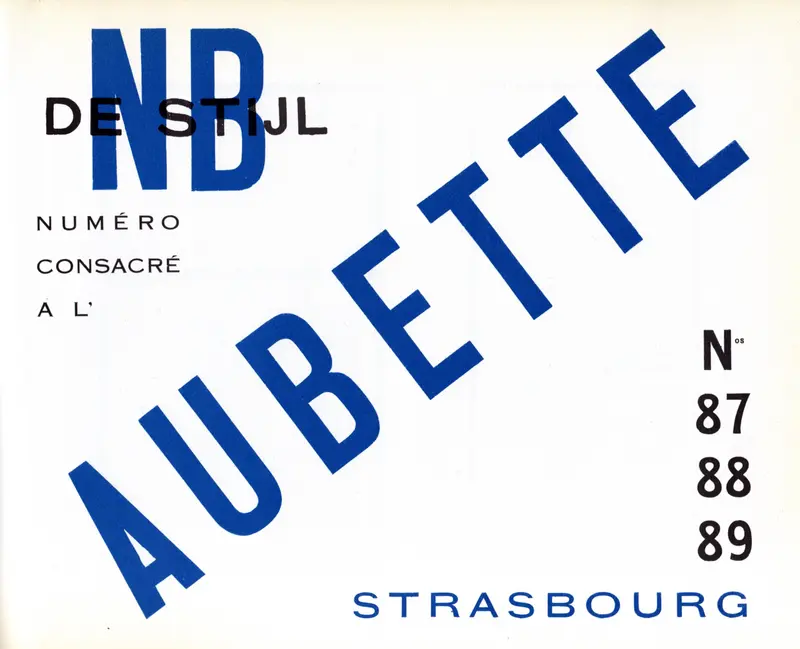
De Stijl, nos. 87–89: Aubette Issue (cover)
Theo van Doesburg
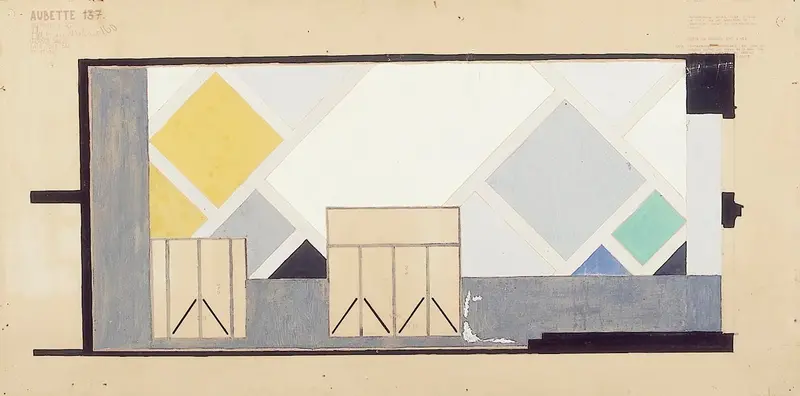
Aubette Ciné-Dancing: Final Color Design for a Wall
Theo van Doesburg
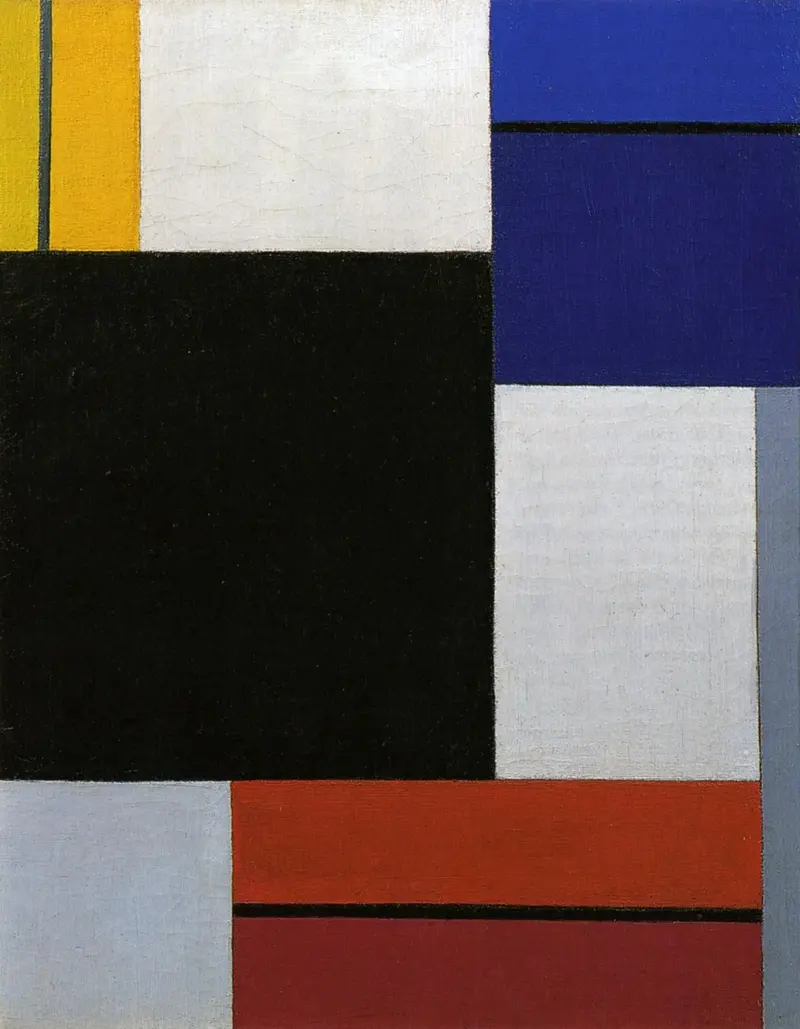
Composition XXI
Theo van Doesburg
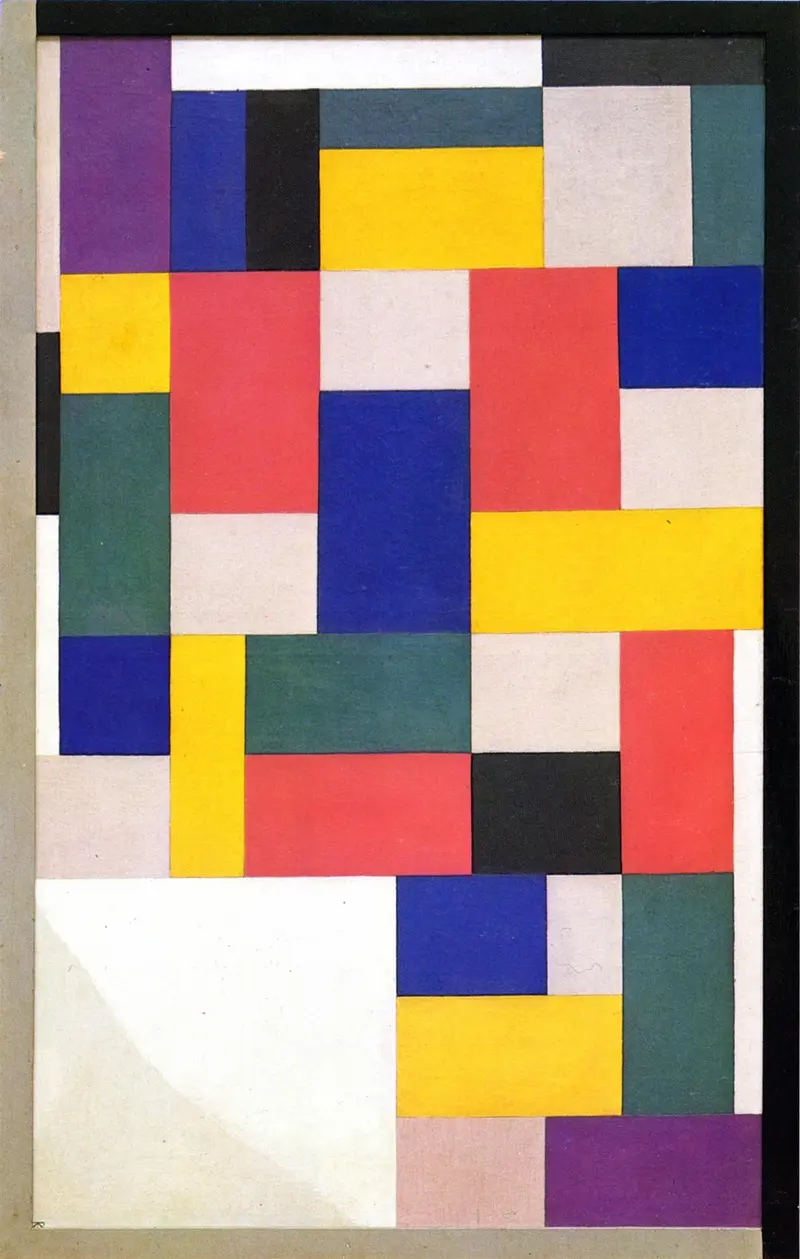
Pure Painting
Theo van Doesburg
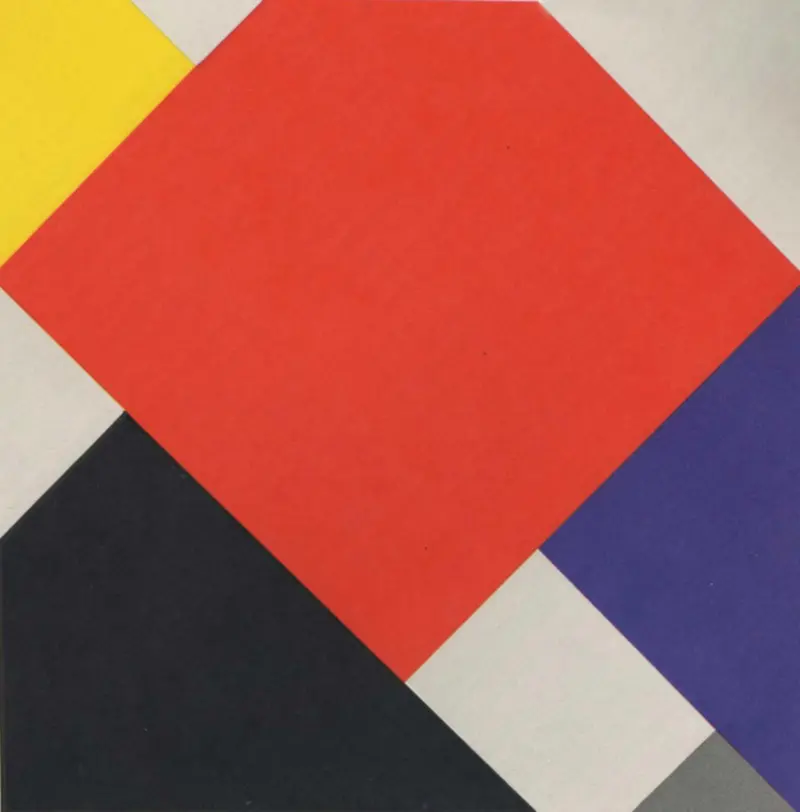
Counter-Composition V
Theo van Doesburg
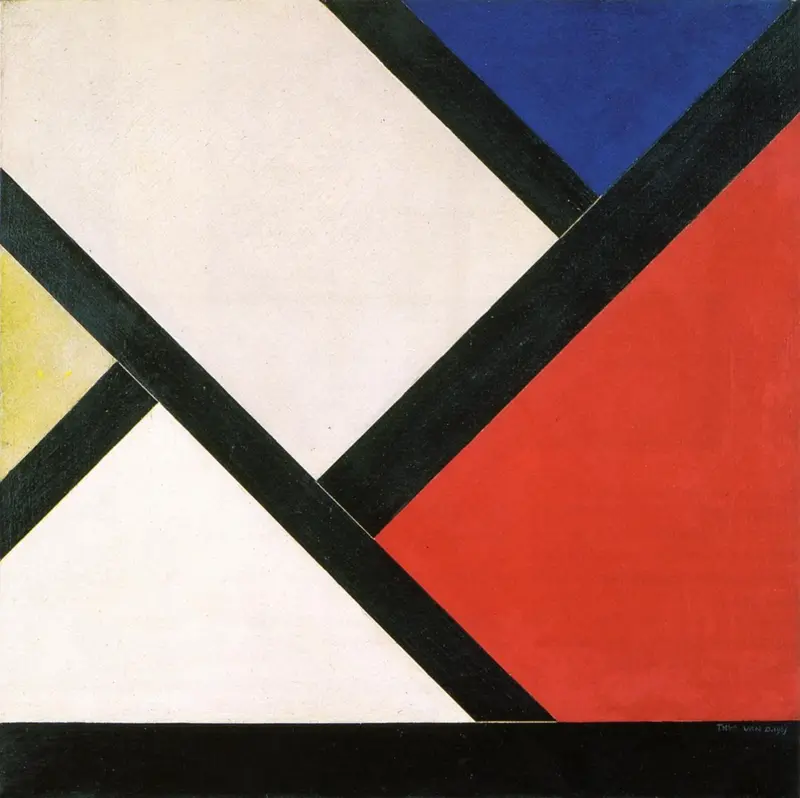
Counter-Composition XIV
Theo van Doesburg
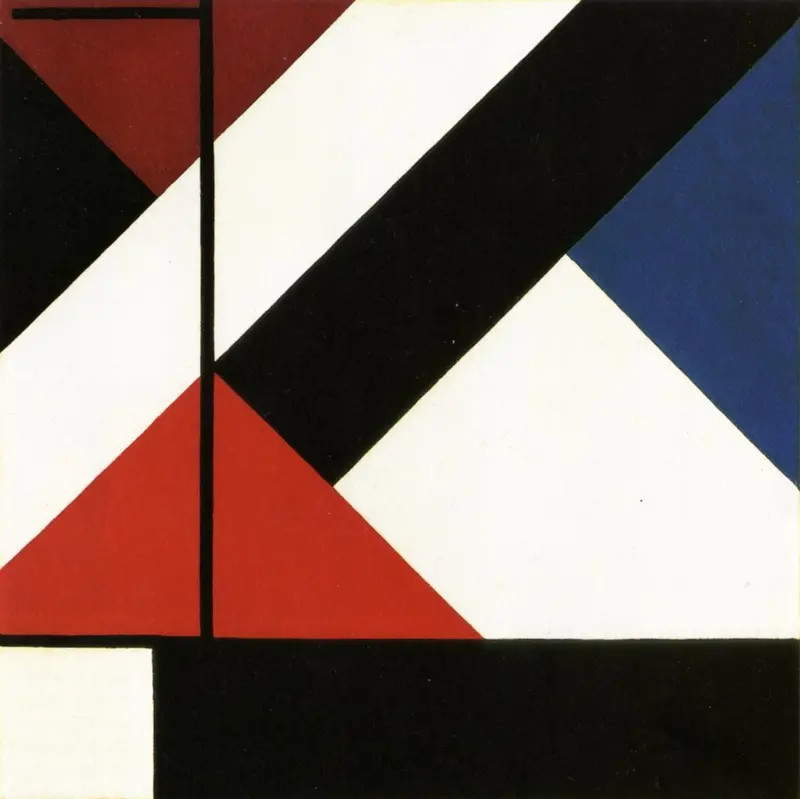
Simultaneous Counter-Composition
Theo van Doesburg
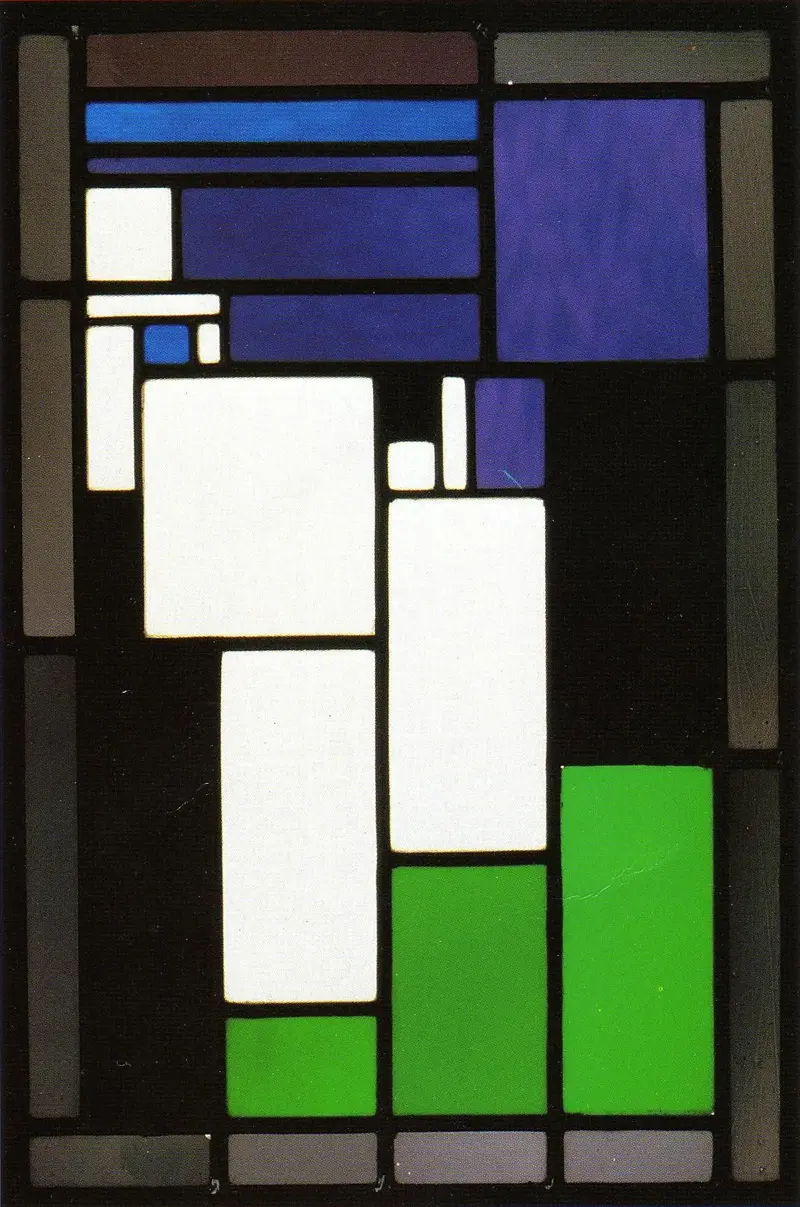
Stained-Glass Composition: Female Head
Theo van Doesburg
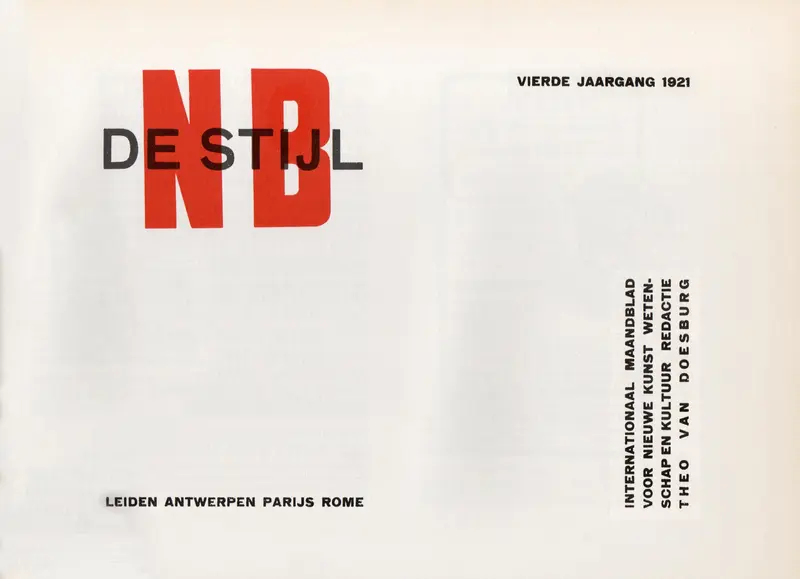
De Stijl, vol. 4, no. 2 (cover)
Theo van Doesburg





