
L’ Empereur — History & Facts
This poignant reflection captures the dual nature of existence, where allure and sorrow intertwine in the shadows of mortality. Focus on the striking hues that beckon from the canvas, where deep blues and rich golds dance together, creating an almost hypnotic effect. The figure, draped in luxurious fabric, stands at the center, exuding both majesty and melancholy. Notice how the intricate details of the garment flow elegantly, yet seem to weigh heavily upon the subject, suggesting a burden carried silently.
The light, warm and inviting, bathes the scene in a golden glow, enhancing the rich textures and evoking a sense of nostalgia. Delve deeper into the contrast of the vibrant hues against the figure’s contemplative expression, hinting at unspoken grief and the passage of time. The expression, serene yet tinged with longing, evokes the fragility of human experience. This juxtaposition of beauty and sorrow, mirrored in the opulence of the attire, invites reflections on how we dress our realities — the gold of grandeur masking the pain beneath. In 1912, Beckwith painted this work during a prolific period in his career while navigating the complexities of early 20th-century American society.
Art was evolving, with movements like Impressionism and early Modernism beginning to reshape perspectives. This painting captures not only his mastery of technique but also reflects the artist's own exploration of mortality and the transient nature of beauty amid the societal changes surrounding him.
More Artworks by James Carroll Beckwith
Browse all →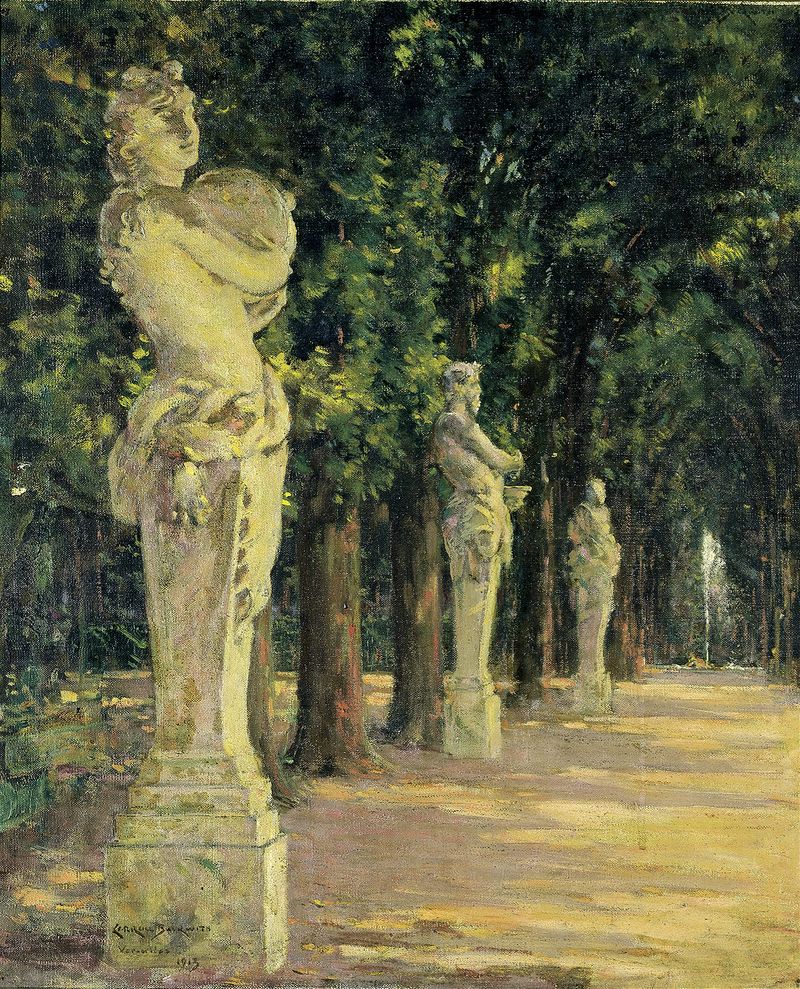
Allee de l’Ete, Versailles
James Carroll Beckwith

Carrefour at the End of the Tapis Vert, Versailles
James Carroll Beckwith

Bassin de Neptune, Versailles
James Carroll Beckwith

Nymph and Cupid
James Carroll Beckwith

George Martin Lane (1823-1897)
James Carroll Beckwith
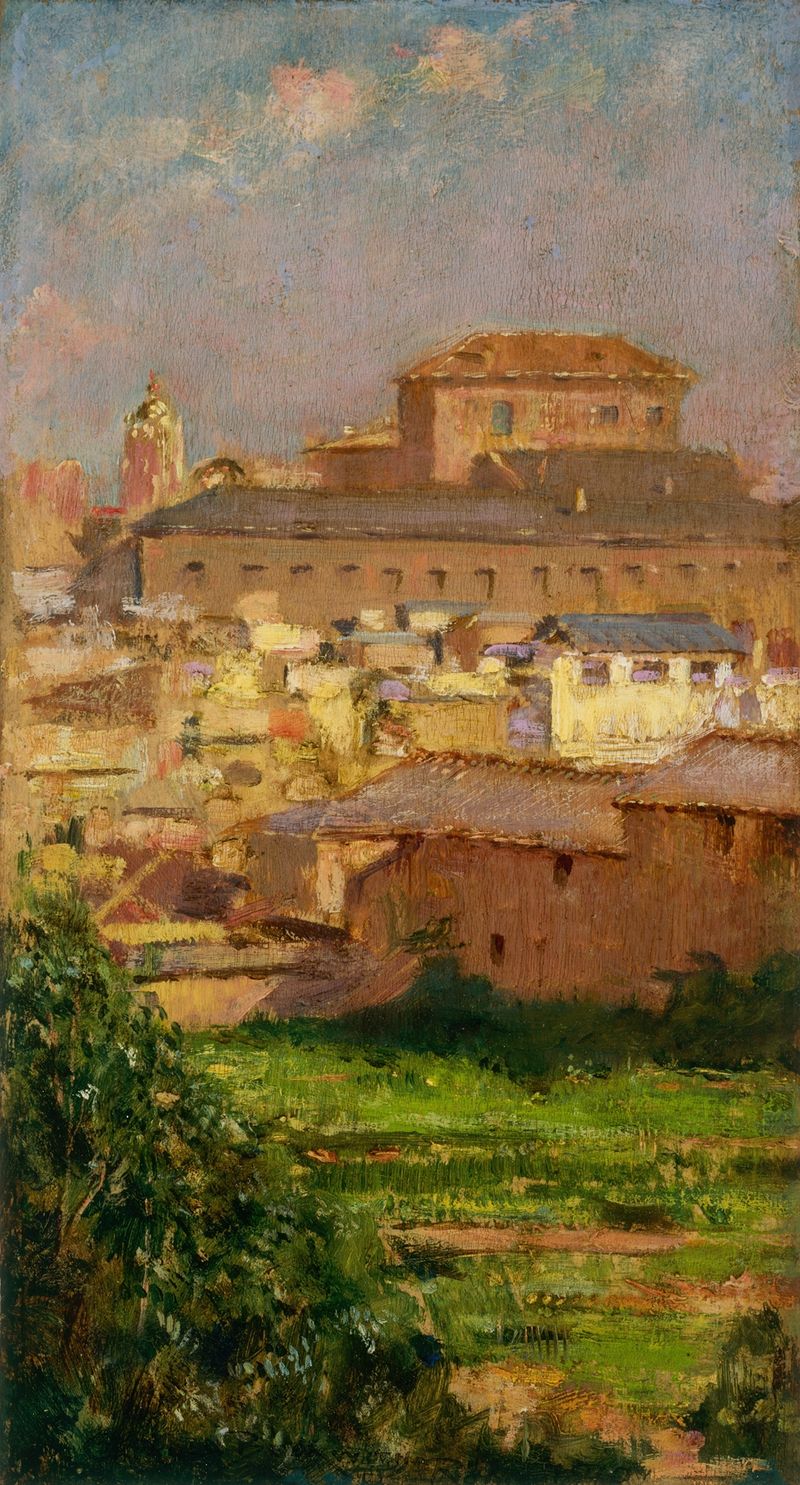
Palazzo Barberini, Rome
James Carroll Beckwith
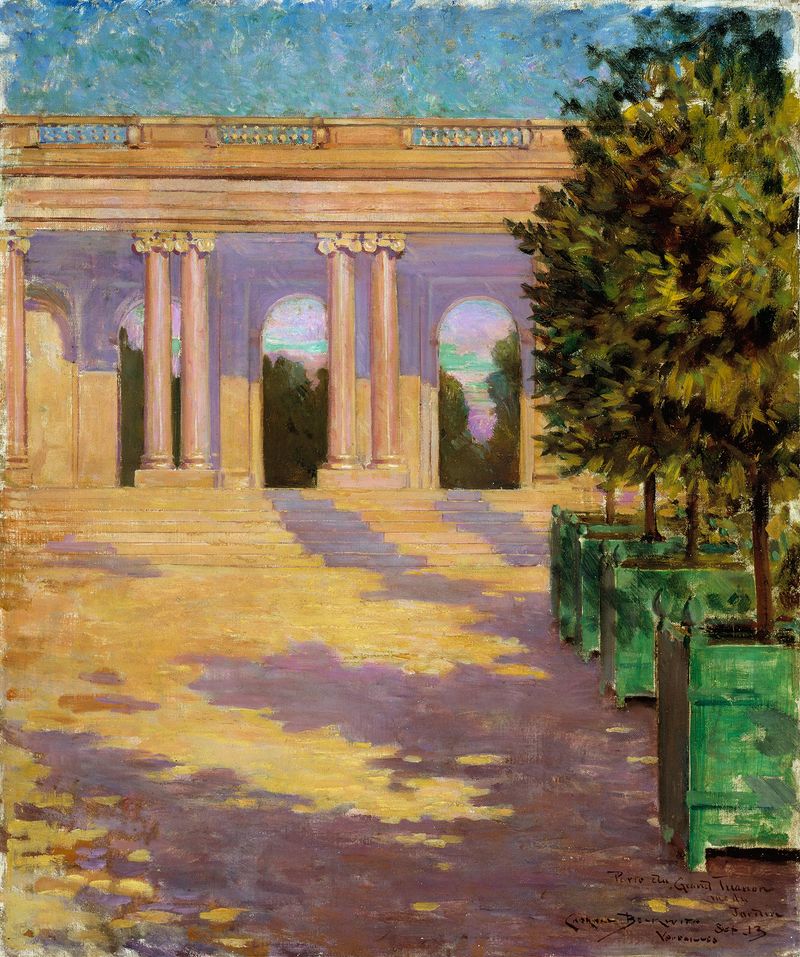
Arcade of the Grand Trianon, Versailles
James Carroll Beckwith

Cathedral at le Puy
James Carroll Beckwith

The Palace of the Popes and Pont d’Avignon
James Carroll Beckwith
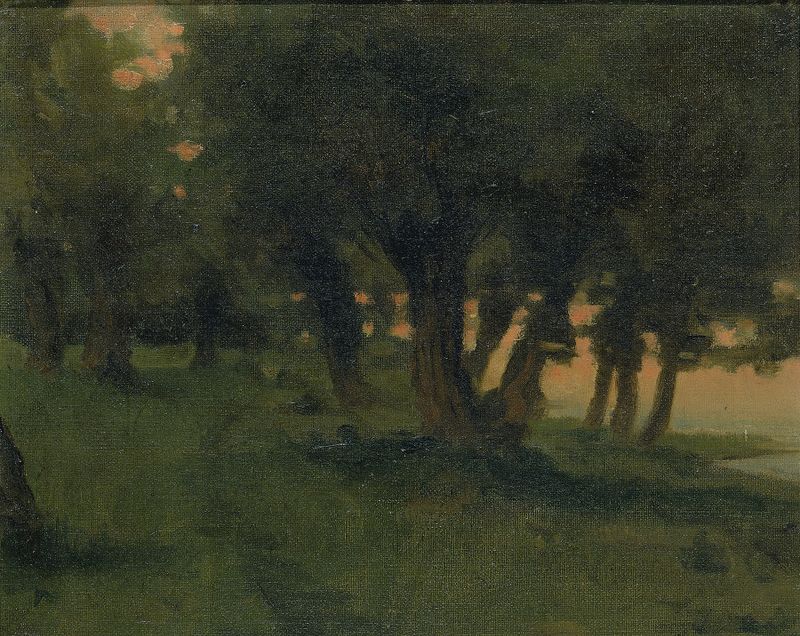
On the Banks of the Rhine, near St. Germain at Mont d’Or
James Carroll Beckwith





