
L’Evocation d’Erda — History & Facts
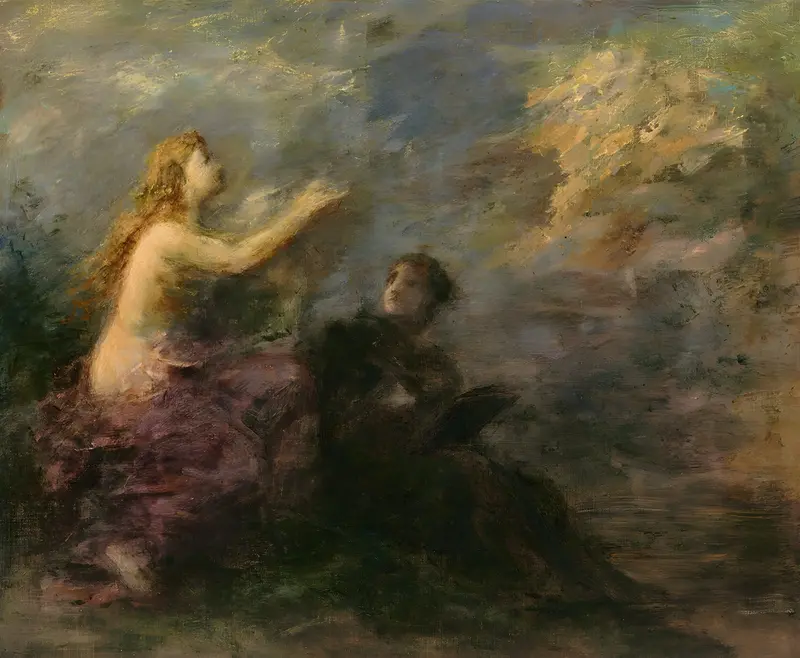
In L’Evocation d’Erda, the viewer is greeted by a rich palette of colors, primarily deep greens and blues, which create a lush, dreamlike setting. The central figure, a woman draped in flowing garments, appears to be in a state of contemplation or invocation. Surrounding her are various symbols and elements that suggest a connection to nature and mythology.
The overall composition is harmonious, inviting the viewer to explore the narrative within the artwork. This painting is executed in oil on canvas, a medium that allows for vibrant colors and subtle blending. The brushwork is delicate, with fine details that enhance the textures of the garments and the surrounding flora. The dimensions are approximately 100 x 150 cm, giving it a substantial presence.
The use of light and shadow adds depth, creating a sense of three-dimensionality in the figures and landscape. Henri Fantin-Latour was a prominent figure in the French art scene during the 19th century, known for his still lifes and portraits. L’Evocation d’Erda reflects his interest in symbolism and mythology, showcasing his ability to blend realistic detail with imaginative themes. An interesting fact about this work is that it was inspired by the Germanic goddess Erda, representing wisdom and the earth, highlighting Fantin-Latour's fascination with mythological subjects.
More Artworks by Henri Fantin-Latour
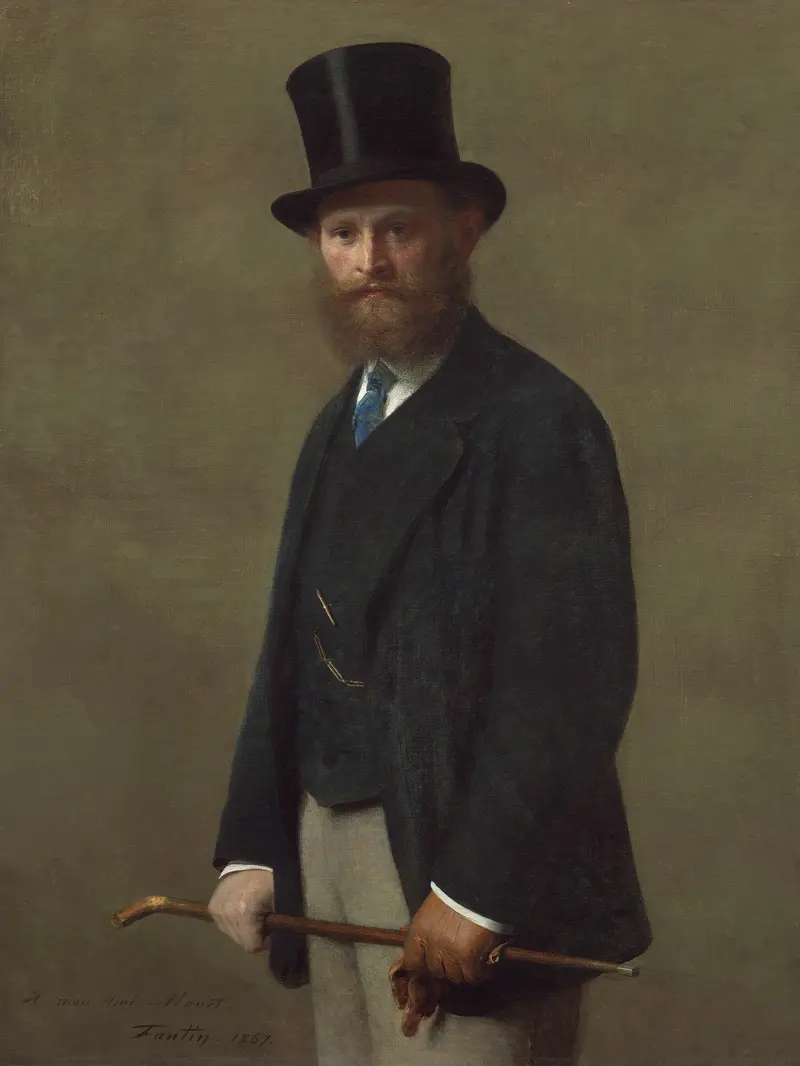
Édouard Manet
Henri Fantin-Latour
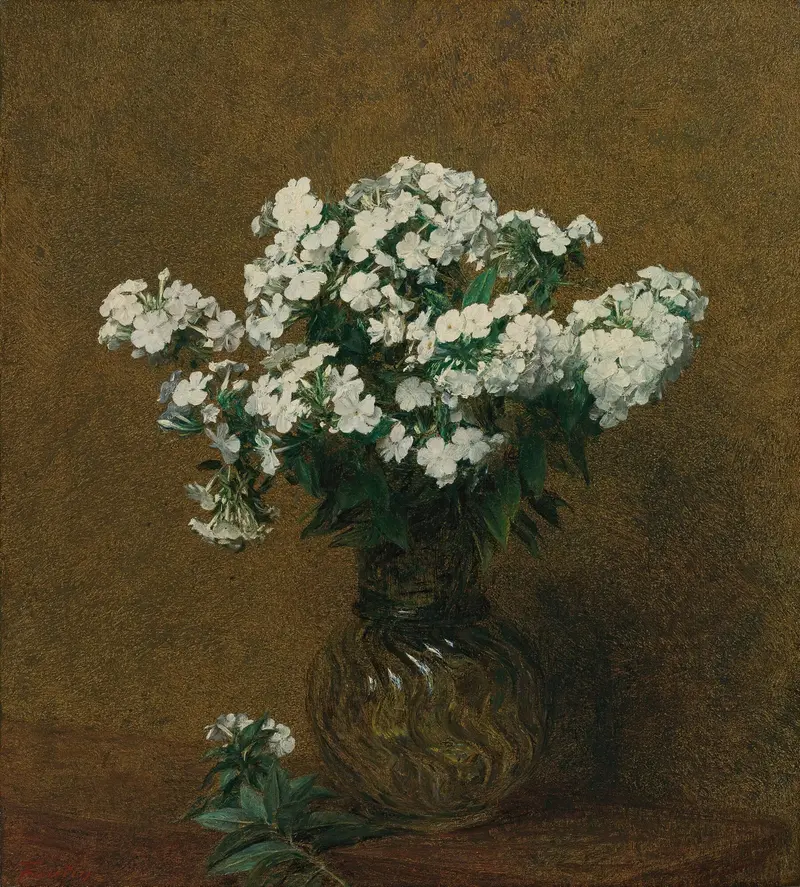
Phlox Blancs Dans Un Vase
Henri Fantin-Latour
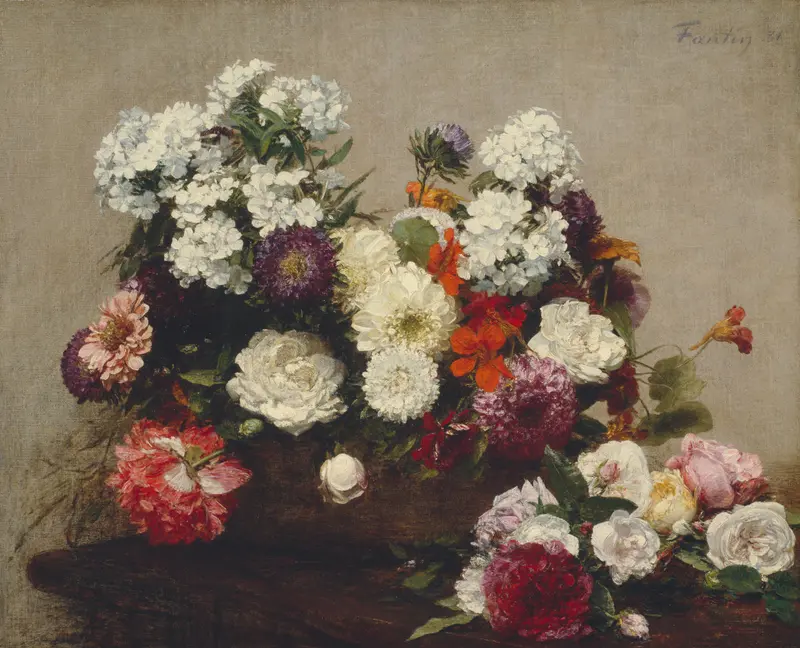
Still Life with Flowers
Henri Fantin-Latour
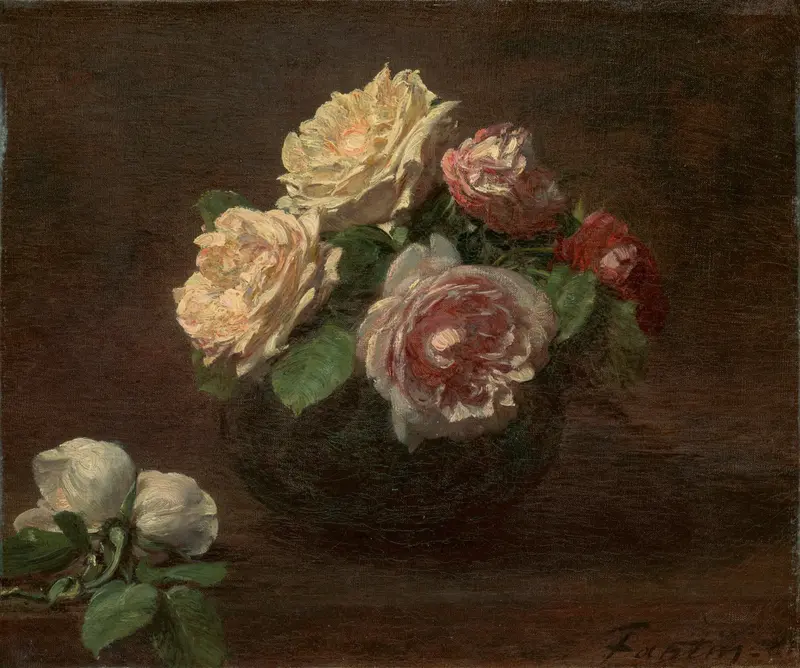
Roses in a Bowl
Henri Fantin-Latour
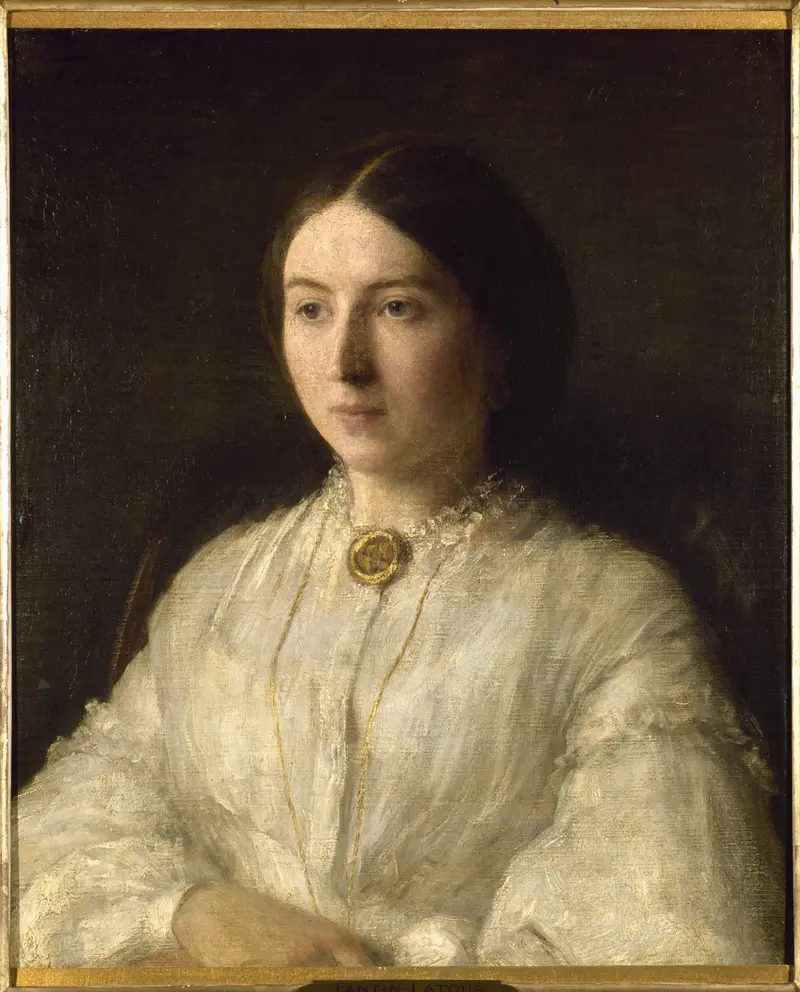
Portrait de Mme Edwin Edwards
Henri Fantin-Latour
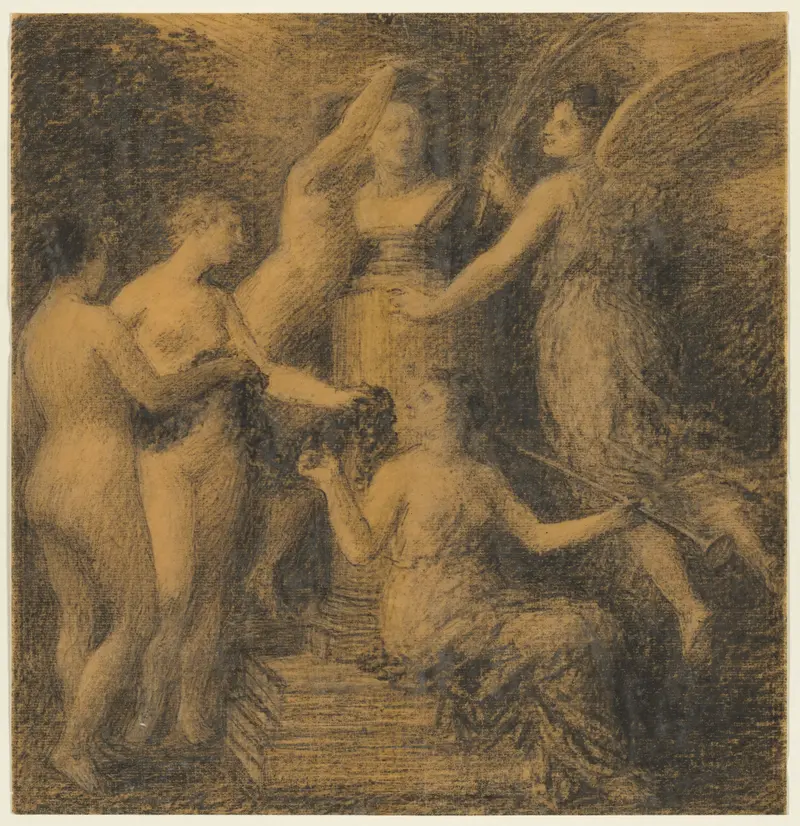
Homage to Rossini
Henri Fantin-Latour
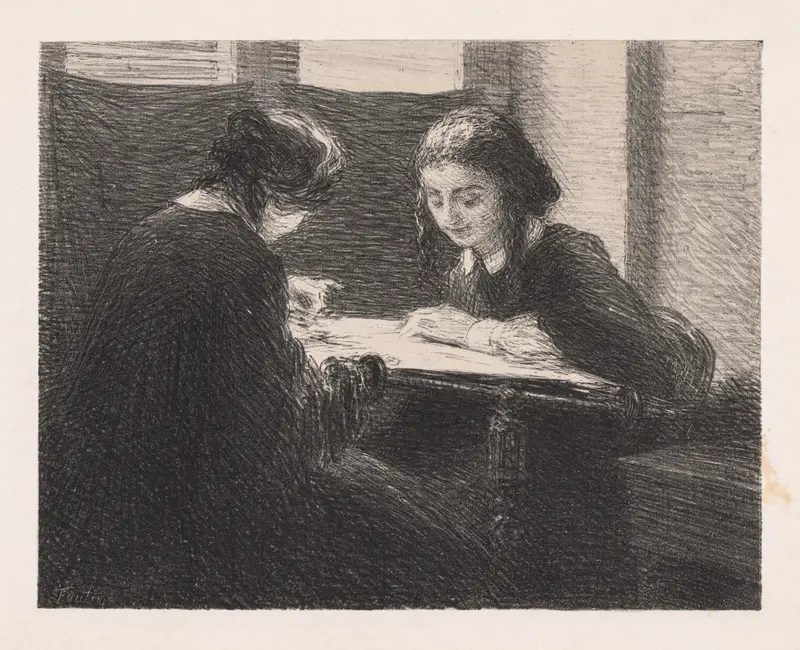
The Embroideres (Les Brodeuses)
Henri Fantin-Latour
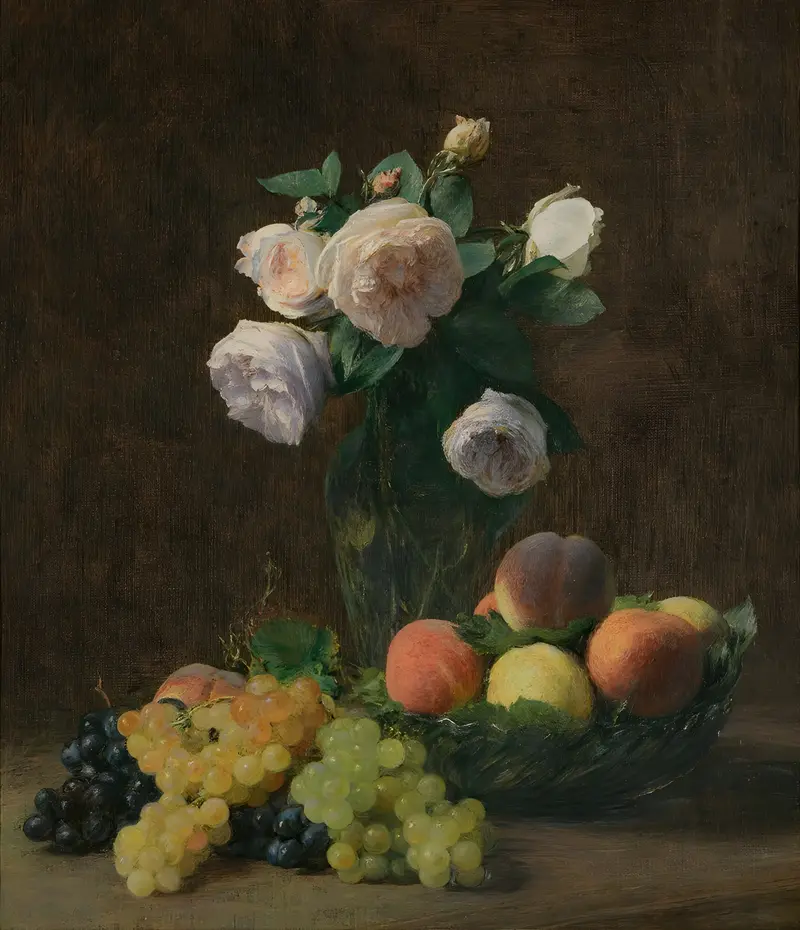
Nature Morte; Vase De Roses, Pêches Et Raisins
Henri Fantin-Latour
Inspiration
Henri Fantin-Latour
Nude study
Henri Fantin-Latour





