La Baigneuse drapée by Aristide Maillol — History & Facts
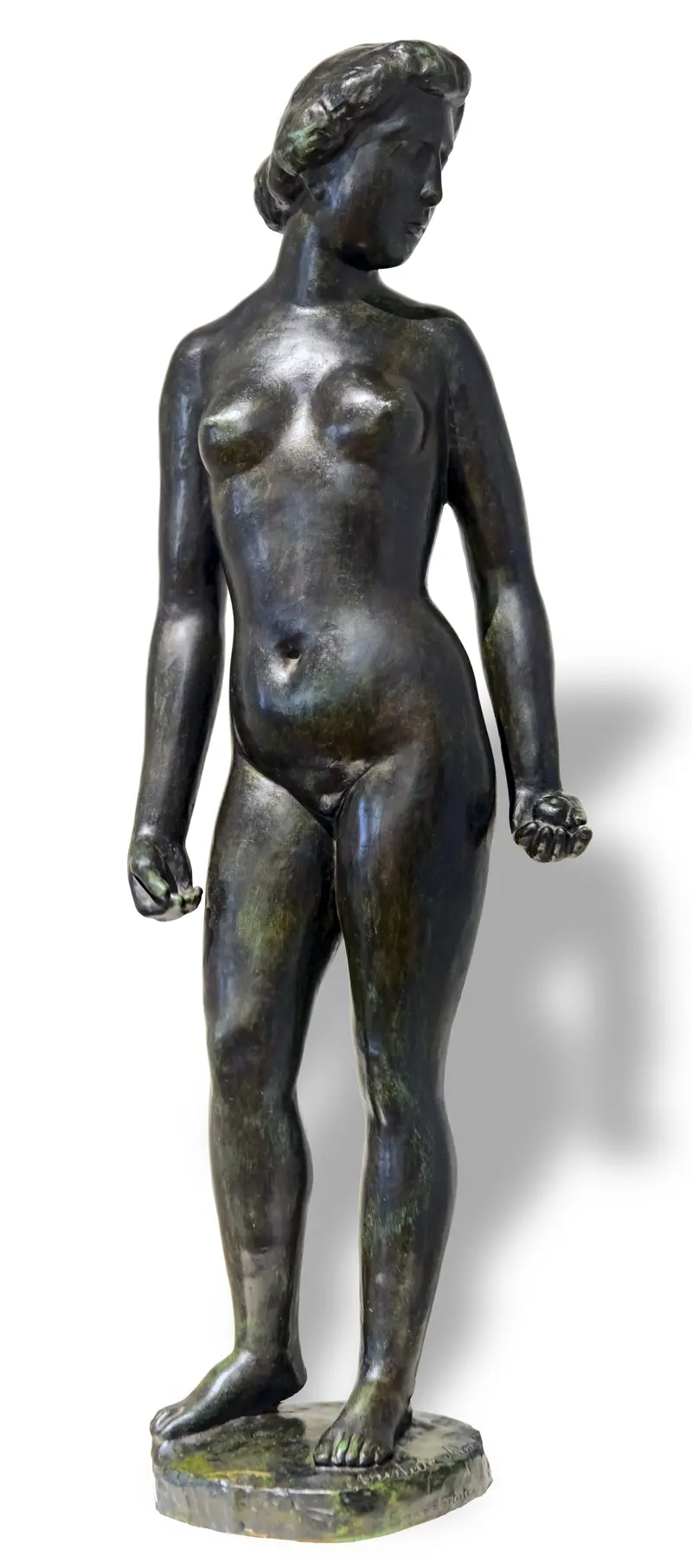
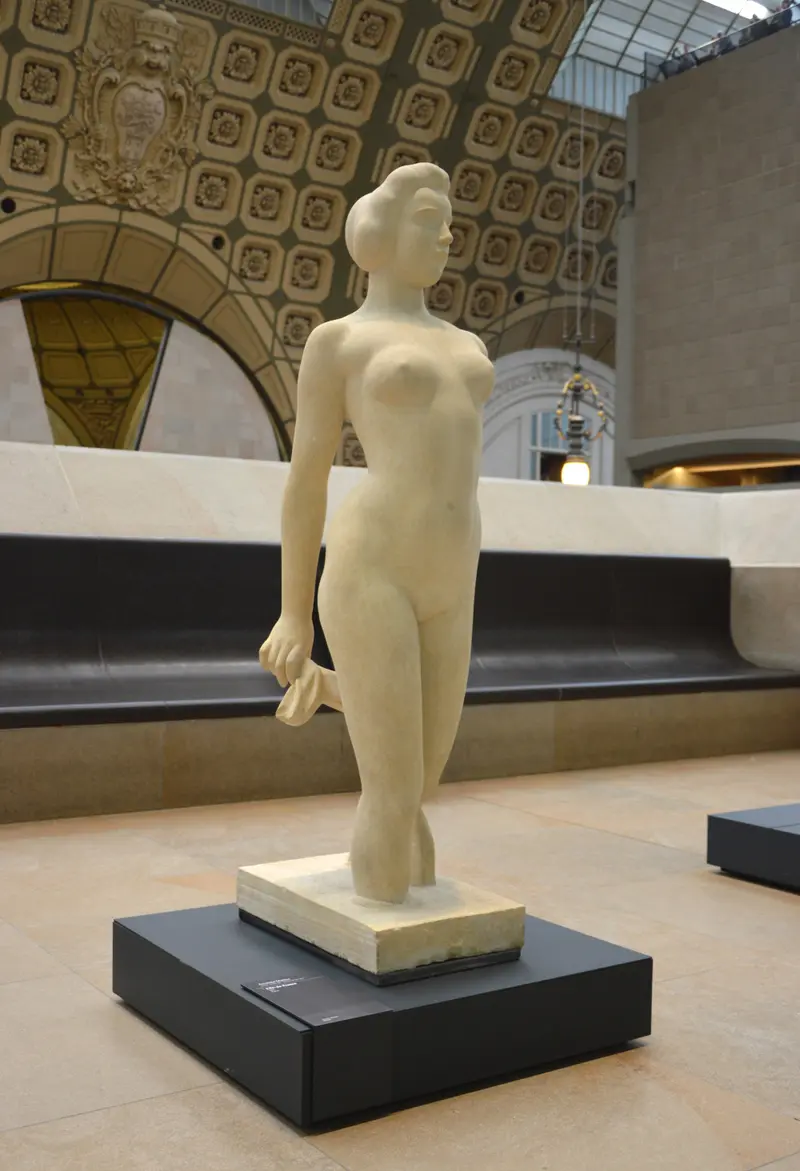
What first catches the eye in La Baigneuse drapée by Aristide Maillol is the quiet authority of the figure’s stance: a woman, nearly life-sized, stands with one hand lifting a heavy drapery, the other relaxed at her side, her gaze steady and unhurried. The bronze surface, with its deep, mottled patina, gives the body a sense of permanence and calm, as if she has just stepped from water and paused, suspended between movement and stillness. The folds of the drapery are not mere decoration; they anchor her to the earth, their weight contrasting with the smooth, rounded forms of her torso and limbs.
Light plays across her body, accentuating the gentle fullness of her hips and the classical serenity of her face, while her upright posture and the subtle turn of her head suggest a moment of introspection rather than display. Created in 1921, this sculpture belongs to a world in which artists like Aristide Maillol were reimagining the classical nude for a new century. The early twentieth century saw a return to the human figure in French sculpture, but with a modern emphasis on simplicity, volume, and balance rather than elaborate detail. Maillol’s work, often commissioned for public spaces or civic collections, was celebrated for its clarity and sense of repose, qualities that set it apart from the more expressive or fragmented forms of his contemporaries.
This particular cast, number 3 of 6, was acquired by the city of Perpignan in 2008, a reminder of how these serene figures continue to find new homes and new audiences. Stand before her, and you may find your own breath slowing to match her measured calm.