
La Bastille en 1740 vue du côté du bastion — History & Facts
When did color learn to lie? In the strokes of this artwork, revelation unfolds amidst layers of vibrant hues and whispered histories. Look to the center, where the imposing bastion rises, its silhouette a striking contrast against the cobalt sky. The artist employs a palette that oscillates between warm ochres and cool greys, creating a pulsating energy that draws the eye. Notice how the light catches the edges of the stone, illuminating the fortification with an ethereal glow, while the shadows deepen around the base, suggesting both strength and vulnerability. Deeper within this landscape lies a tension between permanence and decay.
The bastion, a symbol of resilience, stands firm yet evokes a sense of isolation amidst the soft brushstrokes of the surrounding foliage. This dichotomy mirrors the turbulent era in which it was painted, as the tranquil scene belies the undercurrents of political upheaval. Each stroke invites the viewer to consider not just what is seen, but what lies beneath the surface, revealing the complexities of memory and history. Hoffbauer created this work during a time of significant change, from 1915 to 1945, a period marked by two world wars and the shifting sands of modernity.
Living in France, he sought to capture the essence of the Bastille, an emblem of both revolution and national identity. As art movements were evolving, the artist turned to historical subjects, intertwining his narrative with the national consciousness, imbuing it with the weight of collective memory and the promise of new dawns.
More Artworks by Fédor Hoffbauer
Browse all →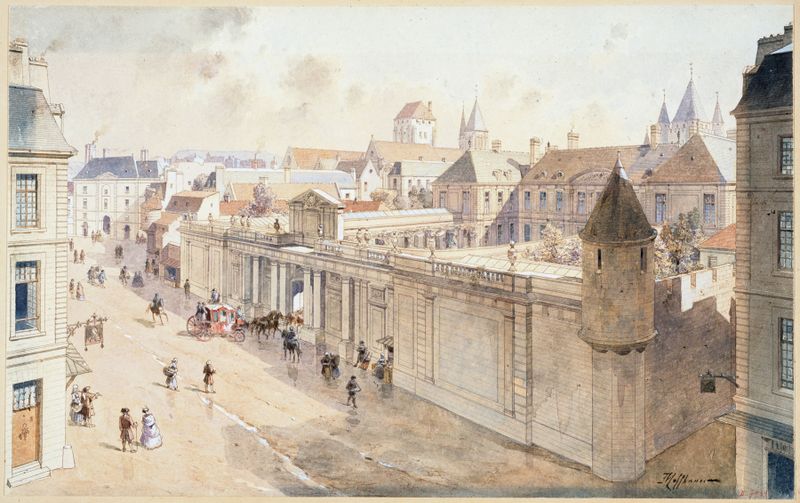
Le palais du Grand Prieur au Temple, en 1770
Fédor Hoffbauer
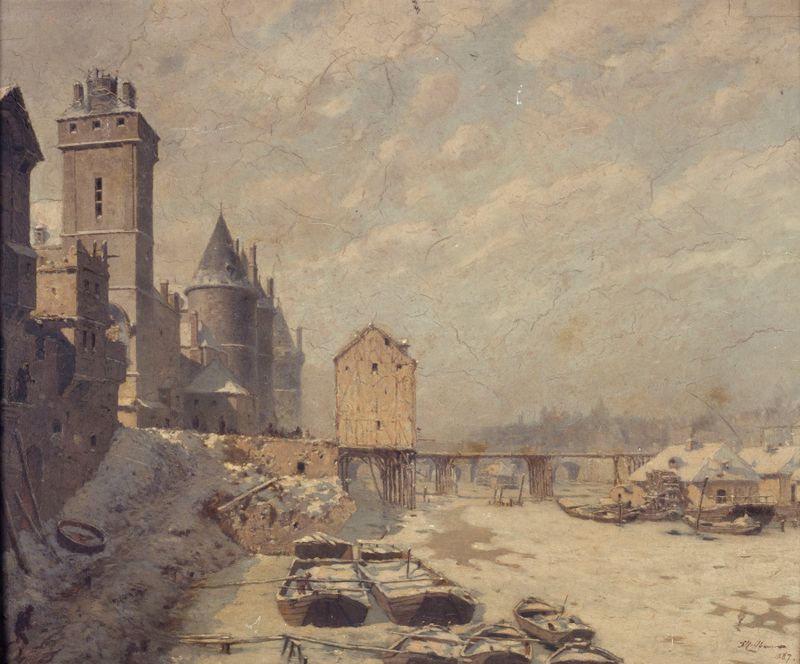
La tour de l’Horloge, la Conciergerie et le pont au Change, en 1621
Fédor Hoffbauer

Banquet des officiers de la marine Russe, dans la salle des fêtes à l’Hôtel de Ville. Fêtes Franco-Russes à Paris
Fédor Hoffbauer

Le Grand Châtelet et le pont de Bois, 1621-1645
Fédor Hoffbauer
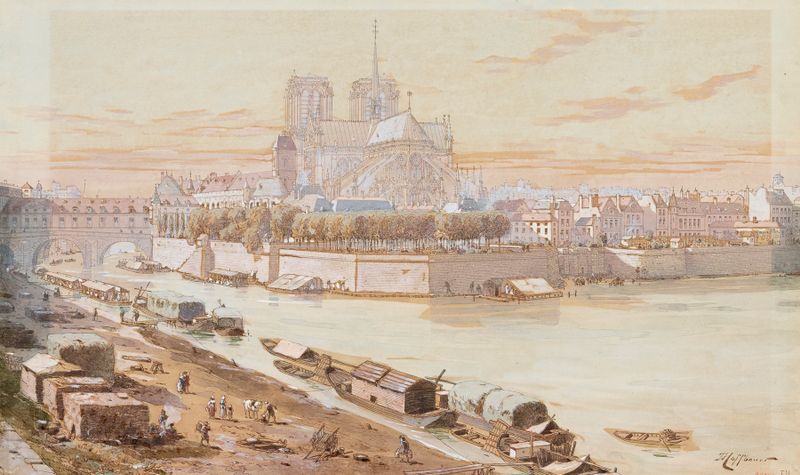
Notre-Dame et l’Evêché en 1750
Fédor Hoffbauer

Vue panoramique de Paris en 1588, depuis les toits du Louvre, avec le Pont-Neuf en construction
Fédor Hoffbauer
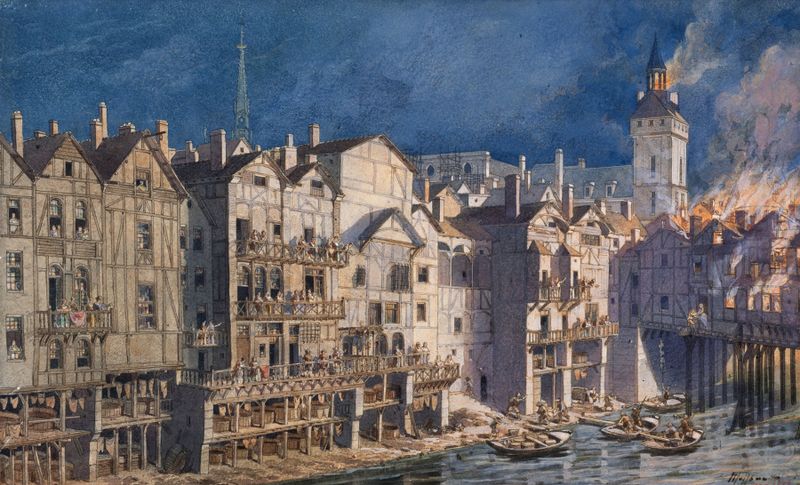
La Cité entre le pont Notre Dame et le pont au Change en 1621
Fédor Hoffbauer

L’Hôtel de Ville et le pont d’Arcole en 1842
Fédor Hoffbauer

Le Cimetière des Innocents en 1750
Fédor Hoffbauer
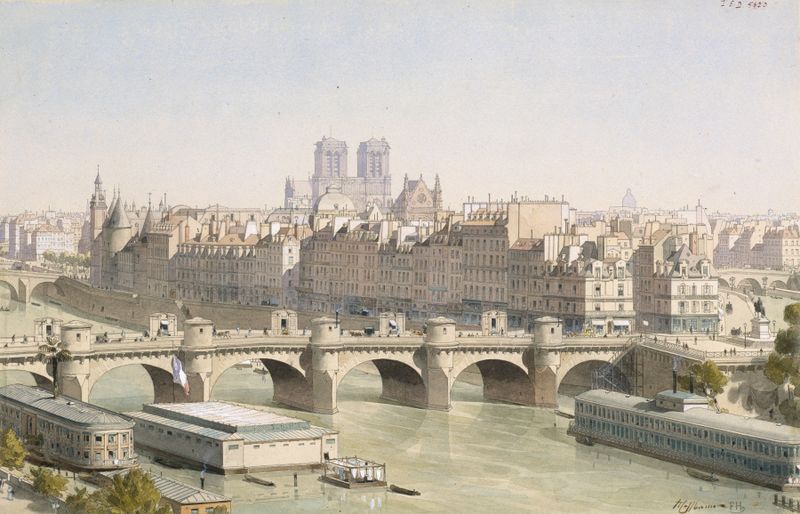
Vue de l’île de la Cité et le pont-Neuf avec ses boutique, vers 1840
Fédor Hoffbauer
More Historical Art
Browse all →
The Night Watch Militia Company of District II under the Command of Captain Frans Banninck Cocq
Rembrandt van Rijn

Lincoln Memorial
Henry Bacon

The Third of May 1808
Francisco de Goya

Isaac and Rebecca, Known as ‘The Jewish Bride’
Rembrandt van Rijn

The Charge of the Mamelukes (1814)
Francisco de Goya

De vier ruiters van de apocalyps
Albrecht Dürer