
La foudre — History & Facts
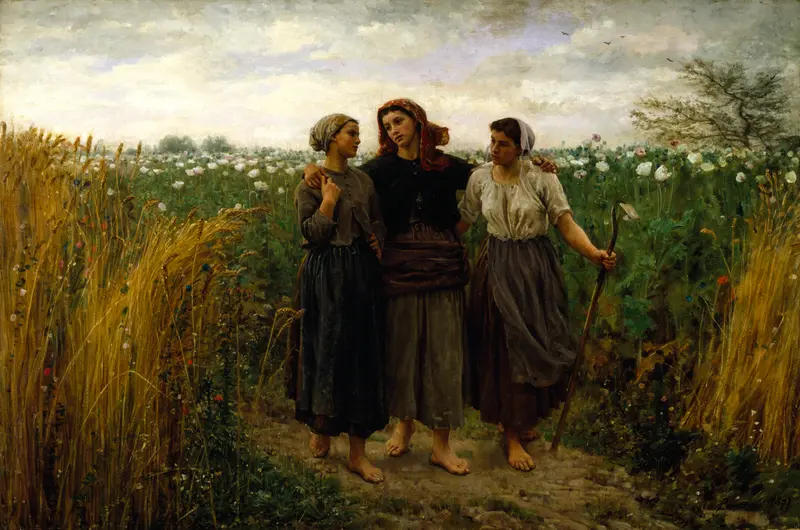
In La foudre, Jules Breton captures a rural scene filled with vibrant colors. The painting features figures engaged in daily activities, set against a backdrop of lush fields and a dramatic sky. The use of light and shadow creates a sense of movement and life.
The overall atmosphere is one of harmony with nature and the simplicity of rural existence. The painting is executed in oil on canvas, showcasing Breton's skill in depicting realistic details. The brushwork is meticulous, allowing for a rich texture that enhances the visual experience. The colors are bright and naturalistic, reflecting the beauty of the countryside.
Viewers can appreciate the careful composition that draws the eye across the scene. Jules Breton was known for his depictions of peasant life and rural landscapes. La foudre is a notable example of his work, reflecting the Realism movement's focus on everyday subjects. An interesting fact about this painting is that it showcases Breton's ability to blend the beauty of nature with the authenticity of human experience.
This piece remains a significant representation of 19th-century French art.
More Artworks by Jules Breton

The Song of the Lark
Jules Breton
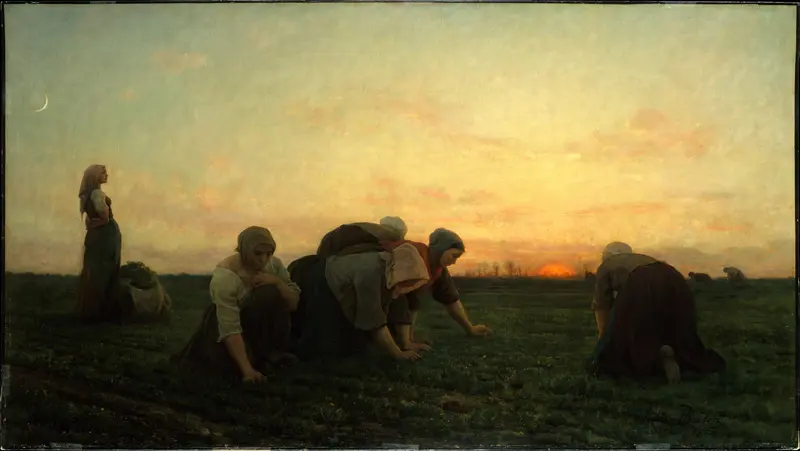
The Weeders
Jules Breton
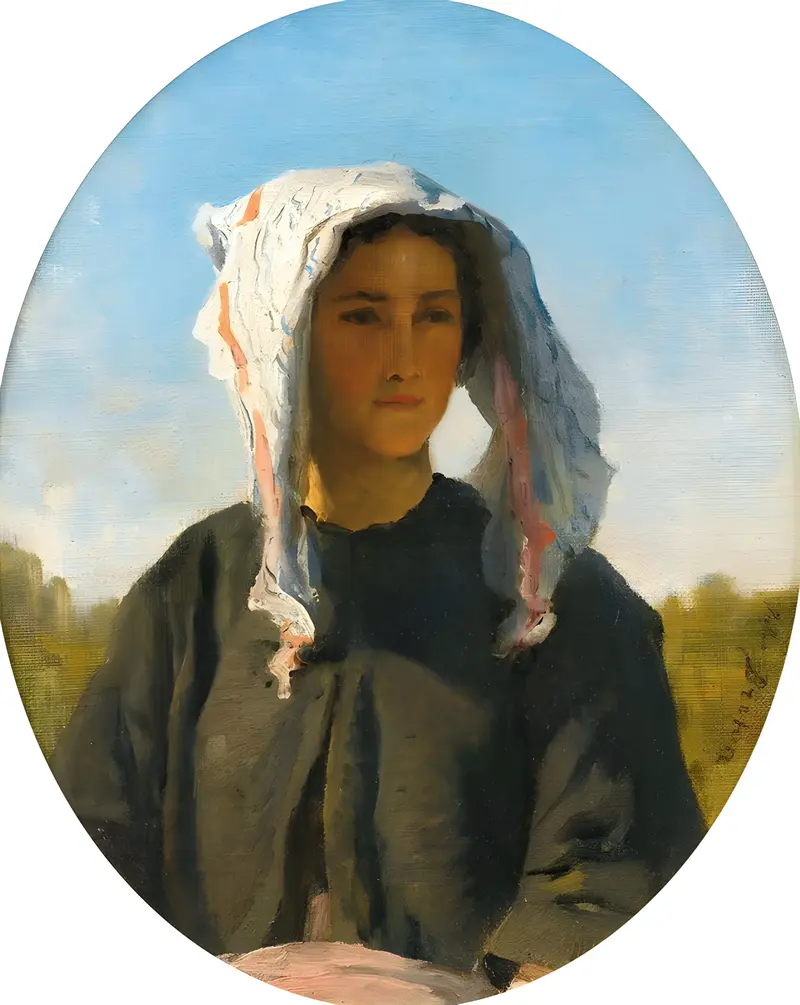
Portrait de jeune Paysanne Bordelaise
Jules Breton
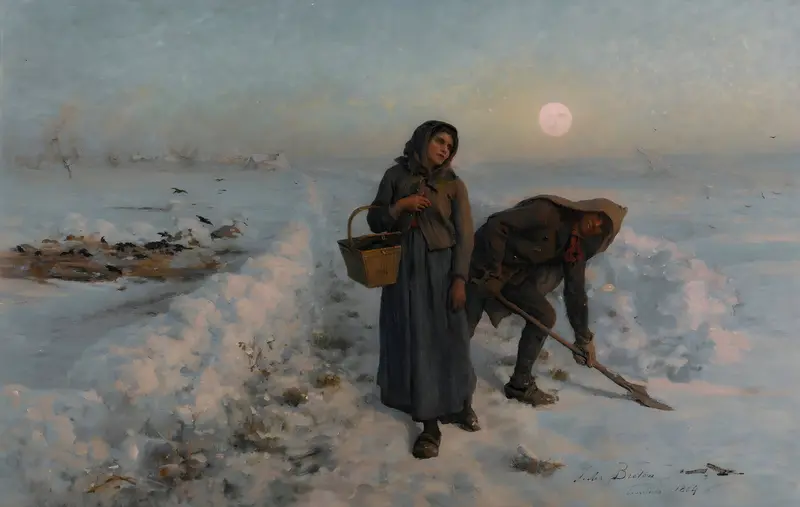
Sur la route en hiver; artois
Jules Breton
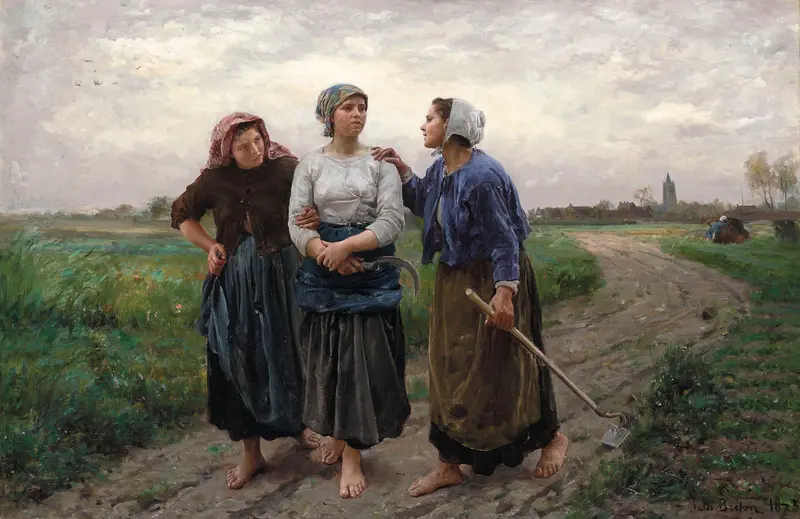
Les amies
Jules Breton
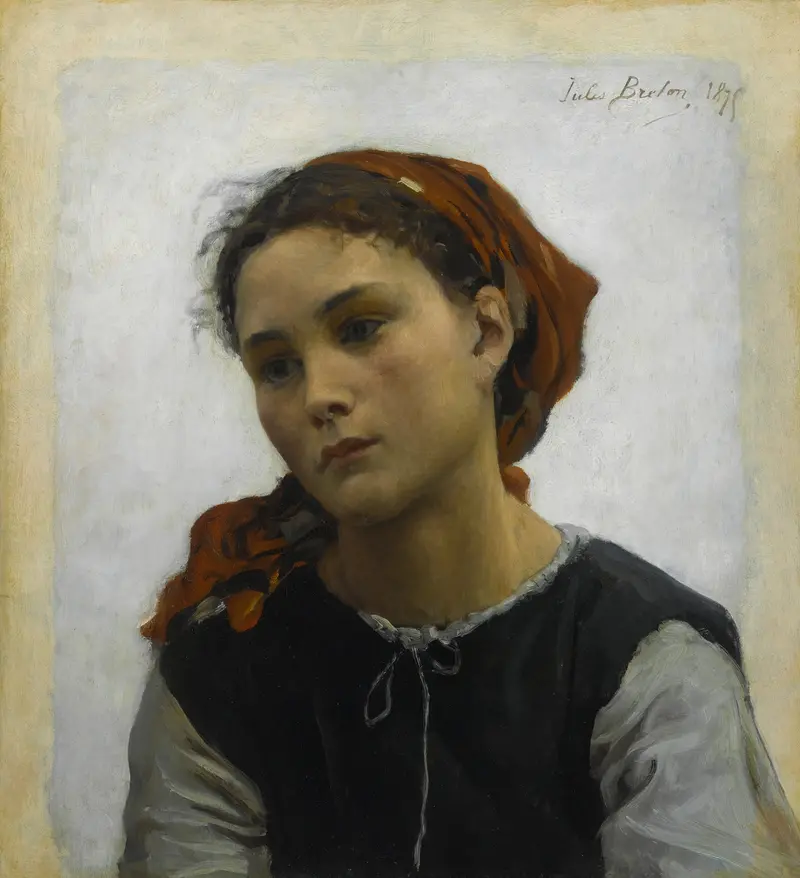
Innocente
Jules Breton
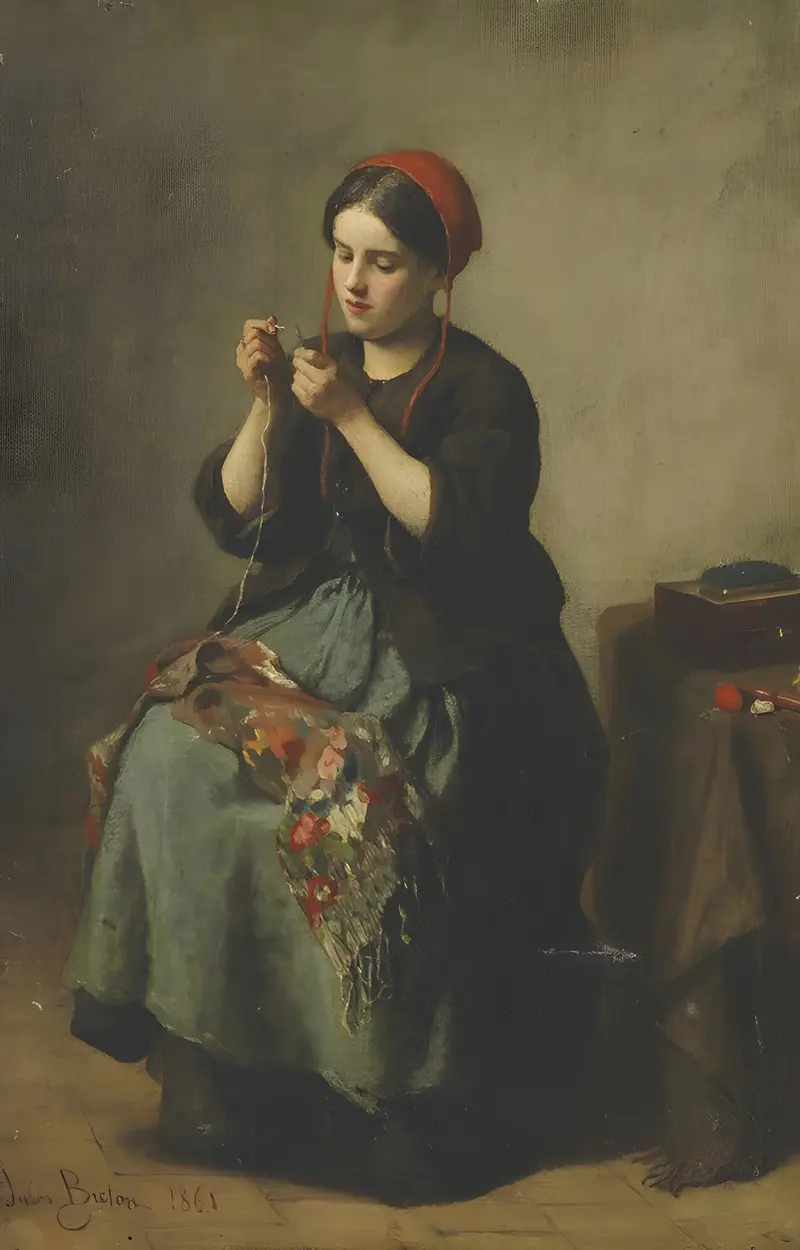
Peasant woman threading a needle
Jules Breton
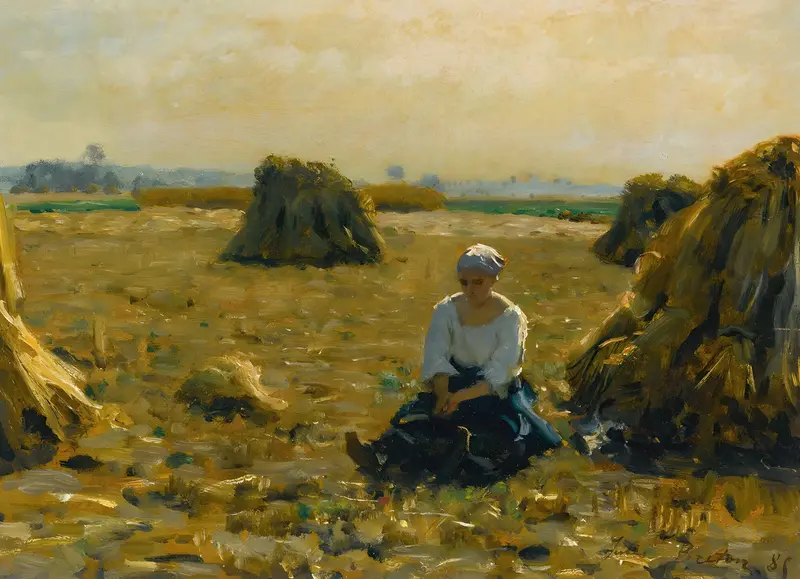
Jeune femme dans les champs
Jules Breton
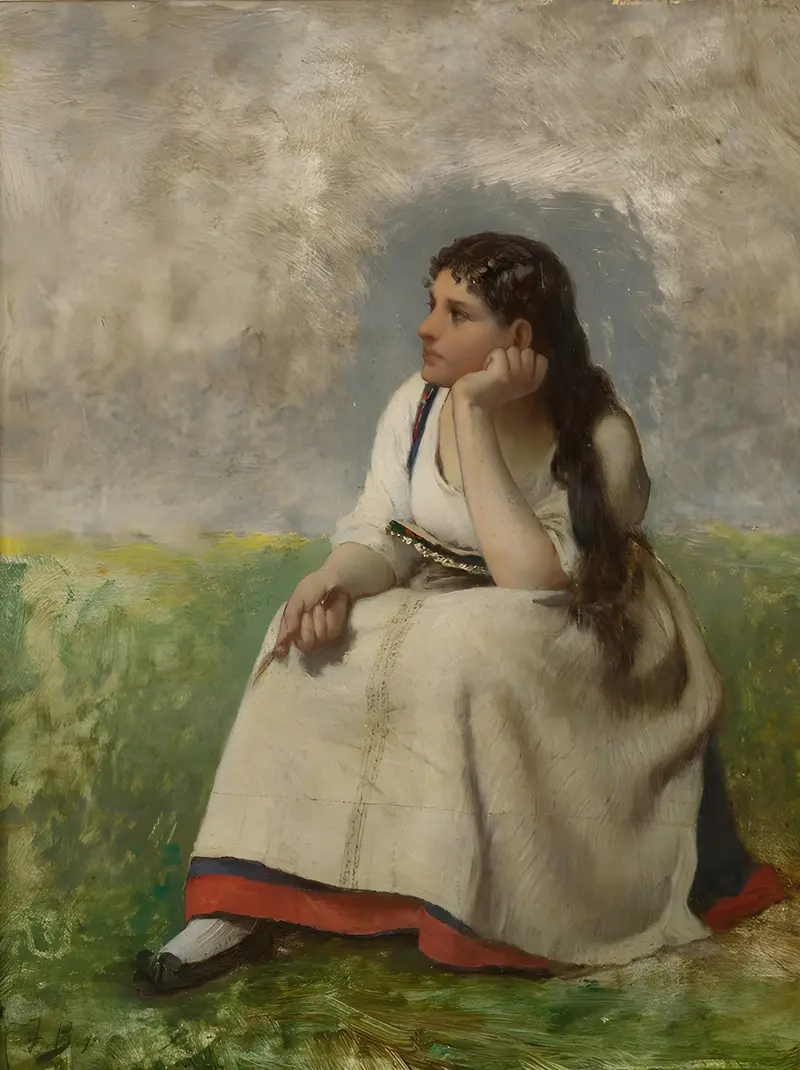
Jeune Fille Pensive
Jules Breton
Returning from the Fields
Jules Breton
More Genre Scene Art

Banquet of the Officers of the St George Civic Guard
Frans Hals

Rembrandt and Saskia in the Scene of the Prodigal Son
Rembrandt van Rijn

Bal du moulin de la Galette
Pierre-Auguste Renoir

Quadrille at the Moulin Rouge
Henri de Toulouse-Lautrec

A Burial at Ornans
Gustave Courbet

When Will You Marry?
Paul Gauguin