
La Madonna de Bogota — History & Facts
Few Renaissance paintings have traveled as far, or sparked as much debate, as La Madonna de Bogota. The work’s name comes not from its Italian origins, but from its unexpected rediscovery in Bogotá, Colombia, in the twentieth century—a journey that remains shrouded in mystery. For centuries, the painting was unknown to European scholars, until it surfaced in South America and was attributed to Raphael by experts, igniting international excitement and controversy.
The question of how a High Renaissance Madonna crossed oceans and centuries, only to reappear in an unlikely place, continues to fascinate art historians. La Madonna de Bogota captures the Virgin Mary in a moment of quiet intimacy, cradling the infant Christ as he reaches up to touch her face. The gentle tilt of Mary’s head, her downcast eyes, and the soft, enveloping blue of her mantle create a sense of maternal tenderness and human warmth. The Christ Child’s small hand on his mother’s cheek is a gesture of affection and trust, while the faint landscape in the background hints at the world beyond this private scene.
Unlike the more formal Madonnas of Leonardo da Vinci, Raphael’s approach here is direct and personal, inviting viewers into a moment of everyday love. The painting’s early history is uncertain, with no surviving documentation of its original patron or commission. Its style and composition suggest it was created during Raphael’s late Roman period, around 1517, when he was at the height of his fame. After centuries in obscurity, La Madonna de Bogota was brought to international attention in the 1930s, when it was examined by European experts and attributed to Raphael—though some scholars have since questioned this, citing differences in technique and materials.
Today, the painting remains in Bogotá, a prized treasure of the city’s Museo de Arte del Banco de la República, and a testament to the enduring mysteries of Renaissance art.
More Artworks by Raphael

Madonna of the Goldfinch
Raphael

Madonna with the Fish
Raphael
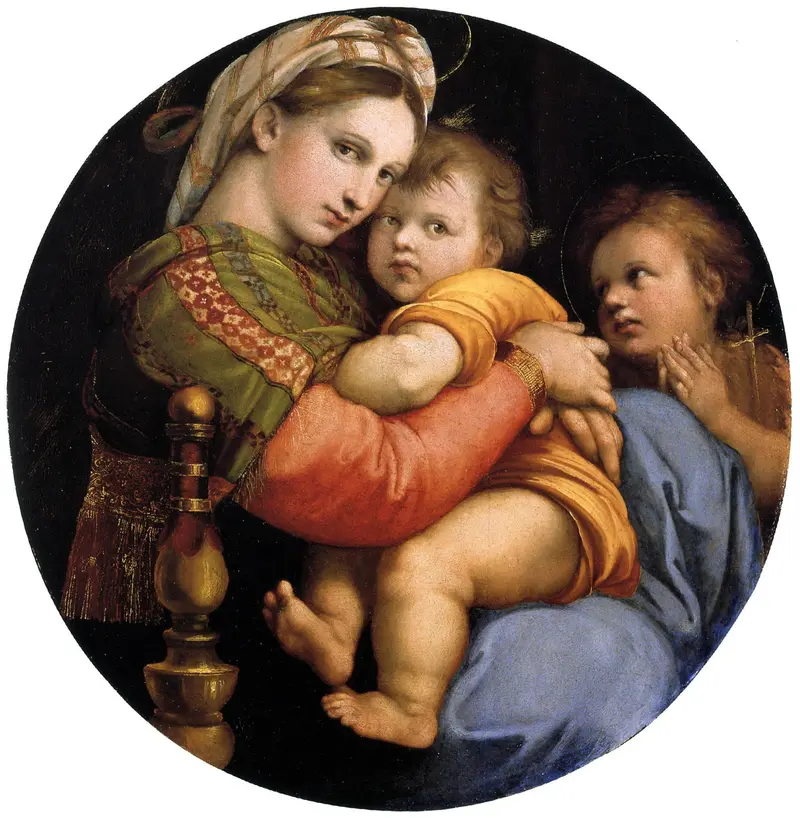
Madonna and Child (Madonna della Seggiola)
Raphael
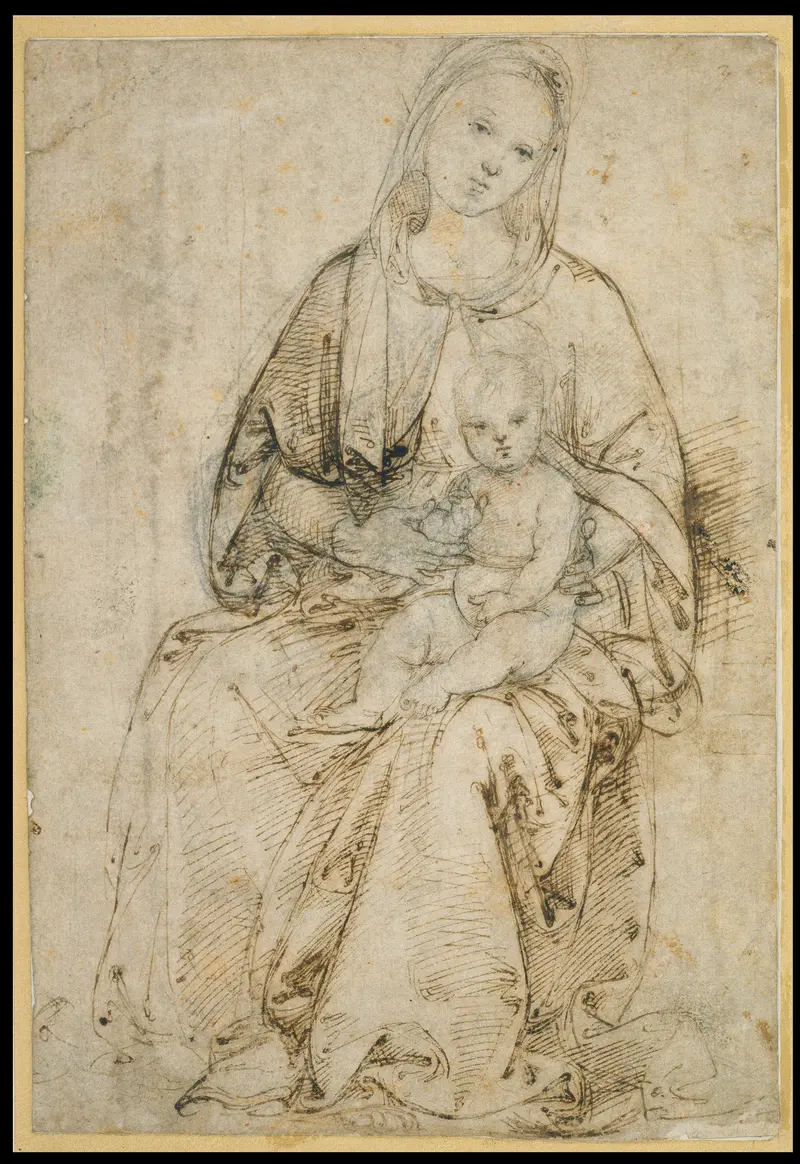
Seated Madonna and Child
Raphael
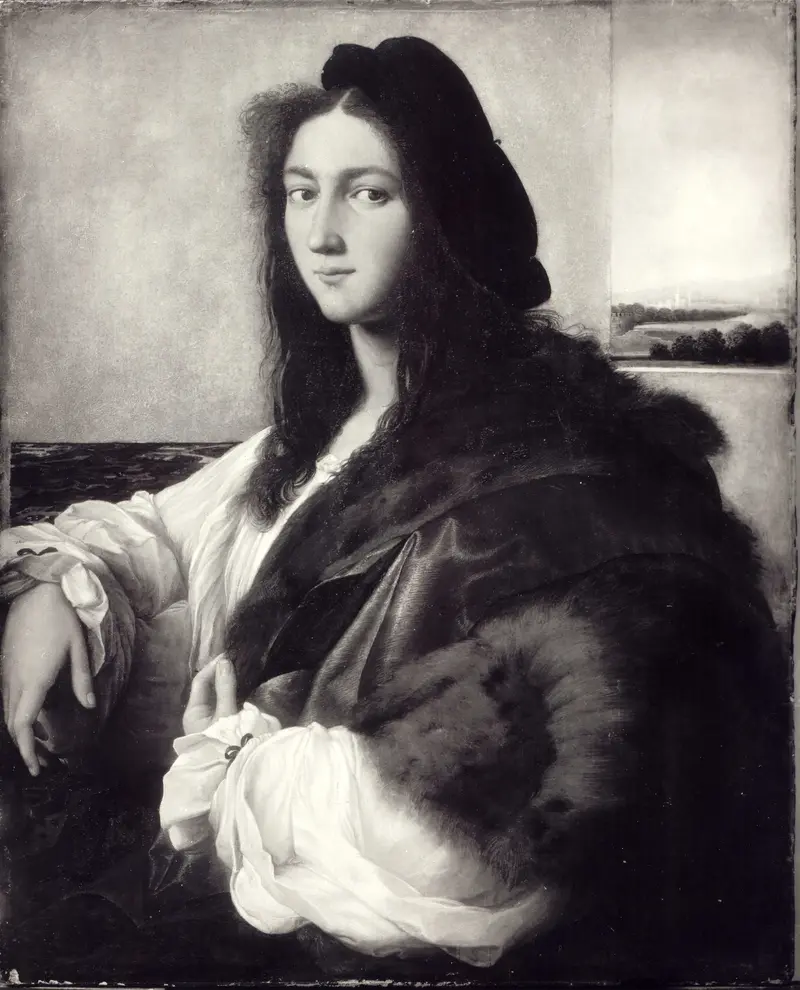
Portrait of a Young Man
Raphael
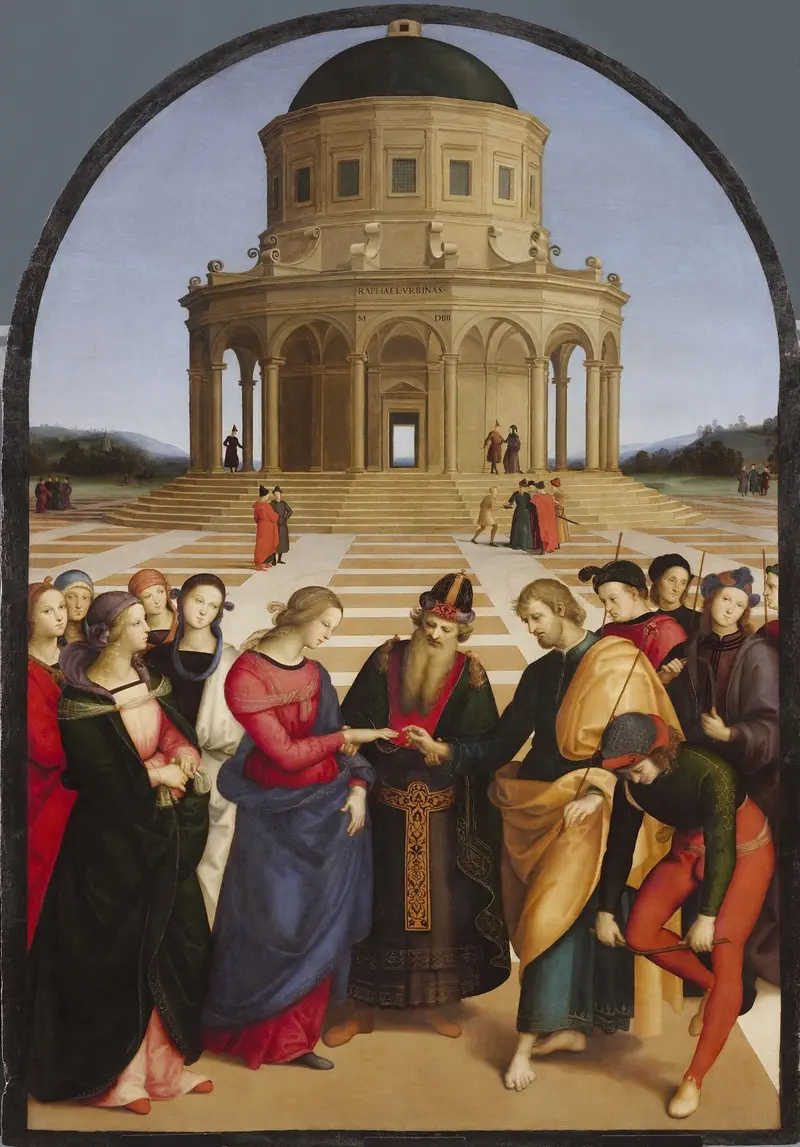
The Marriage of the Virgin
Raphael
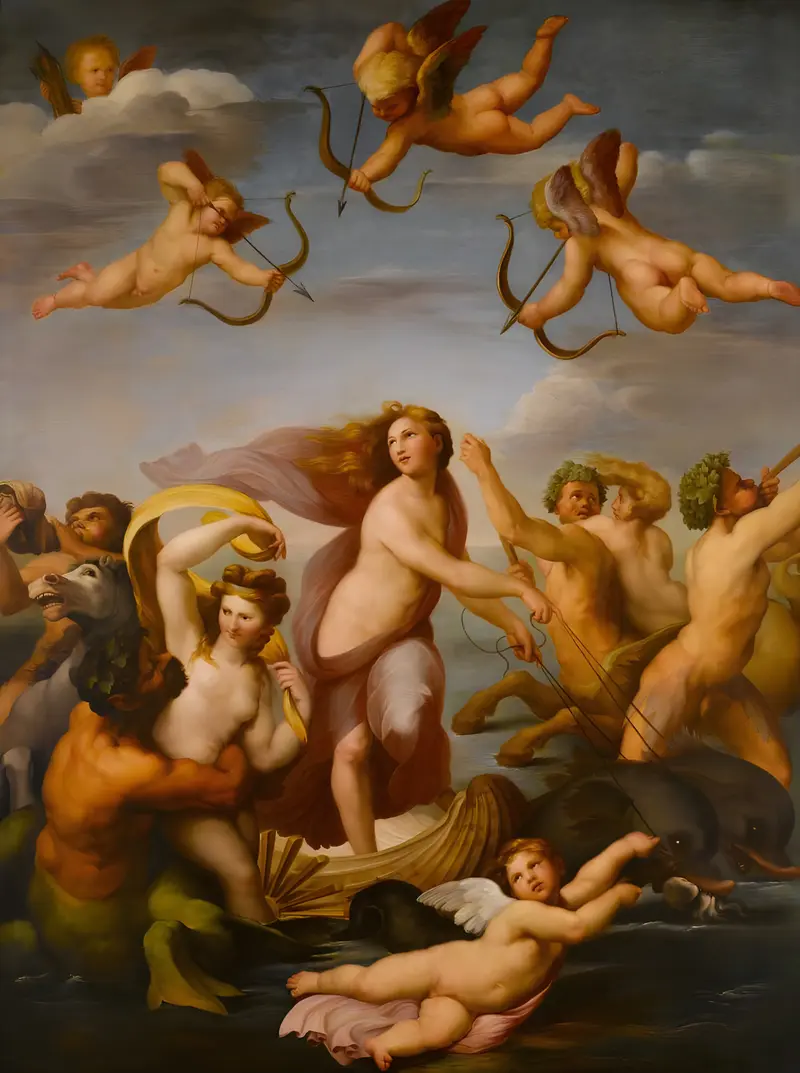
The Triumph of Galatea (copy after Raphael)
Raphael
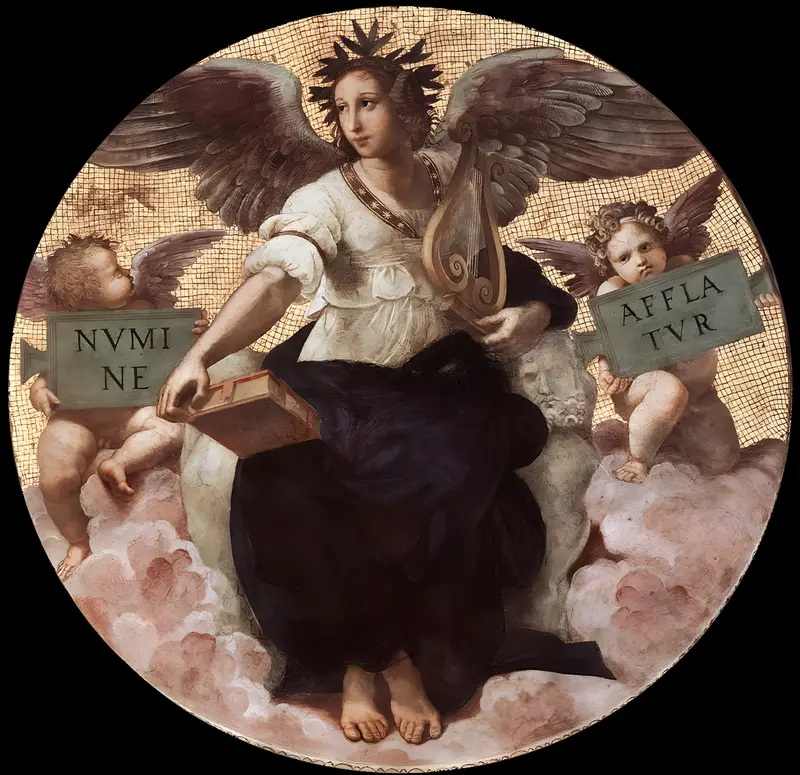
Poetry
Raphael
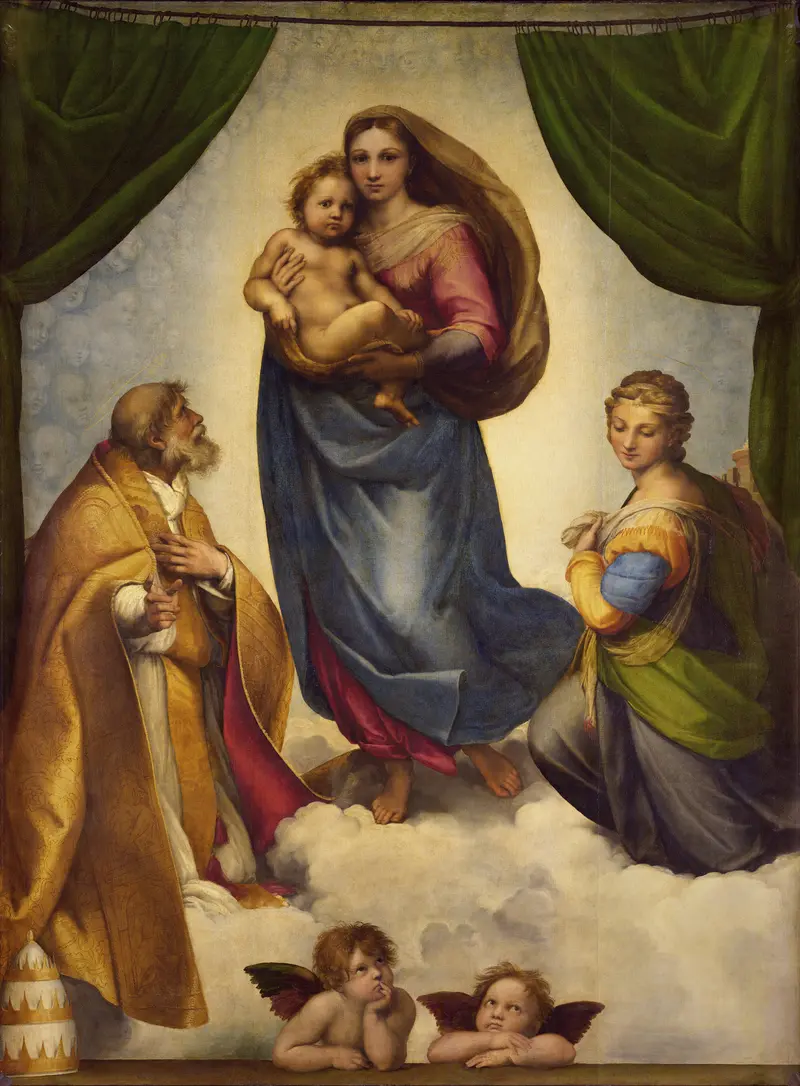
Sistine Madonna
Raphael
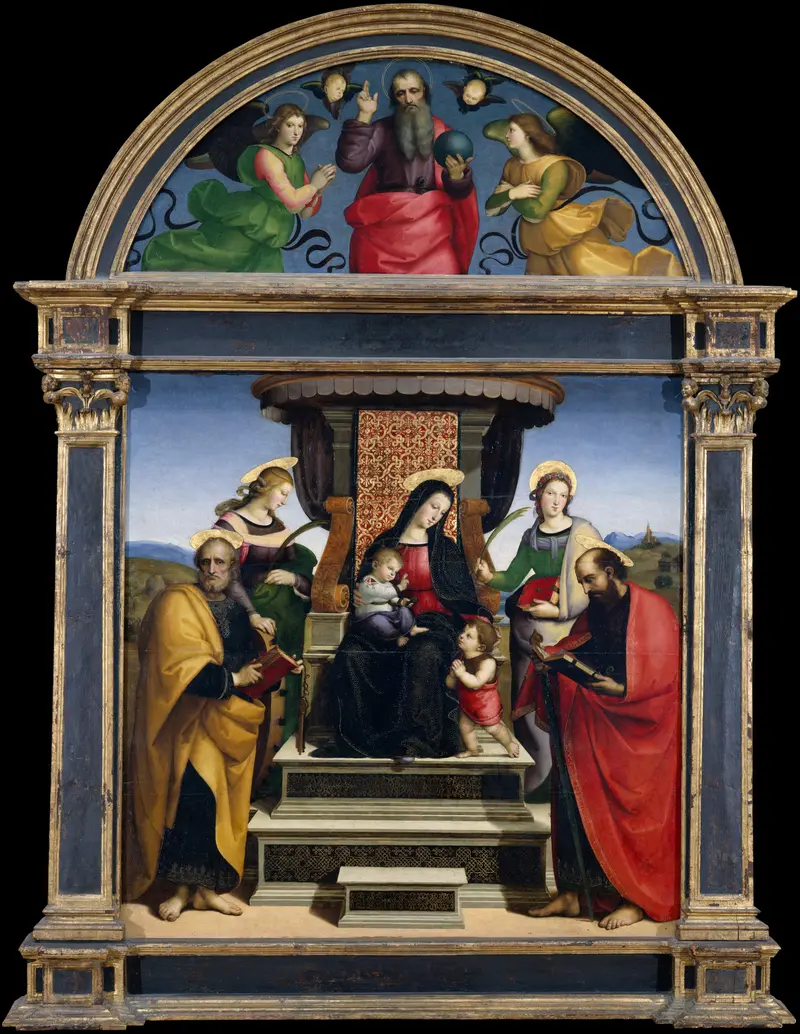
Madonna and Child Enthroned with Saints
Raphael




