
La Neige À Paris — History & Facts
What first seizes the eye in La Neige À Paris is not snow, but a river transformed into a stage of light—lanterns strung like pearls across the water, their reflections multiplying the spectacle. The crowd, pressed along the wooded bank, becomes an audience to this nocturnal festival, each figure caught in a moment of anticipation or quiet conversation. The artist leads us through the scene with a masterful play of contrast: the dense, shadowy foliage frames the illuminated river, while the bursts of light overhead and on the water draw us ever deeper into the heart of the image.
Every lantern is a tiny beacon, and the smoke drifting from the distant barges hints at celebration, industry, or perhaps the mingling of both. The composition’s upward sweep, from the seated crowd to the glowing sky, invites us to imagine the sounds and scents of a Parisian evening alive with festivity. This work belongs to a moment in late nineteenth-century France when artists and printmakers, inspired by the city’s rapid transformation, sought to capture the fleeting pleasures of urban life. Scenes of public gatherings, river fêtes, and illuminated nights became a favorite subject for those documenting the new rhythms of the modern metropolis.
Auguste Lepère, known for his technical innovation and atmospheric wood engravings, was among those who turned everyday spectacles into lasting images. Though little is recorded about this particular piece, its presence in the National Gallery of Art’s collection—shared through open access—reminds us how such prints once circulated widely, bringing scenes of Parisian life to homes far from the city itself. Look again at the lanterns: each one a small promise that the night, and the city, are alive with possibility.
More Artworks by Auguste Lepère

Le Pont-Neuf (Paris)
Auguste Lepère
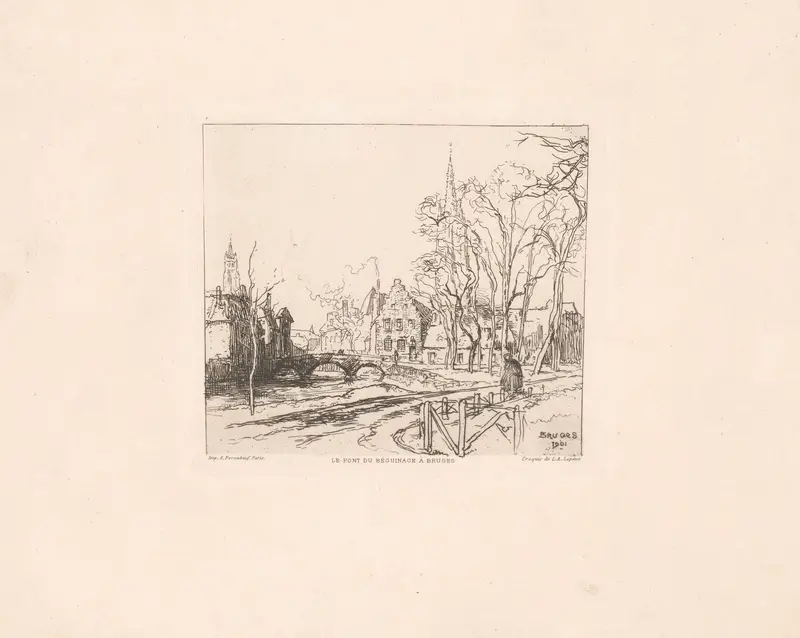
Le pont du Beguinage à Bruges
Auguste Lepère
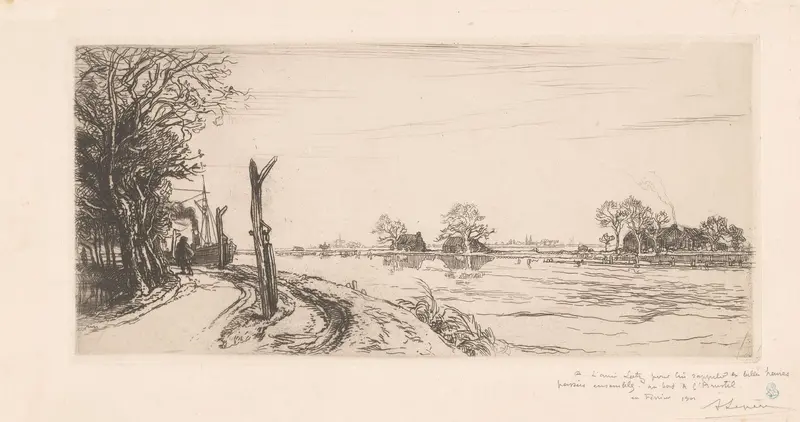
Au bord de l’Amstel
Auguste Lepère
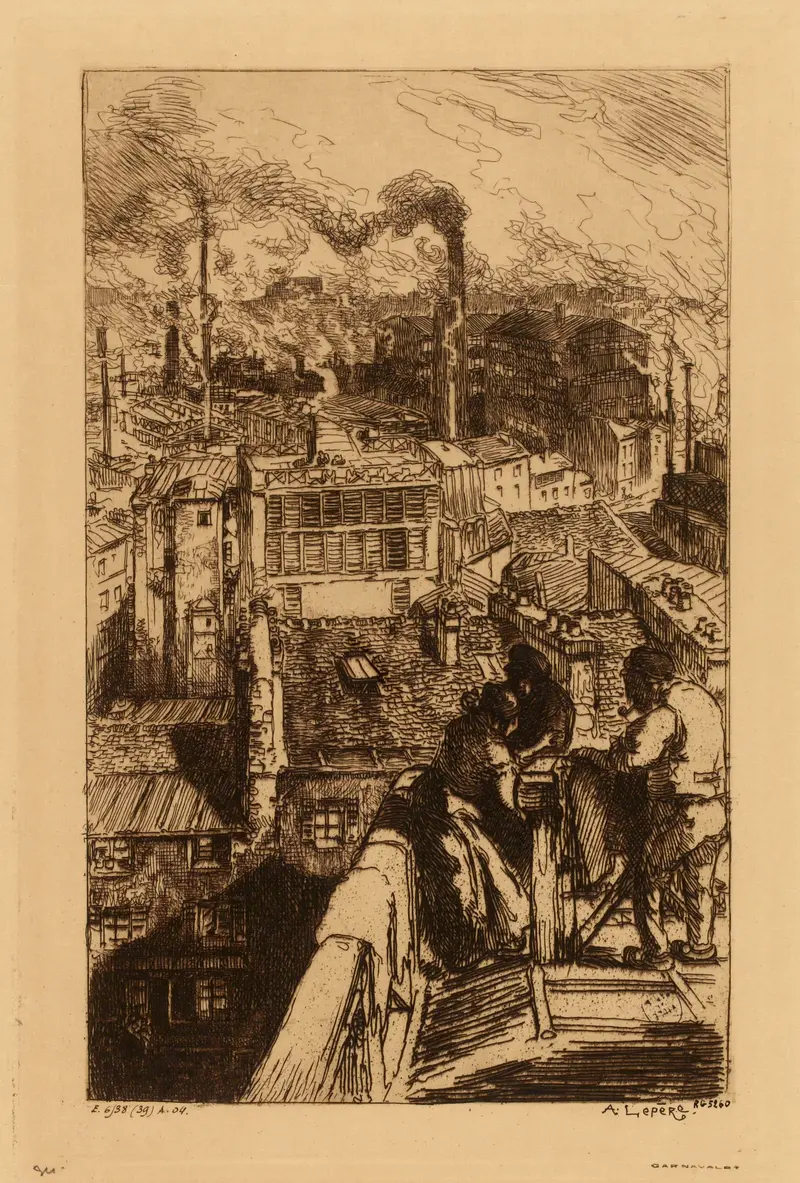
Le quartier des Gobelins
Auguste Lepère
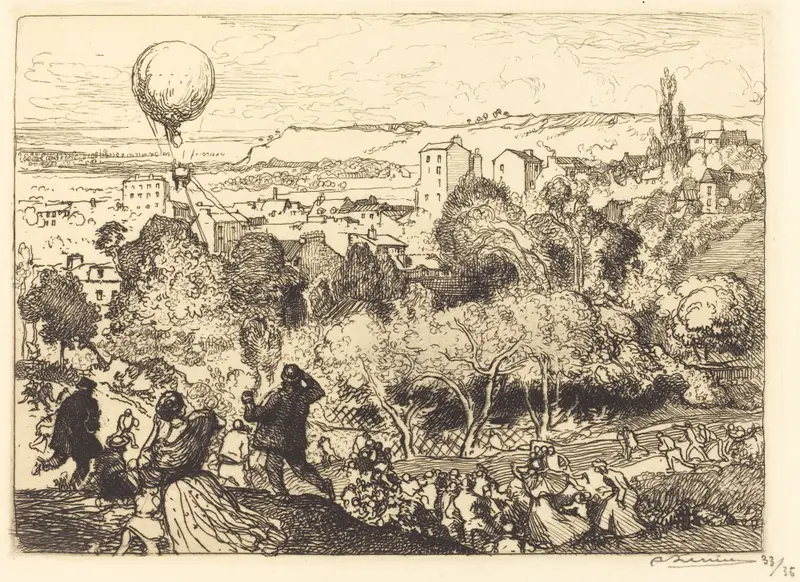
The Falling Balloon, in Pre-Saint-Gervais (Lebaloon qui tombe, au Pre-Saint-Gervais)
Auguste Lepère
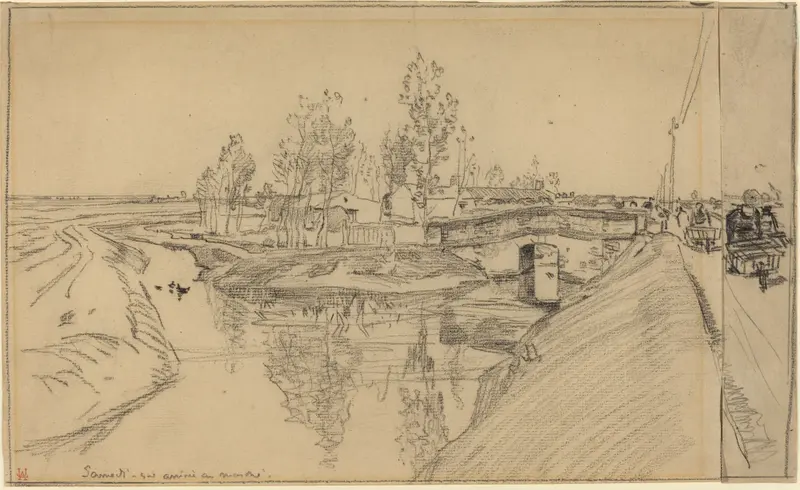
Arrivee au Marche
Auguste Lepère
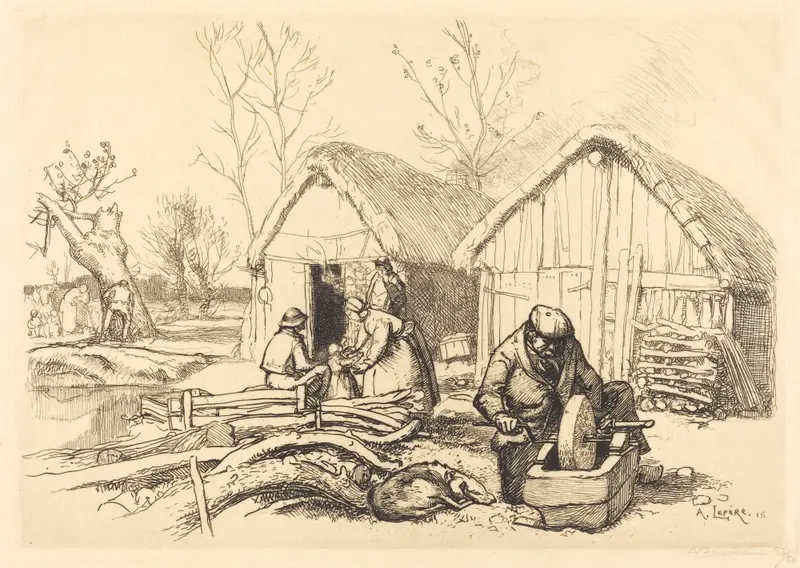
The House of the Woodcutter, Vendee (La maison du bucheron, Vendee)
Auguste Lepère
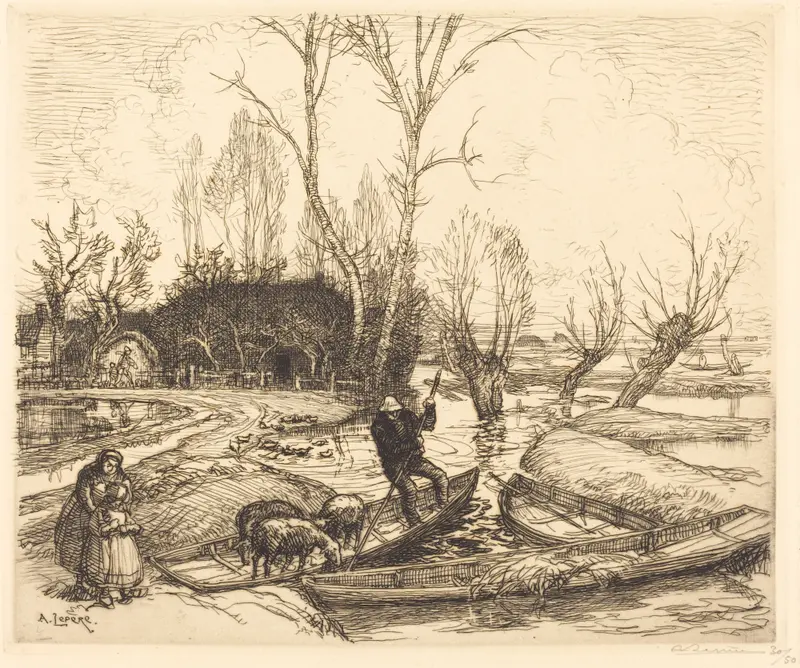
In the Deluged Marsh - The Shepherd (Au marais inonde - Le berger)
Auguste Lepère
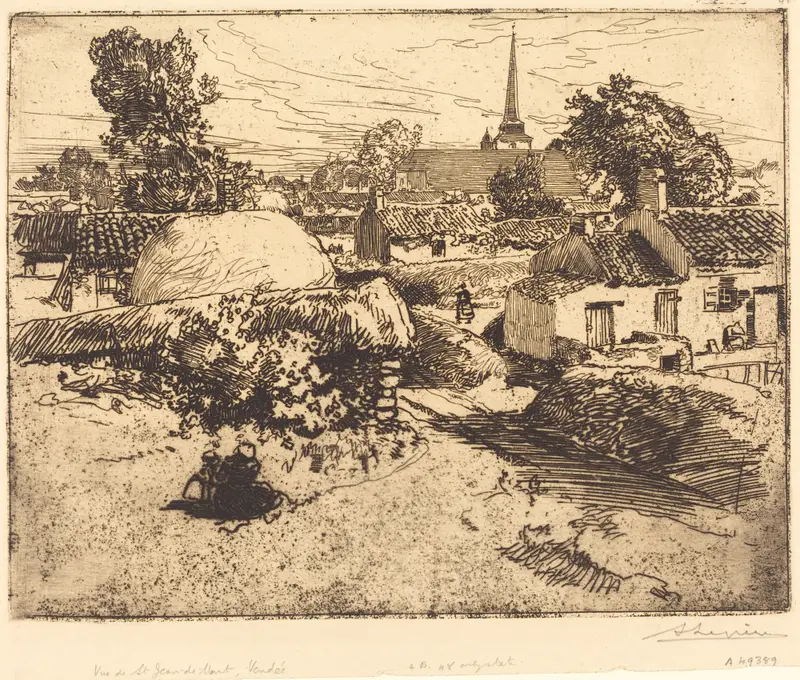
View of St.-Jean-de-Mont, Vendee (Vue de St.-Jean-de-Mont, Vendee)
Auguste Lepère
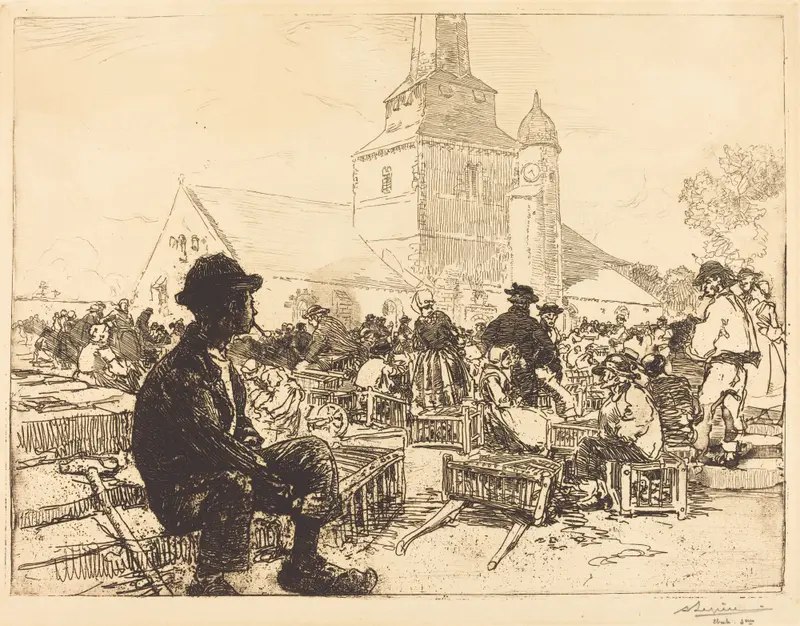
Poultry Market at St.-Jean-de-Mont (Marche a la volaille, a St.-Jean-de-Mont)
Auguste Lepère
More Landscape Art

The Starry Night
Vincent van Gogh

View of Delft
Johannes Vermeer

Water Lilies
Claude Monet

The Grand Canal, Venice, looking north-west from the Ca' Corner to the Ca' Contarini degli Scrigni, with the campanile of Santa Maria della Carità
Canaletto

Windsor Castle
Canaletto

The Grand Canal looking North-East from the Palazzo Dolfin-Manin to the Rialto Bridge
Canaletto