
La Promenade Solitaire — History & Facts
In a world of swirling colors and dynamic forms, one is left to ponder the sublime beauty that emerges from the depths of turmoil. Look to the left at the solitary figure, poised elegantly among the ruins, their presence grounding the scene with an air of quiet contemplation. The interplay of warm ochres and cool greens creates a harmonious balance, while the soft light filtering through the foliage draws the eye toward the intricate details of nature and architecture. Notice how the arches appear both ancient and timeless, juxtaposed against the ephemeral moment captured in the figure's poised stance, inviting you to linger in this serene yet vibrant space. Yet, beneath the idyllic surface lies a deeper narrative.
The solitary wanderer embodies the tension between solitude and connection, evoking a sense of introspection amidst the grandeur of nature. The juxtaposition of the crumbling structures with the flourishing greenery presents an exploration of decay and renewal, suggesting a cyclical relationship between human endeavor and the natural world. Each brushstroke resonates with the artist's reverence for the beauty found in transient moments, urging the viewer to reflect on their own place within this delicate balance. In 1777, Hubert Robert painted this enchanting scene during a period marked by his engagement with both nature and the ruins of classical architecture.
Living in Paris, he was influenced by the burgeoning Romantic movement, which sought to capture emotion and the sublime in art. This work reflects his fascination with landscapes that merge fantasy and reality, as he sought to evoke awe and wonder in the viewer.
More Artworks by Hubert Robert
Browse all →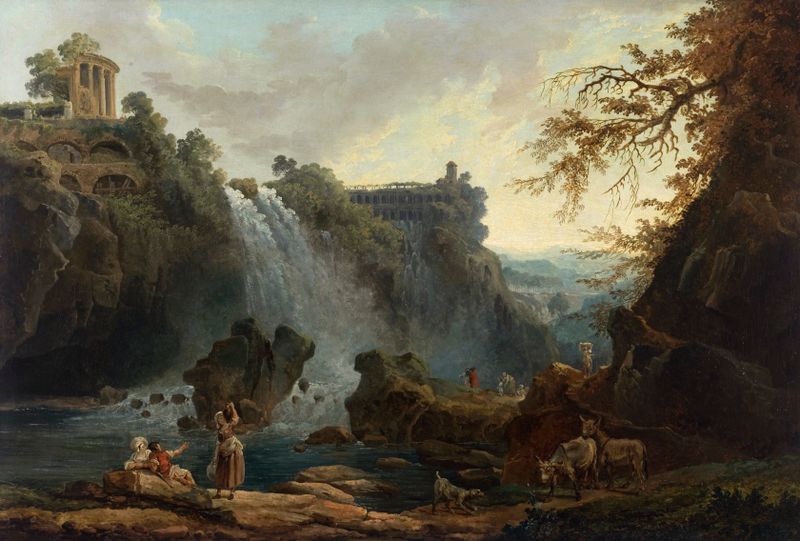
Les Cascatelles de Tivoli
Hubert Robert
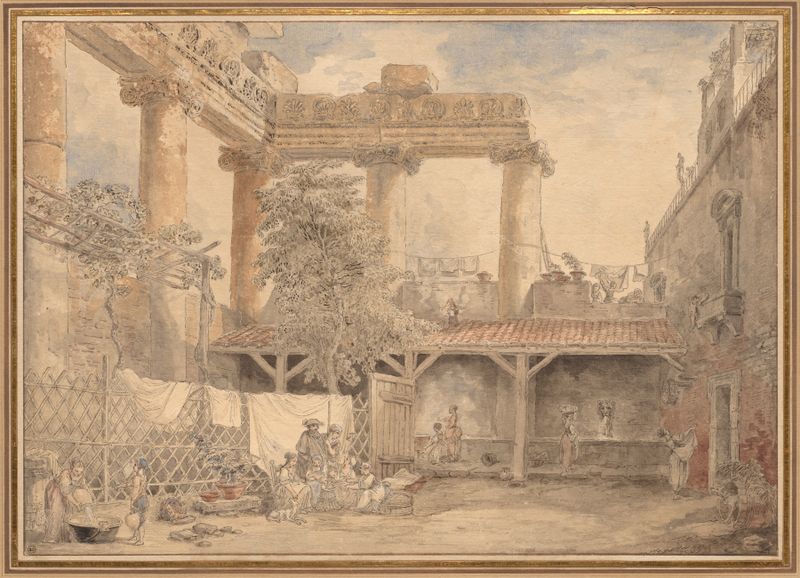
Roman Ruins, Villa Pamfili
Hubert Robert

The Rustic Bridge, Château de Méréville, France
Hubert Robert

The Portico of a Country Mansion
Hubert Robert

Architectural Capriccio
Hubert Robert

The Obelisk
Hubert Robert
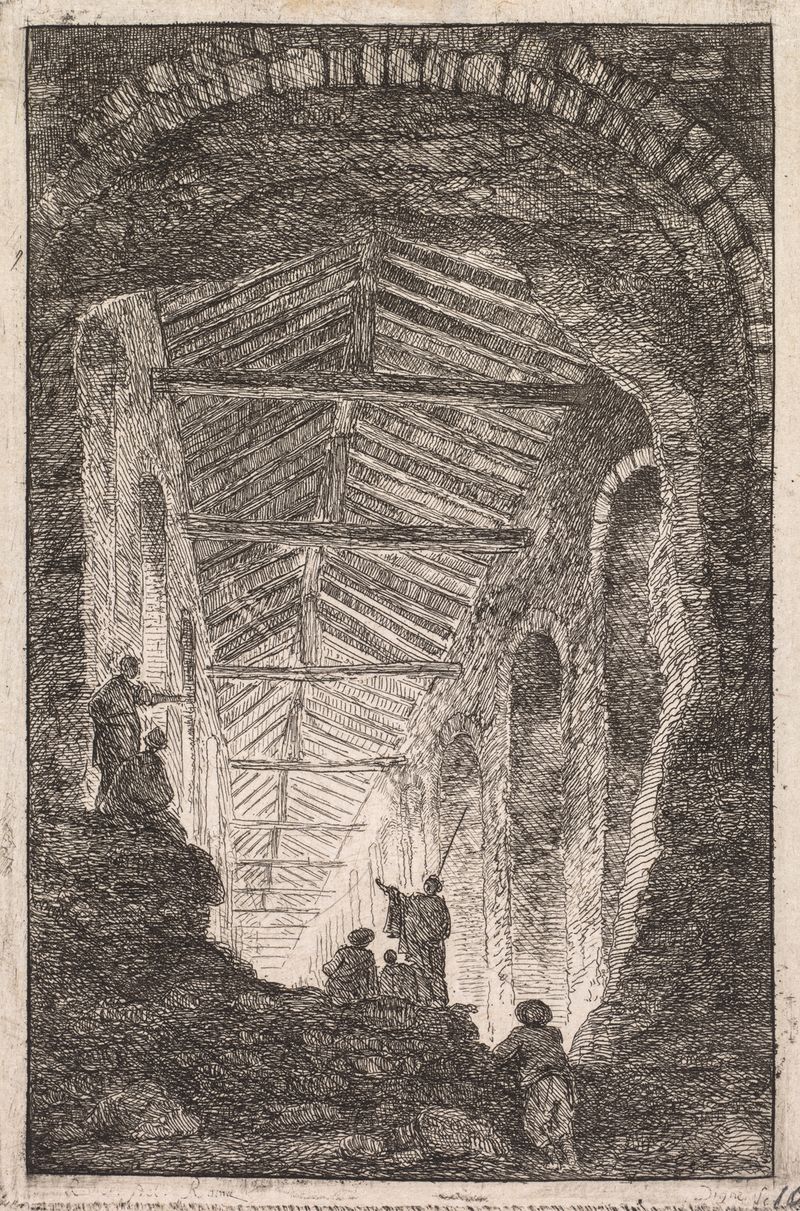
The Antique Gallery
Hubert Robert

L’incendie de l’Opéra, vu des jardins du Palais-Royal, le 8 juin 1781
Hubert Robert
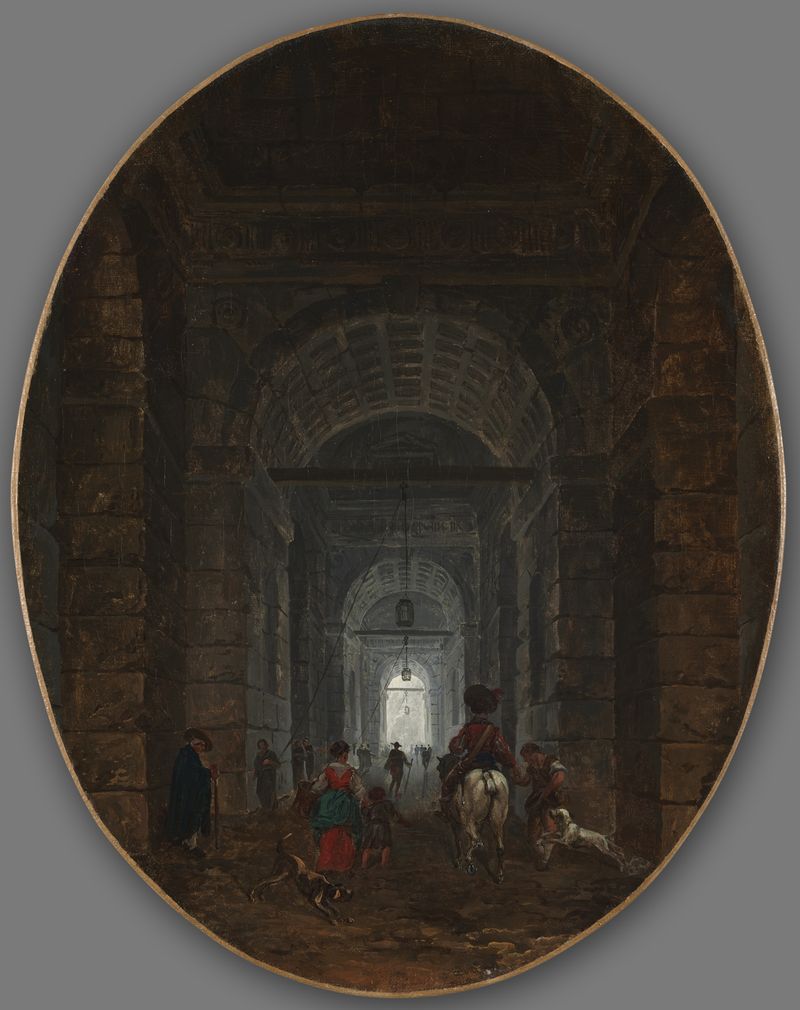
The Grotto of Posillipo
Hubert Robert

Architectural Capriccio with ruins of the Temple of Saturn and the Colosseum in the background
Hubert Robert





