
La rentrée du troupeau — History & Facts
Can beauty exist without sorrow? In La rentrée du troupeau, the answer lingers in the gentle embrace of the landscape, where the pastoral meets the poignant. This artwork encapsulates the legacy of nature's rhythms, reflecting the delicate balance between joy and melancholy in the cycles of life. Look to the left at the shepherd guiding his flock, his figure small against the expansive horizon, where soft blues and greens converge. Notice how the light dances on the sheep's wool, creating a shimmering effect that draws your eye across the canvas.
The brushstrokes are both loose and deliberate, evoking a haze of memory as they capture the fleeting moment of gathering the herd. The interplay of light and shadow serves to heighten the emotional landscape, inviting viewers into a space of quiet contemplation. Boudin masterfully contrasts the warmth of the flock's white coats with the muted tones of the sky, suggesting not only the beauty of the natural world but also the impermanence of such moments. The lone figure of the shepherd embodies resilience amid the pastoral beauty, hinting at the solitude that can accompany connection to nature.
Each sheep represents a thread in the larger tapestry of life, entwined with the inevitable return home that carries echoes of both comfort and loss. In 1856, while living in Normandy, Boudin was deeply influenced by the changing light and weather of coastal France. This period marked his growing interest in plein air painting, which would later inspire the Impressionist movement. At this time, he was transitioning from a focus on traditional techniques to a more spontaneous style, setting the stage for his enduring legacy in capturing the ephemeral beauty of landscapes and the human experience intertwined within them.
More Artworks by Eugène Boudin
Browse all →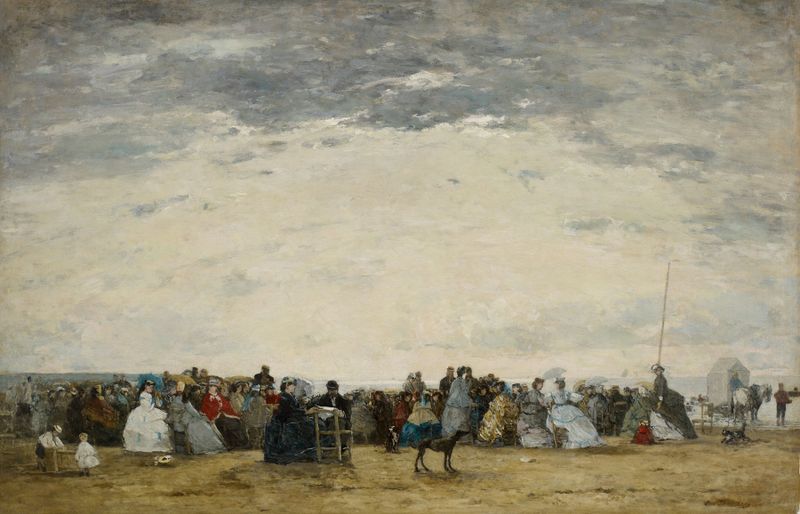
Vacationers on the Beach at Trouville
Eugène Boudin

Washerwoman near Trouville
Eugène Boudin
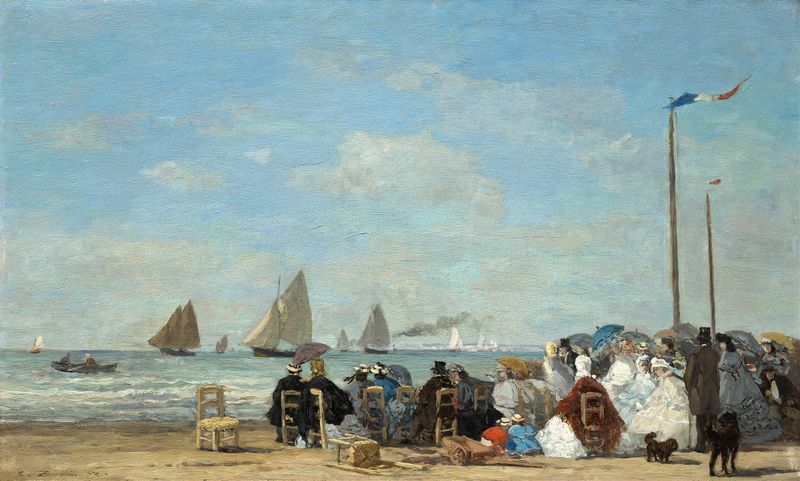
Beach Scene at Trouville
Eugène Boudin

Port aux environs d’Honfleur
Eugène Boudin

Le Faou, un coin du village
Eugène Boudin
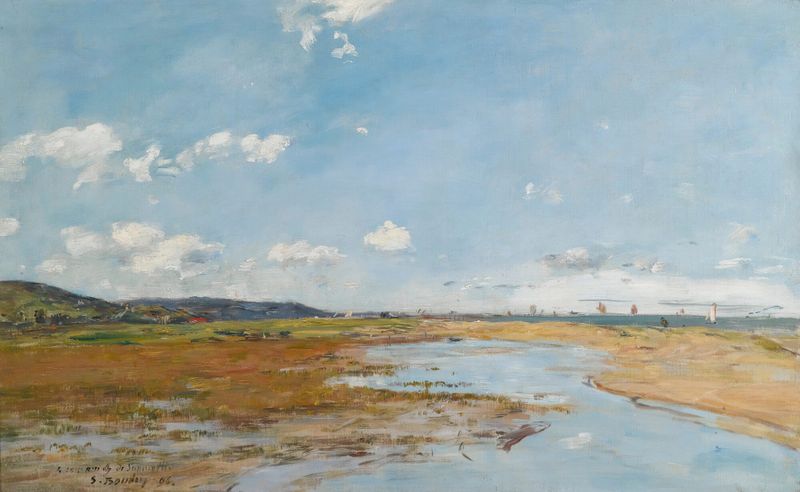
Deauville. Le Rivage
Eugène Boudin
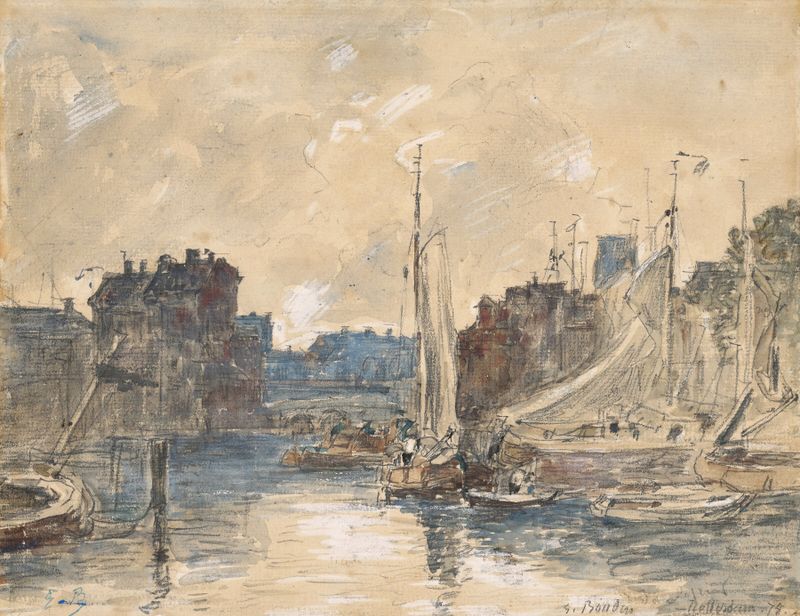
Port de Rotterdam
Eugène Boudin

View of Bordeaux, from the Quai des Chartrons
Eugène Boudin

Trouville, Scène De Plage
Eugène Boudin

Trouville, Le Port
Eugène Boudin





