
La Seine à Croisset, près de Rouen — History & Facts
What draws the eye first is the hush of the light: a riverbank caught in the last warmth of the day, where the Seine glimmers with a gentle gold that seems to dissolve the boundaries between water, sky, and land. Albert Charles Lebourg guides us not with sharp detail but with atmosphere—figures and boats are mere suggestions, their forms softened as if remembered rather than seen. The largest building, its façade catching the sun, anchors the composition and draws the gaze to the right, while the river’s reflective surface pulls it back to the left, where two small boats float in the luminous expanse.
The whole scene is a study in restraint: the palette is muted, the brushwork loose, yet every stroke is placed to evoke the quiet pulse of life along the Seine. This is the world of late nineteenth-century France, when painters like Lebourg—inspired by the Impressionists—turned their attention to the shifting moods of nature and the changing face of rural industry. The banks of the Seine near Rouen were a favorite haunt for artists who sought to capture the fleeting effects of light and atmosphere, and works like this one were often painted for a growing bourgeois clientele eager to bring a piece of the countryside into their homes. Today, La Seine à Croisset, près de Rouen resides in the collection of the Museo Nacional de Bellas Artes, a quiet testament to the era’s fascination with the poetry of the everyday.
Let your eyes linger on the subtle interplay of shadow and light, and you may find yourself standing on that riverbank, watching the day drift by.
More Artworks by Albert Charles Lebourg

Le Jardin du Docteur Viau
Albert Charles Lebourg
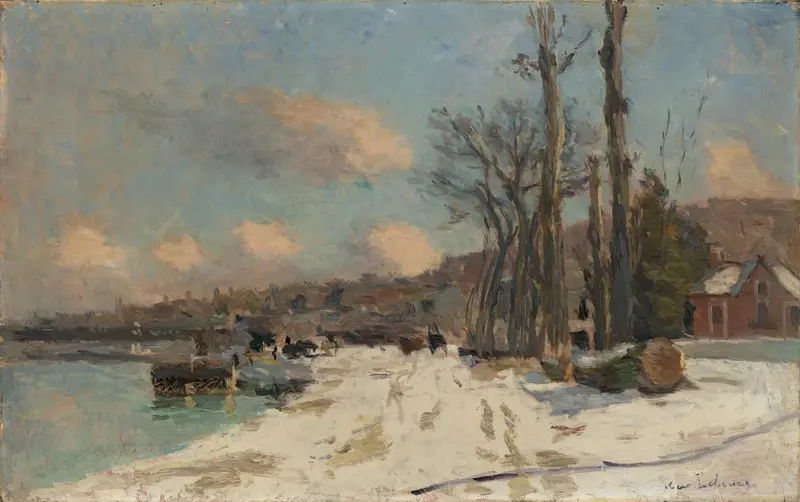
Snow Scene at Bougival
Albert Charles Lebourg
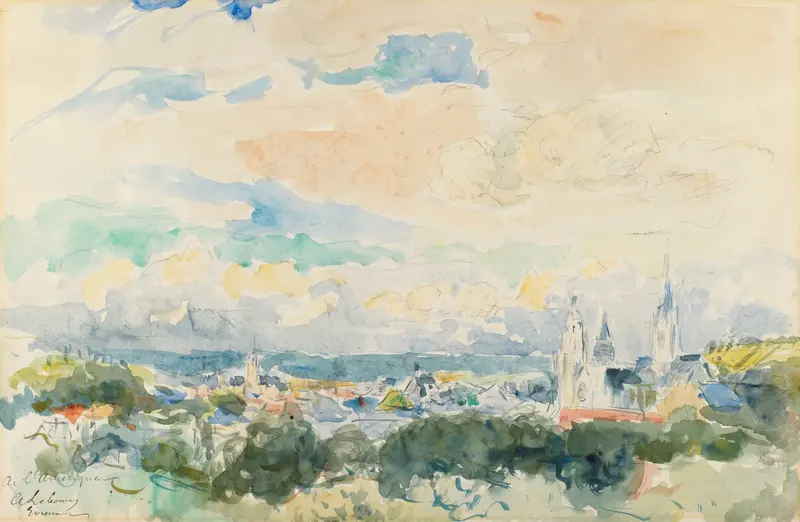
Sketch of a Village
Albert Charles Lebourg
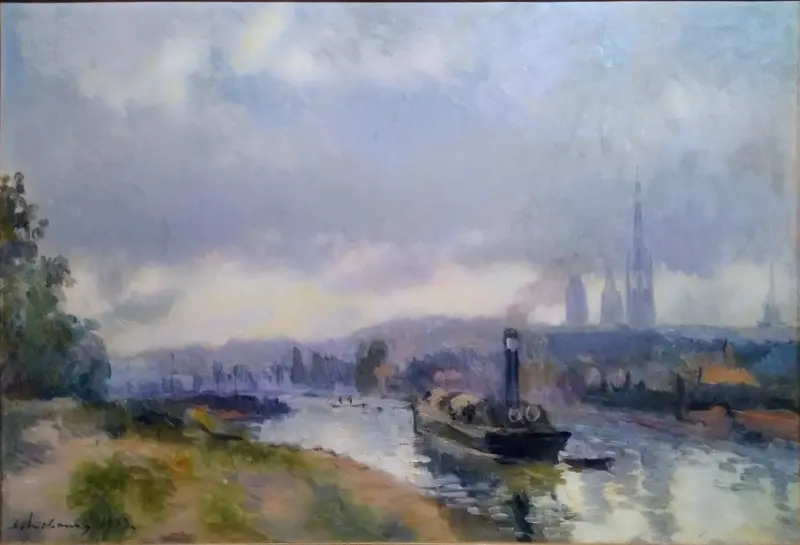
Remorqueurs à Rouen
Albert Charles Lebourg
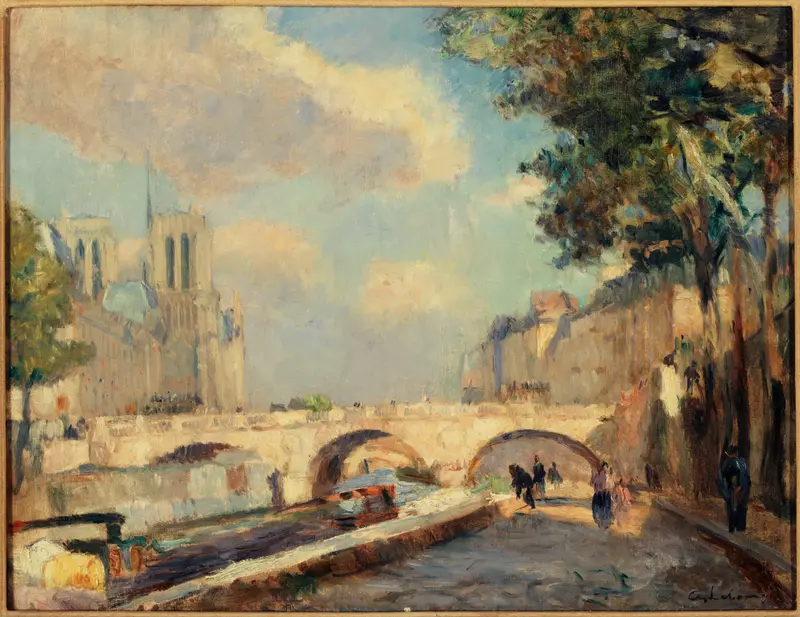
Le pont Saint Michel et Notre Dame, vus du quai des Grands Augustins P459 Musée Carnavalet
Albert Charles Lebourg
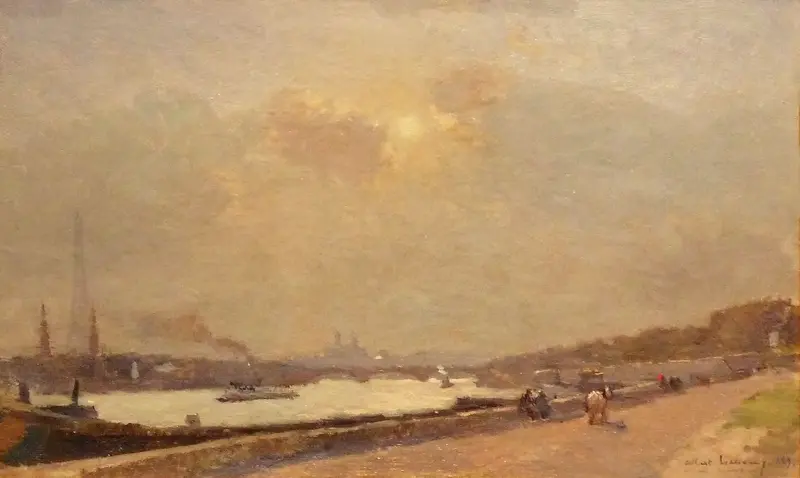
Banks of the Seine, Cours La Reine
Albert Charles Lebourg
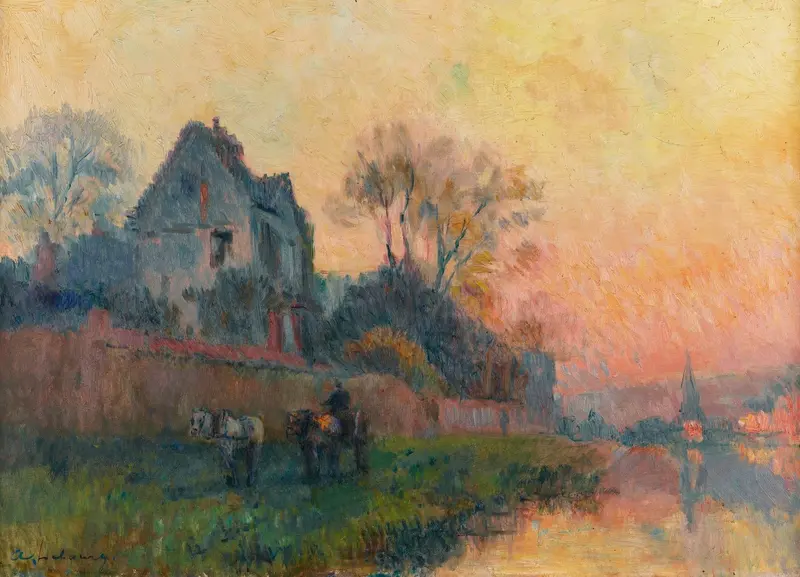
Bords de Seine à Chatou, oil on canvas, 46.4 by 65.1cm, 18.25 by 25.6 in
Albert Charles Lebourg
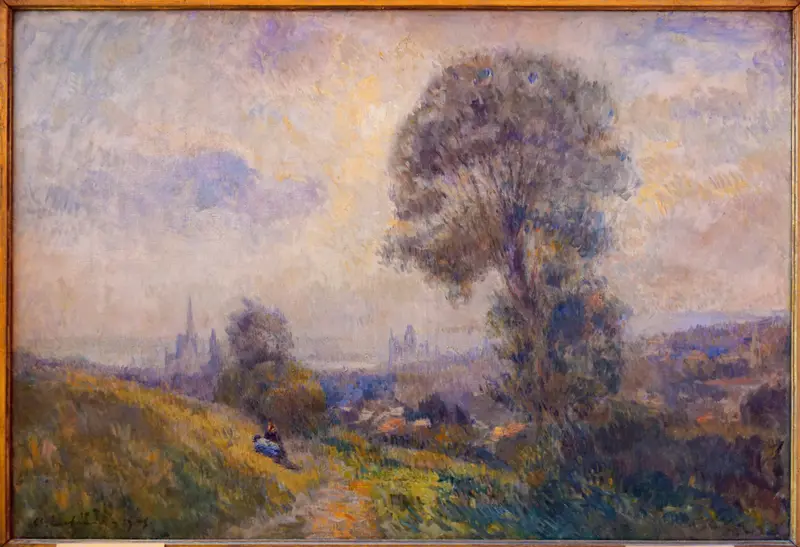
Camaret. The Harbor During a Thunderstorm
Albert Charles Lebourg
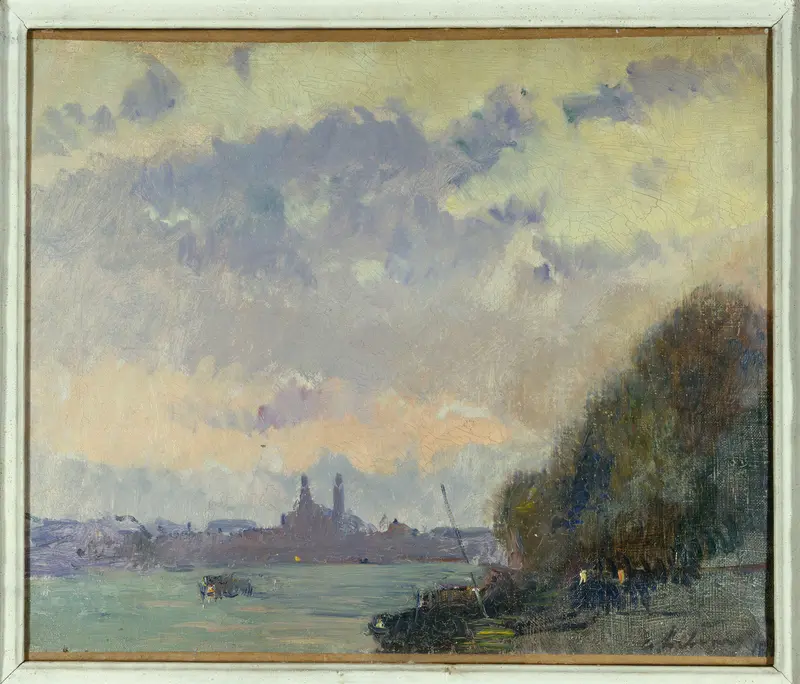
La Seine et l'ancien Trocadéro P2269 Musée Carnavalet
Albert Charles Lebourg
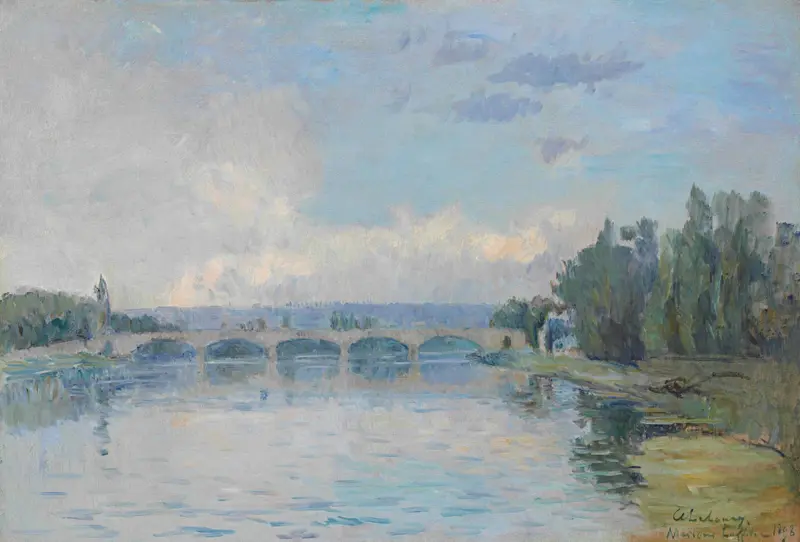
Le Pont de Maisons Laffittes
Albert Charles Lebourg
More Landscape Art

The Starry Night
Vincent van Gogh

View of Delft
Johannes Vermeer

Water Lilies
Claude Monet

The Grand Canal, Venice, looking north-west from the Ca' Corner to the Ca' Contarini degli Scrigni, with the campanile of Santa Maria della Carità
Canaletto

Windsor Castle
Canaletto

The Grand Canal looking North-East from the Palazzo Dolfin-Manin to the Rialto Bridge
Canaletto