
Remorqueurs à Rouen — History & Facts
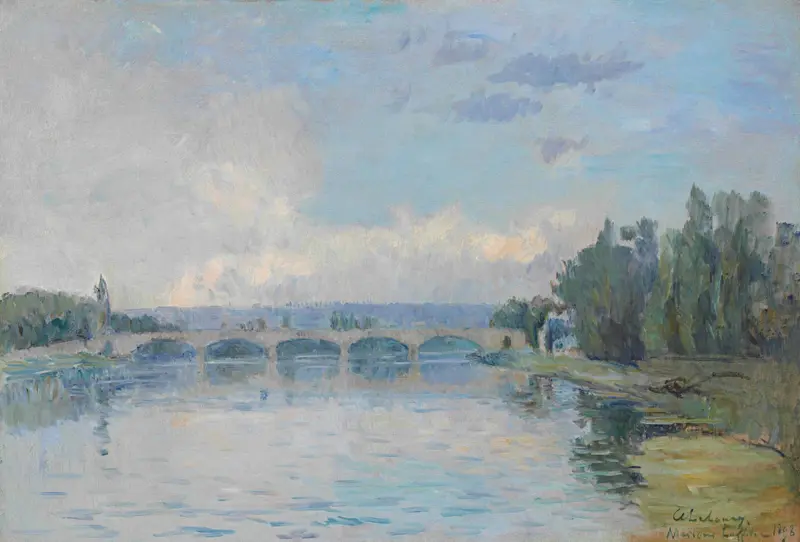
A haze of lavender and pearl sweeps across the canvas, drawing the viewer into a world where river, sky, and city dissolve into one shimmering atmosphere. The tugboats—solid, purposeful—glide along the water, their dark forms anchoring the scene against the luminous mist. The cathedral’s spires, mere silhouettes in the distance, rise like a memory through the vapor, while the riverbank’s earthy greens and ochres pull the eye back to the present moment.
Lebourg’s brushwork is loose and searching, letting the light do the storytelling: reflections ripple and scatter, and the sky seems to press close, making the industrial bustle feel almost dreamlike. This is not a portrait of Rouen as it is, but as it feels at a particular hour, under a particular sky. Painted in 1903, Remorqueurs à Rouen belongs to a moment when French artists were fascinated by the changing face of their cities and the fleeting moods of nature. Works like this, often created for collectors eager to capture the modern world’s pulse, celebrate the mingling of old and new—steam power and Gothic towers, commerce and contemplation.
Albert Charles Lebourg, associated with the Impressionist movement, was known for his devotion to the Seine and its shifting weather, though history has kept few traces of individual commissions or patrons for his quieter scenes. All that remains for certain is the date, the artist’s signature, and the enduring invitation to lose oneself in the river’s silvery light.
More Artworks by Albert Charles Lebourg

Le Jardin du Docteur Viau
Albert Charles Lebourg
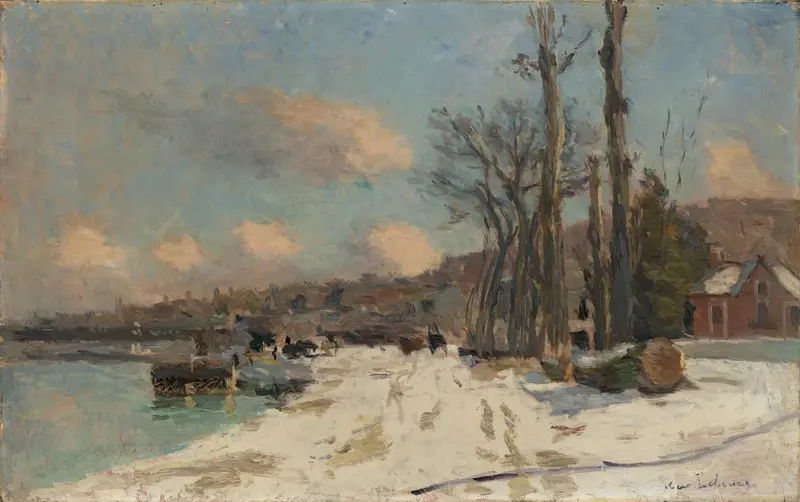
Snow Scene at Bougival
Albert Charles Lebourg
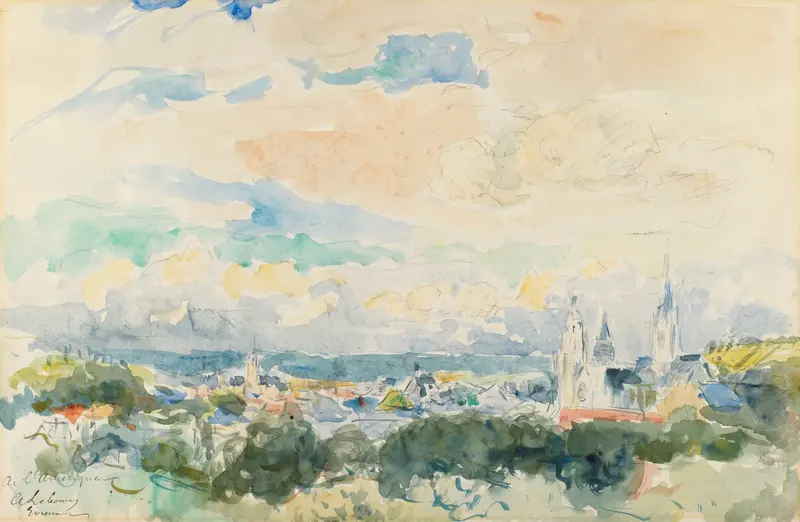
Sketch of a Village
Albert Charles Lebourg
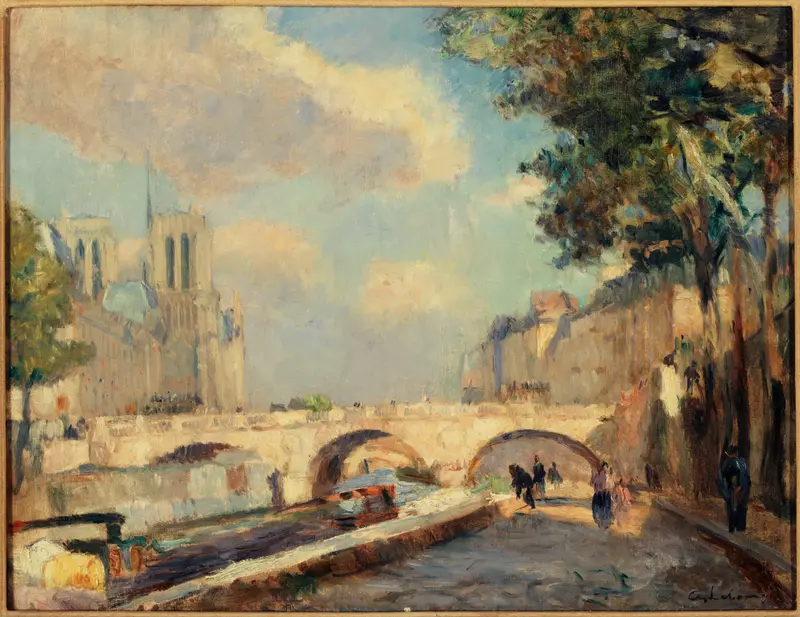
Le pont Saint Michel et Notre Dame, vus du quai des Grands Augustins P459 Musée Carnavalet
Albert Charles Lebourg
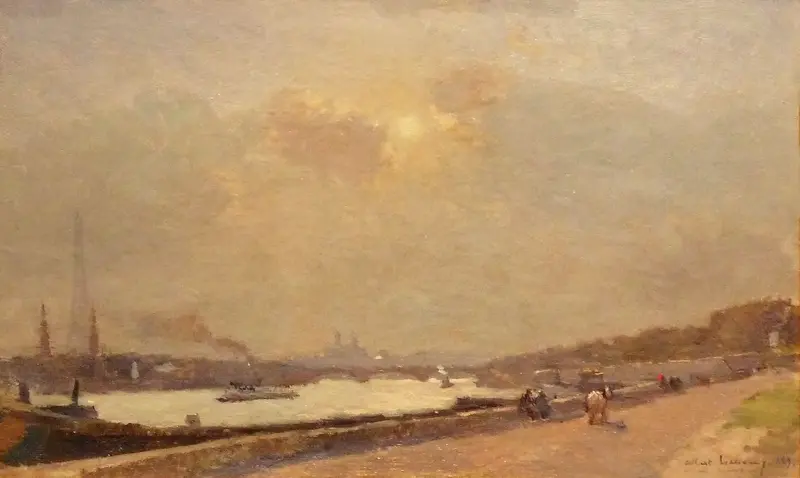
Banks of the Seine, Cours La Reine
Albert Charles Lebourg
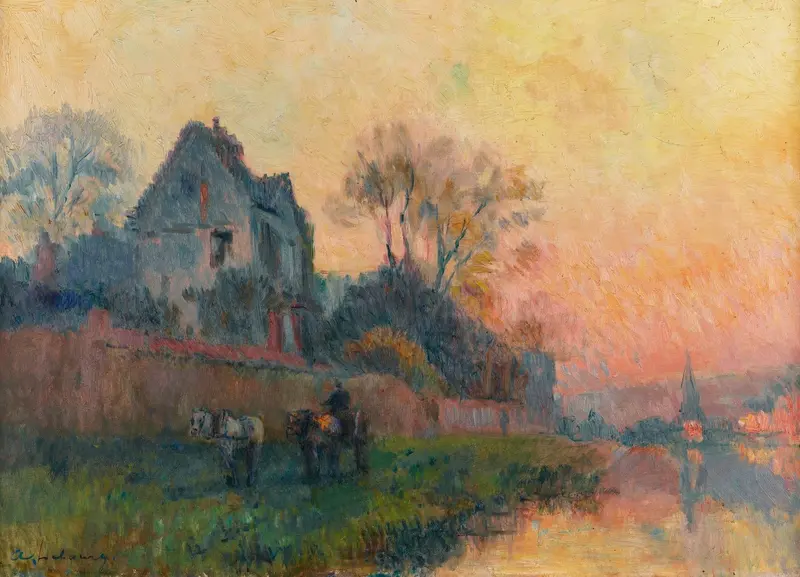
Bords de Seine à Chatou, oil on canvas, 46.4 by 65.1cm, 18.25 by 25.6 in
Albert Charles Lebourg
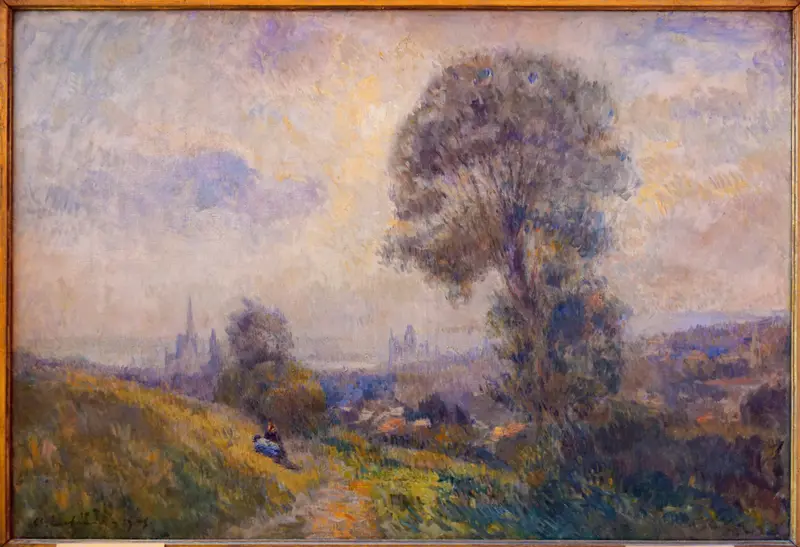
Camaret. The Harbor During a Thunderstorm
Albert Charles Lebourg
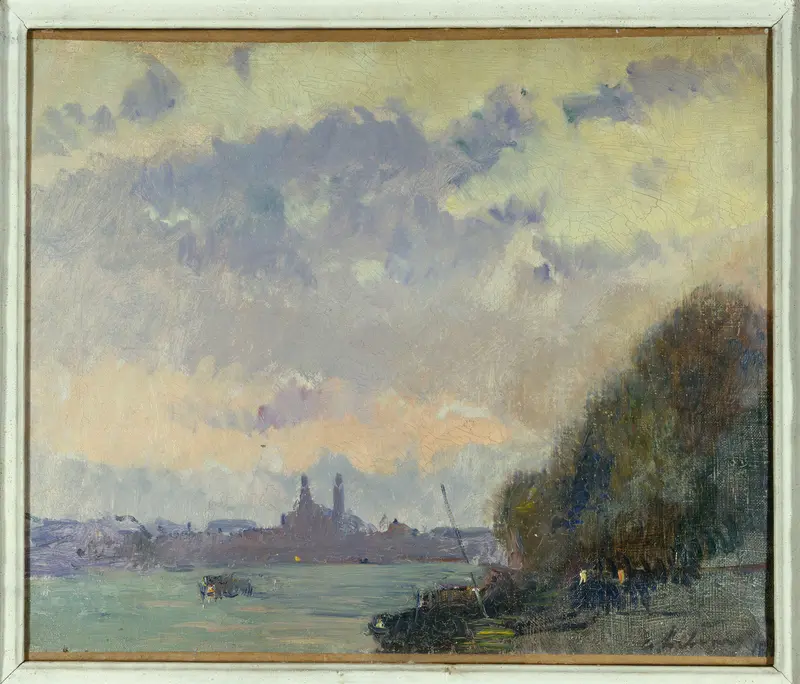
La Seine et l'ancien Trocadéro P2269 Musée Carnavalet
Albert Charles Lebourg
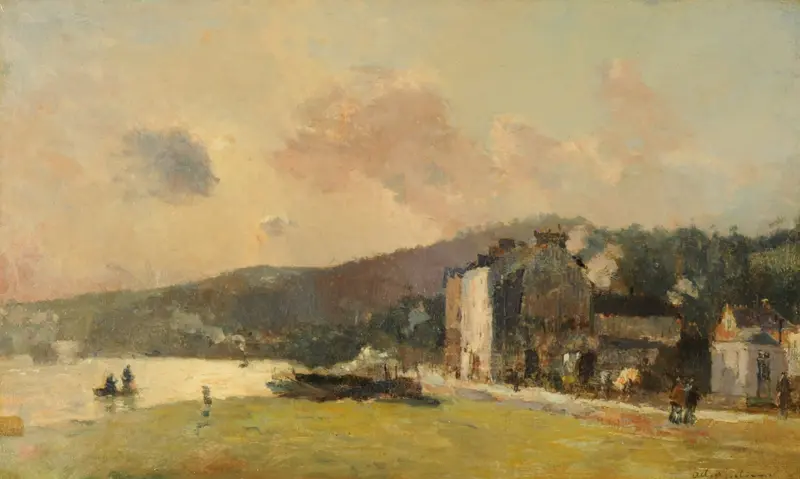
La Seine à Croisset, près de Rouen
Albert Charles Lebourg
Le Pont de Maisons Laffittes
Albert Charles Lebourg





