
Sketch of a Village — History & Facts
What first catches the eye in Sketch of a Village is the sweep of sky—half the painting given over to cloud and color, as if the village below is merely a suggestion, a fleeting thought beneath the vastness above. The brushwork is loose, almost playful, with dabs and washes of blue, green, and ochre that let the imagination fill in the rest. Two church spires rise just enough to anchor the scene, their pale forms standing out against the gentle tumult of the clouds.
The foreground melts into a tangle of green, suggesting trees or gardens, while the rooftops and streets are hinted at rather than described. The painter’s hand is visible everywhere: quick, light, and intent on capturing a mood rather than a map. This kind of work belongs to a world in flux—the late nineteenth century, when artists like Albert Charles Lebourg were abandoning the strictures of academic finish for the immediacy of impression. Such sketches were often made en plein air, meant as studies or records of light and weather, not grand statements for the salon.
The date places it somewhere between 1849 and 1928, a period when French landscape painting was reshaping itself in response to new ideas about perception and memory. Now in the collection of the Smithsonian American Art Museum, this small, lively sheet stands as a testament to the artist’s quick eye and the era’s hunger for scenes that felt true to the moment. Let your gaze wander across the paper and see how much of the village you can find before it slips away into color and air.
More Artworks by Albert Charles Lebourg

Le Jardin du Docteur Viau
Albert Charles Lebourg
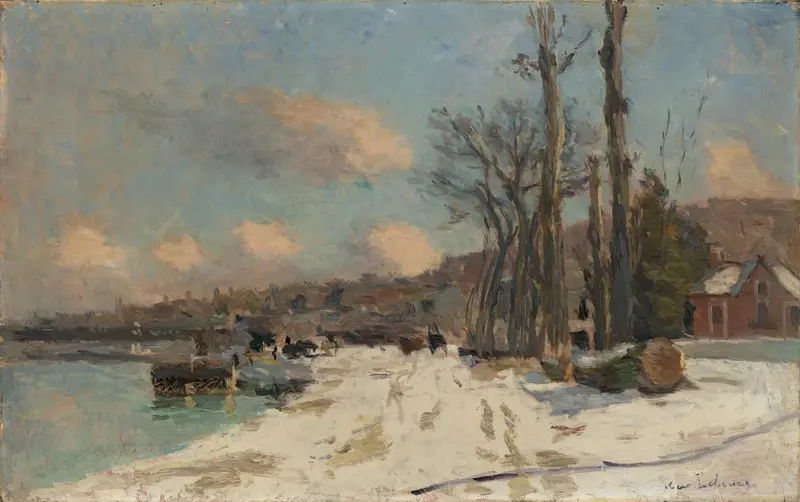
Snow Scene at Bougival
Albert Charles Lebourg
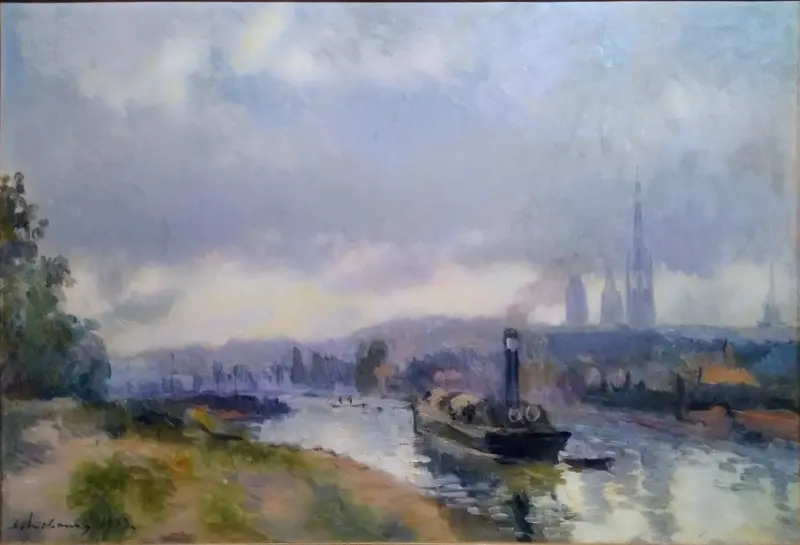
Remorqueurs à Rouen
Albert Charles Lebourg
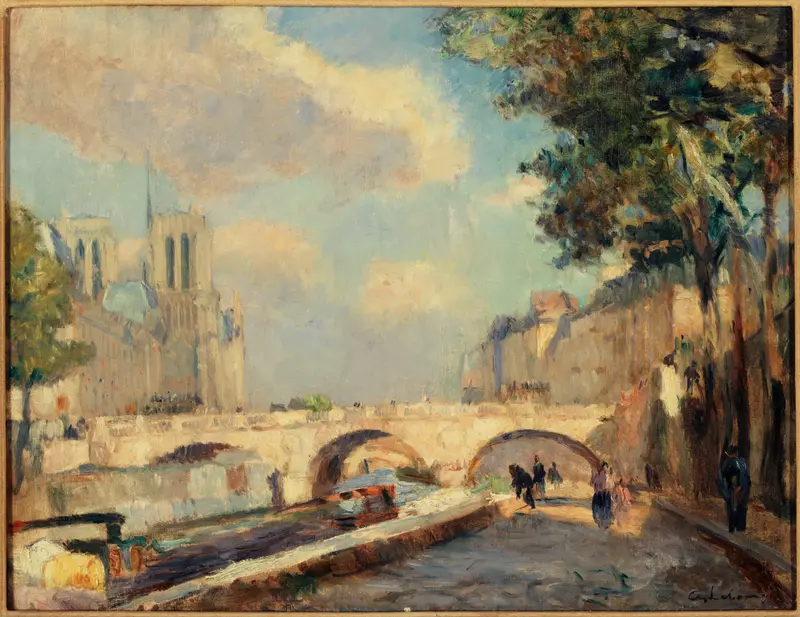
Le pont Saint Michel et Notre Dame, vus du quai des Grands Augustins P459 Musée Carnavalet
Albert Charles Lebourg
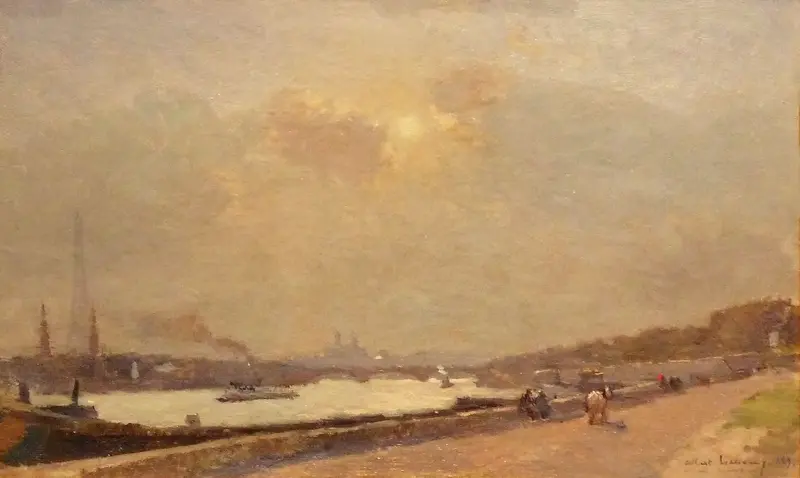
Banks of the Seine, Cours La Reine
Albert Charles Lebourg
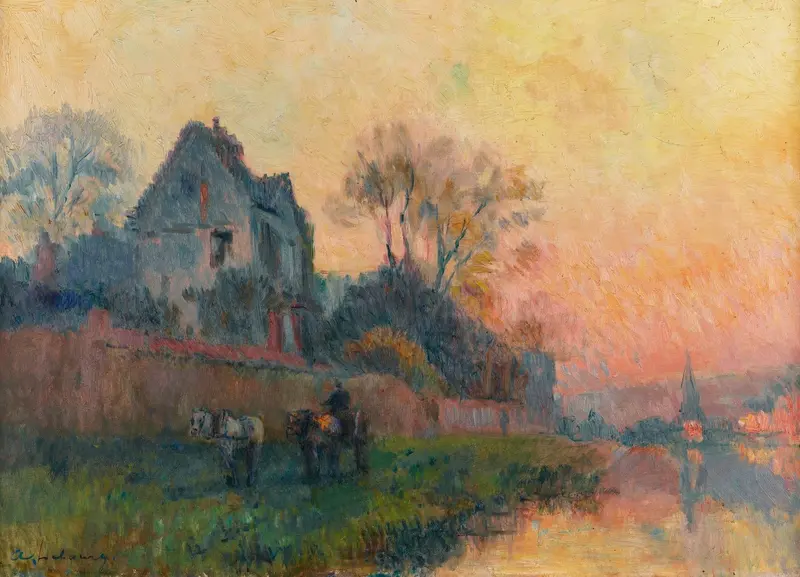
Bords de Seine à Chatou, oil on canvas, 46.4 by 65.1cm, 18.25 by 25.6 in
Albert Charles Lebourg
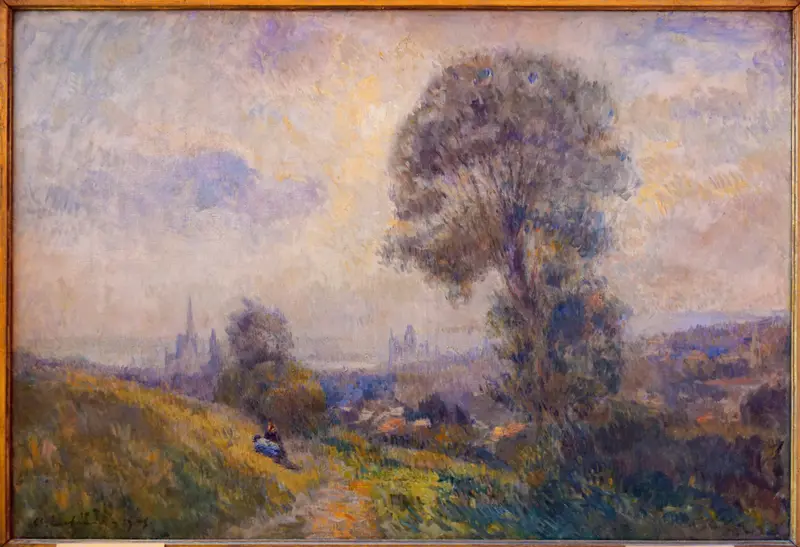
Camaret. The Harbor During a Thunderstorm
Albert Charles Lebourg
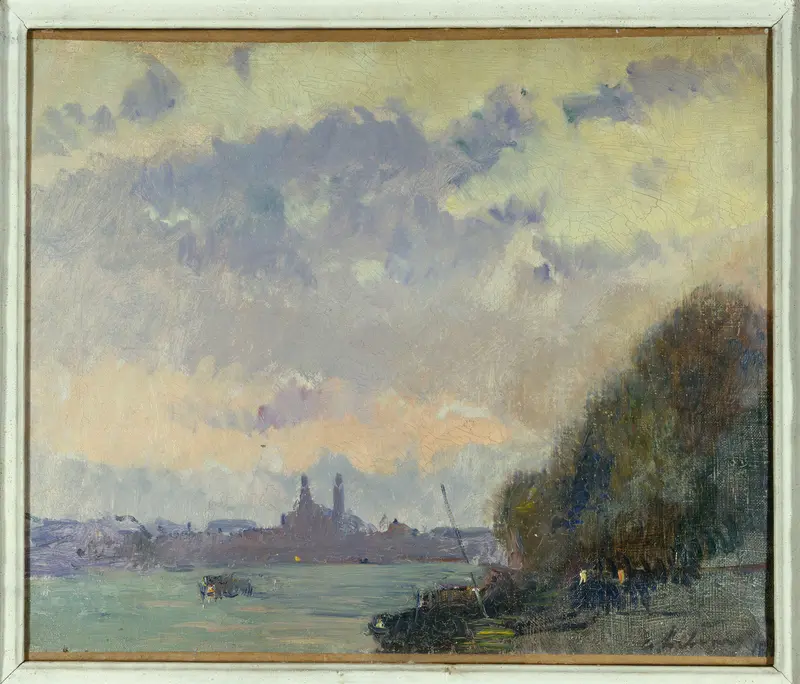
La Seine et l'ancien Trocadéro P2269 Musée Carnavalet
Albert Charles Lebourg
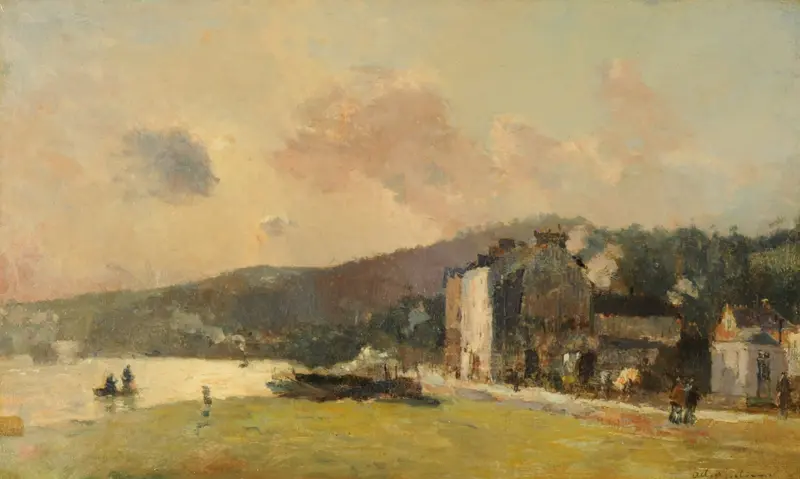
La Seine à Croisset, près de Rouen
Albert Charles Lebourg
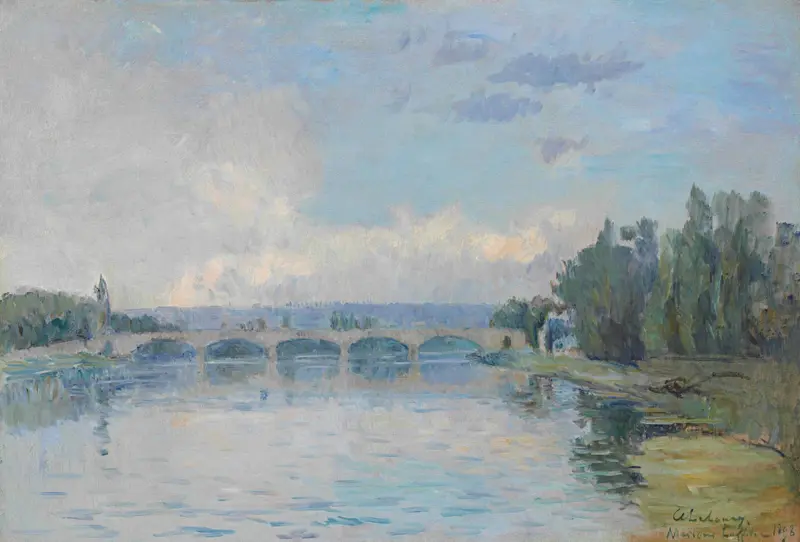
Le Pont de Maisons Laffittes
Albert Charles Lebourg
More Landscape Art

The Starry Night
Vincent van Gogh

View of Delft
Johannes Vermeer

Water Lilies
Claude Monet

The Grand Canal, Venice, looking north-west from the Ca' Corner to the Ca' Contarini degli Scrigni, with the campanile of Santa Maria della Carità
Canaletto

Windsor Castle
Canaletto

The Grand Canal looking North-East from the Palazzo Dolfin-Manin to the Rialto Bridge
Canaletto