
La Seine, au quai d'Austerlitz, effet de neige P905 Musée Carnavalet — History & Facts
What first catches the eye in La Seine, au quai d'Austerlitz, effet de neige is the hush: a riverbank scene where the usual clamor of Paris seems muffled, as if the snow itself has pressed pause on the city’s restless movement. The painter, Auguste Lepère, draws the viewer in with a palette of muted earths and cold greys, letting the pale expanse of the quay dominate the foreground. Figures cluster in small groups, their gestures and postures suggesting quiet conversation or the simple business of enduring the cold.
Smoke drifts from distant chimneys, hinting at the industry that hums just beyond the river, while barges rest heavily in the water, their forms nearly blending into the wintry haze. The composition leads the gaze from these bundled figures to the horizon, where the city’s outline dissolves into a sky thick with weather. Painted in 1900, this work belongs to a moment when artists across Europe were fascinated by the changing face of the modern city and the fleeting effects of light and atmosphere. Scenes like this, capturing the Seine’s working banks under a veil of snow, were rarely grand commissions; instead, they were often painted for collectors or exhibitions eager to see the city’s quieter, more everyday corners.
Auguste Lepère was known for his sensitivity to urban life, and here he joins a generation of painters who found poetry in the ordinary—much as the Impressionists had done decades before, though with a more grounded, almost documentary touch. Now held in the collection of Paris Musées, this painting invites us to linger with its silent figures and let our eyes wander the frozen riverbank, searching for stories in the hush.
More Artworks by Auguste Lepère

Le Pont-Neuf (Paris)
Auguste Lepère
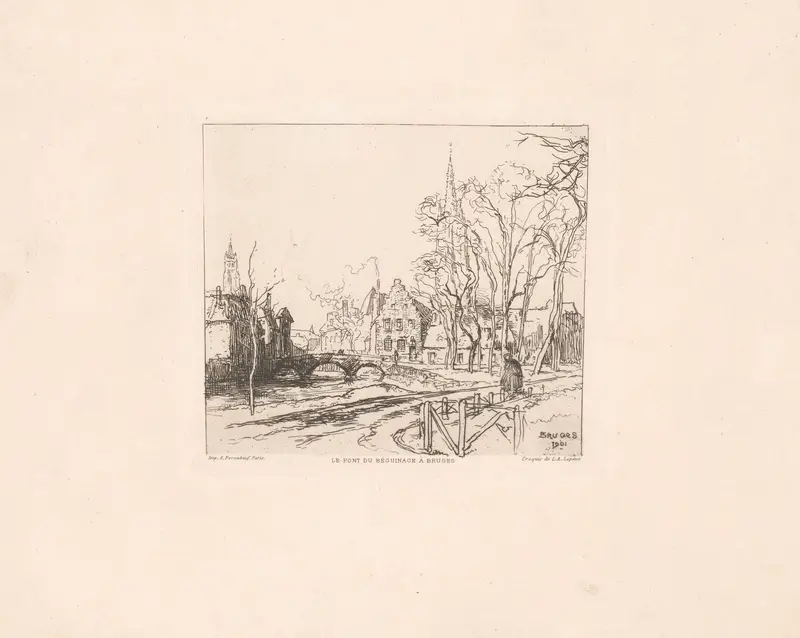
Le pont du Beguinage à Bruges
Auguste Lepère
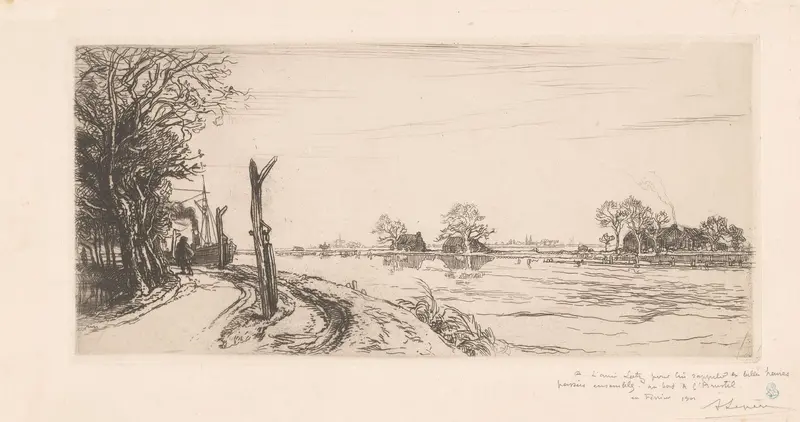
Au bord de l’Amstel
Auguste Lepère
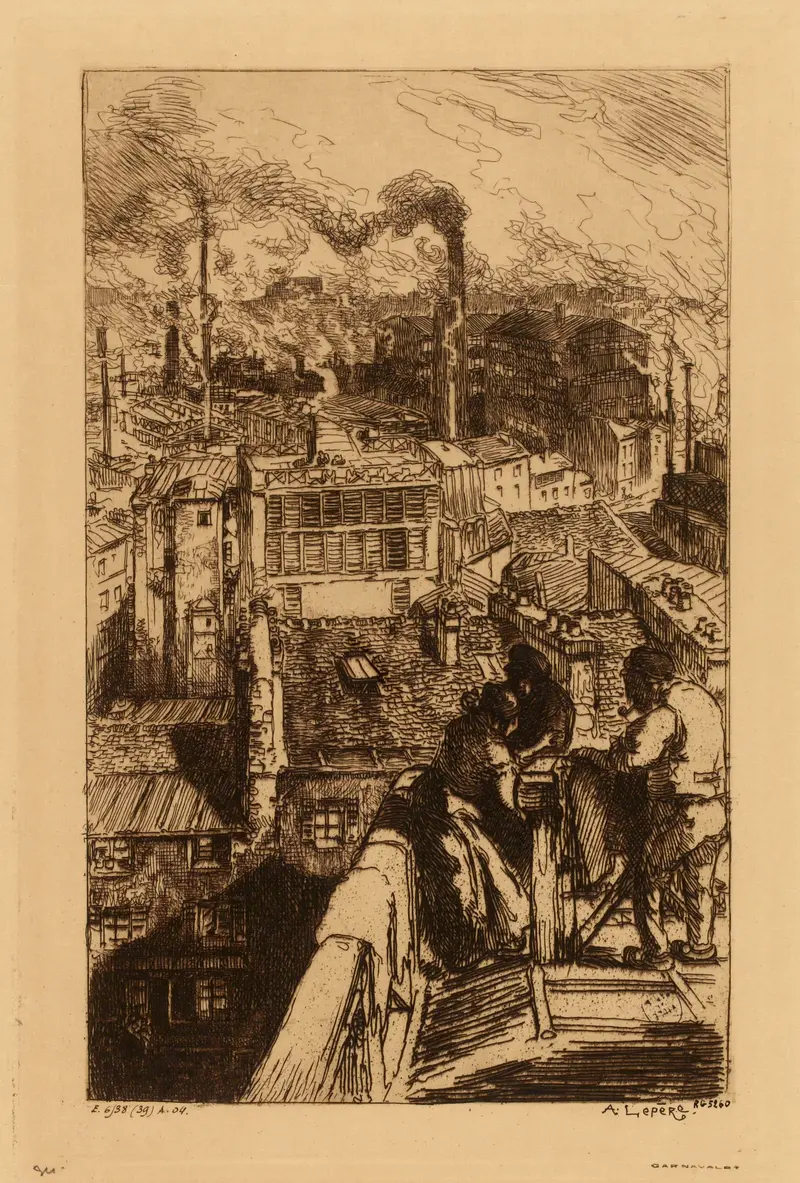
Le quartier des Gobelins
Auguste Lepère
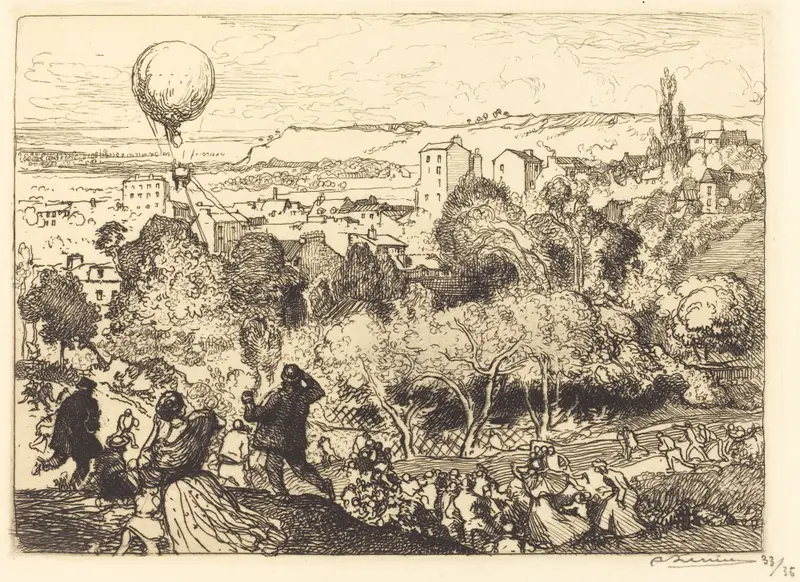
The Falling Balloon, in Pre-Saint-Gervais (Lebaloon qui tombe, au Pre-Saint-Gervais)
Auguste Lepère
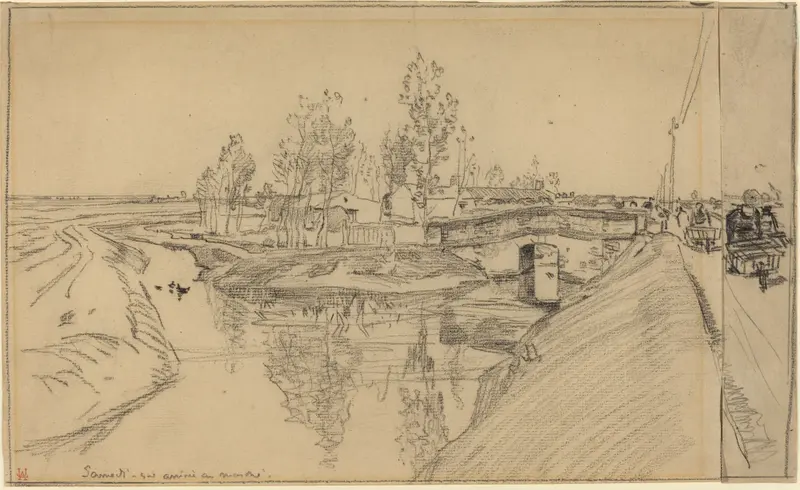
Arrivee au Marche
Auguste Lepère
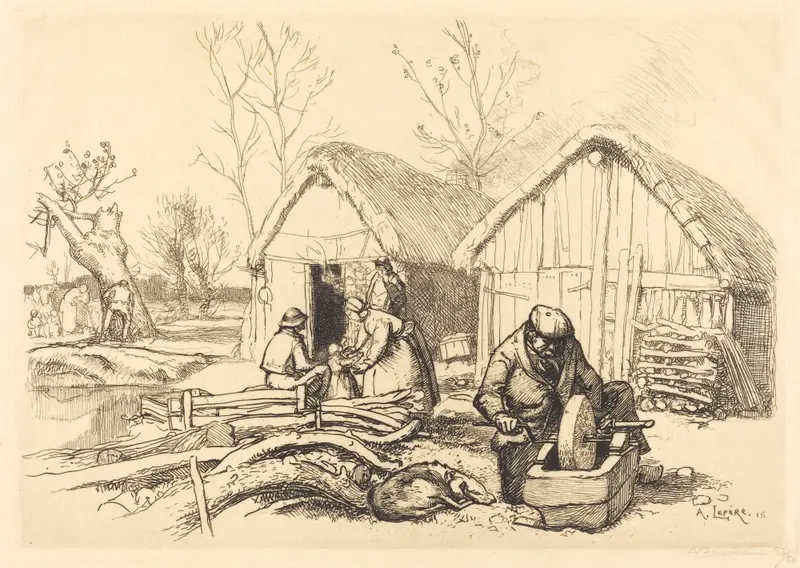
The House of the Woodcutter, Vendee (La maison du bucheron, Vendee)
Auguste Lepère
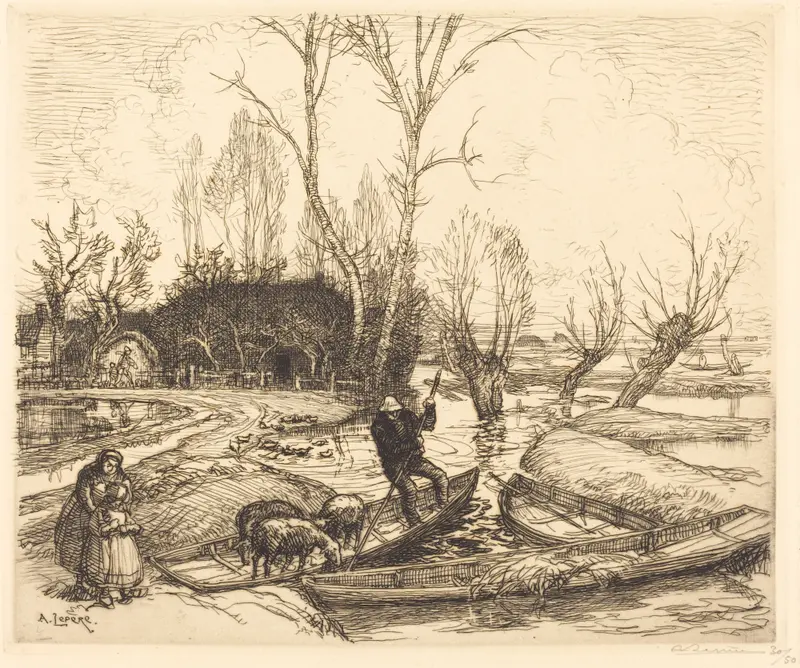
In the Deluged Marsh - The Shepherd (Au marais inonde - Le berger)
Auguste Lepère
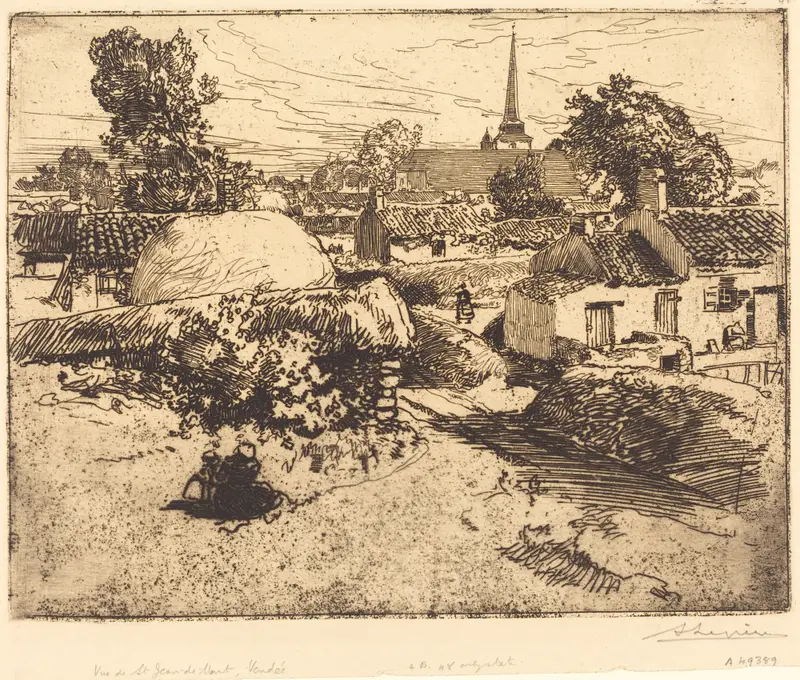
View of St.-Jean-de-Mont, Vendee (Vue de St.-Jean-de-Mont, Vendee)
Auguste Lepère
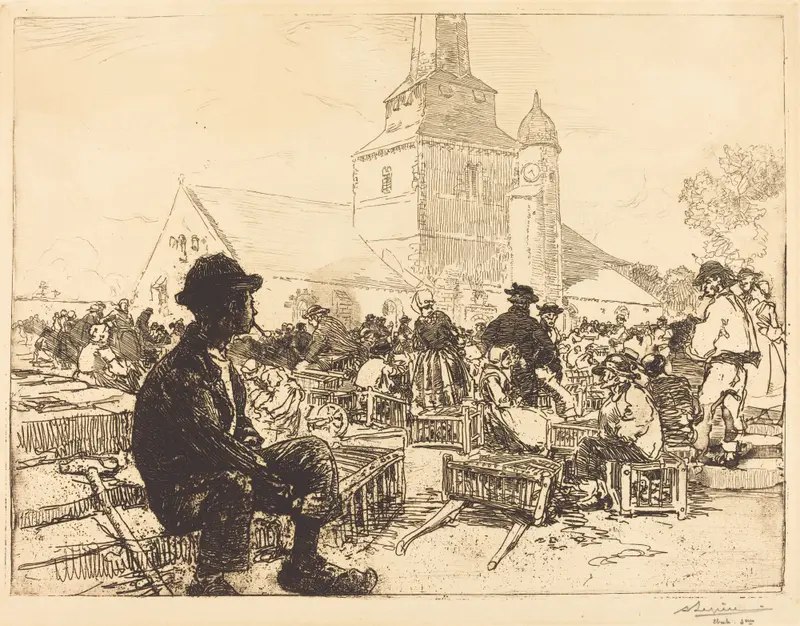
Poultry Market at St.-Jean-de-Mont (Marche a la volaille, a St.-Jean-de-Mont)
Auguste Lepère
More Landscape Art

The Starry Night
Vincent van Gogh

View of Delft
Johannes Vermeer

Water Lilies
Claude Monet

The Grand Canal, Venice, looking north-west from the Ca' Corner to the Ca' Contarini degli Scrigni, with the campanile of Santa Maria della Carità
Canaletto

Windsor Castle
Canaletto

The Grand Canal looking North-East from the Palazzo Dolfin-Manin to the Rialto Bridge
Canaletto