La Tamise sous la neige — History & Facts
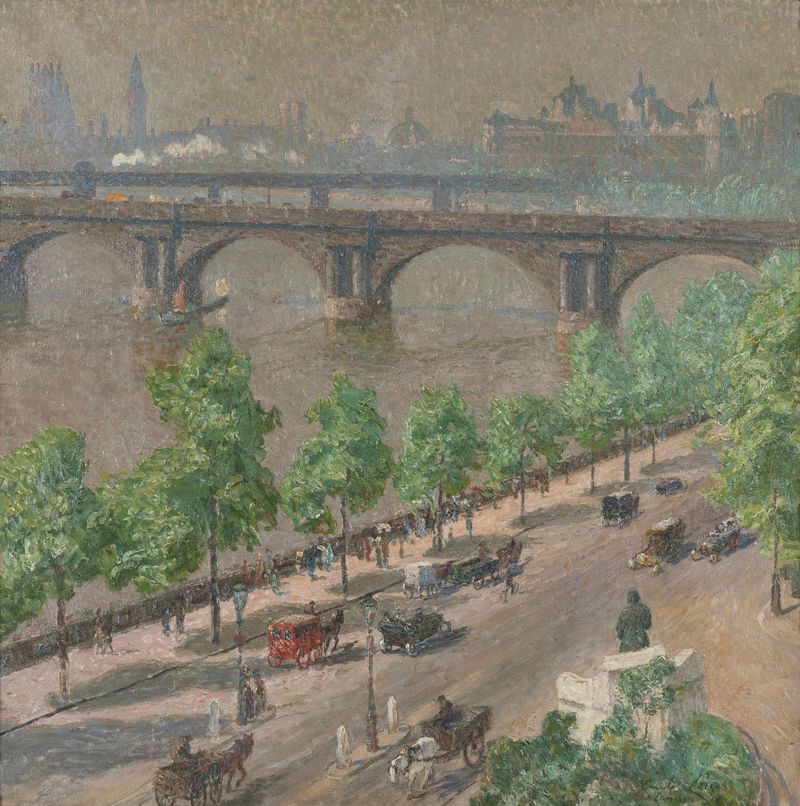
In a world marred by violence, can the purity of nature still prevail? Emile Claus invites us to ponder this question through his serene yet haunting depiction of the River Thames blanketed in snow. Look to the center, where the calm water glistens under a muted sky, reflecting soft grays and blues that dance together as if caught in a delicate embrace. The snow transforms the riverbank into a tranquil expanse, yet the trees, stripped bare, reveal the stark vulnerability of life amidst the chill. Notice how the gentle brushstrokes convey both movement and stillness, invoking a sense of nostalgia—a fleeting moment frozen in time, inviting contemplation. Beneath the surface, the imagery speaks to the contrasts of peace and turmoil.
The serene winter landscape stands in stark opposition to the upheaval of war that was gripping Europe during this time. The snow acts as a blanket, covering the chaos and violence that linger just beyond the edges of the canvas, suggesting a fragile respite. This duality prompts reflections on the resilience of nature even in dark times, urging viewers to confront the tension between beauty and destruction. In 1916, Claus painted this work in Belgium, a country deeply affected by the First World War.
As an artist striving to balance his dedication to beauty with the horrors of conflict surrounding him, he found solace in depicting serene landscapes. This painting reflects his commitment to capturing ephemeral moments of peace, even as the world around him unraveled.