
Lake Gosau with a view of the Dachstein massif — History & Facts
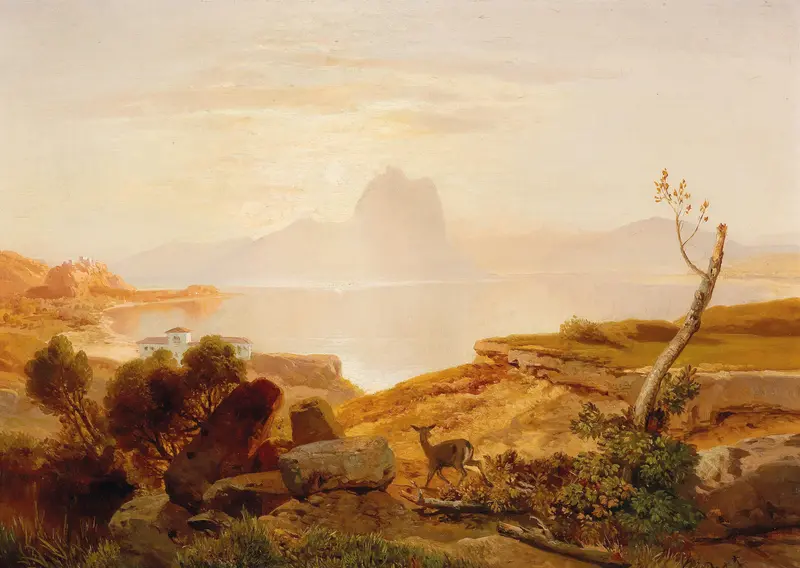
A sweep of turquoise water draws the eye inward, but it is the distant glacier, sunlit and immense, that commands the stage. In Lake Gosau with a view of the Dachstein massif, Albert August Zimmermann orchestrates a scene of contrasts: the warmth of sunlit rocks in the foreground, the cool shadowed slopes, and the dazzling crown of snow. Each element is placed with intention—the fallen logs and boulders at the lake’s edge anchor the viewer, while the tiny figures in a boat, almost lost in the vastness, remind us of human scale against nature’s grandeur.
The light is not just illumination; it is a guide, leading from the golden shallows to the crystalline peaks, inviting us to journey with our eyes and imagine the chill of the air and the hush of the water. Painted by 1888, this landscape belongs to a period when artists across Europe sought out the drama and clarity of the high Alps, often traveling great distances to capture such vistas. Works like this were prized by collectors eager to bring the grandeur of the wild into their parlors, at a time when railways and illustrated travel books were making such places newly accessible. Zimmermann’s approach, with its careful rendering of geological forms and atmospheric effects, reflects both the scientific curiosity and the romantic longing of the late nineteenth century.
Today, little is recorded about the specific journey of this painting, now documented in the Dorotheum collection, but its invitation remains as clear as the water it depicts: to lose oneself in the meeting of earth, sky, and imagination.
More Artworks by Albert August Zimmermann
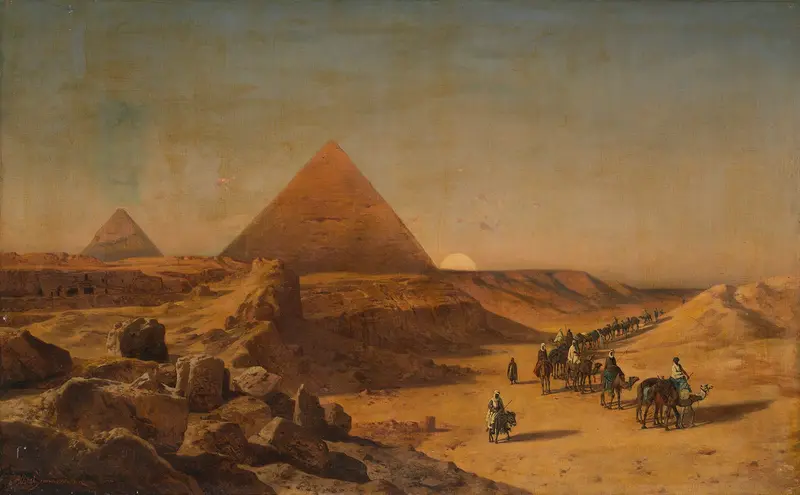
Pyramids
Albert August Zimmermann

Schwäbische Alb
Albert August Zimmermann
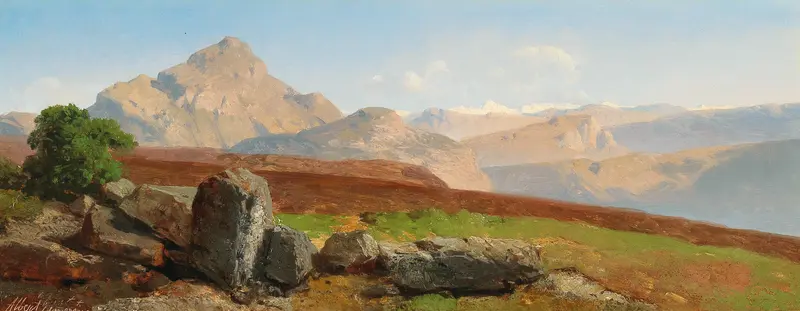
Mountain Landscape
Albert August Zimmermann
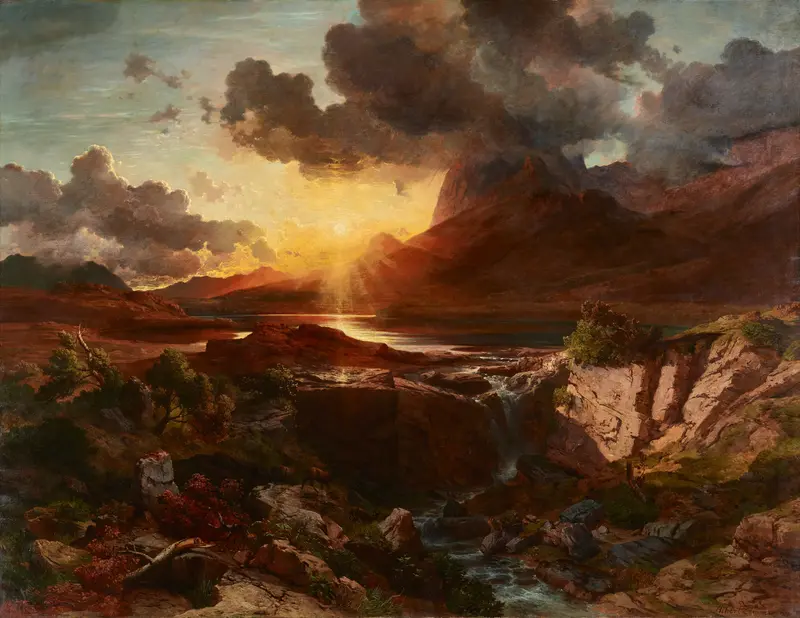
Sonnenuntergang am Hintersee in Berchtesgaden 13 Österreichische Galerie Belvedere
Albert August Zimmermann
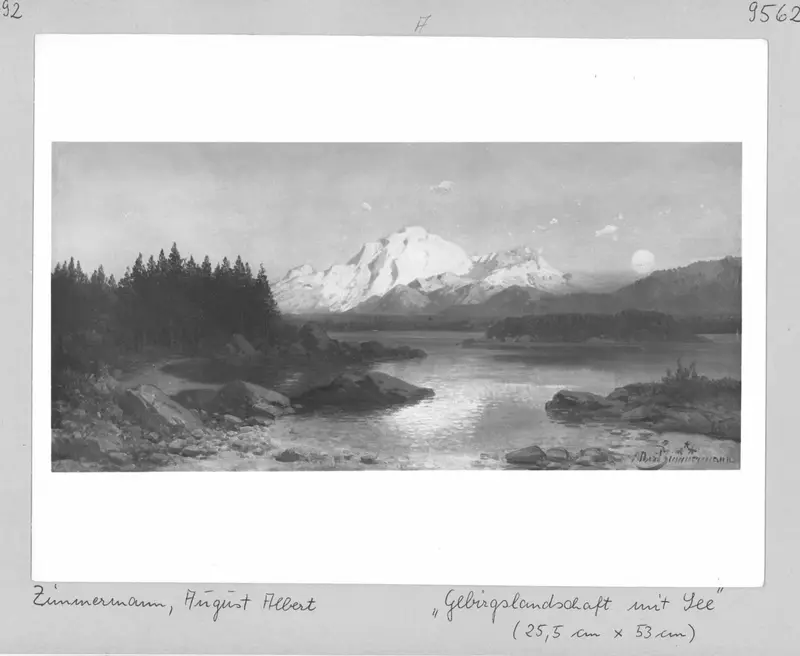
Mountain-landscape with lake
Albert August Zimmermann
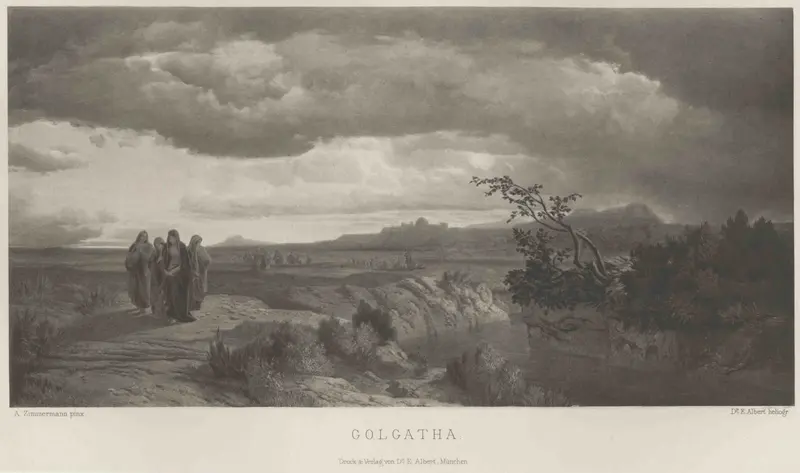
Golgatha
Albert August Zimmermann
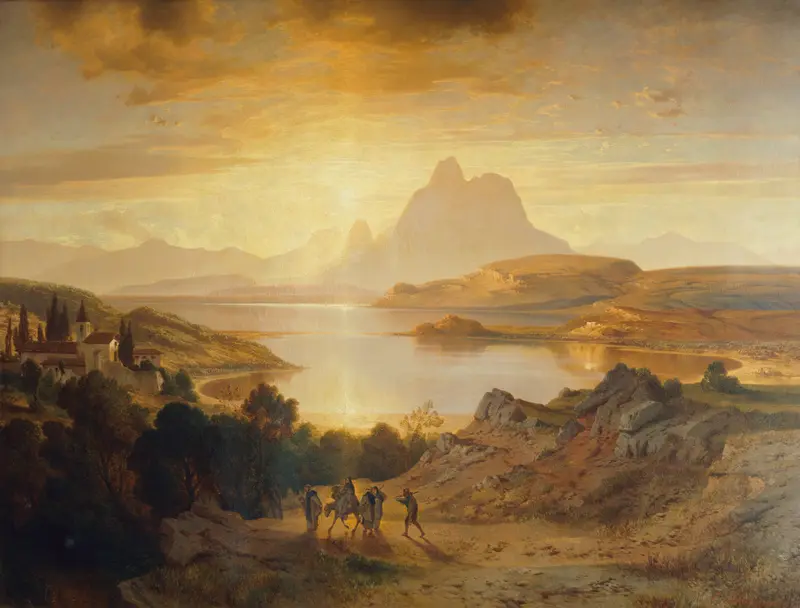
Lago di Lugano 65 Österreichische Galerie Belvedere
Albert August Zimmermann
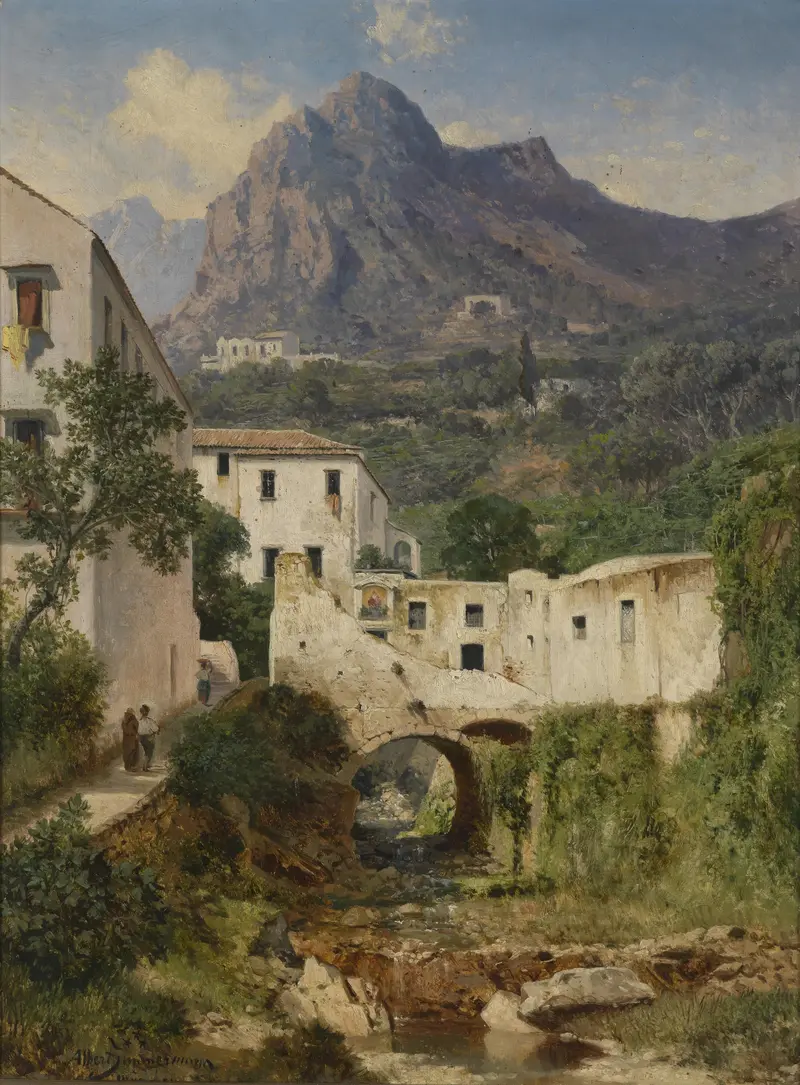
Mühltal bei Amalfi
Albert August Zimmermann
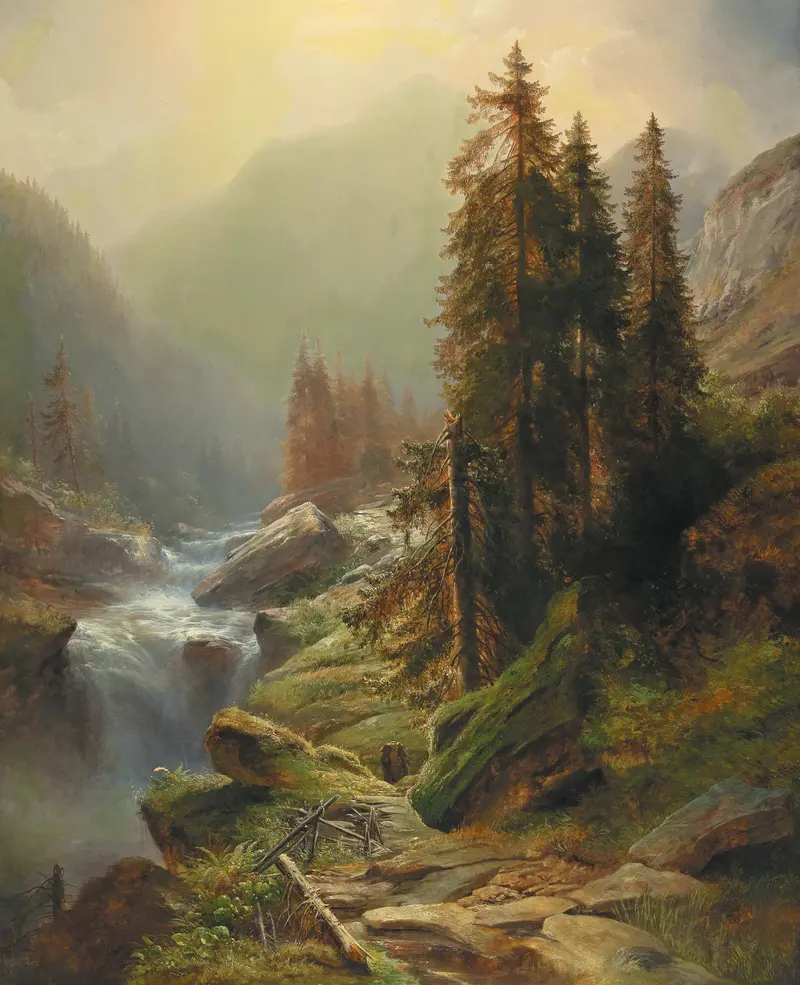
Large Mountain Landscape
Albert August Zimmermann
Partie am Como See
Albert August Zimmermann
More Landscape Art

The Starry Night
Vincent van Gogh

View of Delft
Johannes Vermeer

Water Lilies
Claude Monet

The Grand Canal, Venice, looking north-west from the Ca' Corner to the Ca' Contarini degli Scrigni, with the campanile of Santa Maria della Carità
Canaletto

Windsor Castle
Canaletto

The Grand Canal looking North-East from the Palazzo Dolfin-Manin to the Rialto Bridge
Canaletto